Tag Archives: dictionary project

the dictionary project author interview: elizabeth frankie rollins

We are delighted to share with you the dictionary project’s interview with author Elizabeth Frankie Rollins, whose stunning debut collection of short stories The Sin Eater and Other Stories is released this Saturday. A new plague falls on houses, a boy and his dog appear and disappear and reappear, sins are consumed, relished, and released, whole villages made of sand are carved and destroyed, a boy runs and keeps on running, people try to be who they are not and then failing that, try to be who they are. Enjoy these words from Rollins, on life and writing, which, for her, are really one and the same.
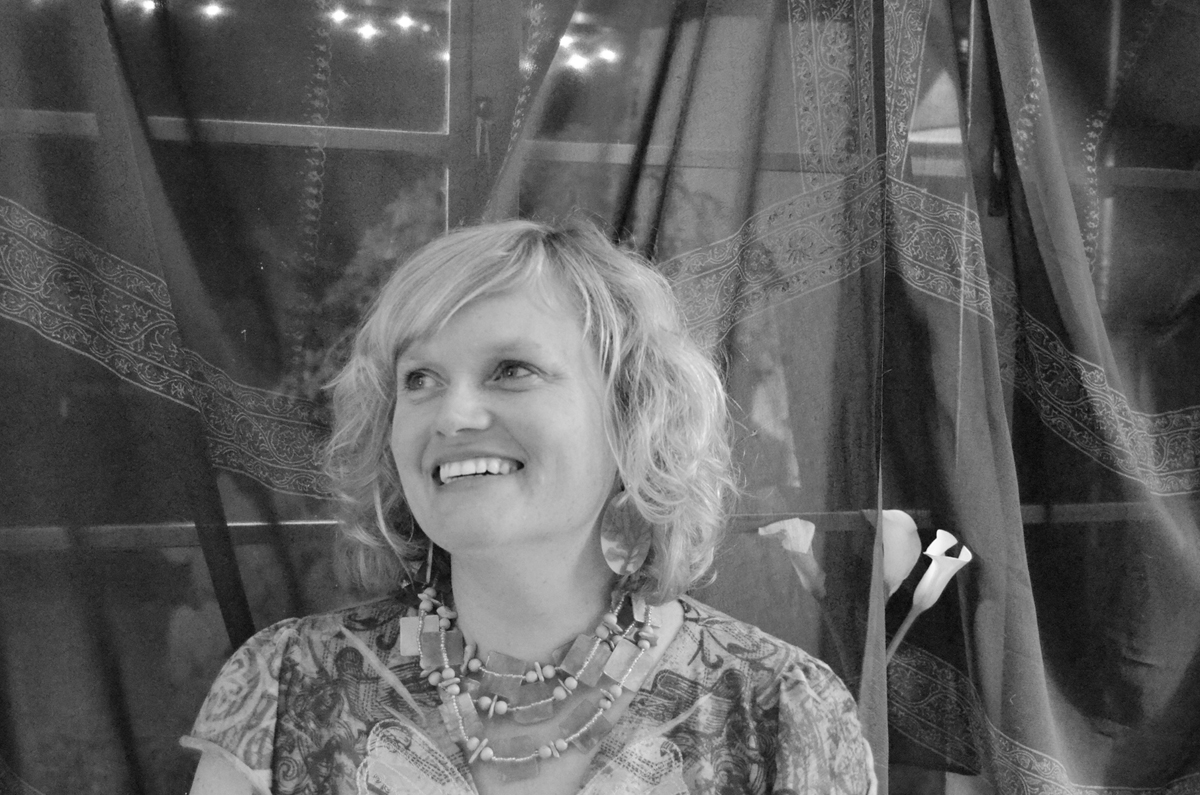
 

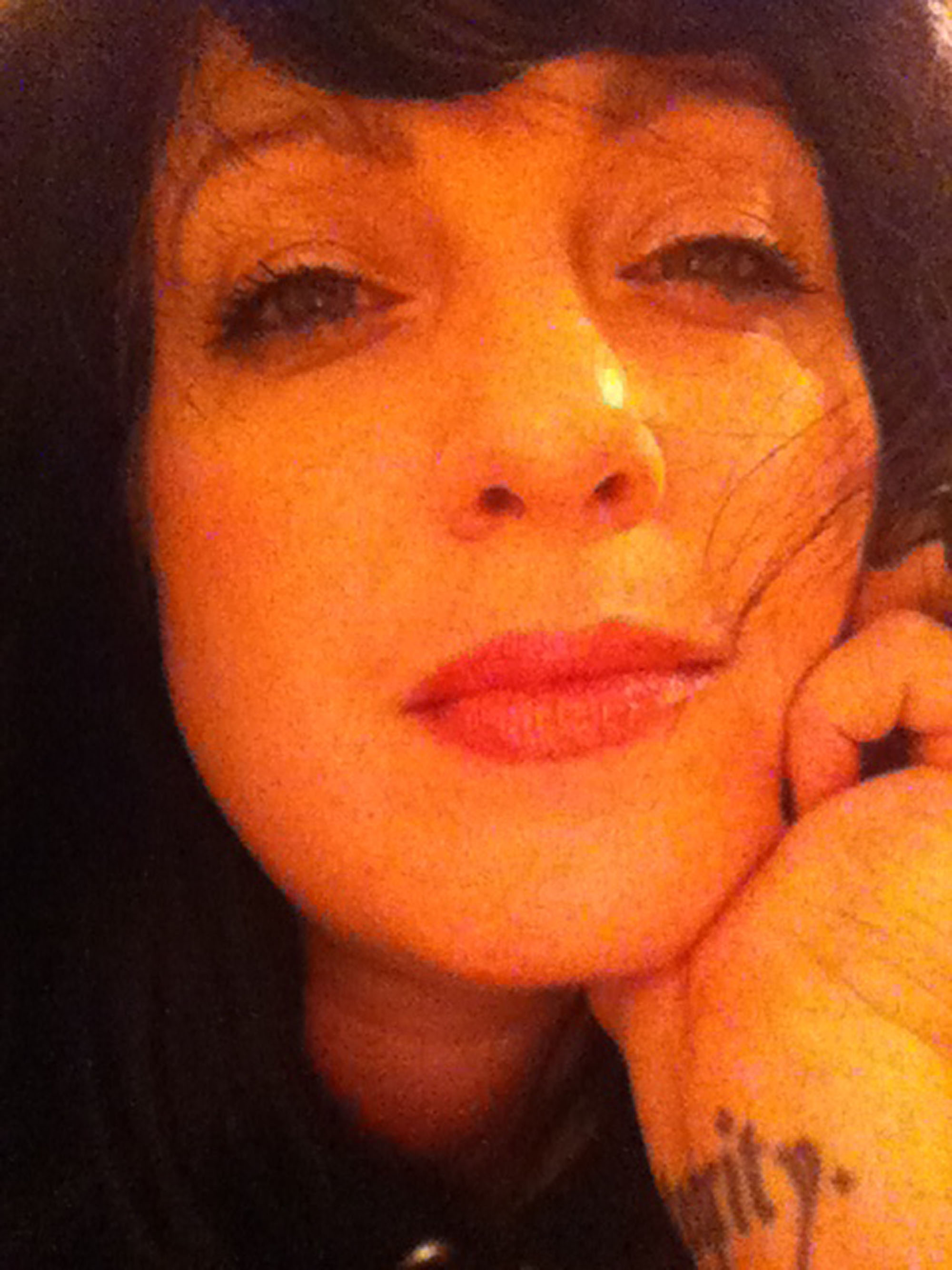
photo by Ben Johnson

photo by Ben Johnson


1. Please share a memory/story/thought in relation to a dictionary/dictionaries:


In my early thirties, I bought a dictionary and a thesaurus for my writing desk, each one big and red.  I told a writer friend of mine that I’d done this and he said, “Uh oh.”  I asked him why he said that but he shrugged and looked out the window.  I changed the subject, mystified.

It used to bother me, that “Uh Oh.” I could hear it every time I reached for one of these big red books.  I mean, what could be wrong with wanting to use better, more accurate language?  I’ve pondered it for years. Still, I have no idea what he could have possibly meant.


2. What is your current favorite word?


Redemption.


3. What is the most obnoxious/insidious/annoying word?


It’s not a word; it’s a phrase.  I loathe the phrase “been there, done that.”  Luckily, it is falling out of use.  It’s such a cruel thing to say.  It speaks of all that is limited and small and unwilling.  What it means to say is that the speaker does not care about you and your story or what you might be saying-it’s an essentially narcissistic, deaf phrase.  It stabs me in the ears.


4. What word has been your (recent or past) muse?


Brimming.  Early on in my writing, while I was working on the story where I first understood the writer that I am, I kept seeing a chalice brimming with red wine.  Neither the chalice nor the wine had anything to do with the story.  It was merely an image that told me how perfectly I must fill the story with the sorrow that was at its core. To have it so full.  To have it just so full, almost too much, but not too much.  To have it also be beautiful.


5. When I think of your writing, particularly in The Sin Eater and Other Stories, the word I think of is precision. Not precision in its hard, calculating sense but in terms of its exactitude, its accuracy, its care. I think of what Kung-fu Tze said: that “all wisdom is rooted in learning to call things by the right name.” I wonder if you could speak to your process of wording, of naming.


In my early writings, I wasn’t precise.  I used to build fat rooms of velvety, lyrical prose.  I’d invite people in and they would smoke hashish and drink honey wine and roll around.  One day, though, someone sat up and said, “Wait, this is lovely, but what the hell does it mean?”  And all my texts crumbled.

In terms of process, now, it still doesn’t begin in precision.  I pound the thing out of the world with the bluntest, dullest tools. I am also partially blind and deaf at this phase.  I follow a single strand of golden idea that I have either seen or perhaps only dreamt of seeing.  I crash around the cave walls, moaning and hacking at what I bump into.  I hope, stupidly and optimistically, that something will be there.  This can take days or years, depending on the project.  Eventually, there’s some light.

I make many, many, many drafts.  Each one increases my sight and understanding.  I’ve learned to point myself, and the reader, in.  I mercilessly surgeon the thing as time goes on.  Lines I once loved I snip away and don’t save.  I carve away bone.  I trim.  I rig up to electricity.  I go from Stone Age to modernity every time.


6. Is there a word for which you would like to rewrite the definition? What word? What does it really mean?


Bin. My husband has long become used to the fact that I call any vessel that holds other things a “bin.”  Socks are bins.  Cups are bins.  Purses are bins.  Paper bags are bins.  A cupped hand can be a bin.  As in, “Hand me that bin, will ya?”


7. Please respond to the following words and definitions*, picked exclusively at random for you:


(en),  n.  1.  in mathematics, the symbol for an indefinite number: see nth.  2.  in physics,, the symbol for neutron.


This is the level to which I have vowed to take the risks of living fully.


flat·ware  (ˈflatˌwe(ə)r),  n.  flat table utensils, as knives, forks, and spoons, or plates, platters, etc.


Any friend of mine will tell you that I want to know what you ate.  I want to know what you had for lunch or dinner.  And I usually remember it.  I ponder it for days.  Why does X eat that?  Why doesn’t Y like that?  I wonder how to cook some of these things.  I store information for future trips to restaurants or grocery stores.  In 2001, a teenager I knew got the house Lo Mein with beef, chicken and shrimp at Oriental Pearl for lunch.  If she didn’t get that, she got the egg salad sandwich at the Bread Board. A phone call to my sister the other night revealed the news that she’d had an antipasto salad and then, cannoli.   I had a boyfriend who loved pepsi and fried fish.  I have a friend who can’t eat any white food.  I have a new friend, who, I’m told, will always order meatballs if they are on any menu.  A friend in NYC has posted several pictures of various plates of sausages and pickles, which she labels: tv snacks.  Another friend ate so many lentils in his crappy flat in Scotland 20 years ago that he still hates them.  My brother-in-law hates stinky cheese.  A friend loves pickled herring.  My nephew loves berries.  It is character.  This is all character study. I study humanity this way, by what it eats with flatware.


rat·toon  (răt`tŌn´),  n. & v.i.  ratoon

rat·oon  (răt`tŌn´),  n.  [Sp. retoño; Hind. ratun], a shoot growing from the root of a plant (especially the sugar cane) that has been cut down.  v.i.  to grow new shoots, or grow as a new shoot, from the root of a plant that has een cut down. also spelled rattoon.


My writing is always concerned with rebirth. Possibility.  It is the most interesting thing about being human.

I love the idea that whenever we tell apocalypse stories, it is about what happens after the apocalypse.  It’s about the ratoon that appears. The possibility of redemption is the most interesting thing in the world.

Rebirth.


-gyn·ous  (jin-us), [Mod. L. –gynus. Gr. –gynos  gyne, a woman],  a combining form meaning:  1.  woman, female, as in polygynous2.  having female organs or pistils, as in monogynous, androgynous.


I’m not interested in the limitations of gender.  I’m interested in the possibilities of thinking beyond gender, beyond culture, beyond years, beyond geography. I’m interested in where the real “us” lives.  The us-ness of all humans.  This is why my writing has turned to history. It’s important to me to find what is the same about characters in 1750 and the people I spend my days with.   If I had a spiritual task, it would be to be able to write this truth finally, completely, clearly.


shape  (shāp),  n.  [ME. schap(e):  AS.  (ge)sceap, created thing  <  scieppan, to create, form;  IE. base *(s)qep, etc., to make with a sharp tool, as also in L. capo (cf. CAPON), Eng. Shaft],  1.  the quality of a thing that depends on the relative position of all points composing its outline or external surface; physical or spatial form.  2.  the form characteristic of a particular person or thing.  3.  the contour of the body, exclusive of the face; figure.  4.  assumed or feigned appearance; guise; as, an enemy in the shape of a friend.  5.  an imaginary or spectral form; phantom.  6.  something having a particular shape, used as a mold or basis for shaping or fashioning; form, as for making hats, molding gelatin, etc.  7.  any of the forms, structures, etc. in which a thing may exist or be embodied: as, dangers of every shape.  8.  definite, regular, or suitable form; orderly arrangement: as, his story began to take shape.  9.  [Colloq], condition; state, especially of health: as, the injured man was in bad shape.  v.t.  [SHAPED (shāpt), SHAPED or archaic SHAPEN (-‘n), SHAPING],  1.  to give definite shape to; make, as by cutting or moldng material.  2.  to arrange, fashion, express, or devise in definite form, as a plan, answer, etc.  3.  to adapt or adjust: as, shape your plans to your abilities.  4.  to direct or conduct, as one’s life, the course of events, etc.  5.  [Obs.], to appoint; decree; ordain.  v.i.  1.  [Rare], to become suited; conform.  2.  [Rare], to come about; happen.  3.  [Colloq.], to take shape or form (often with into).  –SYN. see form, make.


I love the shapes of living.  I love the shape of narrative as it plays out in a life.  How a random move, a trip, a lover, a choice will shape the rest of a person’s life.  My characters teach me this, if I didn’t know it from watching my family and friends.

So many people want an obvious, fill-able, prescribed shape to live into, but there isn’t one.

In fact, it is the truth that there isn’t one shape, that an infinity of life/story shapes exist, that makes me want to go on living.


Elizabeth Frankie Rollins’ debut collection of fiction, The Sin Eater & Other Stories, was released February 2013. Rollins has received a New Jersey Prose Fellowship and a Pushcart Prize Special Mention. She authored the chapbook, The Sin Eater, the novels, Origin, and Doctor Porchiat’s Dream, and has published work nationally in Conjunctions, Drunken Boat, Green Mountains Review, and The New England Review, among others. She lives and teaches writing in Tucson.  She brings the sin eater and other redemptive possibilities for modern maladies wherever she goes.


*Definitions taken from Webster’s New World Dictionary of the American Language: College Edition, copyright 1955

1 Comment

Filed under author interviews

ly·ric


Screenshot of Woody's Journal taken from "The Making of The Works," album with music by Jonatha Brooke and lyrics by Woody Guthrie (click for video)

Screenshot of Woody’s Journal taken from “The Making of The Works,” album with music by Jonatha Brooke and lyrics by Woody Guthrie (click for video)


ly·ric  (lir ik),  adj.  [ < Fr. Or L.; Fr. Lyrique; L. lyricus; Gr. lyrikos],  1.  of a lyre.  2.  suitable for singing, as to the accompaniment of a lyre; songlike; specifically, designating poetry or a poem expressing the poet’s personal emotion or sentiment rather than telling of external events: sonnets, elegies, odes, hymns, etc. are lyric poems.  3.  writing or having written lyric poetry.  4.  in music, a) characterized by a relatively high compass and a light, flexible quality: as, a voice of lyric quality.  b)  having such a voice: as, a lyric tenor. Opposed to dramatic.  n.  1.  a lyric poem.  2.  Usually pl. the words of a song, as distinguished from the music.


the words of a song/as distinguished from the music


“The object of art is not to make salable pictures. It is to save yourself.”

 –Sherwood Anderson, letter to his teenage son, 1927


Lyrics have always been a kind of savior.  From times before written word when sounds were bellowed round a fire, when epic poems were sung as a way to pass down history and legend of how a people came to be. Even the sound of the word om, a mantra for invocation, deemed sacred in part because of the vibrations sent out and the resonance of the sound when sung, a-u-m.


Lyrics have saved me at various moments in my life. I think perhaps the greatest gift of these words set to music is their ability to do away with the notion that we are alone. When I am in pain, that is the moment I find it hardest to see beyond myself. There is a meditation practice Pema Chödrön writes about called tonglen. Tonglen is a practice where you get in touch with your own suffering and then breathe in the pain of others. This is in direct opposition to many new age practices that promise relief through visualization: go to your happy place, imagine a bridge covered with ivy and a brick cottage, breathe in the scent of your favorite flower. Tonglen instead asks that you connect with and breathe in the intensity of your own pain and breathe out relief. Then, tonglen asks that you think of all the people in the world who at this very same moment are experiencing the same pain as you—whether grief, loneliness, anger, jealousy, or fear—and to breathe in their pain and breathe out relief. Tonglen makes you aware that you are not the only one feeling what you are feeling. Tonglen gives you an opportunity to offer relief by seeing outside the parameters of your own pain. Lyrics do the same thing.


I have an uncanny memory for song lyrics; they are stacked, filed, catalogued in my brain—the ones I want to remember and the ones I wish I could forget. I also have a habit from when I was very young of spontaneously breaking into song, singing about what’s happening to me or things I see, or inserting song lyrics when someone says a word that reminds me of the song they come from.


I noticed past this fall that I listen to music less and that I sing along less in the car. I’m not sure exactly when this began, but I recognize some of it. Sometimes, even things I love can become things I resist or deny myself. I go through periods of not writing when I am overcome with doubt, when I become focused on product instead of process. When I’m not feeling good about my songwriting or my singing or when I feel I’m not doing enough, I deny myself the moments of even singing along in the car or playing guitar for fun in my home. I even start watching movies as I move about my home instead of listening to music, so permeating is the feeling that I should be doing more. I resist that which matters to me when I don’t allow myself space for it. This is a harsh reality for so many of us: When do we not provide space and time for that which we love out of fear? When does what’s made become more important than the making?


I think in truth that most of us have ideas and words and architecture running just under the surface of our skin. The power of all that we could create scares us into not making time, into making excuses, into making work that is so much more superficial than that which our deepest knowing dares us to make.


Too often, we are liars.


We tell ourselves that the world doesn’t need one more song, one more story, one more sketch.


We are wrong.


The best songs I have written have been the ones that have come out quickly and seamlessly, seemingly out of nowhere. I have sat down with a pen, a notebook, a guitar, and the song has spilled out. This is not evidence of the quickness of art but rather how quick art can come if we pay attention and allow space for it to emerge. Songwriting is a sort of channeling. I know there are people in Nashville who can turn a phrase, who make their living shaping songs for superstars. But like writing, even those who are prolific, would tell you of a certain spark, a certain word or turn of phrase, the key turning in the lock that opened the way to the rest of the song. A crack in the dam. A snap in the hinge. A pull in the thread that unravels the whole hem,  one seam untying to stitch another.


And the lyrics that are made and sent into the world become a place for others to rest within. For hours after a college boyfriend, the first guy I really fell hard for, left to return to the country he was from, I lay on my bed listening to the same song on repeat for hours. It was a Sundays song called “When I’m Thinking About You.” I remember my dorm room and where my bed was positioned by the window. I remember feeling that I had never loved like this before, fearing I would miss him so much my heart would surely break open inside my chest. There were many tears: so many verses and so many choruses worth. I found comfort in the repetition of the same lyrics over and over again. I listened and I cried and by the time I turned the cd player off hours later, I felt better, even if my heart was still broken.


Lyrics become a way of organizing our experiences in life, a place to store our suffering and our solace. The spectacle of karaoke feels less about nostalgia or the desire to be the center of attention than it feels like confession. Singing in unison, the resonating feeling of these words that everyone knows. I, too, have felt this way. Like communion, me too.


“I hate a song that makes you think you are not any good. I hate a song that makes you think that you are just born to lose. Bound to lose. No good to nobody. No good for nothing. Because you are too old or too young or too fat or too slim. Too ugly or too this or too that. Songs that run you down or poke fun at you on account of your bad luck or hard traveling. I’m out to fight those songs to my very last breath of air and my last drop of blood. I am out to sing songs that will prove to you that this is your world and that if it has hit you pretty hard and knocked you for a dozen loops, no matter what color, what size you are, how you are built, I am out to sing the songs that make you take pride in yourself and in your work. And the songs that I sing are made up for the most part by all sorts of folks just about like you.”

—Woody Guthrie


Several friends have spoken with me about the songs that saved them. These songs held words they needed to hear during dark times. And somehow the fact that the song existed provided a shelter. These lyrics, a place for solidarity and witness. These lyrics, a kiva, where a voice reaches out of the speaker to our waiting bodies, mouths, hearts, skin as these parts of us echo back a simple reply, yes.


One of my favorite songs is Stephen Foster’s “Hard Times, Come Again No More.” The first time I heard it, I was in my early twenties and these three young men, handsome and brilliant musicians, were coming through town on a Woody Guthrie Tribute tour. They played this song in harmony on guitars and accordion and it broke something open in me.


Foster wrote the song about people living in deep poverty and deep despair, something I knew  nothing about at the time, something I know a little more about now but not in the way the people he is writing about knew it. And yet, I could hear myself in the chorus. Hard Times, Come Again No More. I feel a sort of yearning in this song and a feeling that the song itself beckons a wish, that in singing the song loud enough, often enough, we could somehow stave away suffering. A hope. An impossibility. When I play the song now, I experience it as a remembrance and a tribute, an acknowledgement of the pain and suffering that is an inevitable part of being human.


Researcher Brené Brown talks about how: “When you ask people about love, they tell you about heartbreak, when you ask them about belonging, they tell you their most excruciating experiences of being excluded. When you ask people about connection, the stories they tell you are about disconnection.” It makes sense then that for many of us the songs that resonate most are the ones that reveal that aching aspect of being human: having loved and lost, having reached out and been turned away, and the hope we hold for a future when things will turn out in a way that meets our needs and desires.


Lyrics feed us. Because we require constant attention and ever-present opening. Because we cannot do it alone. Because we have lived through heartache and heartbreak and have to learn what it means to stand again. Because we must uncover our hands once more from atop our hearts. Because if you needed me, I would come to you. Because there is no other way. Because this fuel, this fire, this field, this flood; this avalanche, this arc, this arch, this aspen; this meeting, this movement, this martyr, this made; this sacrifice, this sepulcher, this sergeant, this soot; this tandem, this tangent, this target, this tongue; this blanket, this buckle, this banter, this bare. Because in singing and seeking, we come to know each other better and we come to know ourselves.


I sing because I’m grateful for having been sung to. And I sing because it is when I am singing that I feel most alive. And I sing because no matter how hard my day has been, no matter how uncertain the road ahead is, no matter the current state of things, I need to be reminded of the beauty that can be found curled up inside a long held note and the calm of the silence in between one sound and another. Songs are of us and for us. They are of our making and they are how we are made.


4 Comments

Filed under weekly words

con·tig·u·ous

bettydoctor'soffice


Today is our first guest post for flash fiction february, crafted by talented writer Jennifer Rice Epstein! You can check out some more about her writing at her food blog Meals, Squared.


con·tig·u·ous (kənˈtigyo͞oəs),  adj.  [L. contiguous, bordering upon  <  base of contigere, to touch upon, border upon; see CONTIGENT],  1.  in physical contact; touching  2.  near; adjoining.  –SYN. see adjacent.


The waiting room was smaller than her own small living room. There she sat, in an uncomfortable chair, her hands folded across the knitting in her lap. A hobby she’d tried, in recent months, to develop. Her husband, Jimmy, sat next to her. He’d taken the day off work to drive her here; she couldn’t figure out if he was annoyed about it.


She looked up at him, and he looked over to her and smiled. I’m nervous, she whispered. It’s just something in the air, he said. It’s the newness. She began to cough; he patted her hand and stood up, walked toward the reception desk.


Her name was Beth, and she was 21, a newlywed, a new college dropout. At night, she sat up, coughing, while her husband slept. He would be in their room, she on the sofa. Her husband slept through her coughing fits, even when they lasted several minutes, even when she was in bed with him. He slept through everything—maybe a result of his mission to Samoa, where packs of dogs roamed the street outside his house at night, hunting and howling. Maybe that was just how men slept.


Jimmy returned with a glass of water. She took it gratefully. He stood beside her. I need some fresh air, he said. I’ll come right back. I’ll be waiting right here when you get out. He walked away, and she wondered where to look. An old man sitting across from her caught her eye and smiled. She looked at the half-knit blanket in her lap.


She was 21 and lived in a suburb at the edge of Chicago suburbs. Behind their little house was a cornfield, but they were not farmers. Her husband worked at the Chicago Board of Trade. He liked to say he looked no further than his own window to see what his day at work would be like. He joked, but she knew his job was difficult, though she knew not, exactly, what he did.


Her husband thought the cough was allergies. At first, they both thought the cough was from allergies, something in the Midwestern air, something in the house. It had started just a few weeks after they’d moved in. At first, she was only a little put off by it, but he was very worried. They found a doctor in town, who said she was allergic to dust. The doctor’s confirmation put her husband at ease. Now, it was her turn to worry. The cough persisted, no matter how much she cleaned, whether she opened or closed windows, whether she did her shopping or stayed home. Contrary to her imagined married self, the coughing fits kept her from being a gracious host or charming guest. At parties, she sipped water and tried to speak as little as possible. In sacrament, she sat next to the door and, more often than not, missed part of the service.


In the waiting room, another Bethany was called, a woman in every way her opposite—older, darker, happier, pregnant. Perhaps she’d be that Bethany soon enough. She coughed into a handkerchief dotted with blood. This was new; it was the blood that prompted her to seek a second opinion. She was grateful in that moment that Jimmy had gone outside; he didn’t know. It was probably dust, allergies, the air. She’d probably strained something with her coughing.


She was a newlywed 2,000 miles from home. It was October; she had been out of school for five months. Jimmy was her high school sweetheart, a boy she met at a church dance, an Eagle Scout, descended from pioneers. She was still in high school when he left for his mission. Time stood still the first summer he was gone, but then she started her college studies, and that, with church, kept her mind occupied. In her sophomore year, he proposed by mail from Samoa. She remembered opening the letter, postmarked before Christmas, in February. This was his Christmas present to her and his requested gift from her. That’s what the letter said. She had waited several days to answer him, so that her reply would be postmarked on Valentine’s Day. It had all been very romantic. When Jimmy came home and got the job offer at CBOT, they decided to be married right away. She had a year of college left in Reno, but they did not want to be apart another year. At the time, she hadn’t minded the thought of moving. Illinois was just another adventure.


The nurse called her to the back and weighed and measured her. She took her temperature and sent her to the bathroom for a urine sample. When Beth returned to the examination room, it was empty. She sat on the chair, then on the examination table. She wasn’t sure where to sit.


The temple closest to their home had been in Salt Lake, seven hours from Reno by car, but they made the drive for their wedding. She remembered arriving at Temple Square, her own Vatican City, dress and hat and sensible shoes, feeling reverent and sophisticated. The families went sight-seeing, and, as she and Jimmy strode arm-in-arm past bronze statues of Joseph Smith and the Handcart Pioneers, she felt a wash of well-being. Everything here made sense. The day after they arrived, they married and were sealed. The reception was a luncheon with their families, and the next day she said good-bye to her parents. Their honeymoon was the drive to Chicago, where her husband had already leased the house.


It was hard to be so far away from her mother and sister in this cold, flat place that was making her sick. But she had Jimmy. She began to cough and reached for her handbag, but it wasn’t there. She’d left it, along with her coat, on a chair in the waiting room. She coughed, searching the room for a tissue. She found, instead, the faucet and drank from it eagerly, hoping it could soothe her throat. She drank and thought about her impeccably clean house, her husband’s letters, her fine, clear wedding day, and her hastily abandoned belongings safe on the chair, waiting for her. It was nearly enough to calm her.


jenriceepsteinJennifer Rice Epstein lives with her husband and two young sons in Chicago. Follow her on Twitter @jriceepstein.

Leave a comment

Filed under flash fiction february

the dictionary project author interview: anna joy springer

I’m so pleased to share with you all today this author interview with Anna Joy Springer. I find Anna Joy’s work to be immediate, visceral, meditative, guttural, melodic, charged. We are lucky that she doesn’t limit herself in medium of expression.

 AJ promo photo


1. Please share a memory/story/thought in relation to a dictionary/dictionaries:


When I was very small, I ate every word in the dictionary, slowly. The dictionary had been wheat-pasted to the lower half of the walls of my small attic nursery for insulation. As the pages were so thin, many pages were layered in order to create a barrier from the draft. I was an extremely hungry child, and lonely.  Sometimes my mother, who couldn’t bear the sound of “crying babies” left me in the nursery for longer than she should have. She put bottles of formula in my crib, and, when I was not sleeping curled around a bottle or two, I would play a game of “throw the bottle.” Later I would scale the white dowels of my tiny bed-prison and drop myself the floor to retrieve the bottles, warmed sometimes by sun coming in through the small round window. I would find myself soon on the bare wooden floor with empty bottles all around. Teething, needing something less forgiving than a rubber nipple to chew, I would gum the walls to feel their delicious pressure against my swollen gums, and I would suck on the words there until they were soft enough for me to pull off strips of the dictionary pages and suck and gum them into balls. Then, I would swallow them. I didn’t learn to read this way, but I did learn that words are a kind of nutriment and thing to busy oneself with to keep oneself from dying of boredom and loneliness.


2. What is your current favorite word?

My current favorite word is “oodle.” I say it many times a day and I sing it.  It is what I call my new poodle, Percival. It is satisfying and sensuous and silly all at once.


3. What is the most obnoxious/insidious/annoying word?

Finger.


4. What word has been your (recent or past) muse?

Aviary.


5. I heard you read from your fabulist memoir The Vicious Red Relic, Love, and it was really, in form and content, unlike anything I’ve ever heard before. I may be making this up, and forgive me if I am, but I think I remember you saying something about how this was the only way to tell this particular story. Could you talk a little bit of your process in writing the book? And your decision about the form, the container for these stories?


Hmm. I don’t know what I was referring to about this being the only way to make this story, but I do know that I didn’t feel right about “just telling a story” because that wouldn’t be a very dimensional representation of the bigger and smaller pictures touching and affecting each other.  “The story” isn’t a dramatic rendering of events in this piece – it’s more like a collection of evidence about a period, place, and subculture, with a love story as its emotional emblem. The other love stories are like echo lines all around the central one, and they provide a sort of vibe that runs between ancient Sumerian and late 20th c urban
queer punk.  And I guess the thesis, if there is one, is “if we believe ourselves to be something like characters in a story that we’ve heard in different ways a million times, we might consider the interesting possibilities and dangers of creating new ‘liberating’ kinds of stories, even while knowing all stories will somehow reference, reflect, refract, and resist that initial one.”


6. You are a visual artist as well as a writer and you speak of your creations as grotesques. Could you offer your own definition of that word?


Things that both seduce and freak you out and make you feel like your thinking isn’t as big as some other unknown sense that may also be a part of your mind or spirit.


7. Please respond to the following words and definitions*, picked exclusively at random for you:


Dem·bow·ski (dem bou skē),  n.  a walled plain in the first quadrant of the face of the moon: about 16 miles in diameter.


Dembowski died on the moon and nobody outside of the organization found out.


rhen·i·um  (ˈrēnēəm),  n.  Chem. a rare metallic element of the manganese subgroup: used, because of its high melting point, in platinum-rhenium thermocouples. Symbol: Re; at. no: 75; at wt.: 186.2.  [ < NL, equiv. to L Rhen (us) RHINE + ium –IUM]


Dembowski had discovered rhenium in the first quadrant of what we call “the face” of the moon. Dembowski was going to be very wealthy, very taken care of. We all were.


plas·ter (ˈplastər), n.  1.  a composition, as of lime or gypsum, sand, water, and sometimes hair, applied in a pasty form to walls, ceilings, etc. and allowed to harden and dry.  2.  powdered gypsum.  3.  see plaster of Paris.  4.  a solid or semisolid preparation for spreading upon cloth or the like and applying to the body for some remedial or other purpose. –v.t.  5.  to cover (walls, ceilings, etc.) with plaster.  6.  to treat with gypsum or plaster of Paris.  7.  to lay flat like a layer of plaster.  8.  to daub or fill with plaster or something similar.  9.  to apply a plaster to (the body, a wound, etc.)  10.  to overspread with something, esp. thickly or excessively: a wall plastered with posters.  [ME, OE  <  ML  plastr(um) plaster (both medical and building senses), aph. Var. of L emplastrum    < Gk emplastron salve, equiv. to em- EM2  + plass(ein) (to) mold, form  + tron  -TRON] –plas·ter·er, n.  –plas·ter·i·ness, n.  plas·ter·y, adj.


Instead, we were instructed to plaster over the face of the moon. In essence, to create a new face indistinguishable from the last. This plastering would render the rhenium undetectable, and we would be able to return to the site after our mission, when the organization was down for holiday break.  We knew this plan was infeasible, but we couldn’t disobey command, not with the example that’d been made of Dembowski. We pushed Dembowski into the dust and plastered over that too. When we finished, we
felt destroyed.


Ka·ma·su·tra  (kä′mə so̵̅o̅trə), n.  an ancient Hindu text on mystical erotics.


On our return, we didn’t speak except necessary commands and professional responses. Some secrets are powerful and should remain unuttered. One of mine was that I had removed a small book from Dembowski’s leg pocket before the plastering. It was a Kama Sutra, printed in Sanskrit. He had carried it out on his quadrant sweep, and I can’t imagine why. He may have planned to leave the book there in the great hole now known as “Dembowski,” in order to pretend, on a later mission, to have “found evidence” of earliest cultures’ space travel. He might have imagined presenting this quadrant as the former location of a university of lunar sensuality and erotic moon worship. But his plan was unsuccessful. The greatest anthropological and religious scam of the century, at least, was averted when Dembowski broke his neck.


mil·le·fi·o·ri  (miləfēˈôrē),  n.  decorative glass made by fusing multicolored glass canes together, cutting them crosswise, joining them into new groups, embedding the groups in transparent glass, and blowing the resultant mass into a desired shape. Also, mil·le·fi·o·re.  [  < It equiv. to mille thousand ( < L)  + fiore, pl. of fiore  <  L  flori- (s. of flos) FLOWER]


He had tripped over something hidden beneath the moondust. The organization kept it. It was an oblong millefiori bead. No one ever confirmed whether it was ancient or modern. No one outside the organization knows about the bead except for the buyer, my mother. She wears it, dangerously, on a leather thong around her wrist. She still refuses to tell me the results of the tests she’s had done on the bead. She’s mocked me with farfetched millefiori origin stories for years, a new one every time I’ve asked. I have my own fun, too. I have put Dembowski’s volume of the Kama Sutra in Sanskrit under her bed. I would like very much to inherit the bead. I will hold it in my mouth wherever I go.


Anna Joy Springer is the author of The Vicious Red Relic, Love (Jaded Ibis, 2011), a fabulist memoir with soundscape and images. She’s now making a book-length rebus called Thieves With Tiny Eyes.  An Associate Professor of Literature at UC San Diego and the director of its MFA Program in Writing, she teaches experimental writing, feminist literature & graphic texts. She’s played in punk bands Blatz, The Gr’ups, and Cypher in the Snow and toured with the all-woman spoken word troupe Sister Spit.


*Definitions taken from Webster’s Encyclopedic Unabridged Dictionary of the English Language, copyright 1989

2 Comments

Filed under author interviews

the dictionary project author interview: thomas page mcbee

Today, we feature an author interview with Thomas Page McBee. I first became familiar with Thomas’s work through this piece on Salon.com and his ongoing column on The Rumpus, and I was struck by the smartness and poignancy of his writing. I appreciate the way he observes people and incidents, keenly and from all angles, like turning a glass object around in your hand. Enjoy his words.


Thomas


1. Please share a memory/story/thought in relation to a dictionary/dictionaries:

I do a lot of fact checking for my day job, which sounds dry but is actually a beautiful thing. I find I don’t know what I think I know (how to spell “Robert De Niro,” for instance). I have to adopt a position of healthy skepticism, which is different than doubt. It’s a curiosity. So, that’s a metaphor. Though I no longer work with a paper dictionary, my life is rich with reference material: online dictionaries that contradict my spell-check chief among them. I’m always reading definitions, figuring out how words work. I love the logic behind AP Style, grammar as architecture, the construction of language. Metaphors everywhere! I traffic in them.


2. What is your current favorite word?

I’ve been drawn to muscular words like hamstrung lately. I like the combination of jargon, a powerful image, and the right kind of sound in the mouth.


3. What is the most obnoxious/insidious/annoying word?

Ugh. Moist. It’s effective; just too effective.


4. What word has been your (recent or past) muse?

Vulnerability. Though now I think I’m moving into a different space. Instead of looking at the phrase “Be Vulnerable” before I write, I’m visualizing “Have heart.” For me, there are a lot more dimensions in the latter, and it’s a key shift. With vulnerability, courage can be a byproduct, but with heart, courage — in all of its forms — is the actual engine. I see my relationship to this imaginary reader like I would anyone: sometimes there’s room for all of me, but usually you’re getting a slice. And that’s connection, that offering. It feels more real to me than just full-blown exposure, then asking to be understood. I’m not asking any more, I’m making a dynamic and welcoming you in.


5. For The Rumpus, you write a column—or essays in installments—entitled Self-Made Man? If you were to write a dictionary entry for “self-made,” what would it say?

To construct, with awareness and authenticity, a meaningful sense of self; an imprecise, endless fashioning.


6. In a recent essay of yours: “Self-Made Man: In Real Life,” you talk about the intersection of public vs. private and visibility vs. invisibility, particularly having to do with other people’s expectations and perceptions of you. I particularly loved this: “I think that we need to quit feeling obligated to trumpet our multitudes at the start of every interaction.” I’m wondering if you could speak a little to these concepts of (in)visibility and public/private life in terms of language and particular words. How can language serve to make us visible or invisible? Or, when does language fail us in our interactions with one another?

I think a lot about public and private space; what we reveal and what we hide and why. I think about it more now that I’ve experienced a gender transition, which just highlights for me all the ways I pass. It makes me question what passing even means; the negative implication is around being something we’re not, but I think it’s about being interpreted through one lens. I used to want to eliminate reductionism of that sort, but now I’m moved into a sense of it as not only a necessary way to maintain privacy and boundaries, but an opportunity to learn more about who I am through the ways I’m visible and invisible, the echolocation of what I put out there in all my shifting.

I think a lot about invisibility, about accepting what it has to offer. I think about the way identity is created and curated on the Internet in fragments; how self-conscious it is. And I think that’s a neutral quality, self-consciousness, where I used to feel otherwise. I’m just interested in what it is to be human, and I think narrative is a way to create a visibility that holds even in moments of invisibility: by which I mean, I think understanding oneself is to understand others, and that’s what allows us to not fail each other — in language or otherwise.

Also, it’s okay that we fail each other.


7. Please respond to the following words and definitions*, picked exclusively at random for you:


bar·rel  (ˈbarəl),  n.  [ME. barel; OFr. baril; ?  <  LL. barra, a stave, bar; see BAR, n.],  1.  a large, wooden, cylindrical container with sides that bulge outweard and flat ends, made usually of staves bound together with hoops.  2.  the capacity or contents of a standard barrel (in the United States, usually 31 1/2 gallons; in Great Britain, 36 imperial gallons; in dry measure, various amounts, as 196 pounds of flour, 200 pounds of pork or fish, etc.): abbreviated bbl., bl., bar.  3.  a revolving cylinder, wound with a  chain or rope: as, the barrel of a windlass.  4.  any hollow or solid cylinder: as, the barrel of a fountain pen.  5.  the straight tube of a gun, which directs the projectile.  6.  the quill of a father.  7.  the body of a horse, cow, etc.  8.  [Colloq.], a great amount: as, a barrel of fun


It’s interesting to think that that which contains is also a system of measure. And, of course, how we have pushed that measurement into the soft space of the immeasurable: a barrel of laughs, for instance. I’m interested in measurement, in containment. I guess I haven’t been thinking enough about barrels.


gang·li  (gang’gli), ganglio—

[gang·li-o— (gang’gliə),  a combining verb meaning ganglion, as in ganglioplexus

gang·li-on (gaNGglēən), n.  [pl. GANGLIA (ə), GANGLIONS (-ənz)], [LL.  <  Gr. ganglion, tumor],  1.  a mass of nerve cells serving as a center from which nerve impulses are transmitted.  2.  a center of force, energy, activity, etc. 3.  a small tumor growing on a tendon.]


I have thought a lot about neurobiology, especially mirror neurons. I’m not sure how connected this concept is to ganglions but since I’m not a scientist, I choose to not worry about that. Mirror neurons seem to me a biological imperative for empathy. They act when seeing another animal performing a similar action: you flinch when someone else gets hit by a ball. We all learn so much through reaction. There’s a baby that lives upstairs, a toddler now, and she went through a whole period where she behaved exactly like her dog: barking at strangers in a soft woof. We are each other more than we know.


tab (tab)  n.  [earlier also tabb  <  Eng. Dial.; in some senses contr. Of tablet; in others, associated or merged with tag],  1.  a small, flat loop or strap fastened to something for pulling it, hanging it up, etc.  2.  a small, usually ornamental, flap or piece fastened to the edge or surface of something, as a dress, coat, etc.  3.  an attached or projecting piece of a card or paper, useful in filing.  4.  [Colloq.] a record; reckoning.  5.  in aeronautics, a small auxiliary airfoil set into the trailing edge of an aileron, etc.


It’s interesting that human technology goes so far beyond our modern digital definitions. To think, the person who first created a tab. I always imagine buttonholes: what it would feel like to put your coat on for the first time with such ease. Revolutionary actions need not be large, just profound. I try to remember that.


fa·çade  (/fəˈsäd),  n.  [Fr.; It. facciata  faccia; LL. facia; see FACE]  1.  the front of a building; part of a building facing a courtyard, etc; hence, 2.  the front part of anything: often used figuratively, with implications of an imposing appearance concealing something inferior.


Thinking about if it’s possible to have a façade that doesn’t “conceal something inferior.” Inferior! I mean a façade of calm, of strength, of ease doesn’t necessarily conceal an inferiority, just a complexity that isn’t public. It’s interesting to think of all the ways we attach value, even in areas of supposed neutrality (the dictionary, straight journalism, you know, language). To think that there’s an authoritative source for anything feels very dangerous to me. My own narrative is multiple, how can I ever believe that the world is anything but a prism of perspective, blended?


hy·pog·na·thous  (ˈhī¦pägnəthəs),  adj.  [hypo  gnathous], having a protruding lower jaw.


I’m not sure I understand if this word applies to humans or only insects, but I do know that having a pronounced jaw was my dream for a long time, and now it’s a reality. Like I said, I believe in the profound, however small the container.


*Definitions taken from Webster’s New World Dictionary of the American Language, copyright 1955.


Thomas Page McBee pens a column about masculinity, “Self-Made Man,” for The Rumpus. Find his work in the New York Times, TheAtlantic.com, Salon, the San Francisco Weekly, and the Boston Phoenix, where he is an editor. His manuscript, THIS FRAGILE FORTRESS, about crime, forgiveness, and what makes a man, won the Mary Tanenbaum Nonfiction award from the San Francisco Foundation and was a finalist for the Bakeless Literary prize. He’s spoken about his work at colleges across the country. To learn more, visit thomaspagemcbee.com or follow him on Twitter, @thomaspagemcbee.


1 Comment

Filed under author interviews

ring·neck·ed

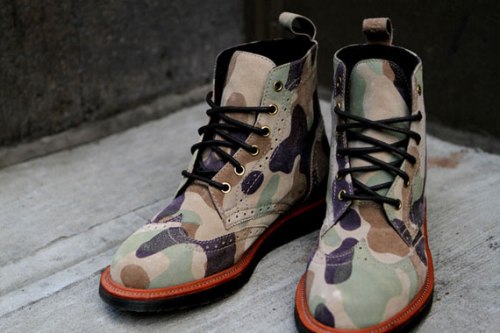
ronnie-fieg-dr-marten-bowery-blue-camo-07


It’s the last day in November and so today we host our last essay in our first nonfiction november at the dictionary project. We are so pleased to have guest writer Nishta Mehra. Nishta writes a wonderful blog about food and life featuring both stellar recipes and poignant essays. Enjoy her writing here and check out her blog for more.


ring·neck·ed, (riŋ-ˌnekt) adj.  having a distinctive colored stripe or stripes around the neck, as certain animals and birds.


My Doc Martens are a holdover from what my partner Jill lovingly refers to as my “Baby Dyke” years.  They are one of the few extant remnants from this phase, along with memorized song lyrics to many, many Indigo Girls songs and a few very dear friends.

The boots are so objectively ugly—mud brown and clunky—that it must have physically pained my mother to spend money on them the year I asked for and received them for Christmas.  I was not particularly tough, badass, or butch, but those Doc Martens made me feel like I was, a little bit. They were not the norm at my very genteel and preppy all-girls’ school in Memphis, Tennessee, but they weren’t all that noticeably different, either; it’s not like I went after purple patent leather or boots that laced up to the thigh.  My boots were quietly defiant, marking me part of some alternative club the same way that the shoes’ very soles stamped a brand imprint into soft ground.

I don’t know why I saved my Docs; I stopped wearing them a long time ago.  Perhaps they seemed too significant, too sturdy, too potentially utilitarian to get rid of.  Or perhaps I was too nostalgic for those coming out years, my earnest, angsty youth.  But kept them I did, unable to throw them out or give them away each time I packed up my dorm room or apartment closet.


They come in handy the first time I go dove hunting with Jill.  It is early in our relationship, maybe the second year.  We are living together but still exploring each other actively, floating into new corners of experience like kids in bumper cars: meeting parents, learning quirks and proclivities, sharing passions.  For this afternoon, she dresses me in an old pair of her heavy canvas camouflage pants and a soft t-shirt (also camo), but is at a loss with what to do with my feet, for hers are much smaller than mine and I will not fit into any of her old boots.  Suddenly I remember my Doc Martens, long neglected and relegated to the bottom of the closet.

“Perfect,” she says as I lace them up, feet remembering just how much these damn things weigh.  I stand and examine myself in the mirror; it is the first time I have ever worn camo in my life.  I look like some alternate version of myself, still not particularly tough, badass, or butch, but feeling more the part than usual.

In the field, I follow behind Jill, treading my way through knee-high brush, grateful for the secure footing of my clod-hopper boots.  She has a gun slung over one shoulder and a folding stool over the other; I carry my own stool, a small, round cooler filled with water, and my journal.  We set up underneath a modest clump of trees and wait.


It’s important to note that Jill hunts for meat, not trophies; everything she kills we eat.  She grew up inhabiting a world that I only read about in books: Where the Red Fern Grows, My Side of the Mountain, and Rascal, stories where the main characters are self-sufficient children deeply connected to the outdoors.  They, like Jill, know the names of animals and plants, are comfortable with silence, have instinctive skills for survival, and are not afraid of much.

Jill shot her first gun at age five.  Her family grew or hunted pretty much everything they ate, skinning and cleaning and canning and preserving, using all parts of the animals they killed—not because it was romantic, but because they needed to.  Because that’s what you did.  Because it was a sin to let a once-living thing go to waste.


I did not grow up around guns, and the proximity of Jill’s shotgun, though I know the safety is on and she is extraordinarily careful, makes me a little jumpy.  In the yellow-brown field around us, bugs and mockingbirds skitter, backgrounded by blue sky.  Our attention is focused on a small watering hole some twenty-five yards away, the hope being that it will draw some thirsty doves on this hot afternoon.

I do not know what to expect, how I will feel about watching the woman I love kill things.  Though a meat eater myself, I came into our relationship with a bias against hunters, a lazy understanding that the sport was necessarily cruel and thoughtless, when for Jill it is quite the opposite.  She hunts to take an active part in the project of feeding herself, instead of shying away from the reality of the death that comes when one creature eats another.  She hunts because she is not a hypocrite, and she is not willing to be a vegetarian.  She hunts to plug her being into the greater cosmos of living things, the wild, cruel, and wondrous food chain into which we are all born.

“Hunting is the only religion I practice,” she told me when we first met, and so I am out here to see it for myself.

After about an hour of waiting, a pair of grey-brown, ring-necked birds appear on the scene and Jill manages to get them both as they come in to land, one smooth motion of lifting the gun’s stock to her cheek and its end into her shoulder.  The sound from the blasts echoes across the field, scattering more distant birds.  Jill locates the discarded shotgun casings on the ground around us and holds one up for me and instructs me to inhale: the sharp, acrid scent of spent gunpowder fills my nose.  “I love that smell,” she says.

We walk over to retrieve the birds before we lose sight of where they fell, their small eyes glazed over and spots of crimson blooming in their breasts.  I have never held a just-dead thing, so recently alive that it is warm and liquid under the surface.  Death has transformed them, making them more lovely and remarkable than they were in life, a kind of reverse benediction.  Before slipping them into her game bag, Jill puts each bird close to her face and whispers thanks for its life.

“You lived wild and free until you died,” she tells a dove, tracing the distinctive dark black ring around its neck with her finger.  “Not in a cage or a pen.”

At sunset, the hunting is done and Jill lays her six birds on the tailgate of the truck.  With skilled fingers and a pair of hunting shears, she cleans their soft bodies, first plucking their feathers, which float out into the air like soft snow for other birds and field mice to use for their nests and burrows.  Then she clips the heads, feet, wings, and removes the glistening innards, tossing it all out onto the ground as an offering of dinner for the creatures that live nearby.  Finally, what’s left are a naked row of breasts and legs, our dinner.

We cook the ring-necks just a few hours later, their flesh meeting flame on the grill,  eating with our hands, taking their bodies into our own for nourishment and pleasure.


black-white-on-benchNishta Mehra is a writer, middle school English teacher, and enthusiastic home cook who blogs about food and life at www.bluejeangourmet.com.  Her first book, a collection of essays entitled The Pomegranate King, is forthcoming in early 2013.  She lives in a suburb of Houston, Texas with her partner, Jill Carroll, and their four-and-a-half month old son, Shiv.


Leave a comment

Filed under nonfiction november

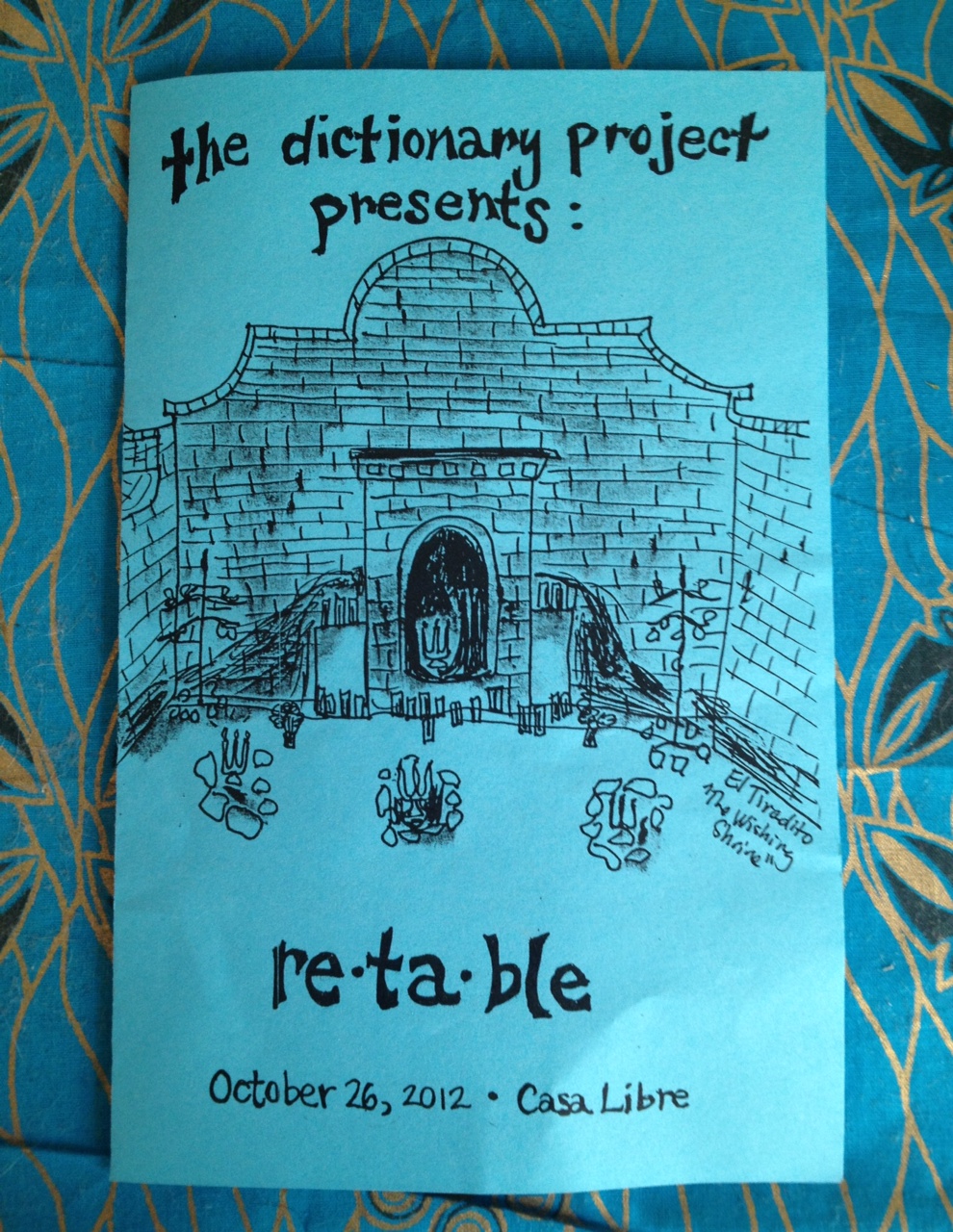
the dictionary project presents: re·ta·ble


On October 26, the dictionary project held our second the dictionary project presents reading featuring Tucson writers writing to the word: re·ta·ble. It was a truly magical, inspired and inspiring evening, hosted at Casa Libre. We constructed an altar in honor of the word, and the readers offerings were poignant, funny, smart, and beautiful. It seems appropriate in this time of harvest and of giving thanks to offer these readings to those of you who could not be with us in person on that evening. Please enjoy these offerings of words and ideas as you consider what people, talismans, gifts are on your own retable.


re·ta·ble  (ˈrē-ˌtā-bəl)  n.  [Fr., contr.  <  *reretable; rere (see REAR) + table (see TABLE)], a raised shelf of ledge above an altar for holding altar lights, flowers, etc.


A million thanks go to Casa Libre Assistant Director Tc Tolbert for recording and uploading these readings so that we can continue to enjoy them.


Leave a comment

Filed under the dictionary project presents

third

Bones of Magalonyx Jeffersoni, James Akin after a chalk drawing by W.S. Jacobs.


Fittingly, our third post for nonfiction november is for the word third. B.J. Hollars offers his interpretation below. I first became familiar with B.J.’s writing when I wrote a review of his book Thirteen Loops: Race, Violence and the Last Lynching in America. There and here, I appreciate his attentiveness to history, all of history, and the complicated dynamics existing within people in positions of power.


1third  (thərd)  adj :  next after second  —  third or third·ly  adv.


The Third


He was the third, but he was also the first.

The first to press ink to parchment and remind men they were equal.

The first to inform a king across a sea of his irrelevance.

Declarations were made, charges levied, but Thomas Jefferson—seemingly so concerned with the future of a democracy—was concerned also with the mysterious bones unearthed in a Virginian cave.

He was the third, but he was also the first to hold those bones and think: I hold in my hands a monster.

And he was the first to build those bones into a pride of giant lions thundering across the American landscape.

He was the first to designate a room in his White House for bones.

The first to fill the hallways with the corpses of unknown creatures.

I will authorize the Louisiana Purchase, he thought, and then I will return to the bones.

He was the first to fight the French on their theory of degeneracy, which claimed Old World creatures superior to the third-ranked runts born of American soil.

And as a result, he was the first to order the slaughter and transportation of a monstrous moose to prove to the French that America’s beasts were born better.

But.

He was also the first to get it wrong.

The first to dream too hard for too long and make a monster out of a megalonyx.

The first to hold those brittle bones in his hands and think he had a beast.

He did not.

(What he had was a giant sloth).

But Jefferson had dreamed a creature into creation he called “Great-claw,” and though the giant lion did not exist, when Jefferson held those bones in the East Room of the White House, he confused a monster for a miracle.

This from the man who once confused “all men are created equal” with “all white men.”

Who wrote of “unalienable Rights” (but only if you were white).

He was the third to overlook these contradictions.

The third to sound the call for liberty, while fitting shackles to feet and fists.

What he needed, Jefferson knew, was a monster bigger than the one he’d helped create.

A giant lion, he thought, will surely eat this wolf.   

Slavery, Jefferson once claimed, was like holding a wolf by the ear.  And though he held tight to that wolf, he knew not how to release it.

Jefferson also held tight to his giant lion, and though science could not support the stature of the creature, he believed in it all the same.

He believed because he needed to.

Because America needed a giant lion to ensure its dominance.  Because trade routes were at stake, and we could not be not be seen as degenerate.

He was not the first or the second to make a mistake, but the third.  And his mistake was perpetuated by the fourth and the fifth, and on and on until the sixteenth took Jefferson’s declaration as truth and ordered emancipation.

The sixteenth released the wolf’s ear and the wolf killed many people.  Boys in blues and grays poured down hills and soaked into the land as if this, too, was not proof of degeneracy.

The wolf, sometimes, took the form of a gun or a bayonet or dysentery, but mostly it just remained a shadow.

When we speak of the wolf and the giant lion, only one ever existed.

But when America needed a monster, Jefferson held firm—one hand tight on the ear of an impossible wolf, the other on an impossible claw.


B.J. Hollars is the author of two books of nonfiction, Thirteen Loops: Race, Violence and the Last Lynching in America—the 2012 recipient of the Society of Midland Author’s Award—and Opening the Doors: The Desegregation of the University of Alabama and the Fight for Civil Rights in Tuscaloosa forthcoming in 2013. His short story collection, Sightings is forthcoming next year from Indiana University Press. He teaches creative writing at the University of Wisconsin-Eau Claire.


This word and definition was taken from a 2004 copy of the Merriam-Webster Dictionary

1 Comment

Filed under nonfiction november

lump·y

 
We are continuing with nonfiction november here at the dictionary project, and I’m so pleased to share with you today the words of Karinya Funsett-Topping. There is so much to appreciate in Karinya’s writing, but I think what I admire most is the way her wit and humor serve to enhance the poignancy and depth of all that she chooses to write about. Please enjoy her piece on lumpy.


lump·y  (ˈləmpē),  adj.  [LUMPIER, LUMPIEST1.  full of lumps: as, lumpy pudding.  2.  covered with lumps; having an uneven surface.  3.  rough: said of water.  4.  like a lump; heavy; clumsy.


“Losing both of your parents when you were just a child – how was that for you?” –asked, mid pap smear, by a health care professional. 
 
 
The nurse practitioner with frizzy red hair and a last name that sounds like a first name uses both hands to palpate my chest as I stare at the inspirational images tacked up beside the exam table. There’s a woman lacing up tennis shoes, a bald head, lots of pink ribbons, a race number from a marathon. I look at them and think to myself, as I often do, Do not cry. Do not cry.
 
 
“In dense breasts, some lumpiness is to be expected,” she says, fingers still moving in the clockwise motion that all the self-exam guidelines suggest. “Soft lumps are usually fine.”
 
 
I nod. I do that uncomfortable half smile one does when there’s not really anything to smile about.
 
 
“Think about homemade mashed potatoes,” she says. “If you’re checking yourself and you feel something other than a potato lump – like a hard pea that got mixed in there – then that’s when you should worry. That’s when to call us.”
 
 
I saw her a few more times at the university’s campus health center over the course of my undergrad & grad school years. I heard the mashed potato analogy most often, but sometimes she mixed it up: one year I was advised that it was fine if my breasts felt like oatmeal, but I should watch out for the raisins.


I was eight when my mom came home with her breast cancer diagnosis. I might have been seven, or nine: at this point there is no one with a reliable memory left to ask. Whenever it was, she was too young to have her concerns taken seriously, and by the time her illness received a name, it was too late. No longer just dealing with a lump, she tried it all. There was the surgery that removed the offending tissue and replaced it with an implant that caused her almost as much pain as the cancer itself.  (“I’m sorry,” I remember her saying as we left the office after her post-surgery check-up. I had stood in the corner as the doctor unwrapped her; green and yellow bruises and stitches, the incision site still fresh and raw.  “You probably shouldn’t have seen that.”) There were chemotherapy sessions where we sat in a big room with other sick people and half watched hockey games on the television (we hated hockey) and there was the aftermath at home when the basement was the one safe refuge from the sounds of my mother throwing-up in the sink. There were the radiation treatments and technicians in lead aprons and that big built-into-the-floor scale at the nurses station that both intrigued and terrified me (I was not a small child) with the numbers it displayed. There were special diets that came and went, when eating was an option for her at all (a plum upon waking, then nothing else for at least an hour). There were frequent trips in the family station wagon to the local natural health store, which resulted in an entire kitchen cabinet being devoted to shelf after shelf of vitamins, teas, and shark cartilage capsules (contrary to the pop-medicine wisdom of the early 1990s, sharks do, in fact, get cancer).  And finally, there were the doctor-prescribed pills that were burning through our savings account and not doing a damn thing else.
 
 
Sometimes thinking about my parents (my father would succumb to cancer too, a few years after my mother did) is like watching a movie without the sound. The images are vivid. The cinematography is great. The actors are beautiful, even when their hair has fallen out and their costumes hang off their skeletal frames. But there’s no sound, and no director’s commentary available to explain the causes or motivations, or to address the why her? question that will linger on, unanswered, forever.
 
 
The doctors said my mom’s tumor had been in there, growing, for years before there was a noticeable lump; probably even while she was breastfeeding my younger sister. Some days, I look down at my son as he sleepily nurses and silently plea to my chest, please do not betray me.


I am always watching out for raisins.


Karinya Funsett-Topping has been, at various points, a book reviewer, bookseller, arts desk writer for a newspaper, literary journal editor, and chief bedtime story reader. She graduated magna cum laude with a BA in Creative Writing (fiction and nonfiction) in 2005 and an MFA in Creative Nonfiction in May of 2008, both from the University of Arizona. She now works as an editor and lives in Michigan with her husband and two children. She really isn’t always as serious as this piece makes her seem.

Leave a comment

Filed under nonfiction november

broad


Courtesy of Isabella’sArt, Etsy.


For our first guest post of nonfiction november, we are featuring the words of contributor Allie Leach.  Allie takes a zany approach to nonfiction. One of the things I appreciate most about her as both a writer and a human is her willingness to try new things, to ask lots of questions, to seek out those tiny mouseholes where stories reside. Before I met her, she was described to me as this woman who went into college classrooms dressed in a panda suit, you know, to see what happened. Please enjoy her piece on the word broad.


Gene Kelly, “Broadway Melody,” Singin’ in the Rain


broad  (brôd), adj.  [ME. bord; AS. Brad; akin to G. breit],  1.  wide; of large extent from side to side.  2.  having great extent or expanse; spacious.  3. extending about; clear; open: as, broad daylight.  4.  open to the sight; obvious: as, a broad purpose.  5.  strongly marked: said of dialects or accents.  6.  outspoken; unreserved: as, a broad statement; hence, 7.  ribald: as, a broad joke.  8.  all-inclusive; tolerant; liberal: as, he takes a broad view of the matter.  9.  extensive; general: as, in a broad sense that’s true.  10.  main; essential: as, in broad outline.  11.  Spoken with the tongue held flat and low in the mouth and the oral passage wide open, as in father: the current phonetic term is open.  adv.  in a broad manner; widely.  n.  1.  the broad part of anything.  2.  [Slang], a woman or girl: a vulgar term.


Photo by JPinlac, Flickr


Not So Practically Perfect on Broadway


On our first date, about seven years ago in Indiana, my husband and I watched the movie, Mary Poppins. This seems random at first, yes, but we had both grown up with this movie.  At a party about a month before, we were absorbed in one of those great conversations where you realize you have something strange and wonderful in common with another person. And the tie that bound just happened to be, well, Mary Poppins. Still new to each other, we coyly poised ourselves at opposite ends of the couch, and not only watched the movie, but, being the nerdy English majors that we were, dissected the lyrics. If a stranger were eavesdropping, they would’ve thought we were munching on pot brownies.

“This shit’s deep,” remarked Rick. “Think about it: ‘Let’s-go-fly-a-kite.’ The lyrics are so simple and wise. It’s telling us how to find everyday joy in our lives. It’s like…the meaning of life.” I looked at him, mesmerized and in love.

“You wanna go fly a kite?” I suggested.

Four years later, we’re in New York. Rick’s at school at Columbia University, and I’m visiting him from Tucson, where I’m also going to school. We buy tickets to see what else but Mary Poppins on Broadway. Broadway: a word synonymous with the bravado and bigness that is New York City. Full of spectacle and stars and shows. A place I’ve always dreamed of, always in broad, hyperbolic fashion. Located in the heart, the heat of Times Square, I’m surrounded by stampedes, people moving like they’re trying to get somewhere. And aren’t we all? If I panic, if I hesitate for too long, I’ll be stamped by their footprints. And so we dance past each other in a maze-like motion, until we can get through a door. A door that frees us from the ads that look like monster-sized Lite-Brites, each one shouting their show: Mamma Mia! Hair! South Pacific! Wicked! Mary Poppins! And so we escape and slip through the door, hoping for something that’s supercalifragilistic.
 
Rick and I are up in the balcony, holding each other’s hands, being all romantic, and reminiscing about the time we watched our beloved musical for the first time together.

“I kind of thought you were a freak,” I say.

“Why?” he laughs, squeezing my hand.

“Because you kept squealing and hitting the couch after we’d discuss the song lyrics.”

“I wanted to grab you and kiss you really bad,” he admits.
 
Before the show starts, the orchestra begins to play a medley of songs, some of which I recognize, and some of which I don’t. Huh, I think. The curtains rise. The actors sing a string of familiar songs like “Chim-Chim-Cheree” and “The Perfect Nanny.” But even though I know these songs, there’s something lost here. All of the actors have these booming voices that are crisp and clear, but annoyingly and cloyingly loud. What’s so great about the original 1964 movie, starring Julie Andrews and Dick Van Dyke, is that these actors’ voices—even the children who play Jane and Michael Banks—crack and quiver and warble. And because of these nuances, their voices build to create meaningful and moving songs. In this case, singing simple and small, trumps big and broad.

As Act I breezes along, the song “Practically Perfect” jumps out. Wait a minute, I think. Hold the mic-ro-phone. This song isn’t from the movie! And not only is it not from the original beloved movie, my original beloved movie, but this song…it’s…bad. Now, I know that Mary Poppins is a bit of an egomaniac. Yes, in the movie, she does have that amazing, yellow measuring tape that dubs her practically perfect in everyway, but she says this phrase lovingly and with a wink. She doesn’t sing a whole song about why she’s so goddamn perfect. That’s not true to her character; she’s so much more refined than that. Even so, in this new version of the musical, Mary gloats, “I’m practically perfect from head to toe. If I had a fault it would never dare to show. I’m so practically perfect, in every way.” Where’s the humility, the honesty, vulnerability? It’s in our flaws that we’re perfect, and the real Mary Poppins knows this. Heck, she’s dating Bert, who’s a poor but wonderful chimney sweep and street performer. And then she goes on to teach the children about unattainable perfection: “By the time I leave here, you both will be the same. You’ll be practically perfect.” Oh, Lord. Those kids are going to grow up and become two highly dysfunctional adults.
 

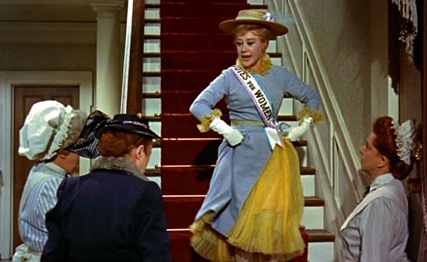
“Sister Suffragette,” Mary Poppins


By Act II, it’s not just me who’s an unhappy theatergoer, Rick is visibly peeved, too. We both roll our eyes at each other and shift around in our seats. And we refuse to clap after the songs. This is musical warfare, and we’re on the opposing side. I squint my eyes, trying hard to read the program in the darkness, and realize that the song “Sister Suffragette,” one of my favorites, has been excluded. This song highlights Winifred Banks, Jane and Michael’s crusading and empowered mother. Keep in mind that this musical is set in the early 1900’s, when women were fighting for their right to vote. And this song does a tremendous job expressing the vive and vigor of this time period as Mrs. Banks sings: “Cast off the shackles of yesterday! Shoulder to shoulder into the fray! Our daughters’ daughters will adore us, and they’ll sing in grateful chorus, ‘Well done, Sister Suffragette!’” Not only are these lyrics poetic and well written, they’re incredibly poignant. This song has instead been replaced with the song “Being Mrs. Banks,” with lyrics like: “And now although you’re lost, it’s time that we closed the ranks. I’ll fight for the man who needs freeing. The real you no one is seeing.” Now, I have to cut the songwriters—George Stiles and Anthony Drewe—some slack here. These are some great lyrics, but this is a completely different Mrs. Banks from the previous song. Instead of fighting for women’s rights, she’s fighting for her needy husband.

The lyricists of the original 1964 Mary Poppins were two brothers, Richard and Robert Sherman, born in the 1920s to Russian-Jewish immigrants in New York City. The duo went on to win two Academy Awards for Mary Poppins. The Sherman Brothers also wrote songs for other classic Disney hits, such as The Jungle Book, Chitty Chitty Bang Bang, The Aristocats, Bedknobs and Broomsticks, Charlotte’s Web, and The Many Adventures of Winnie the Pooh. And for their work, they won nine Academy Award nominations, two Grammy Awards, four Grammy Award nominations, and twenty-three gold and platinum albums. In short, these bros had mad skills and major street cred. In all seriousness, though, the lyrics and songs that these two brilliant men created were full of smart, historical references, playful poetics, and touching turns of phrase. I can remember watching the movie, Charlotte’s Web, as a kid, and bawling when, as Charlotte was dying, she sang to Wilbur, “How very special are we. For just a moment to be, part of life’s eternal rhyme,” in the song “Mother Earth and Father Time.” Even now, as an adult, I listen to this song, and it gives me pangs.

Back on Broadway, Mary Poppins, Jane, and Michael head to Mrs. Corry’s sweet shop—yet another departure from the movie—where the lady sells silly words, like “Supercalifragilisticexpialidocious.” After they leave Mrs. Corry’s, they walk through a park and these dancing statues start singing “Jolly Holiday.” Granted, these details were lifted from the original book series “Mary Poppins,” written by an Australian woman named Pamela Lyndon Travers. When she emigrated to England and began writing her series of children’s novels about a magical English nanny named Mary Poppins in 1933, she wrote under the pen name P.L. Travers. Even so, seeing people dressed in tight silver body suits with spray painted faces singing “Jolly Holiday,” is almost as frightening as what’s coming up next in this remake. And what’s more, these awkward scenes replace the wonderful park outing, when the whole gang jumps into one of Bert’s paintings and are charmed by dancing penguins, the horse race, the caramel apples, and the subsequent trip to Bert’s old Uncle Albert’s place. Remember when their laughter suspends them high to the ceilings while they drink tea and sing “I Love to Laugh?”

As the disjointed story continues, Rick and I are confused when, after Mary Poppins leaves the family so that they can bond, a new nanny appears on the scene. This Nanny is Miss Andrews, who was Mr. Bank’s frightening, childhood Nanny, (though Mrs. Banks doesn’t realize this when she hires her). Miss Andrews, this super-evil Nanny, sings a new song called “Temper Temper,” with eerie lyrics like “children who lose their temper will lose everything in the end” and “you will not see your parents for quite some time” and “children who refuse to learn will not return,” a line Miss Andrews repeats three times in a row, in a cackling voice. This song was so freaky that kids were crying in the audience. In fact, it’s recommended on the official Mary Poppins Broadway musical website, that children be at least six to attend a performance, because it can be too scary for the youngins’. This song completely goes against the ethos that is Mary Poppins: joyful, humane, and life affirming.  I’m pretty sure the Sherman brothers wouldn’t approve. Although Julie Andrews, surprisingly, did. She actually praised the cast for their new interpretation when she appeared onstage during the curtain calls after a performance in London in 2005.

The musical ends with the sentimental and cheesy “Anything Can Happen,” which is full of clichés like, “if you reach for the stars all you get are the stars, but we’ve found a whole new spin if you reach for the heavens” and “anything can happen if you let it. Life out there is waiting for you, so go and get it” and “Go and chase your dreams, you won’t regret it.” The song is too general, too broad and abstract. The original movie ended with the song “Let’s Go Fly a Kite,” which, in my mind, was perfect. This song is so simple and concrete. And the act of flying a kite is symbolic to the story. Mr. Banks has finally let loose, has finally decided that life’s too short to be uptight and strict. And so he does something simple and joyful: he takes his kids out and they fly kites. What could be a better, more lasting image than that?

In the hubbub of the finale, Mary Poppins reappears, but this time, she’s flying high across the audience, strings attached, holding her famed, black umbrella. The parents and kids and, well, everyone it seems except for Rick and me, are ooo-ing and ahhh-ing and chanting, “ANYTHING CAN HAPPEN IF YOU LET IT!” The crowd roars with applause as the actors give their bows, and yet Rick and I are in our own, disenchanted world. Our arms are crossed, our fists clenched tight. We will not clap for this, we’ve decided. We leave early, as the actors come out for their final encore, and we trudge like Eeyore down the red, carpeted stairs. We walk through the theater’s corridors and can hear the muffled applause and music fading away. For a moment, New York City seems as quiet as a secret. This sensation, though, only lasts for a moment. As we push the theater doors open, we’re thrown into the rainbow fluorescence of Times Square. It’s dark outside and the scene has shifted. The streets are still crowded with people, but I’m not overwhelmed anymore. I want to be a part of it.


Allie Leach lives in Tucson and works at The University of Arizona Poetry Center. Her work has appeared in South Loop Review, Hot Metal Bridge, Diagram, and Tucson Weekly. When not at work on essays, she’s plotting to become a professional tap dancer and collector of miniatures.


1 Comment

Filed under nonfiction november