Tag Archives: dictionary project

saint

saint (sant), n. [ME.; OFr. seint, saint; L. sanctus, holy, consecreated],  1. a holy person. 2. a person who is exceptionally meek, charitable, patient, etc.  3. [S-], a member of any of certain religious groups calling themselves Saints. 4. in certain churches, a person officially recognized as having lived an exceptionally holy life, and thus as being in heaven and capable of interceding for sinners; canonized person.    adj. holy; sacred; blessed  v.t. to canonize; make a saint of. Abbreviated St., S., s.
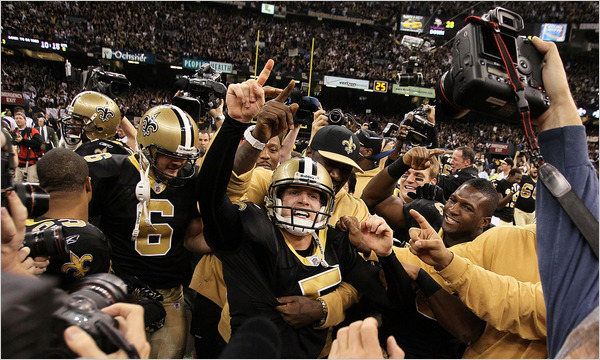

This is a special post, not one that follows the normal rules of this blog. I felt I had to weigh in on the New Orleans’ Saints victory over the Minnesota Vikings today to win the N.F.C. Championship just a few hours ago.

I am not a big football fan. I enjoy watching the game but only in the company of others. As a New Orleans native, I became quite used to the Saints losing year after year. When others were watching, I would watch too and cheer and ultimately, be disappointed. Over the past few months, I have watched the Saints both win and lose, but I have watched them play with diligence and commitment and a spirit of camaraderie. I have also watched my friends and strangers from my hometown become overcome with excitement at having a winning team, at having something from our city to believe in.I have seen the Superdome full, the fans decking themselves out in elaborate black and gold gear. I have seen post after post on facebook, friends echoing their enthusiasm about the team winning.

New Orleans isn’t always united. The town had its share of problems even before the levees broke–a failing education system, deep scars and open wounds of racism, corrupt politicians, disintegrating wetlands that make the city even more unstable. But the thing is, the city is also a place of deep spirit, of commitment, of passion that cannot be squelched, of celebration that will not be denied. And we have seen that in the way its citizens–and many people from around the country–have rallied around the Saints this year.

The truth is: We needed this. It has been a long long road since Katrina. We watched our city, our neighborhoods, our blocks and our homes covered with water. This was about more than a football team. This was about more than a championship game. Today was about feeling proud of our city and ourselves. I’m not saying that winning this championship game or even winning the Superbowl, if that’s what comes to pass, solves the city’s problems. There is still so much to rebuild. There is a deep disparity of wealth. There are problems that will not be erased without much work and dedication. But when I watched the Saints win today, I kept thinking of the song “Do You Know What It Means To Miss New Orleans?” I thought of it in terms of this game. I don’t think that everyone knows what it means to see a team that has never, in its 43 year history, made it to the Superbowl  realize that dream. I don’t think everyone knows what it means to see the Superdome–a place ridden with memories of despair from when it was a shelter for Hurricane victims–turn into a place of redemption and hope.

Perhaps some might say that I am blowing this out of proportion, that this is afterall just a sports game, that it is made up of overpaid players and by people who want to make a ton of profits. All I can say in rebuttal is how it felt today to see the Saints win. I, a person who doesn’t really care about sports, was overcome with a spirit of joy as I watched fans in the dome hug each other and confetti fall from the ceiling. I was unable to get through to my parents on the phone for an hour because the 504 lines were all tied up, everyone was calling each other to scream into the phone, to cry, to celebrate.

I will argue with anyone who says this was just a game. Today provided the citizens of New Orleans with fulfillment of a long awaited dream and with a chance to showcase our city and be proud of one another. No matter what our differences, today we all have a team we can believe in, and for the moment, that feels like enough.
Leave a comment

Filed under weekly words

fustigate

So, I am working on finalizing a draft of a long writing project. Although there is much work to be done, I feel proud of myself for all the work I’ve put in.

And I was thinking of starting to go to Bikram Yoga–healthy body, healthy mind, healthy heart.

In this spirit, I sat down to pick out the new word. I actually felt a sensation–a sort of warmness, a good wholeness sort of vibe–shooting up my chest as I flipped through my dictionary. This sensation grew as I moved my finger across the page. I opened my eyes and found… fustigate. Fustigate: to beat with a stick. Are you fucking kidding me? I’m trying to do good things for myself and in my warm and fuzzy mindset, the word the universe sends me to is one about being beaten with or beating someone with a stick. Okay. Well, I am not ready for this post, clearly. To be continued…

Back…It has been a few weeks since I picked that word.

fustigate (fus’te’gat’), v.t. [FUSTIGATED (-id), FUSTIGATING], [<L. fustigatus, pp. of fustigare, to beat with a stick < fustis, a stick], to beat witha  stick; cudgel.

objects used: bastinado, bat, belt, billy, billyclub, birch, blackjack, bludgeon, cane, club, cosh, ferule, mace, nightstick, paddle, rod, sap, shill, shillelagh, spontoon, stick, switch, truncheon

action taken: bang, bash, bat, batter, belt, box, break, bruise, buffet, cane, castigate, chastise, clobber, clout, club, collide, crush, cudgel, cuff, drub, flaggelate, flail, flax, flog, hammer, hide, hit, knock, lambaste, larrup,  lash, lather, leather, lick, maltreat, mash, maul, paddle, pelt, pound, pummel, punch, punish, put over one’s knee, ram, rap, slap, slug, smack, sock, spank, stike, sawt, tan, tan one’s hide, thrash, thresh, thump, thwack, trounce, wallop, whale, whelp, whip

objects receiving action: arm, brow, cheekbone, eye, ear, elbow, thighs, knee, foot, nose, organs, crown, forehead, temple, ankle, finger, wrist, shin, back of the knee, back of the head, back of the back, jaw, head, nails, neck, clavicle, breast, chest, abdomen, hipbone, pelvis, toe.

result: broken, fractured, bruised, bent, torn, lacerated, bleeding, scarring, ripped open, searing, gone to pieces, fragmented, injured, dismembered, mangled, mutilated, pulvirized, riven, ruptured, separated, severed, shattered, shredded, slivered, split.

reasons given: so he can learn a lesson lesson, to knock some sense into her, so she’ll know better next time, tough love, to know life isn’t easy, to not mess up, screw up, fuck up again, he had it coming, she had it coming, she/he/they should have known better, he’s a fuck up, she’s worthless, if he wasn’t around, my life would be easier, she makes me do it cause she makes me so angry, he deserves to be taken down a notch, she knew I was like this when she got together with me, because I can.

http://www.abanet.org/domviol/statistics.html

Leave a comment

Filed under weekly words

synthetically

syn·thet·ic·al·ly (sin-thet i’k’l’i, sin’thet ik-li), adv. In a synthetic manner; through synthesis

thus:

syn·thet·ic (sin-thet ik), adj. [Fr. Synthetique; Gr. Syntetikos], 1. of, involving, or using synthesis: opposed to analytic. 2. produced by synthesis; specifically, produced by chemical synthesis, rather than of natural origin, hence 3. artificial; not real or genuine: as, synthetic enthusiasm. 4. characterized by the use of inflectional adjuncts, or affixes, to express syntactical relationships: opposed to analytical. n. something synthetic; specifically, a substance produced by chemical synthesis. –SYN, see artificial.

Truths:

I picked this word about a month ago.

I have been in the throes of a major project which has demanded my attention and moved to the top of my priorities.

I also just felt stumped. What a cool word, but for some reason, I couldn’t figure out what to write.

I do want to move on and in order to move on, I have to have a post about this word. That’s the rule.

So here is my post about this word.

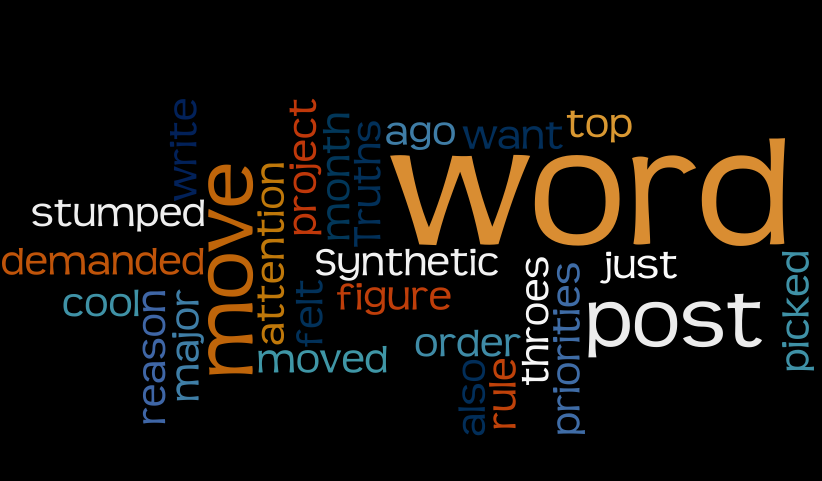
When I put the words above into wordle.net (which, by the way, you have to check out if you haven’t already), I got the an image. Here you go, my random thoughts synthetically created into this image:

In addition, here are images that came up on the first page when I did a google search for synthetically, synthetically arranged:

Leave a comment

Filed under weekly words

pinaceous

DouglasFir

pi·na·ceous (pi-na-´shes), adj. [< pine (a tree) + aceous], of the pine family of trees, including the pine, cedar, fir. Etc.

When I was three years old, I had a violent allergic reaction to our Christmas tree. My cheeks swelled and red raised welts began to pop up all over my body. My mom took me to the doctor. My dad took our tree to the curb. And they both remembered never to get a White Dutch Pine again.

I don’t actually remember that Christmas—ironic, considering that I’m fairly certain I felt miserable. All my memories of Christmas trees—from picking one out, to tying it to the car, to decorating it in our living room—are fond ones. I remember the fresh smell of the needles, like cool air and earth. I didn’t even mind the sticky sap on my fingers. The three of us piled in the car to get the tree a week after Thanksgiving—first at Christmas tree farms and then at Home Depot. We enjoyed the tree in its natural state for a week or so before decorating it.

Then, one Friday evening, Dad would begin handing an indeterminable number of cardboard boxes down from the attic. As we unpacked them, we discovered packages of white and colored lights and shiny, red globes. We found handmade reindeers and soldiers made out of glued and painted clothespins. When I turned ten, we had to start to consider whether we needed to put all the ornaments we had on the tree. We had accumulated so many. One year, I was obsessed with trains and my dad spent all Christmas morning after I opened my new motorized trainset setting it up so it twisted and turned through the pretend village around the bottom of the tree.

Twice I remember us coming home to the tree toppled over on the floor. We set it straight again, swept up the broken shards of ornaments and moved on.

The decorating was always my mom’s domain. She decided when I was in high school that she wanted something more from our tree. No longer would a hodgepodge of ceramic angels and homemade stars do.  Our tree would have a theme, would have a design aesthetic. First, the entire tree was covered in crimson and gold. When I was a senior, my class color was blue, and she filled the tree with silver and royal blue ribbon and orbs.

My mother grew up in rural Louisiana, and each winter, her family would visit a local wooded area to cut down their long-needle pine tree. Although lush and nice to look at, the type of tree they always got had slippery needles. The ornaments didn’t hang. One year, she decided to speak up.

“There are other kinds of trees,” she told her parents.

“No, this is the kind we’ve always had and this is the kind we are going to keep having.” There was an attention to detail and a need for consistency in tradition.

That was the end of the discussion.

So instead of a tree covered in sparkly ornaments, they had a tree covered in silver tinsel and popcorn garland and candy canes.

“They saw it as pretty and what you needed to use, and I saw it as limiting,” she told me later.

Pine trees are evergreens. Their literal quality of being green forever, of living for so long, make them ideal symbols for the holiday that celebrates the birth of the God that would eventually rise from the dead. But these trees were used to celebrate winter and the solstice long before Christ or the celebration of his birth. Pagaans, however, didn’t cut down their trees. As the idea was to celebrate the earth, destroying nature as a way to honor and revere it didn’t really work. They picked up fallen branches or cut clippings to hang in their homes. They also adorned living trees with shiny metal in the shapes of their gods.

For Christmas Eve, we always went to my Grandma O’Neill’s house, and when we got there, the tree was bare. I always thought it was such a pity to not have a decorated tree until Christmas Eve, to not be able to enjoy it except for that one day (since Grandma took the tree down the day after Christmas). But Grandma didn’t want the tree to be decorated until her family was there to do it. We each picked the ornaments that we wanted to put on and visited the tree one at a time. There was a sort of precision about the process. There was a sort of prayer in the slow ritual. After the tree was decorated, we enacted a live nativity. A small homemade manger was placed under the tree. The grandchildren, dressed as angels and Mary (because by the time I was old enough to participate, all the boy cousins were too old), stepped soberly down the carpeted living room floor while Grandma read from Luke. Then, whoever had the privilege to play Mary that year, placed the small baby doll Jesus under the tree.

Christmas trees take about eight to ten years to mature before they reach a size large to fit in someone’s living room. The Douglas Fir, from the pinaceae family and one of the most popular kinds of Christmas tree, can live for thousands of years rooted in the ground.

I have mixed feelings about Christmas trees. Trees are steady things. They are constants. Instead of honoring their longevity and their right to grow where they do, we edge them. We cut them down. We clear land to build. I understand that cutting down trees or raising trees merely to harvest them is not ideal. However, I also find comfort in the tradition and solace in the smell of fresh pine in the house during the holiday season. Most cities have begun to institute recycling programs where trees are used to stop erosion or are recycled into mulch. I wonder, does this make up for cutting them down in the first place? I also wonder at the movement of nature indoors. We have houseplants to admire and to make for cleaner air, but we don’t always take the time to walk around outside. We bring trees into our living room without always spending moments wandering amongst them.

In his poem Hoopoe, Mahmood Darwish writes, “We didn’t ask why man is not born of trees so as to be reborn in spring.” I don’t know what he is trying to say with this line, but I love the phrase “born of trees.” Maybe because I feel that way sometime. Our ancestors buried in the ground fertilize the soil for the trees. The trees send oxygen into the air that allow us to breathe. And breath is what gives us life. So maybe we are born of trees.

One year when I lived in San Francisco, my parents were visiting for Thanksgiving. Before they left, they bought me a Christmas tree. We bought it from a place that employed people in recovery for addiction. They carried it up the stairs of my Victorian and put it in the corner of my living room. My roommates and some friends and I decorated it one night, standing on chairs to put the lights up high and to place an angel at the top. The dark green of the tree blended with the ornate gold and sage green wallpaper covering the walls and ceiling. When our gas fake-wood fireplace was on, I felt like I was home instead of in San Francisco amongst a surrogate family.

After Christmas came and went, the tree stayed. It became a New Year’s Tree. Then a Mardi Gras Tree. And before we could entertain the possibility of it becoming an Easter Tree, we hauled it downstairs, leaving a thick trail of needles to vacuum up. And the corner of the room no longer looked like the same corner. There was something missing in the tree’s absence, always. We tried to put a bookshelf there, and then the table with the television. But from then on, the only thing that would ever seem right there was that tall tree.

Leave a comment

Filed under weekly words

coke

coke (kok), n. [north Eng. Dial; prob. < ME, coke, a core < IE. Base *gel-g, rounded, ball-like, etc.], coal from which most of ht gases have been removed by heating: it burns with intense heat and little smoke, and is used as an industrial fuel. V.t. & v.i. [COKED (kokt), COKING], to change into coke.

He didn’t like the way his clothes always smelled like sulfur or that his wife would scrub and scrub without ever getting his shirts or denim overalls completely clean. He didn’t like the way the gases made him hack or the feeling of needing to preserve air, to breathe shallow and infrequently. But he liked the coolness and the darkness. He liked the feeling of being in a space that not everyone was allowed in.

He had been working the mines for twenty years now, like his father and his father’s father before that. There wasn’t ever any thought of what else he would do. There wasn’t much else to do in Milnee and leaving wasn’t a consideration. So he went into the mines. He had heard the warnings from older miners. He had seen the way they coughed. He had visited them in hospitals with the curtain of tubing surrounding them. Problems with their esophagus. Problems with their lungs. Every breath feeling like a jagged homemade knife probing a little deeper in their chest, spreading blood and infection.

He tried not to think about it because he didn’t have any other options. Today, he was working in a very deep and narrow part of the cave. He had been lowered down, with three other miners, by sturdy yellow rope. When he looked up, the hole at the top looked no bigger than a tiny prick made by a pin. He thought of when his son was little and how he had showed them how to make a pinhole camera. He had watched as his tiny little hands fumbled with the black paper, holding his mama’s sewing needle awkwardly.

“Just a little bitty hole,” he told him. “We can always make it bigger if we need to, but we can’t make it smaller.”

The little boy’s eyebrows furrowed in concentration as he finally punched with enough power to push the needle through. He looked up tentatively.

“Like this?”

“Perfect,” he had told his son.

The little boy’s face had lit up like a firework with pride and accomplishment. Now that they had the shoebox with the hole on top, they needed to put the film paper inside and figure out what to take a picture of.

“Daniel.”

His thoughts were broken by the voice of his fellow miner.

“It’s time to move down a bit more.”

He nodded and wondered how long he had been just standing there, staring off, pickaxe by his side. Had it just been a few minutes? More? He pointed his head downward to shine his headlamp on the path he was walking and the men walked deeper into the dark. The thing about mining, he had learned, was it gave you a real appreciation for time. The time it took for this coal to form, the time it took to break it up and take it out. He wondered how many people considered that when they sat around their hearth, when they hung iron pots of stew in their coal-burning stove. This was backbreaking work but he had always been a quiet man. He liked the time to himself to think.

After the men had stopped, he took his axe and began to hit at one of the walls to his left. He could hear the clang of the axe hitting the rock and could feel the reverberations from contact through the metal to his hands. After years of this, they were much easier to take and now it was almost as if the axe was an extension of his arms. The axe itself took the brunt of the movement and by the time it got to the bones and sinews in his forearms, the small pulses were miniscule.

“You, daddy,” his son had said. “I want to take a picture of you.”

“Well, son, this isn’t like an ordinary picture. Whatever you take a picture of has to stay still for a real long time.”

He could see the boy reconsider and try to think of something else he might like to preserve on film.

“How about the tree out back?” he suggested.

He told him that sounded like a good idea and they set up the box on the back porch. It was mid-day and he figured there would be plenty of light left to capture the shot.

The father and son left the box there and returned for it in the evening. When they went to look at it, they could see the magnolia tree, tall in the distance. But they can also see the trail of leaves that had begun to fall. They were like streamers, like bits of light coming down throughout the image. It reminded the father of when he was little and used to lie out at night with his brothers watching shooting stars flash through the dark blue sky.

“It doesn’t look like a tree at all,” the boy said.“It looks like something on fire.”

Leave a comment

Filed under weekly words

the reddist

missionmural

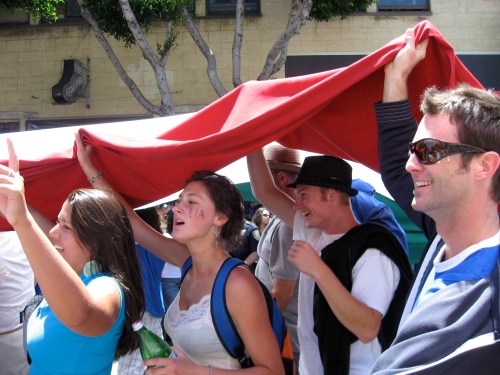
WorldCup2006-Italy Wins

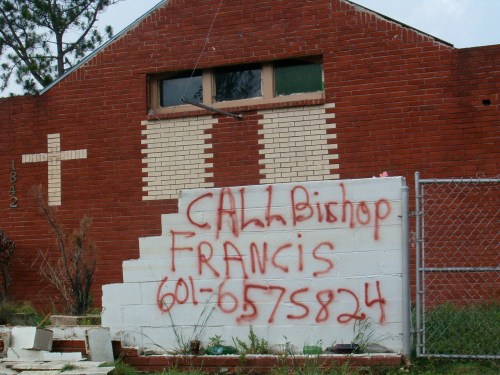
9th ward

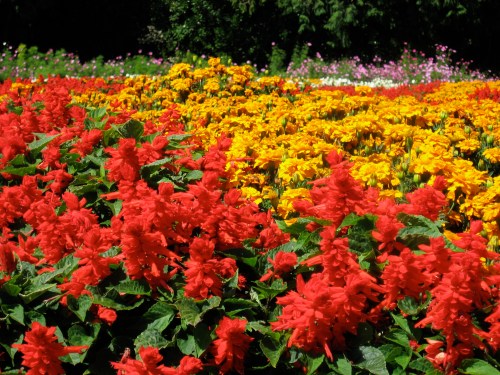
Botanical Gardens San Francisco

red (red), n. [ME, rede, redde; AS, read; akin to G. rot, rufus, red, rubere, to be red, etc. (cf. RUBRIC, RUBY, RUBCUND, ROUGE, etc.)] 1. a primary color, or any of a spread of colors at the lower end of the visible spectrum, varying in hue from that of blood to pale rose or pink: see color. 2. a pigment producing this color. 3. [often R-], [sense a & b from the red flag symbolizing revolutionary socialism], a) a political radical or revolutionary; especially, a communist. b) a citizen of the Soviet Union. c) pl. North American Indians. 4. a red object, as a red space on the board or wheel used in various games of chance, a red chessman, or a red piece in checkers. adj. [REDDER (er), REDDEST (-ist)], 1. having or being of the color red or any of its hues. 2. Having red hair. 3. Having or considered to have, a reddish or coppery skin, as the North American Indians. 4. [often R-], a) politically radical or revolutionary; especially communist. b) of the Soviet Union.

in the red, 1. losing money, as in business. 2. in debt.

paint the town red, [Slang], to have a noisy good time, as by visiting bars, night clubs, etc.

see red, [Colloq.], to be or become angry.

For this week, I asked some writer friends if they would like to contribute a paragraph about red, whatever that meant to them. My friend Debbie submitted hers.

Red is the succulent calyx of hibiscus, the paper-like petals of a poppy flower, the embarrassing and always surprising dog penis. Red is the fire truck nail polish I’ve never had the guts to wear. It is the color of my grandmother’s lipstick, given to me in a ziplock after she died. Red, in several different shades, were the turtlenecks my mother bought me when I went into 7th grade. Red was my face, standing in front of the dressing room mirror at JC Penny, terrified of my reflection, ashamed to take up too much space–as though the red of my shirt was screaming. “You look good in red,” I remember my mom saying, leaning against the doorway, “Red is definitely your color.”—Debbie Weingarten

Red is the color of embers. The hot burning coals at the bottom of a fire tinge with red. It is the color of anger and of inspiration. Bored with my desk a year ago, I covered its bright white with a deep tomato red. Red and green color blindness is the most common kind. No sunsets. No grass. Red ribbons have become synonymous with the fight against AIDs. Red roses represent love. Red is one of my mother’s favorite color and she looks striking in it, her stark white hair and a red blouse. Red is the color of the blood coursing through my veins. Red is the color that shades my insides when I am frustrated. I remember feeling shy about wearing red when I was younger because I learned somewhere along the way that red was the color prostitutes preferred. Red lips. Red slips. The Red Light District. Red is a shock of a color. Red was the color of the dress I wore to my friend’s ball. I was sixteen and the gown was long and satin with flowers on it. I used my mom’s red lipstick and I felt beautiful. A search for red leads to Red, a digital camera company; Joinred, the fight for Aids awareness; Red Bull energy drink; The American Red Cross; The wikipedia entry for “red.” I remember the joke from when I was little, “What is black and white and red all over? A newspaper.” It took me a long time to get that joke, so embedded in my mind was the visual of “red” that I didn’t even consider “read.” – Lisa O’Neill

What is “red” for you?

Leave a comment

Filed under weekly words

redder

IMG_9201

IMG_5580

IMG_8688

muglegs

IMG_8177IMG_8647IMG_8586IMG_8053

Leave a comment

Filed under weekly words

red…

the word of the week.

more soon, but for now:

Leave a comment

Filed under weekly words

shrike

shrike01


shrike (shrik), n. [<AS. (via deal.) scric, bird of shrill cry < same base as shriek with reference to the cryle, any of several shrill-voiced birds with hooked beaks, gray, black, and white plumage, and long tails: most types feed on insects, some on small birds, frongs, etc: also called butcher bird.

I have been surprised at the accessibility of the words so far. They have all been words that I know, that easily conjure up discussion of concepts and issues. But for this week’s selection is a word I did not know and has a definition of something I was unaware existed.

So, the shrike. The shrike is a kind of bird. I love birds. I have come to appreciate birds even more since I moved to Tucson. Tucson is full of all kinds of birds. There are hummingbirds, woodpeckers, quail, cactus wren, crows, pigeons, and many more. Although the great grey shrike and the loggerhead shrike do live in the United States, they tend to stay in northern states. So, to my knowledge, I have not seen a shrike here in Arizona.

loggerhead shrike

Shrike are also known as “butcher birds,” named for the way they feed. They tend to spend most of their day resting on or near objects with sharp and pointy edges: barbed wire, branches with sharp ends, chicken wire. Once they have their prey, they impale the creature while they chew off bite-sized chunks. So ostensibly, they are eating the, for example, lizard, while it is still alive and writhing in pain. Peaceniks they are not.

Kaweahoaks.com calls shrikes “trim, businesslike birds.” I’m not really sure why. Is it because with their black, white and grey plumage, they could look like they were wearing a business suit or tuxedo? Or is it because they mean “business,” they are “taking care of business,” (insert other cheesy saying here) when they hunt and eat their food?

Shrikes are typically monogamous and, since they are territorial, they tend to defend their area in pairs. When the male is courting the female shrike, he does a dance that resembles the way he eats, by mocking how he impales creatures and offering her a piece of the invisible food. Fake hunting? Offering food that doesn’t exist as a form of courtship? Well, there are still shrike around so I guess it works for them.

Shrike556-CQB-LMG-003
A quick Internet search revealed that the shrike is also the name of a semi-automatic machine gun, i.e. the Shrike 5.56—a patented “drop-on” belt-feed upper receiver assembly that fits all MIL-SPEC AR15/M16/M4 type lower receivers. I do not know what any of that means. The picture of the gun makes me think it is a pretty serious weapon. In an attempt to learn more about the weapon, I did further searches and then, I got worried. Were my google or facebook ads suddenly going to offer me details about local gun shows or on how to join the NRA? Would someone doing a search on my computer find in my history the word “machine guns” and suddenly become concerned? That’s so unlike her.

But more disturbing than this was the pure amount of information about machine gunnery on the Internet. I don’t like guns at all and don’t think that machine guns should be available to civilians. I would expect detailed information about handguns, weapons that many people choose to have in their home for protection (or sometimes, for if they need to kill someone). But machine guns? People talking about specifications and release and action are using terminology to cover up one idea—violence. No matter what you terms you used, machine guns are manufactured to kill. And they are not rifles, meant to be shot at deer or ducks. Machine guns are meant to kill human beings.

Typically, these guns would be employed at war. And through the military, I would imagine you are taught the intricacies of the weapons you will use. I can understand that military personnel might do some searches to learn if there is more information out there about the guns they will use. Other than that, all of this information on the web is for gun enthusiasts. I think gun enthusiasts fall into categories. Number 1: Hunters, who obviously use guns. Number 2: Gun collectors, people who are curious about the history of warfare. They have may have an old bayonet, a rifle from the Civil War. They keep them unloaded in display cases next to the case with their wife’s Faberge eggs. Number 3: People who just like guns. I’m thinking number 1 and 2 would not be interested in semi-automatic weapons. They ruin their bounty, filling them with bits of shell. They aren’t old or interesting. Gun enthusiasts in group number 3 are the ones that concern me.

Why do we, as humans, like anything that is dangerous? Because it makes us feel powerful and alive. Because we like to believe that we are the only ones that will defy mortality. This is also true about guns. I would be willing to bet that people in group 3 like guns for this reason. Owning a gun makes them feel powerful. Maybe they feel impotent in their work life, their relationship, or their relationship to the world around them, but they have something very powerful that belongs to them. But there is a difference between being powerful and being brave. Guns give one person the capacity to end another person’s life. This makes the person holding the gun powerful. However, owning or carrying a gun doesn’t make a person brave even if it makes them feel that way. Ending another person’s life does not make you brave. On the contrary, most times it signals that the person pulling the trigger is operating out of fear.

Someone fears she is powerless so she fires her gun. Someone is afraid to deal with where his anger is really coming from because that would be too painful or make him too vulnerable so he fires his gun. Someone fears that if he doesn’t shoot first, he will be shot at so he fires his gun. A nation’s leader is afraid that if we don’t act first, we will be attacked so he orders the nation’s soldiers to fire their guns. A nation—told to be afraid of everything—wants to believe it is the most powerful nation in the world so its families will be safe and demands that its leaders send out the troops to fire their guns.

Fear is a normal human emotion, as is anger. It is not the emotions themselves that are problems but the way that we respond to them that makes a difference in our lives. Having protested against wars in my lifetime, I am often criticized as being “unpatriotic” or of “not supporting the troops.” I do support the troops and that is why I don’t believe anyone should be made to kill another human being. Soldiers are props in our wars. They do not know the person they are shooting, what their name is or what their family is like. Human beings—despite what we are told—are not wired for violence. When we hurt and kill other people, we suffer. There is something “off” in us from that experience.

I have talked to veterans from all different wars who are suffering with Post-Traumatic Stress Disorder. They have continuous nightmares based on what they had to do, something that is not in their makeup. I have talked to people convicted of violent crimes, who deeply regret what they did and who talk about what happened when anger mixed with a weapon—their hands, a gun, a knife. They didn’t think it was in them to do what they did.

We are good at the things that feel good to us—loving our significant other, raising our beloved children, taking care of family and friends in times of sadness and joy. These things feel good to us because they are at the core of who we are. We all have the capacity to do things that we can be proud of and harmful things, things that have the potential to hurt others. But ultimately, we have to work to be brave, despite this being a hard world, from the material we have in us and not because of what we hold in our hands.

Appropriately, the Shrike 5.56 is manufactured by a company called ARES Incorporated.  Ares is a figure from Greek Mythology. He is the son of Zeus and Hera, who, as any Edith Hamilton reader will remember, had quite the tempestuous relationship. Hera did not want to marry Zeus. For one, he was her brother. Beyond that reason, she didn’t see him as a good partner. He had swallowed his first wife and had a history of philandering. She refused him for 300 years until he came one day to her window in the shape of a disheveled cuckoo bird. She immediately had compassion for the bird, and at that moment he turned back into himself and convinced her to marry him.

Greeks used their gods to understand and explain the behavior they saw in themselves and to reiterate what was to be applauded and punished. Is it a mystery, then, that born out of this unwilling and untruthful union came Ares? Ares is referred to as the god of warfare, of bloodlust, or as Wikipedia states, “slaughter personified.” He is also considered a coward.

One version of the Shrike 5.56, made by a company named for the God of slaughter, can fire off up to hundred rounds per minute. As Ares says, the weapon “is designed for hard use” and “provides the modern operator with the adaptive firepower necessary to prevail on today’s battlefield.” I sort of feel bad for the shrike. Sure, he doesn’t employ the most fair or peace-loving techniques to capture and eat his prey. But he uses his bounty for sustenance. A bird’s got to eat. It doesn’t seem fair for his name to be given to a gun that is capable of mass slaughter.

Leave a comment

Filed under weekly words

drop

As in, I “dropped” the blog posting for last week. As in, the post “dropped” out of my head, “dropped” off my to-do list, “dropped” outside my priorities.

Last week was my first week of teaching and school so even though I picked a word, I didn’t get to posting it or to writing about it (part of this might have to do with the fact that that the word “drop” has 15 definitions). But here it is, the word of last week:

drop (drop), n. [ME, droupen; ON, dropa; akin to G, tropfin toften; for the base, see DRIP], 1. a small quantity of liquid that is somewhat spherical or pear-shaped, as when falling. 2. a very small quantity of liquid. 3. pl. liquid medicine taken in drops. 4. a very small quantity of anything. 5. a thing like a drop in shape, size, etc. as a pendant earring or a small piece of candy. 6. a dropping; sudden fall, descent, slump, or decrease: as, a drop in prices. 7. anything that drops or is used for dropping or covering something, as a drop cutrian, a drop hammer, a trap door, or a slot for depositing letters. 8. the distance between a higher and lower level; depth to which or distance through which anything falls or sinks. 9. in football, a drop kick. v.i. [DROPPED or, occas., DROPT (dropt), DROPPING], 1. to fall in drops. 2. to fall; come down. 3. to sink to the ground exhausted, wounded, or dead. 4. to fall into a specified state; pass into a less active or less desirable condition: as, she dropped off to sleep. 5. to come to an end or to nothing: as, let the matter drop. 6. to slump; become lower or less, as temperatures, prices, etc. 7. to move down with a current of water or air. 8. to be born: said of animals. v.t. 1. to let fall in drops. 2. to sprinkle with drops. 3. to let fall; release hold of. 4. to give birth to: said of animals. 5. to utter (a suggestion, hint, etc.) casually. 6. to send (a letter). 7. to cause to fall, as by wounding or killing. 8. to dismiss; have done with. 9. to lower. 10. to omit ( aletter or letters) in a word. 11. to poach (an egg) 12. [Colloq.] to leave (a personal or thing) at a specified place. 13. [Slang], to lose (money). 14. in football, a) to drop-kick (a ball). b) to make (a goal) in this way. 15. in nautical usage, to outdistance.

at the drop of a hat, 1. at a signal. 2. immediately. at once; without hesitation or reluctance.

drop behind, to be outdistanced; fall behind.

drop in, to pay a casual or unexpected visit.

drop off, 1. to go away or out of sight. 2. [Colloq.], to fall asleep.

drop out, to stop being a member or participant.

get (or have) the drop on, [Slang], 1. to draw and aim one’s gun at (another) more quickly than he can draw and aim at one; hence, 2. to get (or have) any advantage over.

I remember learning about onomatopoeia, a fancy word for something I think we all inherently feel and understand, in elementary school. I liked these words, known to me but suddenly imbued with importance because of a new concept that went along with them. Crash. Bang. Thud. The words whose consonant and vowel construction made them sound like the definition that went with them.

Drop. It is a word that feels this way. A word that—to me, at least—implies a fall into an unknown and sometimes scary destination. Last week was the anniversary of Hurricane Katrina, the storm that was only a Category 1 when it hit, and the breaking of levees in New Orleans. And the word of the week, and its many meanings, feels oddly appropriate to me. Millions of raindrops. The dropping of plans, of events, of schoolbooks to get out of town. Drops of hurricanes poured into glasses by those who decided to wait this one out at hurricane parties with friends. The word from a neighbor to my parents and then to me that there wasn’t a drop of water on our street. Followed by the drop of the news that the city was now flooded. People floating in the water. People dropping dead from exhaustion, from dehydration, from heart attacks, from shock and loss. President Bush dropping out of the public eye and our government dropping responsibility for its citizens. Local, state, and federal officials dropping the ball as the citizens of my hometown struggled to stay alive with no food and water and in the face of tremendous loss. Coast guard trying its best but dropping behind in reaching every person in his home, atop his roof. A good five days after the storm, the first supplies dropped down to the people at the Convention Center. Drops followed by drops followed by drops. Dropped calls as I tried to reach friends and family, to see where they were if they were okay. Dropping out of work as I spent all my time in the office trying to find out the latest information. Drops of tears heard over the phone on multiple calls a day to my parents. My stomach dropping when I heard that my cousin and state trooper Ivy had finally been able to see our house two weeks after the storm saw the waterline five feet up. He couldn’t open the kitchen door because the water had picked up the kitchen table and dropped it in front of it. The drop of my parents’ plan to retire in the next year. The drop of their security, having paid off the house. Not a drop of hope. Not a drop of peace. Not a drop of poise. People picked up at the Superdome and the Convention Center and then dropped onto buses, dropped at the airport, dropped on bridges. New Orleanians dropped in the Kentucky, in Arizona, in New York, in places where they knew no one and nothing. Children separated from their mothers and dropped thousands of miles away. Pets dropped off at kennels, at foster homes, with people who weren’t their owners. Refrigerators, kitchen tables, photo albums, clothes, mattresses dropped in the street in front of houses. Roofs dropped into living rooms from felled trees. My parents and I dropped all we could save of our house in the back of a van and drove away. People dropping their expectations of returning to the city they love because they have no money to return, no home to return to. The Road Home dropped their promises to Hurricane Katrina victims. Insurance agencies refusing to pay what’s due and dropping their policyholders. People seeing the racism and classism witnessed in the footage of Katrina and then, quickly, dropping the issue. Newsmedia finding new stories and dropping New Orleans out of the headlines. Volunteer groups dropping into the city and rebuilding. People from elsewhere dropping their judgment that New Orleans should not be rebuilt. That citizens should have left. That people of New Orleans were ignorant or stupid for not leaving, that they were dumb to live there in the first place. A dropped sense of security in the levee system and in the government’s concern for New Orleans. Me dropping the information to friends from other places that a year, two years, after the storm, the city looked the same as it did a month after. The drop of letters and photos in my mailbox from college friends, showing their support and trying to replace some of the memories I lost. Dropping into my old haunts now four years later and seeing them full of people. Dropping through neighborhoods where houses and businesses are still abandoned. Dropping down to the ground to dance to Rebirth Brass Band at Jazz Fest. A dropping of heads at the funeral of another friend who has died since the storm. Bulldozers dropping concrete and bricks that, just minutes before, were the public housing apartments for New Orleans residents. Homeless citizens going to drop in shelters that may or may not have room for them. Friends and family unable to drop in for a visit because they now live hundreds or thousands of miles away. Tourists dropping their original vacation plans and heading to New Orleans to spend their money there. Businesses dropping out of conventions in New Orleans either because it looks bad after bailouts to be in a “party city” or because they are worried the storm has left the city devastated, still. Drop-kicks scoring goals for the Saints as Saints fans drop their banners to throw up their arms in joy. A drop followed by a drop followed by a drop. Definition #7:  to move down with a current of water or air.

2 Comments

Filed under weekly words