Tag Archives: dictionary

na·po·mo

IMG_1200


Well, spring has sprung. April has come. And along with being the time where things turn green and blossoms sprout from the ground, April is National Poetry Month. To celebrate, the dictionary project is hosting its second annual na·po·mo! All month, we will be featuring poems contributed by visiting poets in response to  dictionary project words. Stay tuned!

Leave a comment

Filed under napomo

spoke


spoke*  (spōk),  past tense or archaic past participle of speak.


    IMG_1019


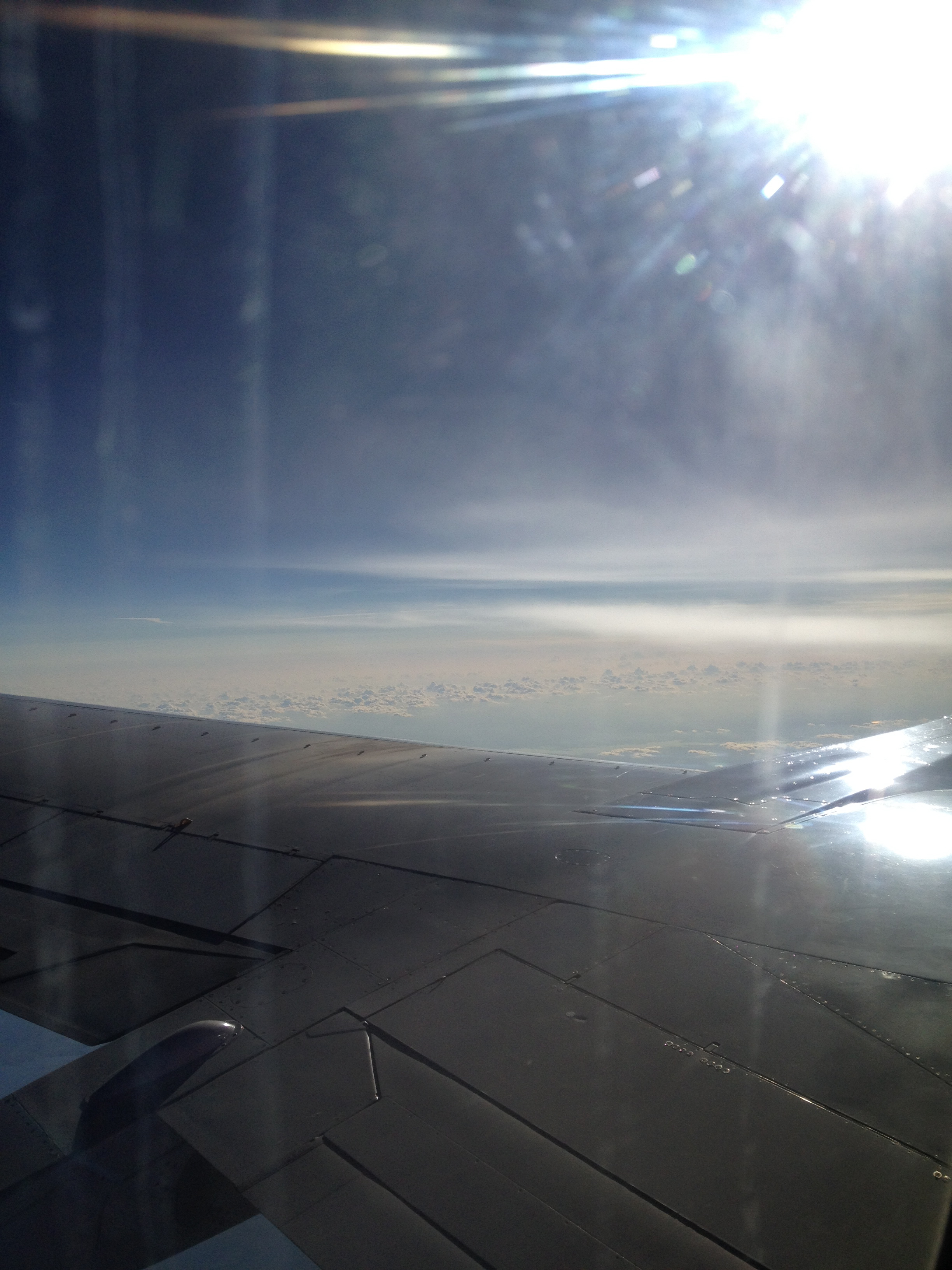
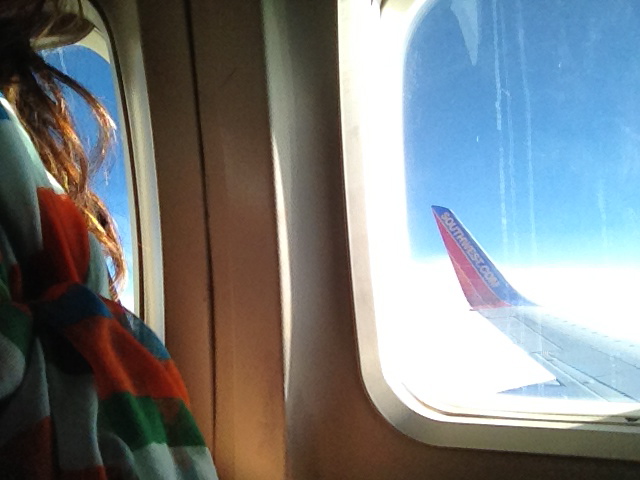
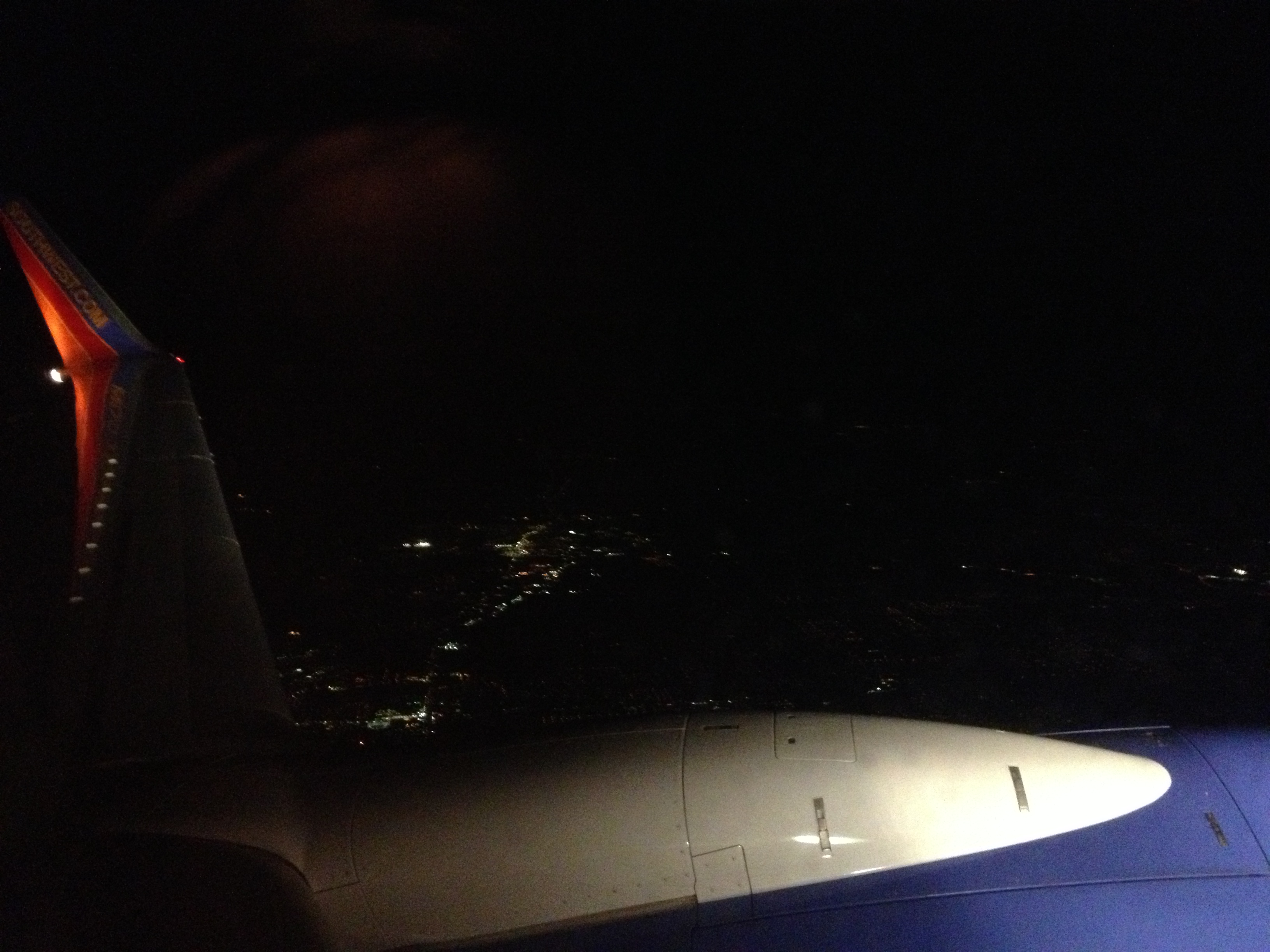
Today, I am on a plane from New Orleans, my hometown, to Dallas, and then I’ll get on another one to fly to Tucson, the desert town where I live.


Last Sunday, I was dancing—moving my feet and shaking my hips—to Rebirth Brass Band, a band from my hometown who was playing at a festival in Tucson. Trumpets and trombones. Snare drums. If there’s a sound the inside of my chest makes, I think it must sound like horns and drums. Blares and beats.


The Sunday before that, I was sitting talking with dear friends after four days of silence. Earlier that day, I prostrated myself on the floor in the direction of where my parents live, where my teachers are, where my community resides. Mala beads were placed over my head and I received a new name.


IMG_1021


I am thinking about motion and staticity. I am thinking about what it means to move forward, what it means to hold still, to hold stillness.


I met my niece for the first time this weekend and as I held her in my arms, I was struck by her substance, her solidity. She is seven months old. She has not yet said her first word. She does not have an understanding of object permanence. She does not get peek-a-boo. She does not know her name. Yet she knows how to smile and make raspberries. She has obvious preferences: from when she wants to be held  and when she wants to stand up to when she does and does not want to eat. She has already formed into a self and she is still in formation. Different each day and also still her. What a gift to watch these changes in increments. What a pleasure to watch her as she awakens to the world.


Is this then about spoke, about speaking? There is nothing more fleeting than words spoken. I spend my life impossibly torn between the desire to record every instant for posterity, to write every word spoken down, and the desire to throw away my pen and just listen, knowing I will not remember.


IMG_1032


We are flying over the river now, the Crescent City is crescent because of the way the water bends into the land. If I put my hand on the window, I could trace the river’s path, no larger than the tip of my finger. Yesterday, I stood on the bank and watched seagulls overhead. I sat with my parents. We had gone to the French Quarter on Easter Sunday as we had when I was ten. When I was sixteen. When I was twenty-four. We caught the end of the Easter Parade and shiny purple, pink, white, and green beads joined the simple brown ones hanging around my neck. There seemed something fitting and sacred about each strand. My parents said that when they were last in the Quarter, they saw the portrait artist who drew me when I was ten. That drawing lost in the floodwaters that came when the levee broke. Or as my parents said, “We lost that one in Katrina.” What made this man a good portrait artist is the way he could capture the uniqueness of each individual’s eyes. I looked at my eyes and saw it was me. A year or two later, my dad and I went alone to the French Quarter on Easter. My parents had separated. When we saw the same artist he drew me and then, on the same paper, my dad. The two of us without my mother. I don’t remember seeing that portrait after they got back together.


On my flight to New Orleans a few days ago, I was sitting next to a mother and her son. The woman looked to be in her forties. The son looked to be about twelve. He intertwined his arm with hers and later, she cradled him against her body and they slept. I thought about this intimacy, tender because of its transience. Soon, this boy will begin to pull away from his mother, from this body that birthed him. Soon, those small intimacies will be grieved by his mother. I imagine her: sitting alone at the kitchen table, hands wrapped around a mug of tea, remembering this flight or any other of the millions of tiny moments of closeness and hoping her son—now out with friends—is safe. But for now, they have each other and the closeness of their bodies, this proximity, feels like something sacred. I am both riveted by the tenderness and embarrassed to bear witness, sitting just inches away. This: the moment of a bubble before it breaks, a flower before the petals begin to fall, the last lingering note before the song is over.


Sometimes I feel awash in all the talking. Is there a time, I wonder, beyond and below what is spoken?


When I didn’t speak for four days, I noticed the energy spared. And I noticed how much could be communicated with a simple facial expression, a slow bow, the way one sits or stands. Intention isn’t always clear in language but it seems more clear in what the body says.


IMG_1033


For our family get-together, my parents rented a bouncy castle. Strong nylon whose shape is held only by air. Air pumped in. Air moving around.


Sometimes, when I am speaking while walking, I stop mid-step. I have only realized recently that I do this. Or maybe I realized it and then forgot it and then realized it again. Someone could be five steps ahead of me before I realize, before they realize we are no longer walking together. One friend called this caesura an exclamation point. “An em dash?” I offered.


“For one day,” I told my students, “your mission is to communicate only in the form of questions. Be curious. See what happens when you have more space to listen.” It was hard, they told me. But many were shocked that their friends and classmates didn’t even notice their lack of declaration. In the absence of their statements, the others easily filled the space.


IMG_1035


The flight is only an hour long. Soon we will land. Soon all the passengers will collect their purses and suitcases and plastic bags. They will move forward down the aisle. They will go home or on vacation. They will walk towards baggage claim and then on to funerals and hospitals, to weddings and baby showers. They will fall into the arms of lovers. They will get into the cars of family members. They will hug their roommates. They will stare at the gray heads of friends they haven’t seen in years. They will drive into cities teeming with people and countryside sparse with them. This flight will move from an immediate experience to an unremembered one. It will become part of a collective memory, one of many uneventful flights, defined only by its unremarkable nature: smooth air, easy takeoff, seamless landing, no delays. This time will collapse into empty space in their memory. Their slow movement through the sky will be marked only by fading numbers on cheap paper tucked into a paperback. Maybe a year from now, they will pick up the book they bought at the airport that they left unfinished. Maybe they will look at the date and the destinations and a specter of the person they sat next to will be conjured up in their memory. Or maybe they will, without looking, toss the slip of paper into the recycle pile, the last piece of evidence of this moment in the ether will be ground back into pulp from which new things will be made.


*composed 30,000 feet in the air

1 Comment

Filed under weekly words

breech·block


breechblock


Here we are, the last day of February and our last post for flash fiction february 2013. Thanks so much to Jennifer Holland, our last contributor, for her piece on breechblock. Thanks go also to the rest of our writers who joined us in writing flash fiction this month: Jennifer Rice Epstein, Michael Sheehan,  Mary Woo, and Katherine Hunt! Stay tuned for more bibliomancy and more writing and more flash fiction in 2014.


breech·block   (ˈbrēch-ˌbläk),  n.  the steel part of a breech-loading gun which when open permits loading and when closed receives the force of the combustion of the charge.


It started out as a game, where I would hide parts of my father’s rifle around the house on the nights he got drunk. The rifle was this old 1875 Martini Henry he shot off when the woodpeckers came around the roof. Most of the parts I stole were small: a split pin here, a muzzle cover there. Whatever I could manage to disassemble while he listened to his radio in the garage or argued with my mother in another room. My father was never what you would call mild-mannered, except for when he had a hangover and it was just easier to play along, lifting up sofa cushions and shaking out books while I said “Hot” or “Cold.”


By the time I reached middle school, the drinking got to a point where he didn’t get hangovers anymore. He and my mom were pretty much separated by then, though my mom still wore her wedding ring and slept on one side of the bed. My father showed up at the house occasionally, like a failed actor reprising the role that made him a star. I missed him while he was gone, but hated him when he came back. Once, he stayed away for almost two months, and I took the whole rifle apart, distributing the parts in all the places I was sure he would never think to look. I knew if I told him what I’d done he would get angry, so the next time I saw him, I had my answer all prepared. “You took it with you last time you left.” He looked at me for a very long time, searching his mind for this memory that did not exist. Finally, he just turned to the window to gaze upon my mom, who was whistling to herself as she pulled socks and hand towels from the clothesline. That was one of the last times I heard her whistle, before he stopped showing up for good.


Years later, my mom came across an old rifle part inside a board game that smelled of decomposing cardboard. The house was up for sale and we were packing up her things. “Look,” she said, holding it up. There were many things she was already starting to forget, I didn’t think it would mean much when I said it was a breechblock. “I know,” she laughed, and I caught a sudden glimpse of little silver fillings in her teeth, glinting like buried treasure from some half-remembered world.


HollandPhotoJennifer Holland is currently a graduate student in the School of Information Resources & Library Science at the University or Arizona. She lives in Tucson.

Leave a comment

Filed under flash fiction february

the dictionary project author interview: janice lee


45889_1572138860803_1155476649_1641583_3252858_n


the dictionary project is happy to share with you our most recent author interview with Janice Lee. Janice’s work is insightful, intensely curious, and without bounds. In reading her work, we begin to see words and phrases we have seen before in completely new ways because of the way in which she places, considers, turns them in her work. Please enjoy.


1. Please share a memory/story/thought in relation to a dictionary/dictionaries:


I recently learned the story of W.C. Minor, one of the largest contributors of quotations to the Oxford English Dictionary. As a surgeon for the Union Army, he was given the duty of punishing a fellow soldier by branding his face with “D” for deserter, which just pushed him over the edge. He then moved to England where he murdered a man in a delusional fit, and was committed to the Broadmoor Criminal Lunatic Asylum. A lover of books and words, Minor heard of a call for volunteers (specifically for quotes from verifiable sources backing up definitions) from what was to become the Oxford English Dictionary. Minor developed a system for going through his books in search of illustrative quotes and ended up supplying the OED with a massive 12,000 illustrative quotes. Each submission was marked with the return address “Broadmoor Asylum,” so the editors assumed Minor was a doctor in charge, not a patient. It was many years later before OED editor James Murray learned of Minor’s background and visited him at the asylum.


2. What is your current favorite word?


Moosh. It’s what we call our dogs: Moosh #1 and Moosh #2.


3. What is the most obnoxious/insidious/annoying word?


Currently I’m pretty annoyed by all the filler words we use in oral speech: actually, basically, you know, like, etc. I use these words too. A lot. It’s a horrible habit. I feel like I have a disorder when I catch myself saying “You know” over and over again. It makes our speech so cluttered and ugly. I wish we were taught to care more about articulate and beautiful language in spoken speech just as in written.


4. What word has been your (recent or past) muse?


DAMNATION.


5. What can language contain? What can it not ever contain?


Language can contain almost everything, the beginning, the end, the inevitable ruin of a world, the collapse and betrayal of truth, the compacted pain of life and death, but in words, only in words. It can not contain the same permanence of time that film offers, for example. Or the power given to a viewer in the prolonged gaze of a slow-moving herd of cows.


6. In your novel Daughter, there are many places in which you invite the reader to engage, to create story with you, by asking them to draw, by having only the placeholder for [image] rather than a literal image. Could you talk about what’s said and unsaid in your work? And about the prompts to allow reader to make meaning along with you?


The momentum in Daughter partially comes from the desire for understanding. The daughter asks questions from a certain vantage point assigned to her by the author. The reader sits from a different vantage point, and any significance that arises from the language of the book is a collaboration, a microcosm of the secret discourse that occurs between wondering minds and souls. And part of this “understanding,” comes from the notion that “meaning” is not the same thing as “understanding” is not the same thing as “clarity” is not the same thing as “certainty.”


7. What role do definitions/does defining play in your work?


Defining a word freezes it momentarily. Because in the context of many other words, a single word can be flexible, in constant tension with the other words surrounding it, anticipating, inseparable. When I define a word, I can fix it, and then also subvert it, and reshape it. This is why the etymology of a word often interests me. Because words can change, and when language changes, so does thought.


8. Please respond to the following words and definitions*, bibliomanced exclusively for you:


cre·dit  (`kredit),  n.   [Fr. crédit; It. credito; L. creditus, pp. of credere; see CREED],  1.  belief; confidence; trust; faith.  2.  the quality of being credible or trustworthy.  3.  the favorable estimate of a person’s character; reputation; good name.  4.  praise or approval to which a person or thing is entitled; commendation: as, he deserves credit for telling the truth.  5.  a person or thing bringing approval or honor: as, he is a credit to the team.  6.  usually pl. acknowledgment of work done, as in the preparation of a motion picture.  7.  the amount of money remaining in a person’s account in a bank, etc.  8.  in accounting, a)  the acknowledgment of payment on a debt by entry of the amount in an account.  b)  the right-hand side of an account, where such amounts are entered.  c)  an entry on this side.  d)  the sum of such entries.  9.  in business,  a)  trust in one’s integrity in money matters and in one’s ability to meet payments when due.  b)  the time allowed for payment.  10.  in education,  a)  the certification of a student’s successful completion of a unit or course of study.  b)  a unit of work so certified.  v.t.  1.  to believe; trust; have confidence or faith in.  2.  to bring approval or honor to.  3.  to give deserved commendation for.  4.  to give credit in a bank account, etc.  5.  in accounting, to enter on the credit side.  6.  in education, to enter a credit or credits on the record of (a student).  Abbreviated cr.  –SYN, see ascribe.


It is the horse today who is the witness of credit, so that it is not significant who pulls the cart, the girl or the horse.


hin·ny  (ˈhinē),  n.  [ pl. HINNIES (-iz)], [L. hiinnus  <  Gr. ginnos], the offspring of a male horse and a female donkey: distinguished from mule.

“Say, honey, why?” says the hinny, its hair combed down and collar adjusted for a casual afternoon outing.


ex·ile  (ˈegzīl),  n.  [ME. exil, exile; OFr. exil, essil; L. exilium, exsilium  <  exul, exsul, an exile, one banished  < ex-, out + IE. base *al-, to wander aimlessly; hence skin to GR. alaomai, I wander, roam, am banished],  1.  a prolonged living away from one’s country, community, etc., usually enforced; banishment, sometimes self-imposed.  2.  a person in exile.  v.t.  (also ig-zīl’), [EXILED (-zīld, -sīld, -zīld’), EXILING], to force (a person) to leave his own country, community, etc.; banish. –SYN.  see banish.

He goes home sadly, in the rain, stops and sits for a moment at the engraved statue in the square, another figure in exile. The rain destroys everything. “What’s the point anymore?” he asks no one in particular before making a comprehensive list of all the things he won’t ever use again.


whan·gee  (hwaŋ-ˈē),  n.  [prob.  < Chin. Huang-li; huang, yellow + li, bamboo cane],  1.  any of a number of related Chinese and Japanese bamboos.  2.  a walking stick made from any of these bamboos.


It’s raining. He grasps the whangee handle until it hurts. It’s always raining. So he has no real excuse then.


com·pa·ra·ble  (ˈkämp(ə)rəbəl),  adj.  [L. comparabilis],  1.  that can be compared; having characteristics in common.  2.  worthy of comparison.

“Language–or any comparable apparatus of recognition–is the legal filter for groupings of presented multiples. It is interposed between presentation and representation.” (Badiou)


Janice Lee is a writer, artist, editor, designer, curator, and scholar. Interested especially in the relationships between metaphors of consciousness, theoretical neuroscience, and experimental narrative, her creative work draws upon a wide variety of sources. Her obsessive research patterns lead her to making connections between the realms of technology, consciousness studies, design theory, the paranormal & occult, biological anthropology, psychology, and literary theory. She is the author of two highly acclaimed novels: KEROTAKIS (Dog Horn Press, 2010) and Daughter (Jaded Ibis, 2011). She also has several chapbooks Red Trees, Fried Chicken Dinner (Parrot/Insert Press, September 2012), and The Other Worlds (Eohippus Labs, June 2012). Her newest project, Damnation, is forthcoming from Penny-Ante Editions in 2013. She currently lives in Los Angeles where she is Co-Editor of the online journal [out of nothing], Co-Founder of the interdisciplinary arts organization Strophe, Reviews Editor at HTMLGIANT, and Founder/CEO of POTG Design. She can be found online at http://janicel.com.

Leave a comment

Filed under author interviews

ex·pe·di·en·cy


Train, NYC, Lisa O'Neill

Train, NYC, Lisa O’Neill


For our fourth post this flash fiction february, we are pleased to share with you this piece by writer Katherine Hunt on expediency.


ex·pe·di·en·cy   (dē-ən(t)-sē),   n.  1. the quality or state of being expedient; suitability for a given purpose; appropriateness to the conditions.  2.  the doing or consideration of what is of selfish use or advantage rather than what is right or just; self-interest.


I saw the man on the subway. I had been pregnant nearly three months and sat with my head in my hands, feeling nauseous and trying not to think about the day ahead. That week I’d started a new episode of the TV show I produced on, a documentary series on homicide investigations. I had hours of crime scene footage to watch down. But crime scenes had begun to depress me. Also, I wasn’t sure I wanted a child. Now a woman said, It’s not your private candyland. At least that’s what I thought I heard. I glanced up but I couldn’t tell who had said it.

This is when I noticed the man, a tall man in a brown suit and the kind of dress shoes that look leather but cost nineteen dollars. He stood by the doors with his back turned so I couldn’t see his face. His hands kept me looking, though. He had nice hands, by which I mean large. I stared at them, thinking, I could just walk up and ask him to fuck me. It was the kind of thought I often had in those days: I could leave my life for another. This other life existed only in my mind but was actually more my own. I could step into it in one clean movement. Erase my husband. Erase the pregnancy. I could do it now, I thought. Then the man turned toward me and I recognized him as the murder suspect from an episode I’d worked on.

It didn’t make sense. The guy, Anton James, had shot a rival drug dealer in Dallas. He’d been arrested and charged with capital murder. Yet here we were on the A train, lurching into Manhattan. I stared at his long, sad-looking face. The dark, slow eyes. The rough skin along the jawline. I’d spent hours watching that face on video monitors. He glanced at me and I felt a thrill of terror, like in a dream when the monster struggles out of the black woods or the chasm, the black, unconscious pit.

I looked away. But when he got off the train, I followed him. We walked out into a hot, bright morning. Commuters rivered the sidewalks but the man’s height made him easy to track. Within three blocks, he went into a bank. I waited for him to come out. Minutes passed. Finally, I looked inside. He stood behind the bulletproof glass, one in a line of tellers.

I went in and waited in line, feeling increasingly nauseated and anxious. When I approached his window, he nodded. I saw you on the A, he said. He had the type of voice I’d heard in the streets my whole life, a flat voice, with an edge. Was it Anton’s voice? I couldn’t be sure. His nameplate, I noticed, was blank.

I know you from Dallas, I said.

You mixing me up with someone.

Maybe.

What can I help you with?

Nothing, I said and tried to smile. I just thought I knew you.

He nodded again and looked down along my body. For an instant, I felt he saw inside me, through to whatever it was fighting its way along in there. If he could see the fetus, I knew he would feel nothing for it. And in that cold moment, I realized how it might be to be my own child. You could come back later, if you want, he said.

All right, I said. All right.

When I work up the courage to tell this story, people ask if I went back. They ask if I had sex with him. But that wasn’t ever really the point. Though I did go back. He wasn’t there. Another bank employee said he’d left for the day.

So what kind of hours does he work? I asked.

Oh, he’s on his way out, she said. Whatever that meant.

I hadn’t liked working on the Anton James case. The killing had been captured on surveillance video. And there was something awful about watching that video. The cold eye of the camera became my own eye. I looked down on a harshly lit parking lot, everything black or gray, like the inside of a metal can. Anton leaned against the side of the store, smoking. He waited like that for three hours. I wondered what he could be thinking about. Because as soon as his victim approached, Anton pulled the gun. It was as if he’d never questioned his original decision, the one he later voiced to detectives. I said I’d get that motherfucker. So I did.

I saw the man another time, several weeks later. I’d left work with my editor. We started toward the train in a greenish evening light and I noticed the man crossing the street ahead. That’s him, I told her, pointing. The dude that look like Anton.

He reached the end of the block and vanished around the corner.

Come on, I said. Let’s catch him up.

I ran and she clomped after me, saying, Are you crazy?

He couldn’t have been Anton James. He must have been someone else. And yet I couldn’t shake the feeling that he was Anton. Or that he was a dream Anton was having about his own life.

We reached the corner and I spotted him again, walking with his head up and at a comfortable pace, as if he was any other person.


MYFACE     Katherine Hunt lives in Brooklyn.

Leave a comment

Filed under flash fiction february

identical twins

photo by E.J. Bellocq

photo by E.J. Bellocq


Welcome to our third installation for this year’s flash fiction february at the dictionary project. We are delighted to share with you this piece by Mary Woo, writing on twins. Enjoy!


identical twins,  a pair of twins who were developed from a single fertilized ovum: they are always of the same sex and show great similarity in physical appearance.


My sister, Coco, she likes them big. She likes an arm she can swing on. She likes stomachs that spill over waistbands like oversized ice cream cones. She likes big, broad shoulders with chunks of skin to hold onto.

Me, I like them small. I don’t like to feel threatened. I want to know that I can toss them across the room if need be.

In this way, we are compatible. She gets what she wants; I give her what I don’t want. But most of the time, we take what we get.

It’s funny. I know that you, and so many others, wonder about us, about this lifestyle and what damage could have possibly led to it. What loss. What depravity. An absent father? A crazy mother? I loved my mother very much, and never felt such shame as when she found us here. But what do you expect, raising two daughters and never teaching them anything about life? But I don’t want to talk about that.

What about the ones who come here? What about their damage, their sin? I don’t know why the giver, and not the taker, is always the wicked one.

Me, I fall in love all the time. Coco has been in love only once. He was a Parisian, just her type, smug and pretty. She saw him every day for two weeks, and then he disappeared. She cried and cried until I told her we were running out of money and there was no time for tears. What did she expect? Sometimes she is so…

Well, anyway. Of course we laugh! A lot, in fact. What, you think we got into this line of business for serious academic pursuit? We make fun of all the men who come here. They don’t know, they think we moan and groan and mean it. You’d be surprised how many different sizes and shapes—

Sorry.

The Parisian, he came back one fall. I was the only one here; Coco had taken a daytrip to Brussels. He waved at me through the window, held up a rose. When I finally realized who it was, I knew he was mistaking me for my sister.

I couldn’t let her go through that again.

“Coco, my love!” he said to me, cupping my cheeks, his eyes watering. He grasped me to his chest.

I took him into Coco’s room, which felt like a greater betrayal. Coco’s very particular about her stuff. She has dolls and posters and perfume bottles carefully curated from antique stores. She would be angry to know that I had been among her precious things. These are the things that belong only to her.

Don’t look at me like that, like I am some kind of monster. I was only trying to protect her. Coco’s heart has always been more fragile than mine. Even at birth, she spent two extra days in the hospital because her heart was not pumping enough blood.

The Parisian, he took me, saying over and over, “Coco, I missed you,” and in that moment I became Coco, not Anna, not the strong one, the first twin. I was weak and loved.

And then, he was gone again, just like I knew he would be, and I was pleased that I had saved Coco another lifetime of grief.

Well, it wasn’t long before I realized I was carrying the child of this man.

Yes, I’m usually very careful! But it was passionate, and we were in love. I mean, they were. Call it, getting lost in the moment. Or God’s will.

I knew I wasn’t fit to be a mother. My life revolving around someone else’s? Never. I couldn’t do it.

I had to tell Coco the truth, and we agreed Coco should raise the child as its mother.

The months passed and Coco took on more work as my stomach grew to repulsive sizes.

Was she mad? I don’t know. Coco is incapable of true anger. And with twins, well, it is so hard. Because we need each so badly, you see. Because we are parts of the same. Something changed, though. Our thoughts did not overlap as much, and our laughs were fewer.

The child was born, and in this way, Coco became a mother, and I became an aunt, and we were no longer mirrors of each other, but an ungainly triangle, feeble and diluted.

When the Parisian came back, she presented the child to him, and told him he was the father. He began sending money, and she would send him pictures. He came to visit for a few days every year, and for a few days, they were a family, whole, and I was on the outside, looking through the window of their happiness.

One day, they disappeared. Coco, child, father. She didn’t even leave a note.

Sorry, I only cry because that is the most hurtful part. No note, no word. What, did she think I would try to follow her into her ordinary, tedious life?

I suppose I am happy for her. In a way, I am with her, still. You see, we weren’t exactly identical. I’ve always had this birthmark, right here, next to my eye. And when the child was born, there it was. Same birthmark, same spot.

Every time Coco looks at the child, she will see me, and that makes me happy.

Well, there you are. What was it you asked?

I recognize you. Yes, you were here something like twenty years ago. We had a fun time, no? You were so smug back then, ordering us around, throwing dollars at us like we were circus monkeys. Now look at you. Old and gray and sad. You look like you’ve learned how life can toss things back in your face. You come here, curious. I hope that I’ve given you a good story. Not the one you were expecting, I suppose.

That is all. Now I must work. You can show yourself out, I’m sure.


pic of MaryMary Woo works as a freelance writer in Washington, DC, where she lives with her husband and dog. This story was inspired by the Fokken sisters, twins and Amsterdam’s oldest prostitutes.

Leave a comment

Filed under flash fiction february

the dictionary project author interview: elizabeth frankie rollins

We are delighted to share with you the dictionary project’s interview with author Elizabeth Frankie Rollins, whose stunning debut collection of short stories The Sin Eater and Other Stories is released this Saturday. A new plague falls on houses, a boy and his dog appear and disappear and reappear, sins are consumed, relished, and released, whole villages made of sand are carved and destroyed, a boy runs and keeps on running, people try to be who they are not and then failing that, try to be who they are. Enjoy these words from Rollins, on life and writing, which, for her, are really one and the same.
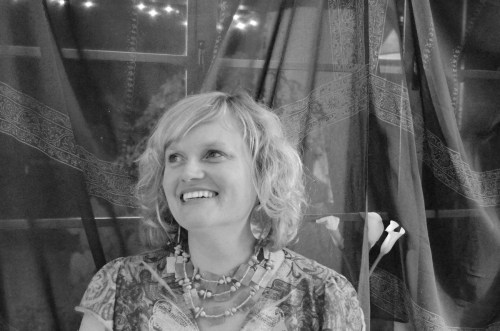
 

photo by Ben Johnson

photo by Ben Johnson


1. Please share a memory/story/thought in relation to a dictionary/dictionaries:


In my early thirties, I bought a dictionary and a thesaurus for my writing desk, each one big and red.  I told a writer friend of mine that I’d done this and he said, “Uh oh.”  I asked him why he said that but he shrugged and looked out the window.  I changed the subject, mystified.

It used to bother me, that “Uh Oh.” I could hear it every time I reached for one of these big red books.  I mean, what could be wrong with wanting to use better, more accurate language?  I’ve pondered it for years. Still, I have no idea what he could have possibly meant.


2. What is your current favorite word?


Redemption.


3. What is the most obnoxious/insidious/annoying word?


It’s not a word; it’s a phrase.  I loathe the phrase “been there, done that.”  Luckily, it is falling out of use.  It’s such a cruel thing to say.  It speaks of all that is limited and small and unwilling.  What it means to say is that the speaker does not care about you and your story or what you might be saying-it’s an essentially narcissistic, deaf phrase.  It stabs me in the ears.


4. What word has been your (recent or past) muse?


Brimming.  Early on in my writing, while I was working on the story where I first understood the writer that I am, I kept seeing a chalice brimming with red wine.  Neither the chalice nor the wine had anything to do with the story.  It was merely an image that told me how perfectly I must fill the story with the sorrow that was at its core. To have it so full.  To have it just so full, almost too much, but not too much.  To have it also be beautiful.


5. When I think of your writing, particularly in The Sin Eater and Other Stories, the word I think of is precision. Not precision in its hard, calculating sense but in terms of its exactitude, its accuracy, its care. I think of what Kung-fu Tze said: that “all wisdom is rooted in learning to call things by the right name.” I wonder if you could speak to your process of wording, of naming.


In my early writings, I wasn’t precise.  I used to build fat rooms of velvety, lyrical prose.  I’d invite people in and they would smoke hashish and drink honey wine and roll around.  One day, though, someone sat up and said, “Wait, this is lovely, but what the hell does it mean?”  And all my texts crumbled.

In terms of process, now, it still doesn’t begin in precision.  I pound the thing out of the world with the bluntest, dullest tools. I am also partially blind and deaf at this phase.  I follow a single strand of golden idea that I have either seen or perhaps only dreamt of seeing.  I crash around the cave walls, moaning and hacking at what I bump into.  I hope, stupidly and optimistically, that something will be there.  This can take days or years, depending on the project.  Eventually, there’s some light.

I make many, many, many drafts.  Each one increases my sight and understanding.  I’ve learned to point myself, and the reader, in.  I mercilessly surgeon the thing as time goes on.  Lines I once loved I snip away and don’t save.  I carve away bone.  I trim.  I rig up to electricity.  I go from Stone Age to modernity every time.


6. Is there a word for which you would like to rewrite the definition? What word? What does it really mean?


Bin. My husband has long become used to the fact that I call any vessel that holds other things a “bin.”  Socks are bins.  Cups are bins.  Purses are bins.  Paper bags are bins.  A cupped hand can be a bin.  As in, “Hand me that bin, will ya?”


7. Please respond to the following words and definitions*, picked exclusively at random for you:


(en),  n.  1.  in mathematics, the symbol for an indefinite number: see nth.  2.  in physics,, the symbol for neutron.


This is the level to which I have vowed to take the risks of living fully.


flat·ware  (ˈflatˌwe(ə)r),  n.  flat table utensils, as knives, forks, and spoons, or plates, platters, etc.


Any friend of mine will tell you that I want to know what you ate.  I want to know what you had for lunch or dinner.  And I usually remember it.  I ponder it for days.  Why does X eat that?  Why doesn’t Y like that?  I wonder how to cook some of these things.  I store information for future trips to restaurants or grocery stores.  In 2001, a teenager I knew got the house Lo Mein with beef, chicken and shrimp at Oriental Pearl for lunch.  If she didn’t get that, she got the egg salad sandwich at the Bread Board. A phone call to my sister the other night revealed the news that she’d had an antipasto salad and then, cannoli.   I had a boyfriend who loved pepsi and fried fish.  I have a friend who can’t eat any white food.  I have a new friend, who, I’m told, will always order meatballs if they are on any menu.  A friend in NYC has posted several pictures of various plates of sausages and pickles, which she labels: tv snacks.  Another friend ate so many lentils in his crappy flat in Scotland 20 years ago that he still hates them.  My brother-in-law hates stinky cheese.  A friend loves pickled herring.  My nephew loves berries.  It is character.  This is all character study. I study humanity this way, by what it eats with flatware.


rat·toon  (răt`tŌn´),  n. & v.i.  ratoon

rat·oon  (răt`tŌn´),  n.  [Sp. retoño; Hind. ratun], a shoot growing from the root of a plant (especially the sugar cane) that has been cut down.  v.i.  to grow new shoots, or grow as a new shoot, from the root of a plant that has een cut down. also spelled rattoon.


My writing is always concerned with rebirth. Possibility.  It is the most interesting thing about being human.

I love the idea that whenever we tell apocalypse stories, it is about what happens after the apocalypse.  It’s about the ratoon that appears. The possibility of redemption is the most interesting thing in the world.

Rebirth.


-gyn·ous  (jin-us), [Mod. L. –gynus. Gr. –gynos  gyne, a woman],  a combining form meaning:  1.  woman, female, as in polygynous2.  having female organs or pistils, as in monogynous, androgynous.


I’m not interested in the limitations of gender.  I’m interested in the possibilities of thinking beyond gender, beyond culture, beyond years, beyond geography. I’m interested in where the real “us” lives.  The us-ness of all humans.  This is why my writing has turned to history. It’s important to me to find what is the same about characters in 1750 and the people I spend my days with.   If I had a spiritual task, it would be to be able to write this truth finally, completely, clearly.


shape  (shāp),  n.  [ME. schap(e):  AS.  (ge)sceap, created thing  <  scieppan, to create, form;  IE. base *(s)qep, etc., to make with a sharp tool, as also in L. capo (cf. CAPON), Eng. Shaft],  1.  the quality of a thing that depends on the relative position of all points composing its outline or external surface; physical or spatial form.  2.  the form characteristic of a particular person or thing.  3.  the contour of the body, exclusive of the face; figure.  4.  assumed or feigned appearance; guise; as, an enemy in the shape of a friend.  5.  an imaginary or spectral form; phantom.  6.  something having a particular shape, used as a mold or basis for shaping or fashioning; form, as for making hats, molding gelatin, etc.  7.  any of the forms, structures, etc. in which a thing may exist or be embodied: as, dangers of every shape.  8.  definite, regular, or suitable form; orderly arrangement: as, his story began to take shape.  9.  [Colloq], condition; state, especially of health: as, the injured man was in bad shape.  v.t.  [SHAPED (shāpt), SHAPED or archaic SHAPEN (-‘n), SHAPING],  1.  to give definite shape to; make, as by cutting or moldng material.  2.  to arrange, fashion, express, or devise in definite form, as a plan, answer, etc.  3.  to adapt or adjust: as, shape your plans to your abilities.  4.  to direct or conduct, as one’s life, the course of events, etc.  5.  [Obs.], to appoint; decree; ordain.  v.i.  1.  [Rare], to become suited; conform.  2.  [Rare], to come about; happen.  3.  [Colloq.], to take shape or form (often with into).  –SYN. see form, make.


I love the shapes of living.  I love the shape of narrative as it plays out in a life.  How a random move, a trip, a lover, a choice will shape the rest of a person’s life.  My characters teach me this, if I didn’t know it from watching my family and friends.

So many people want an obvious, fill-able, prescribed shape to live into, but there isn’t one.

In fact, it is the truth that there isn’t one shape, that an infinity of life/story shapes exist, that makes me want to go on living.


Elizabeth Frankie Rollins’ debut collection of fiction, The Sin Eater & Other Stories, was released February 2013. Rollins has received a New Jersey Prose Fellowship and a Pushcart Prize Special Mention. She authored the chapbook, The Sin Eater, the novels, Origin, and Doctor Porchiat’s Dream, and has published work nationally in Conjunctions, Drunken Boat, Green Mountains Review, and The New England Review, among others. She lives and teaches writing in Tucson.  She brings the sin eater and other redemptive possibilities for modern maladies wherever she goes.


*Definitions taken from Webster’s New World Dictionary of the American Language: College Edition, copyright 1955
1 Comment

Filed under author interviews

ly·ric


Screenshot of Woody's Journal taken from "The Making of The Works," album with music by Jonatha Brooke and lyrics by Woody Guthrie (click for video)

Screenshot of Woody’s Journal taken from “The Making of The Works,” album with music by Jonatha Brooke and lyrics by Woody Guthrie (click for video)


ly·ric  (lir ik),  adj.  [ < Fr. Or L.; Fr. Lyrique; L. lyricus; Gr. lyrikos],  1.  of a lyre.  2.  suitable for singing, as to the accompaniment of a lyre; songlike; specifically, designating poetry or a poem expressing the poet’s personal emotion or sentiment rather than telling of external events: sonnets, elegies, odes, hymns, etc. are lyric poems.  3.  writing or having written lyric poetry.  4.  in music, a) characterized by a relatively high compass and a light, flexible quality: as, a voice of lyric quality.  b)  having such a voice: as, a lyric tenor. Opposed to dramatic.  n.  1.  a lyric poem.  2.  Usually pl. the words of a song, as distinguished from the music.


the words of a song/as distinguished from the music


“The object of art is not to make salable pictures. It is to save yourself.”

 –Sherwood Anderson, letter to his teenage son, 1927


Lyrics have always been a kind of savior.  From times before written word when sounds were bellowed round a fire, when epic poems were sung as a way to pass down history and legend of how a people came to be. Even the sound of the word om, a mantra for invocation, deemed sacred in part because of the vibrations sent out and the resonance of the sound when sung, a-u-m.


Lyrics have saved me at various moments in my life. I think perhaps the greatest gift of these words set to music is their ability to do away with the notion that we are alone. When I am in pain, that is the moment I find it hardest to see beyond myself. There is a meditation practice Pema Chödrön writes about called tonglen. Tonglen is a practice where you get in touch with your own suffering and then breathe in the pain of others. This is in direct opposition to many new age practices that promise relief through visualization: go to your happy place, imagine a bridge covered with ivy and a brick cottage, breathe in the scent of your favorite flower. Tonglen instead asks that you connect with and breathe in the intensity of your own pain and breathe out relief. Then, tonglen asks that you think of all the people in the world who at this very same moment are experiencing the same pain as you—whether grief, loneliness, anger, jealousy, or fear—and to breathe in their pain and breathe out relief. Tonglen makes you aware that you are not the only one feeling what you are feeling. Tonglen gives you an opportunity to offer relief by seeing outside the parameters of your own pain. Lyrics do the same thing.


I have an uncanny memory for song lyrics; they are stacked, filed, catalogued in my brain—the ones I want to remember and the ones I wish I could forget. I also have a habit from when I was very young of spontaneously breaking into song, singing about what’s happening to me or things I see, or inserting song lyrics when someone says a word that reminds me of the song they come from.


I noticed past this fall that I listen to music less and that I sing along less in the car. I’m not sure exactly when this began, but I recognize some of it. Sometimes, even things I love can become things I resist or deny myself. I go through periods of not writing when I am overcome with doubt, when I become focused on product instead of process. When I’m not feeling good about my songwriting or my singing or when I feel I’m not doing enough, I deny myself the moments of even singing along in the car or playing guitar for fun in my home. I even start watching movies as I move about my home instead of listening to music, so permeating is the feeling that I should be doing more. I resist that which matters to me when I don’t allow myself space for it. This is a harsh reality for so many of us: When do we not provide space and time for that which we love out of fear? When does what’s made become more important than the making?


I think in truth that most of us have ideas and words and architecture running just under the surface of our skin. The power of all that we could create scares us into not making time, into making excuses, into making work that is so much more superficial than that which our deepest knowing dares us to make.


Too often, we are liars.


We tell ourselves that the world doesn’t need one more song, one more story, one more sketch.


We are wrong.


The best songs I have written have been the ones that have come out quickly and seamlessly, seemingly out of nowhere. I have sat down with a pen, a notebook, a guitar, and the song has spilled out. This is not evidence of the quickness of art but rather how quick art can come if we pay attention and allow space for it to emerge. Songwriting is a sort of channeling. I know there are people in Nashville who can turn a phrase, who make their living shaping songs for superstars. But like writing, even those who are prolific, would tell you of a certain spark, a certain word or turn of phrase, the key turning in the lock that opened the way to the rest of the song. A crack in the dam. A snap in the hinge. A pull in the thread that unravels the whole hem,  one seam untying to stitch another.


And the lyrics that are made and sent into the world become a place for others to rest within. For hours after a college boyfriend, the first guy I really fell hard for, left to return to the country he was from, I lay on my bed listening to the same song on repeat for hours. It was a Sundays song called “When I’m Thinking About You.” I remember my dorm room and where my bed was positioned by the window. I remember feeling that I had never loved like this before, fearing I would miss him so much my heart would surely break open inside my chest. There were many tears: so many verses and so many choruses worth. I found comfort in the repetition of the same lyrics over and over again. I listened and I cried and by the time I turned the cd player off hours later, I felt better, even if my heart was still broken.


Lyrics become a way of organizing our experiences in life, a place to store our suffering and our solace. The spectacle of karaoke feels less about nostalgia or the desire to be the center of attention than it feels like confession. Singing in unison, the resonating feeling of these words that everyone knows. I, too, have felt this way. Like communion, me too.


“I hate a song that makes you think you are not any good. I hate a song that makes you think that you are just born to lose. Bound to lose. No good to nobody. No good for nothing. Because you are too old or too young or too fat or too slim. Too ugly or too this or too that. Songs that run you down or poke fun at you on account of your bad luck or hard traveling. I’m out to fight those songs to my very last breath of air and my last drop of blood. I am out to sing songs that will prove to you that this is your world and that if it has hit you pretty hard and knocked you for a dozen loops, no matter what color, what size you are, how you are built, I am out to sing the songs that make you take pride in yourself and in your work. And the songs that I sing are made up for the most part by all sorts of folks just about like you.”

—Woody Guthrie


Several friends have spoken with me about the songs that saved them. These songs held words they needed to hear during dark times. And somehow the fact that the song existed provided a shelter. These lyrics, a place for solidarity and witness. These lyrics, a kiva, where a voice reaches out of the speaker to our waiting bodies, mouths, hearts, skin as these parts of us echo back a simple reply, yes.


One of my favorite songs is Stephen Foster’s “Hard Times, Come Again No More.” The first time I heard it, I was in my early twenties and these three young men, handsome and brilliant musicians, were coming through town on a Woody Guthrie Tribute tour. They played this song in harmony on guitars and accordion and it broke something open in me.


Foster wrote the song about people living in deep poverty and deep despair, something I knew  nothing about at the time, something I know a little more about now but not in the way the people he is writing about knew it. And yet, I could hear myself in the chorus. Hard Times, Come Again No More. I feel a sort of yearning in this song and a feeling that the song itself beckons a wish, that in singing the song loud enough, often enough, we could somehow stave away suffering. A hope. An impossibility. When I play the song now, I experience it as a remembrance and a tribute, an acknowledgement of the pain and suffering that is an inevitable part of being human.


Researcher Brené Brown talks about how: “When you ask people about love, they tell you about heartbreak, when you ask them about belonging, they tell you their most excruciating experiences of being excluded. When you ask people about connection, the stories they tell you are about disconnection.” It makes sense then that for many of us the songs that resonate most are the ones that reveal that aching aspect of being human: having loved and lost, having reached out and been turned away, and the hope we hold for a future when things will turn out in a way that meets our needs and desires.


Lyrics feed us. Because we require constant attention and ever-present opening. Because we cannot do it alone. Because we have lived through heartache and heartbreak and have to learn what it means to stand again. Because we must uncover our hands once more from atop our hearts. Because if you needed me, I would come to you. Because there is no other way. Because this fuel, this fire, this field, this flood; this avalanche, this arc, this arch, this aspen; this meeting, this movement, this martyr, this made; this sacrifice, this sepulcher, this sergeant, this soot; this tandem, this tangent, this target, this tongue; this blanket, this buckle, this banter, this bare. Because in singing and seeking, we come to know each other better and we come to know ourselves.


I sing because I’m grateful for having been sung to. And I sing because it is when I am singing that I feel most alive. And I sing because no matter how hard my day has been, no matter how uncertain the road ahead is, no matter the current state of things, I need to be reminded of the beauty that can be found curled up inside a long held note and the calm of the silence in between one sound and another. Songs are of us and for us. They are of our making and they are how we are made.


4 Comments

Filed under weekly words

con·tig·u·ous

bettydoctor'soffice


Today is our first guest post for flash fiction february, crafted by talented writer Jennifer Rice Epstein! You can check out some more about her writing at her food blog Meals, Squared.


con·tig·u·ous (kənˈtigyo͞oəs),  adj.  [L. contiguous, bordering upon  <  base of contigere, to touch upon, border upon; see CONTIGENT],  1.  in physical contact; touching  2.  near; adjoining.  –SYN. see adjacent.


The waiting room was smaller than her own small living room. There she sat, in an uncomfortable chair, her hands folded across the knitting in her lap. A hobby she’d tried, in recent months, to develop. Her husband, Jimmy, sat next to her. He’d taken the day off work to drive her here; she couldn’t figure out if he was annoyed about it.


She looked up at him, and he looked over to her and smiled. I’m nervous, she whispered. It’s just something in the air, he said. It’s the newness. She began to cough; he patted her hand and stood up, walked toward the reception desk.


Her name was Beth, and she was 21, a newlywed, a new college dropout. At night, she sat up, coughing, while her husband slept. He would be in their room, she on the sofa. Her husband slept through her coughing fits, even when they lasted several minutes, even when she was in bed with him. He slept through everything—maybe a result of his mission to Samoa, where packs of dogs roamed the street outside his house at night, hunting and howling. Maybe that was just how men slept.


Jimmy returned with a glass of water. She took it gratefully. He stood beside her. I need some fresh air, he said. I’ll come right back. I’ll be waiting right here when you get out. He walked away, and she wondered where to look. An old man sitting across from her caught her eye and smiled. She looked at the half-knit blanket in her lap.


She was 21 and lived in a suburb at the edge of Chicago suburbs. Behind their little house was a cornfield, but they were not farmers. Her husband worked at the Chicago Board of Trade. He liked to say he looked no further than his own window to see what his day at work would be like. He joked, but she knew his job was difficult, though she knew not, exactly, what he did.


Her husband thought the cough was allergies. At first, they both thought the cough was from allergies, something in the Midwestern air, something in the house. It had started just a few weeks after they’d moved in. At first, she was only a little put off by it, but he was very worried. They found a doctor in town, who said she was allergic to dust. The doctor’s confirmation put her husband at ease. Now, it was her turn to worry. The cough persisted, no matter how much she cleaned, whether she opened or closed windows, whether she did her shopping or stayed home. Contrary to her imagined married self, the coughing fits kept her from being a gracious host or charming guest. At parties, she sipped water and tried to speak as little as possible. In sacrament, she sat next to the door and, more often than not, missed part of the service.


In the waiting room, another Bethany was called, a woman in every way her opposite—older, darker, happier, pregnant. Perhaps she’d be that Bethany soon enough. She coughed into a handkerchief dotted with blood. This was new; it was the blood that prompted her to seek a second opinion. She was grateful in that moment that Jimmy had gone outside; he didn’t know. It was probably dust, allergies, the air. She’d probably strained something with her coughing.


She was a newlywed 2,000 miles from home. It was October; she had been out of school for five months. Jimmy was her high school sweetheart, a boy she met at a church dance, an Eagle Scout, descended from pioneers. She was still in high school when he left for his mission. Time stood still the first summer he was gone, but then she started her college studies, and that, with church, kept her mind occupied. In her sophomore year, he proposed by mail from Samoa. She remembered opening the letter, postmarked before Christmas, in February. This was his Christmas present to her and his requested gift from her. That’s what the letter said. She had waited several days to answer him, so that her reply would be postmarked on Valentine’s Day. It had all been very romantic. When Jimmy came home and got the job offer at CBOT, they decided to be married right away. She had a year of college left in Reno, but they did not want to be apart another year. At the time, she hadn’t minded the thought of moving. Illinois was just another adventure.


The nurse called her to the back and weighed and measured her. She took her temperature and sent her to the bathroom for a urine sample. When Beth returned to the examination room, it was empty. She sat on the chair, then on the examination table. She wasn’t sure where to sit.


The temple closest to their home had been in Salt Lake, seven hours from Reno by car, but they made the drive for their wedding. She remembered arriving at Temple Square, her own Vatican City, dress and hat and sensible shoes, feeling reverent and sophisticated. The families went sight-seeing, and, as she and Jimmy strode arm-in-arm past bronze statues of Joseph Smith and the Handcart Pioneers, she felt a wash of well-being. Everything here made sense. The day after they arrived, they married and were sealed. The reception was a luncheon with their families, and the next day she said good-bye to her parents. Their honeymoon was the drive to Chicago, where her husband had already leased the house.


It was hard to be so far away from her mother and sister in this cold, flat place that was making her sick. But she had Jimmy. She began to cough and reached for her handbag, but it wasn’t there. She’d left it, along with her coat, on a chair in the waiting room. She coughed, searching the room for a tissue. She found, instead, the faucet and drank from it eagerly, hoping it could soothe her throat. She drank and thought about her impeccably clean house, her husband’s letters, her fine, clear wedding day, and her hastily abandoned belongings safe on the chair, waiting for her. It was nearly enough to calm her.


jenriceepsteinJennifer Rice Epstein lives with her husband and two young sons in Chicago. Follow her on Twitter @jriceepstein.

Leave a comment

Filed under flash fiction february

flash fiction february


IMG_8758 IMG_9594 IMG_6820


Well, it’s February. Month of groundhogs. Month of valentines. Month of Mardi Gras. Month of celebrating Black History. Month of (for those who don’t happen to live in the Southwest) bitter cold subzero temperatures. Apparently today, in addition to what would be the 100th birthday of the amazing Rosa Parks, is “Create a Vacuum Day” and “Thank a Mailman Day.”


And by now, you should know what February means at the dictionary project:


Flash. Fiction. February.


All month, we will be featuring original flash fiction pieces inspired by bibliomanced dictionary project words and composed by guest writers of the fiction persuasion.


Stay tuned!

Leave a comment

Filed under flash fiction february