stem

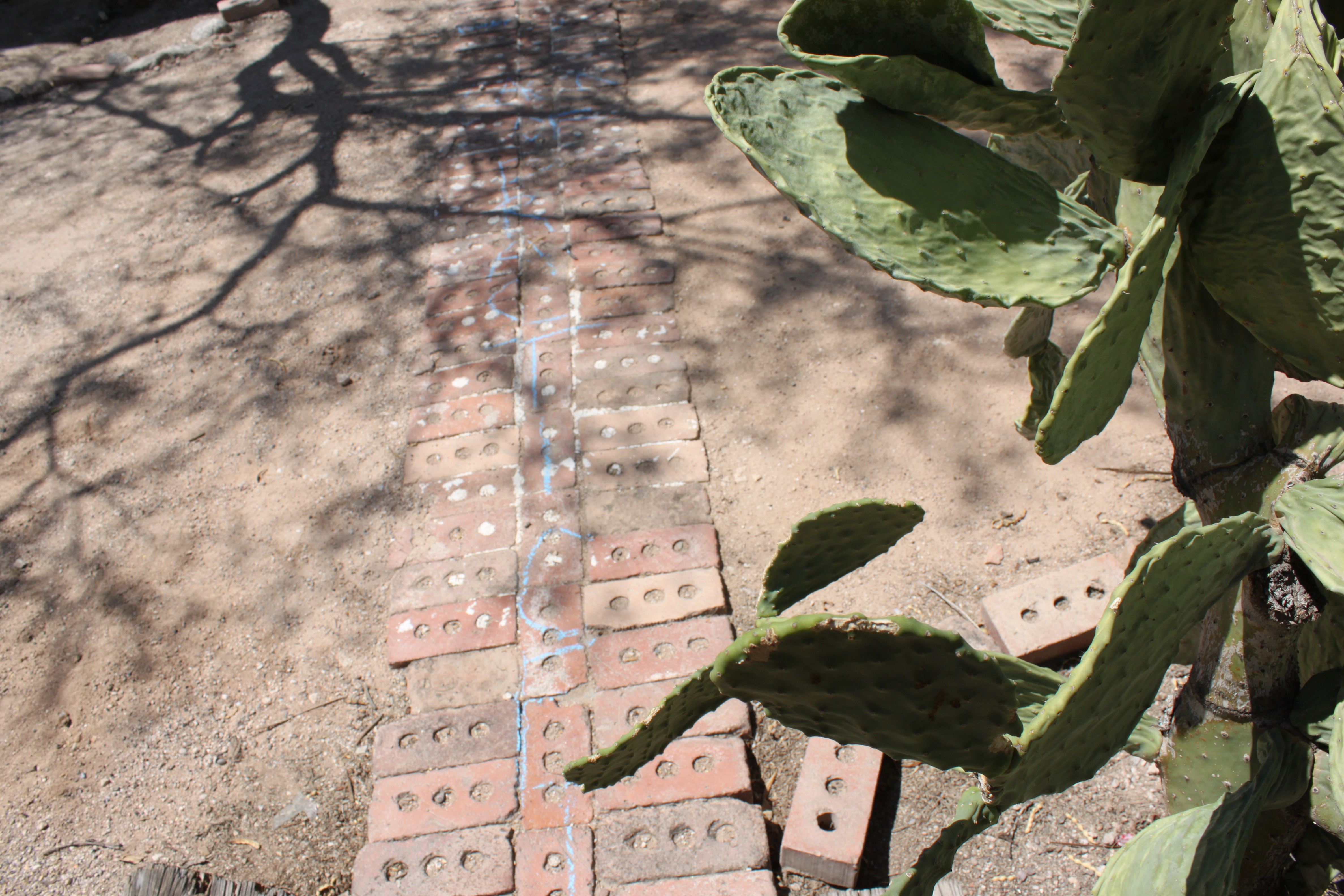
chalkblackboard


Day 5 of the 30 days, 30 words challenge.


1stem  n.  1  :  the main stalk of a plant; also: a plant part that supports another part (as a leaf or fruit)  2  :  the blow of a ship  3  :  a line of ancestry: STOCK  4  :  that part of an inflected word which remains unchanged throughout a given inflection  5:  something resembling the stem of a plant —stemless  adj  —stemmed adj.


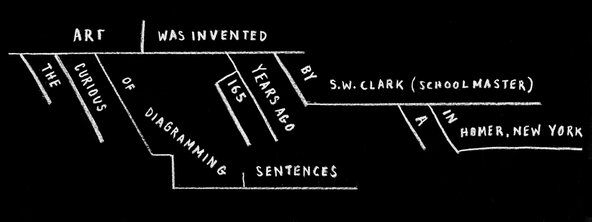
When I was a kid, I used to love diagramming sentences. Every time the teacher asked for a volunteer, my hand would shoot up. Sometimes she would pick me and I would walk down the narrow aisle to the chalkboard. Getting to write on the board was always exciting as it bestowed a feeling of authority and significance, but I didn’t love it when I had to answer math problems, when I worried I might get it wrong. But words, I understood how words worked. I wanted to understand how words worked. What they meant, how they were spelled, how they were connected to one another. There was something thrilling about drawing that initial horizontal line, placing the subject and verb there, and then finding where the diagonal lines needed to be made, where the other words fit in. I could feel the chalk pressing into my hand and could feel that this was important work: learning how words were arranged to make meaning. As a kid, I worried a lot: about grades, about friends, about what to wear to school on non uniform days, about what it meant that I was picked last when dividing into teams for freeze tag, about running or not running for student council. I also had an active imagine so I worried about potential catastrophes that could befall me, my family, the world. I didn’t often feel like I had much control over impacting any kind of change in the injustices I saw, even from a place of privilege, around me.  I was a kid in need of something to rein these worries in. I was a kid in need of a refuge. I found one in language. Diagramming, I felt reassurance in the words’ connection through these lines. The lines made the words’ existence tangible and real. They weren’t just things to be said, tossed away into the air. Here, they were concretized, even if momentarily so given the ephemeral quality of chalkboards, of chalk. As I drew the lines and continued to build the branch of the sentence, I understood that words could be made to do something, that the way they were positioned mattered, that they could be used to make meaning and that I could learn the system for the time when, maybe, I would want to use them to make meaning of my own.


draft-florey-diagram1-tmagArticle

writingletters


*Author note: funny where my mind went with this. I wonder if I was still also ruminating on chalk from yesterday. I guess one possibility with this month is that the words could continue to unfold and also fold over and touch and interact with one another.

Leave a comment

Filed under 30 days 30 words

chalk

Day 4 of the 30 days, 30 words challenge.


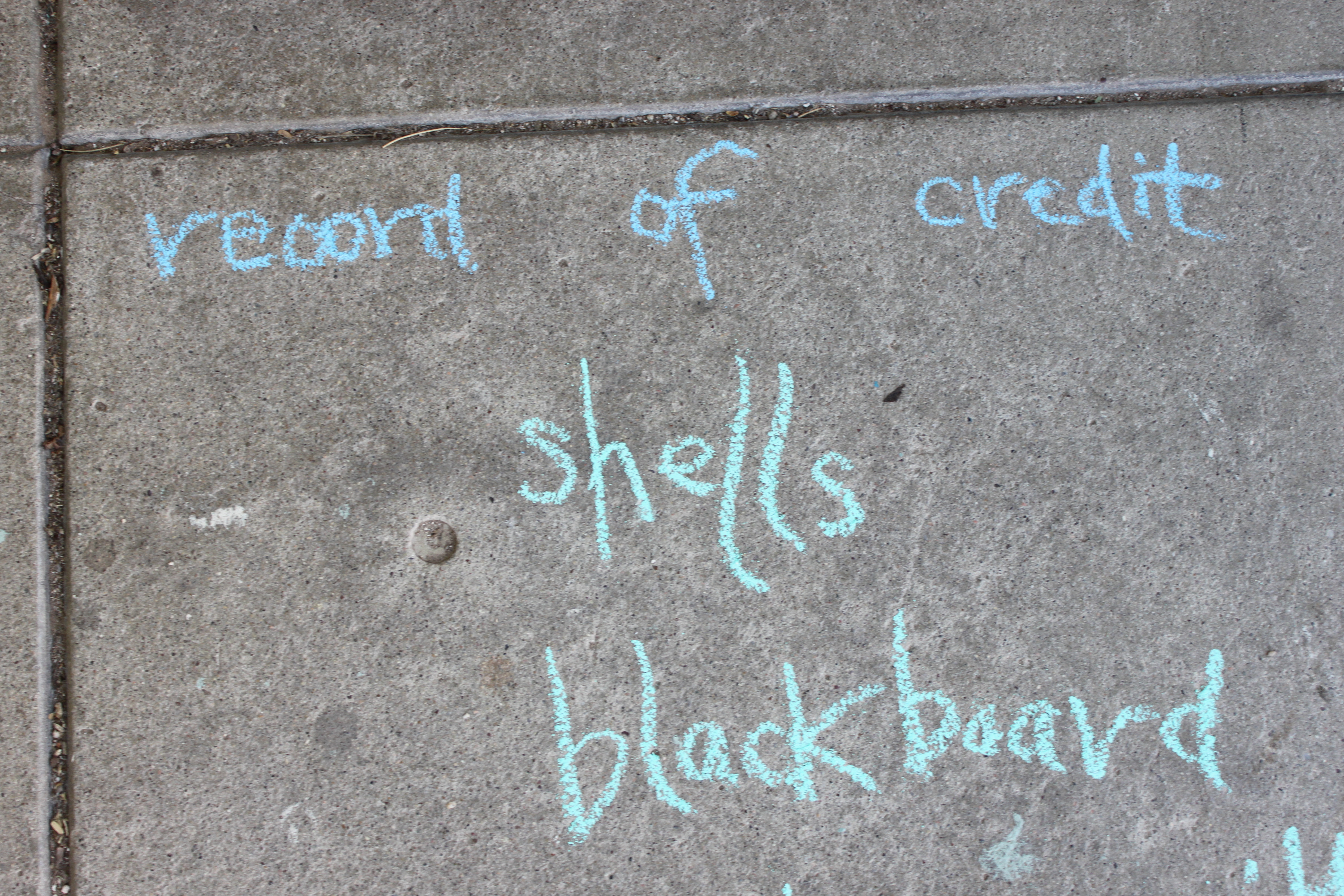
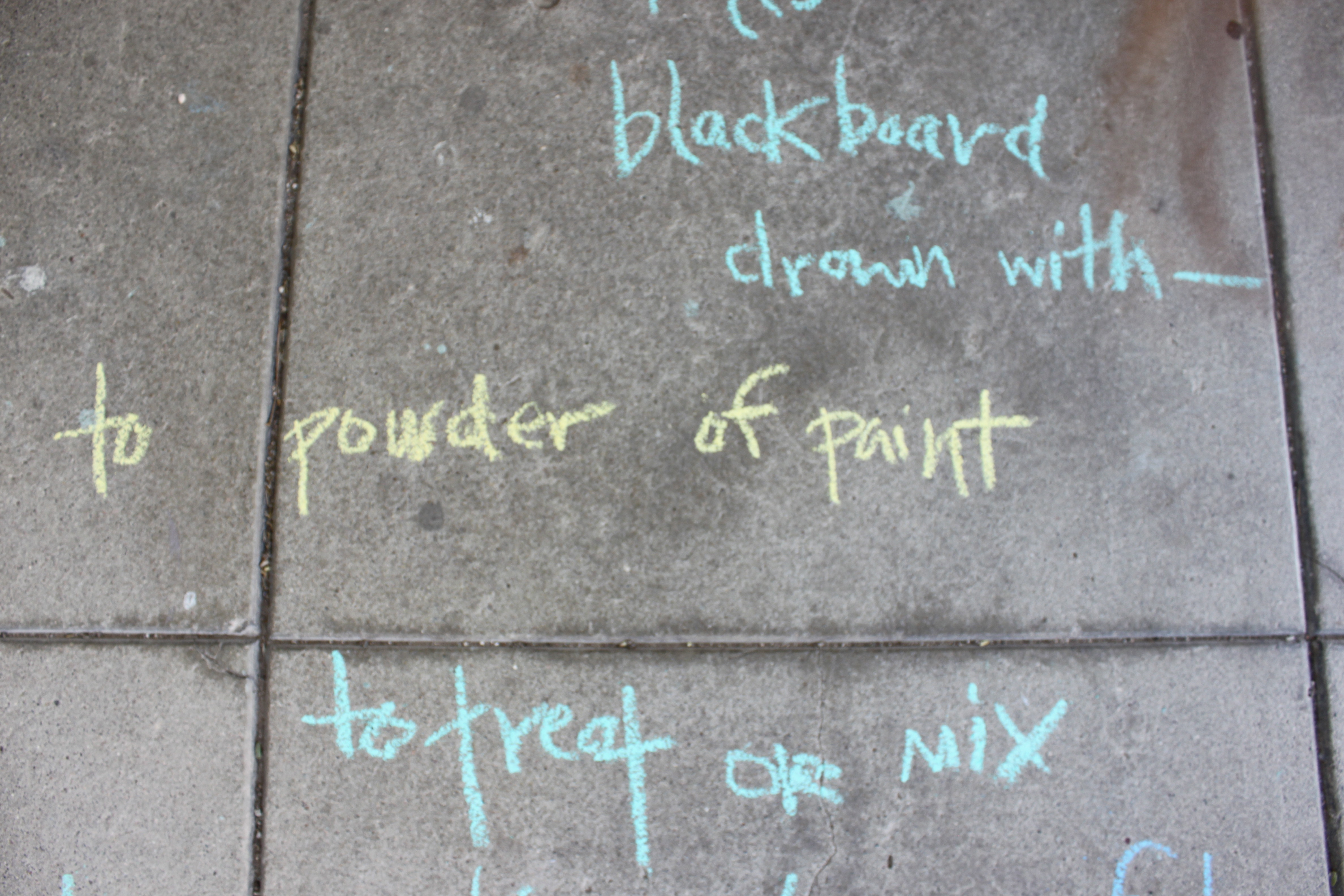
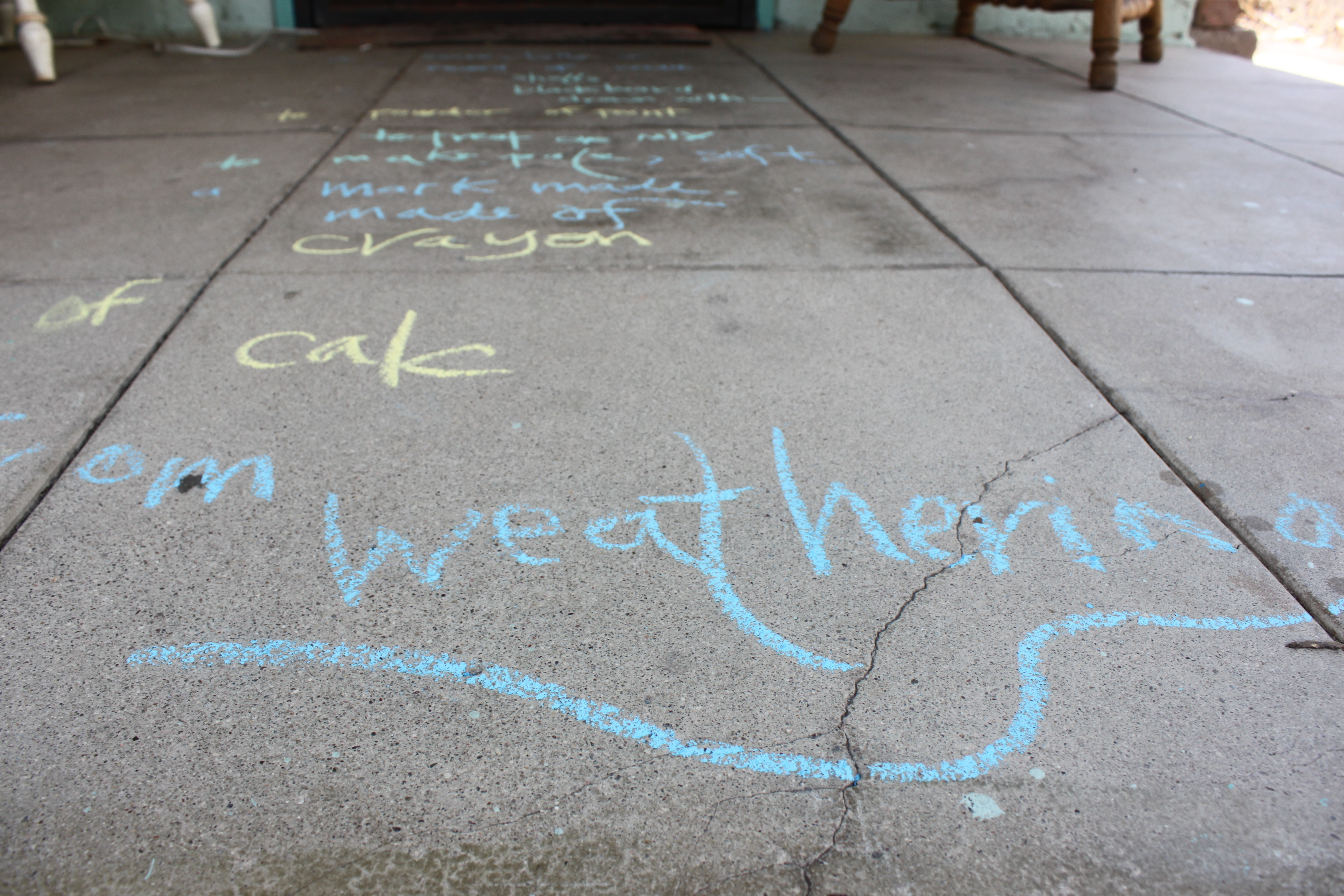
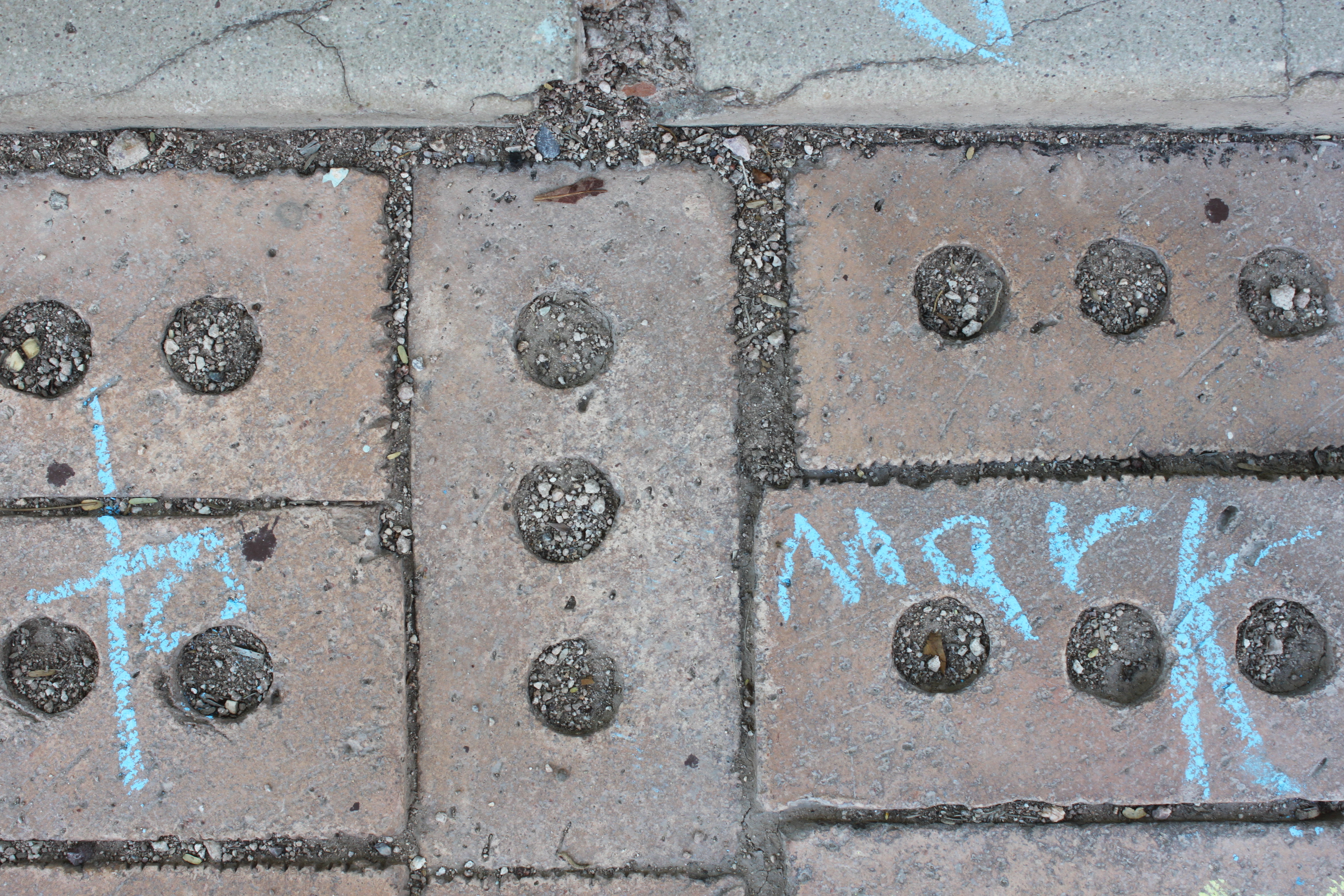
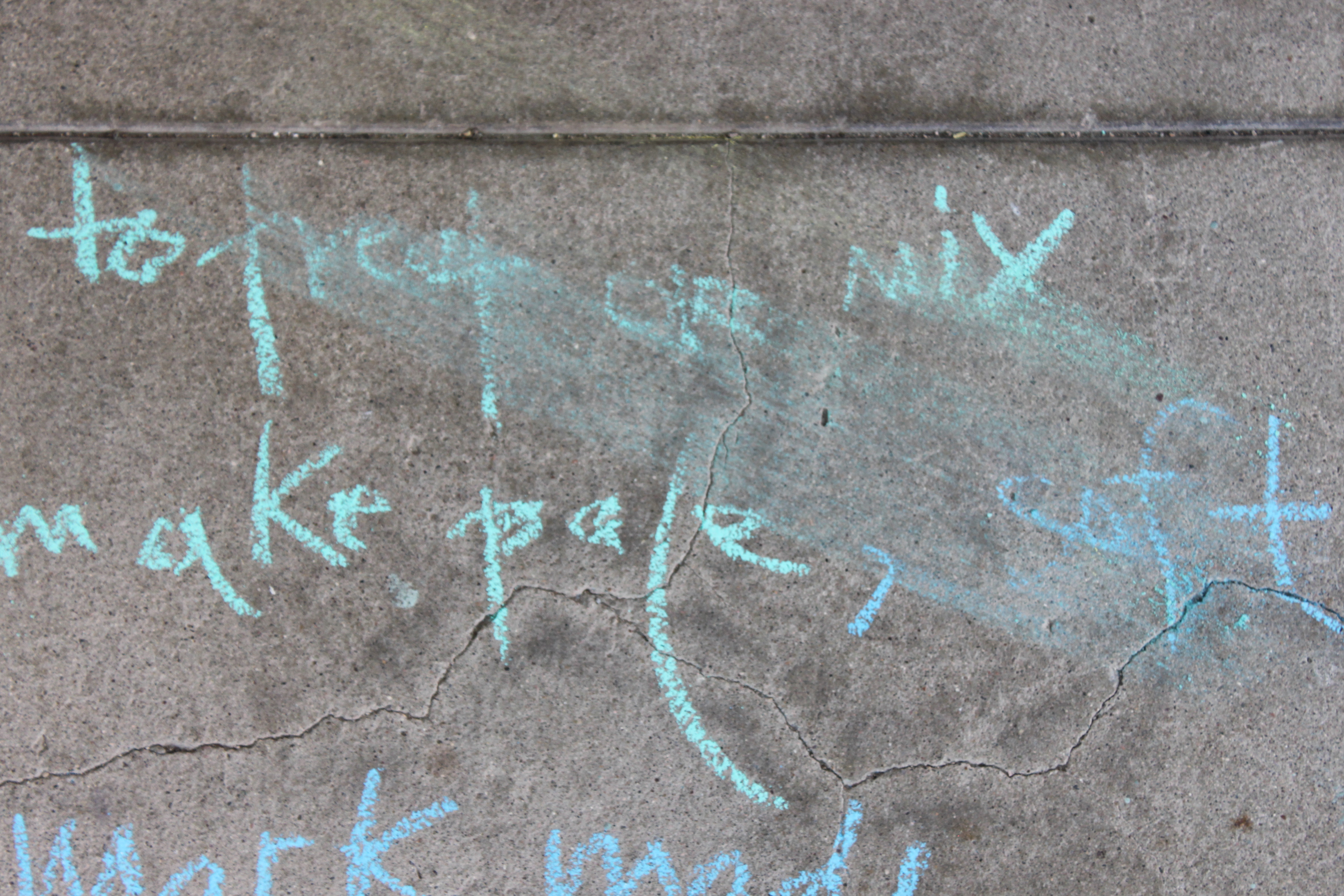
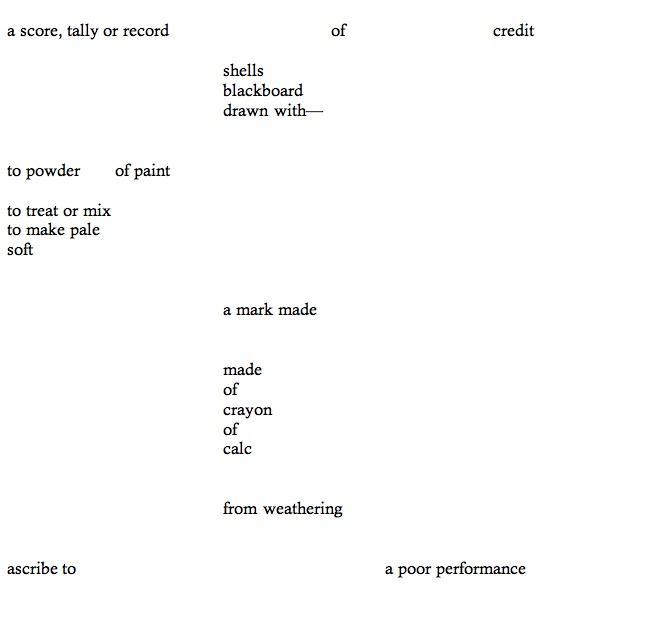
chalk  (CHôk)  n.  1.  a soft, white powdery limestone consisting chiefly of fossil shells of foraminifers.  2.  a prepared piece of chalk or chalklike substance for marking: a blackboard crayon.  3.  a mark made with chalk.  4.  a score, tally, or record of credit  v.t.  5.  to mark or white with chalk.  6.  to rub over or whiten with chalk.  7.  To treat or mix with chalk: to chalk a billiard cue.  8.  To make pale; blanch; Terror chalked her face   v .i.  9.  (of paint) to powder from weathering  10.  chalk up, a. to  b. to charge or ascribe to: It was a poor performance, but may be chalked up to lack of practice  —adj.  11. of, made of, or drawn with chalk.  {ME chalke, OE cealc  <  L  calc- (s. of calx) lime]  —chalk`like, adj.


IMG_0932

IMG_0936

IMG_0959

IMG_0963

IMG_0967

IMG_0970

IMG_0973

IMG_0974

IMG_0976

IMG_0975

IMG_0979

IMG_0980

IMG_0964

IMG_0989

IMG_0994


chalk1chalk2


Leave a comment

Filed under 30 days 30 words

de·fame

Hollywood Sign, 1978

Hollywood Sign, 1978


Day 3 of the 30 days, 30 words challenge:


de·fame  (diˈfām), v.t.  –famed  —faming.  1.  to attack the good name or reputation of, as by uttering or publishing maliciously or falsely anything injurious; slander or libel; calumniate: the newspaper editorial defamed the politician.  2.  Archaic. to disgrace; bring dishonor upon  3.  Archaic. to accuse.  [ME defame(n)  <  L  defam(are), equiv. to De– DE- + famare, deriv. of fama a report, rumor, reputation (see FAME); r. ME diffame(n)  <  OF diffame(r)  <  L  diffamare, equiv. to dif- DIF-  + famare]  —de·fam·er, n. —de·fam·ing·ly, adv.


De-fam-ous


I don’t pay attention to the negative because I’ve seen this play out
so many times
how many times have we seen this?


     Hayden Panettiere!
     Incredible Ass!
     In Incredible Bikini!


You know now.
You know what’s happened.


     Fergie and Josh Duhamel hire Dog Whisperer, Cesar Millan.
     Dancing with the Stars is furious.
     Tom Brokaw is a bully.


Anyone that performs
That’s what you’re looking for.


     Jennifer Lopez.
     No longer the best **s on the block.


You’re wanting to make history.
 
 
     Ex-Disney Superstar
     Death Certificate Released
     Gunshot Wound To Head


We said, “You know we’re about to make history right now?”


     Should she do her daughter a solid and tone it down?
     But at what an enormous price?
     The floor is yours!


What’s amazing is, I think, now we’re three days later they’re still
talking about it.


     Lamar is giving Khloe the silent treatment.
     Amanda Bynes is ensconced.
     Kanye West banks millions.
     Disney is none too pleased.


They’re over thinking it.


     Justin Bieber’s Perfectly Chiseled Torso Was Threatened


You’re thinking about it more than I thought about it when I did it.


     Snooki in a High-Waisted Bikini, Looks Better Than Taylor Swift?


Like, I didn’t even think about it, ’cause that’s just me.


All plain text taken from TMZ.com
All italics taken from Miley Cyrus’ official statement about her recent VMA performance. (http://jezebel.com/miley-cyrus-speaks-turns-out-youre-all-over-thinkin-1246861692)

1 Comment

Filed under 30 days 30 words

cap·tive


All photos courtesy of http://hermanshouse.org

All photos courtesy of http://hermanshouse.org


herman2


hermans_house_4web


hermans_house_3web


Day 2: I’m realizing that one of the challenges of the 30 days, 30 words challenge is being okay with letting go of a piece once I have written it. Usually, I have a week to let the ideas simmer and to come back to drafts so writing a draft the same day and then putting it up is a challenge for sure. This is especially true when I feel I have so much to say and am trying to figure out the right way to do it. It’s an exercise in non-attachment, I guess. Or at least being less attached to what I am writing in this particular iteration on this particular day.


cap·tive  (kap’tiv) n.  [L. captivus  <  captus, pp. of capere, to take; cf. CAITIFF],  1.  a person held in confinement or subjection; prisoner.  2.  a person who is captivated.  adj.  1.  taken or held prisoner  2.  captivated  3.  of captives or captivity.


Of Captives or Captivity


Herman Joshua Wallace participated in a project several years ago where he worked with a visual artist to design a house. I imagine that the process was not much different than when most people work with designers and architects to design homes. He described in detail what he wanted his house to look like, how many stories it would be, what features the room swould have. He talked about the landscaping and the outdoor pool. But there was one major difference. Herman Wallace was designing a house he would likely never live in. He designed his house from the confines of a 6-foot-by-9-foot cell in Angola State Penitentiary in Louisiana.

Angola is an 18,000 acre former slave plantation which takes its name from the country most of the slaves who worked the land traveled from. Able-bodied prisoners, 78 percent of whom are black, are required to work for four to twenty cents an hour a minimum of forty hours a week: working the fields of sugar cane, soybeans, cotton, and corn or looking after the 1,500 cattle herd.

Herman Wallace has been in solitary confinement for 41 years. Solitary confinement at Angola State Penitentiary means a minimum of 23 hours a day in a 6-foot-by-9-foot cell, 7 days a week. For 41 years. The last time he was a free man the Vietnam War was in full swing; Richard Nixon was planting the secret taping system that would blow up in Watergate; Ben Hur played on television; Radio Hanoi broadcast Jimi Hendrix’s version of “The Star Spangled Banner”; Tom Jones and Barbra Streisand had hits on the radio; a first class postage stamp went from six to eight cents; Ed Sullivan hosted his final broadcast; Walt Disney World opened in Orlando; the U.S. performed nuclear tests at the Nevada test site; and Don Mclean’s eight-minute song “American Pie” was released.

Wallace had been convicted of armed robbery in 1971. That same year, in prison, he and three other inmates: Ronald Ailsworth, Albert Woodfox, and Gerald Bryant established the Angola Chapter of the Black Panther Party. The goal of the chapter was to improve prison conditions, and chapter members spoke out against unjust treatment and racial segregation in prisons, which many believe made them targets to the administration.

In 1972, prison guard Brent Miller was brutally murdered at Angola, and in 1974, Wallace and Woodfox were convicted of this murder despite there being no physical evidence to link them to the scene of the crime. The victim’s widow does not believe in their guilt. Wallace and Woodfox have fought their convictions since, claiming  one eyewitness was legally blind and another witness, rewarded for his testimony, was known for being a prison snitch. Known as the Angola 3, Wallace, Woodfox, and Robert King (who was accused of another separate prison murder) were put in solitary. King was released in 2001 after 29 years when his case was overturned. Wallace and Woodfox have been in solitary for 41 years.

Visual artist Jackie Sumell first wrote Wallace in 2002 when she heard of his case. She was a graduate student at Stanford University and was given an assignment: “to speak with the professor of my choice about spatial relationships and indulgent dream homes.” Sumell writes in The House That Herman Built, “I struggled to balance the futility of this assignment with the reality of Herman’s condition. So, with the support of Herman’s lawyer and his personal advocate, I asked Herman Wallace a very simple question: “What kind of house does a man who has lived in a six-foot-by-nine-foot cell for over 30 years dream of?”

For the next five years, through extensive letter writing and occasional phone calls, Herman and Jackie worked collaboratively to design that house. She asked questions and he answered them in words and drawings. The letters are also a document of Herman’s emotional condition as they range in time from when he was in Camp J (the harshest camp nicknamed “The Dungeon” by inmates) and back in regular solitary (or Closed Cell Restriction, CCR).

In one of the letters, Wallace writes: “I don’t have the measurement of the cell but here is the best way to do this. In width when I outstretched my arms I can touch both walls with about 3 inches to spare. Lengthwise, I got this much: … That would be one arm, body, body 2 arms. Its best to make your measurement this way because now you could built it according to the person who would have to live in it. Let me know if I’m making sense or not. The above is where I live, the worst unit and cell in the prison. Yesterday one man next door to me tried to take his own life. They took him off 4-point restraint this morning and I’ve been talking to him to help him relax. Security lied on him and got him knocked down to level 2, forcing him to do 6 more months back here and he just snapped–so sad.”

The design of the house bears the mark of someone who has spent the majority of their life in a confined space without access to air, to light, to outside. Flowers and plants are ever present on the grounds and also in the greenhouse (“I’ve attempted many times to grow plants in my prison cell, but would only gain a stem and the plant would soon die. I learnt that concrete walls and steel bars stifle growth which is why it is so necessary this house be made of wood.”). There is attention to detail in the colors used and the types of wood. One bathroom features a 6’9” bathtub– “the exact size of the cell I lived in for 26 years.” The design also reflects a sense of isolation and enclosure and anxiety about outside dangers. “The wrap around porch was not constructed for the purpose of beauty but rather to discourage stray animals from getting too close.” “The chimney connected to the house is really an escape tunnel….this escape tunnel leads beneath the patio to the swimming pool…beneath the bottom of the pool’s concrete for is the bunker for safety measures. If attacked, seriously under attack, the house can be set afire to with more than enough time for you and your family to escape unharmed.”

The project was first done as an interactive art piece. Herman’s cell was reconstructed. Letters he and Jackie exchanged were hung and an animated tour of the house, much like a video game, played on a television screen with Herman speaking about different features of the house. In July 2013, a documentary based on the project, Herman’s House, was released. Efforts are underway for the physical house to be built. Herman said, “Whether I live in the house or not, it makes no difference. The symbol of the house is what it’s about.”

In June 2013, announcements came out that Wallace has been diagnosed with liver cancer. Petitions called for his release. But Angola Warden Burl Cain stated in a deposition that “Albert Woodfox and Herman Wallace is locked in time with that Black Panther revolutionary actions they were doing way back when.” He said that, if released out of solitary, “I would have me all kinds of problems, more than I could stand, and I would have the blacks chasing after them.” One of Wallace’s lawyers Nick Trenticosta told Mother Jones magazine:  “The level of inhumanity I am not used to. I am used to bloodthirsty prosecutors who want to kill people, but not this sort of thing.” Wallace will likely die in captivity. Not only in captivity but in solitary.

Wallace and Woodfox may have some of the longest time served in solitary but they are not alone. Based on available data, on any given day, there are at least 80,000 prisoners in isolated confinement in America’s prisons and jails, including some 25,000 in long-term solitary in supermax prisons. According to the American Friends Service Committee, the average term served in supermax prisons is five years. In the federal system, Thomas Silverstein has been held in solitary confinement under a “no human contact” order for 28 years.

In solitary at Angola, inmates can use their one hour a day to shower or walk down the hall of the cell block. They have the option three days a week to exercise alone in a fenced yard. Wallace and Woodfox’s lawyers argued in civil suit about the physical, emotional, and mental injuries suffered from their long time duration. Medical reports reveal the men “suffer from arthritis, hypertension, and kidney failure, as well as memory impairment, insomnia, claustrophobia, anxiety, and depression.”

This summer, Netflix launched an original series called Orange is the New Black. Some have lauded the show for its diversity of women: race, class, sexuality, body shape, while others have said that the show kowtows to stereotypes about different kinds of people and about prison. Having watched half of the season, I witnessed the refusal to deny any of the prisoners dignity and a series of storylines that reveal inmates as complex, beautiful and flawed characters. As someone who is concerned about prison issues and who has taught writing workshops with incarcerated individuals, I am grateful that, for once, prison is in the limelight. Prisoners are getting attention in pop culture and in a way that doesn’t immediately dismiss them as evil or irrevocably damaged and deserving of bad treatment.On the show, one thing all of the women inmates speak of with dread is the SHU (Security Housing Unit), or solitary. There is a shared understanding that noone who goes to the SHU comes back the same.

I cannot even imagine what it would be like to be confined to such close quarters for so long. What it would be like to not have anyone to talk to. What it would be like to be able to reach out and touch the walls on either side.

To be held captive can have positive connotations: to be engaged, to be rapt.

But far more often, it has the connotation of powerlessness, an inability to get out: whether that be out of an enemy’s hands, out of a particular situation, out of our own thoughts, out of a jail cell.

And captivity, on the behalf of the captors, shows kind of denial. It is a denial of the wholeness and the dignity and the largess of spirit of those who are held captive. And it is an arrogance that we have any right to put them in a cage and throw away the key. I know the reason prisons and jails and juvenile detention centers aren’t talked about in presidential debates. Because prison isn’t popular. Because we would like to pretend that the human beings held in these spaces we have made are different than you and I, that they have somehow forfeited their right to any decency or care because of crimes they committed (or, in some cases, didn’t commit). But to pretend this is to hold ourselves captive: in the belief that there are some among of us that are chosen or safe or saved and others that aren’t; in the belief that people are fixed and unchangeable, that the way we are is the way we are; in the belief that only some of us are worthy of redemption; in the belief that we can commit atrocities to one another, deny the humanity of one another and not personally suffer.

Wallace said of his house, “[This project] helps me to maintain what little sanity I have left, to maintain my humanity and dignity.”

May we all remember the humanity and dignity of one another. And may we challenge one another whenever we try to hold each other in spaces too cramped for our bodies or for our deeper truths.

7 Comments

Filed under 30 days 30 words

Tun·gus·ka

tunguska-01


Day 1 of the 30 days, 30 words challenge and the word is:


Tun·gus·ka (toon goosˈka)  n.  any of three rivers (the Upper, Stony, and lower Tunguska rivers) in central Siberia, flowing westward to the Yenisei River.


A Second Sun*


The forest was a forest and the river was a river. That is until the day the forest flattened.  I was sleeping in the hut with my brother. Somebody shoved me and I awoke. My brother had been shoved too. But no one else was there. We heard the whistling and felt a strong wind. Brother said, “Can you hear all those birds flying overhead?” And I heard the sound he meant: the echo of thousands of wings flapping against the air. We stepped out of the hut but the sound was not birds.


I saw the sky split in halves, high and wide over the forest. The entire northern side of the forest covered with fire. The forest flattened, as far as I could see, trees red with ember leaves. The split in the sky grew larger. Suddenly, I became so hot I could not bear it, as if my shirt was on fire. I wanted to tear off my shirt and throw it down, but then the sky shut closed, a strong thump sounded, and I was thrown.


After that, such noise came. As if rocks were falling or cannons were firing. A thunder like I’d never heard.


The earth shook.


I was shoved again and fell into the fire. We got scared. We cried out, for our father, our mother, our sisters, our brothers. But they didn’t seem to hear. The earth below us began to move and rock, wind hit our hut and knocked it down.


My body was pushed down by sticks, but my head was clear. Then I saw a wonder: the sky became bright—how can I say it?—as if there were a second sun. My eyes burned from the way it blazed. Brother said, “Look up” and pointed with his hand. We watched the treetops get snapped off. Another flash, another thunder. We were knocked off our feet, struck against fallen trees.


In the air where the flashes had been, a blue cylinder, a billow of smoke. We thought sure it was the end of us. Then, suddenly the sky began to clear. There had been five of them. The thumps. No, six.  Now I remember well there was also one more, but it was small, and somewhere far away, where the Sun goes to sleep.


* Words and images from this piece taken from multiple eyewitness accounts of the a powerful explosion called the Tunguska Event, which took place in 1908 near the Tunguska River in what is now Krasnoyarsk Krai, Russia. While the cause is debated, the most popular explanation is that the explosion was caused by an air burst of a small asteroid or comet five to ten kilometers above the Earth’s surface.


Lake Cheko: In June 2007, scientists from the University of Bologna led by professor Giuseppe Longo identified a lake in the Tunguska region as a possible impact crater from the event. They do not dispute that the Tunguska body exploded in midair but believe that a one-meter fragment survived the explosion and struck the ground. Pollen analysis reveals that remains of aquatic plants are abundant in the top post-1908 sequence but are absent in the lower pre-1908 portion of the core. These results, including organic C, N and δ13C data, suggest that Lake Cheko formed at the time of the Tunguska Event.

Lake Cheko: In June 2007, scientists from the University of Bologna led by professor Giuseppe Longo identified a lake in the Tunguska region as a possible impact crater from the event. They do not dispute that the Tunguska body exploded in midair but believe that a one-meter fragment survived the explosion and struck the ground. Pollen analysis reveals that remains of aquatic plants are abundant in the top post-1908 sequence but are absent in the lower pre-1908 portion of the core. These results, including organic data, suggest that Lake Cheko formed at the time of the Tunguska Event.


2 Comments

Filed under Uncategorized

30 days, 30 words

This is a photo series I took a few years back for my 30th birthday, but I think the range of emotions is fitting for this challenge too

This is a photo series I took a few years back for my 30th birthday, but I think the range of emotions is fitting for this challenge too


The 30 days, 30 words Challenge


Greetings Dictionary Project Followers! I hope this post finds you well and enjoying the first day of September. Here in Tucson, it’s 93 degrees at 9:13 at night so the weather doesn’t feel much like fall. The season delivers in other ways though: the sharpened pencils, the full bookbags, the undergrads taking over town like army ants.


I’ve always loved September and the beginning of the new school year which brings with it new and exciting challenges. Inspired by the new academic year and month-long challenges artist friends have taken on, this month will be the first ever 30 day, 30 word challenge at the dictionary project.


For the month of September, a new word and new post will be added to the site every day.


I will write a post each day, and I invite you all to bibliomance (close your eyes, flip through dictionary, select a word) your own words (for all 30 days or for some of them) and post your words, definitions, and writing in the comments.


pre reqs:

1: a love of language

2: a curiosity about words

3: the desire to write

4: the desire to bibliomance


necessary tools:

1: a printed dictionary

2: a pen and paper or access to computer

3: an inquisitive mind


The idea for this challenge is not to strive for perfection in every post but rather to see where my mind takes me and to produce a piece every day, whether it be a few lines or a few pages long. I hope some of you will join me!


3 Comments

Filed under 30 days 30 words

es⋅cutch⋅eon

Ellie's first bibliomanced word: escutcheon!

Ellie’s first bibliomanced word: escutcheon!

IMG_0867

"So, what if I can't read yet? I'm into this dictionary thing."

“So, what if I can’t read yet? I’m into this dictionary thing.”


escutcheon* \is-ˈkə-chən\  n. 

1: a shield or emblem bearing a coat of arms.

2: a flat piece of metal for protection and often ornamentation, around a keyhole, door handle, or light switch.

3 : the part of a ship’s stern on which the name is displayed

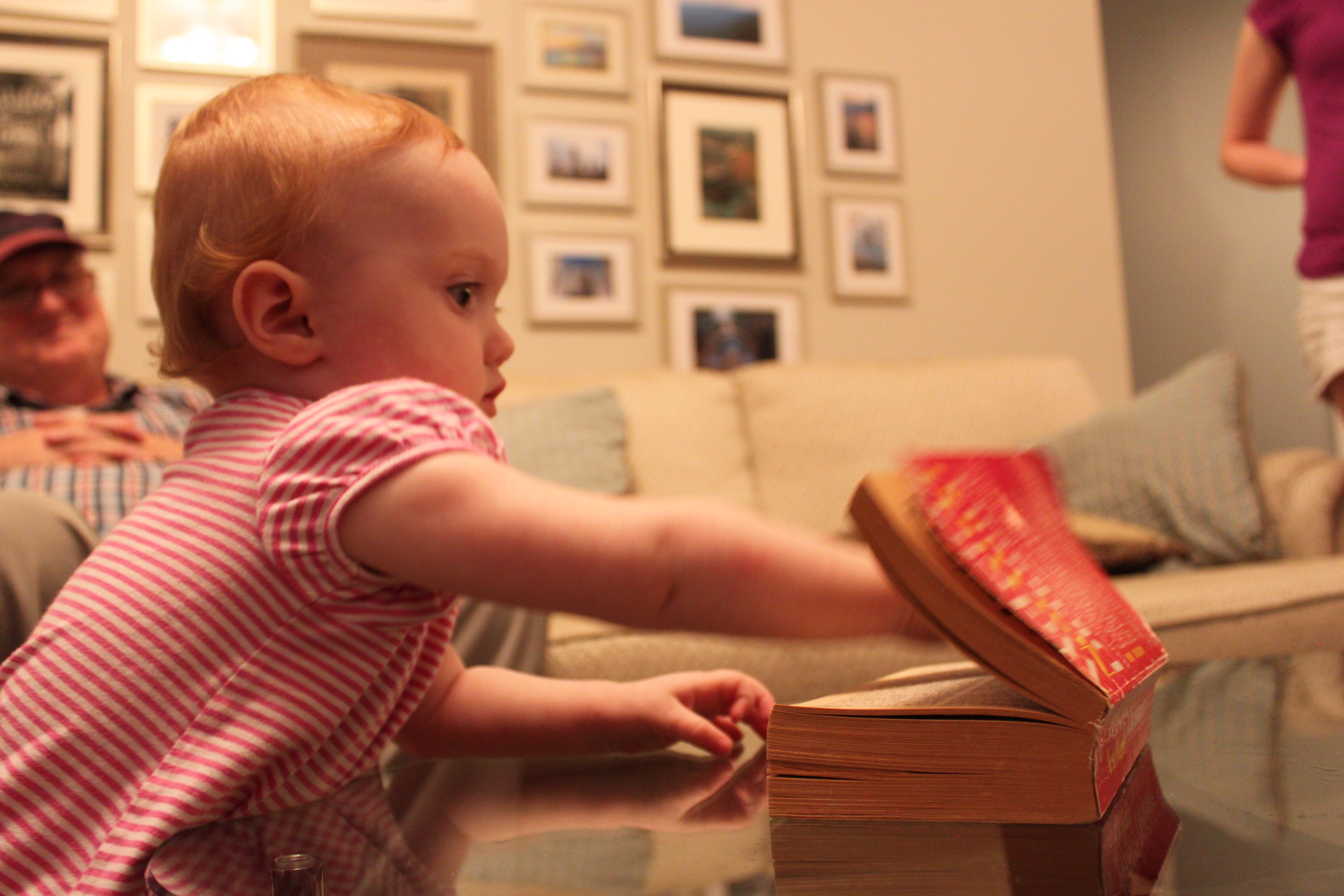
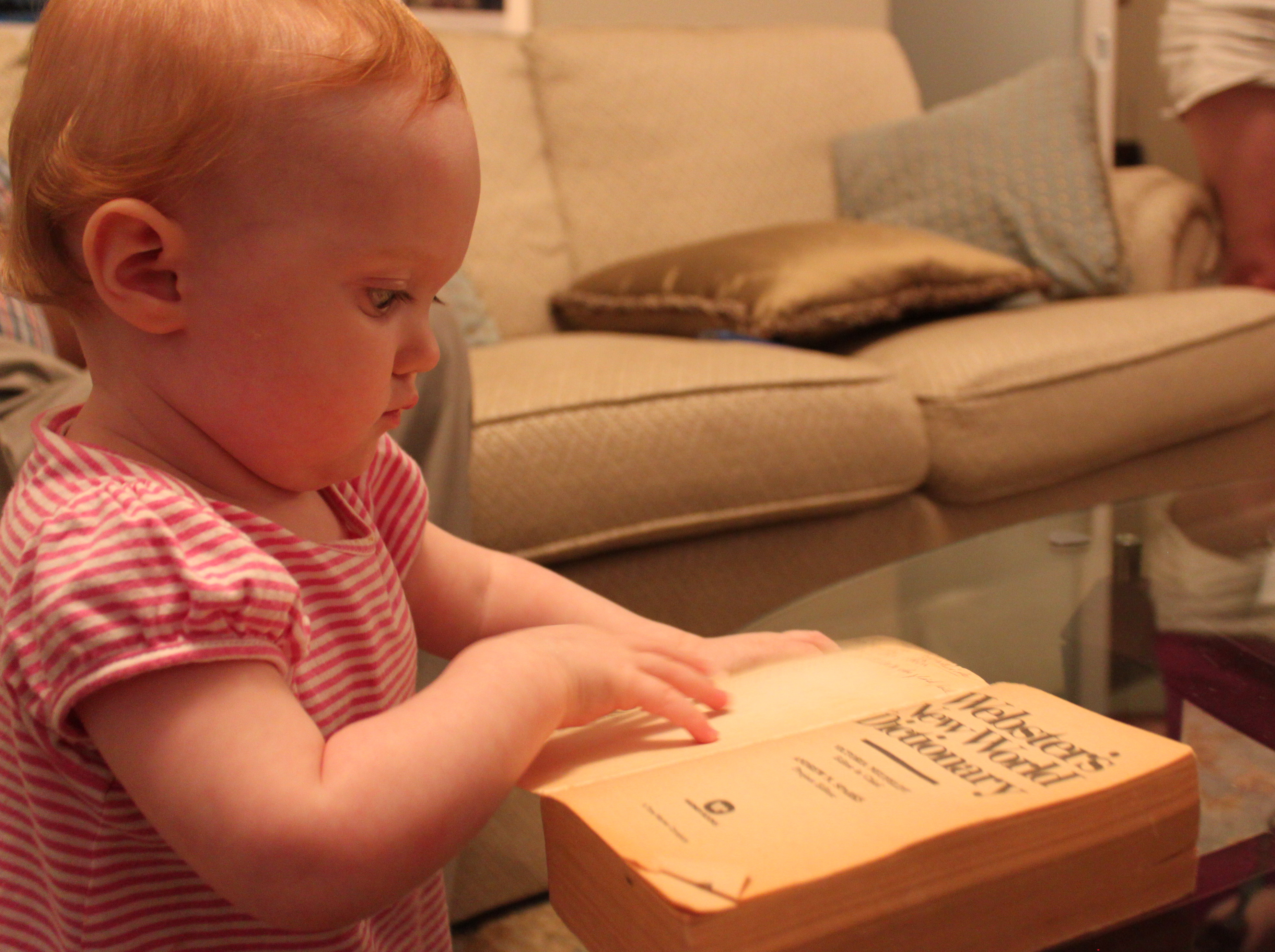
*My sweet little niece Ellie picked this word in her first ever bibliomancy. She just turned a year old. I got the chance to visit with her, my cousins, and my aunt and uncle in July in Atlanta.


Growing up as an only child, I spent a lot of time thinking about my proximity to others and about being alone. When I was surrounded by other people, I often wanted solitude. But when I was by myself, I worried about being alone. Sometimes, I was lonely.

It wasn’t until my twenties that I could actually enjoy time spent by myself without the fear of missing out or being left out. I learned when I wanted to spend time with others and when I wanted to be on my own.

In July and August, I had the opportunity to spend time with family. I come from a large extended family on both sides, and I know at times I have taken this family, and the warmth and connection of this family, for granted. There have definitely been moments when I have focused more on our differences than what we share. And in these times, I have felt isolated or judged, as if I didn’t belong. What I have not always realized is that often I was the one who was stepping back and creating rifts, even if this was out of a sense of protection.

Of all of my relatives, I am one of the few to move away, out of Louisiana, living outside the state for the past decade. Most of my cousins live within a mile or two of their parents and in close proximity to one another. There is a beauty to this kind of cohesion, this intimate distance. In my mid-twenties, some part of me knew that only by leaving would I be able to come into my own and discover who I wanted to be. I knew that I must separate from my family in order figure out who I was and how I wanted to build my life. Yet, I also believe that knowing that my parents and my family are there and that I can return at any time is one of things that has allowed me to have the confidence needed in moving away, in experimenting with risks, in encountering old wounds and healing them.

Traditionally, coat of arms were used as a way to identify individuals and clans and to proclaim military prestige. In heraldry, one part of the coat of arms is the escutcheon, where symbolic images are identified that often have to do with the individual wearing the shield. Another portion is the crest, which looks like a scroll, where a family surname is identified. Although typically described as “family crests,” coat of arms are not just representation of a clan or family; one portion of the coat of arms identifies the family and another part identifies the individual family member. At my grandparents’ house, there was a plaque that hung on the wall with the O’Neill coat of arms. In the escutcheon are two lions, representing the tribes of Judah and the lions are upright holding a red hand. The legend of the hand’s meaning was told to me many times growing up. When boats of ancestors were headed for Ireland, there was a promise that the first man to touch the land would rule so one of my ancestors chopped off his left hand and threw it ahead onto the land before the boat came ashore.


oneill

O’Neill Coat of Arms


When I was visiting my aunt, uncle, and cousins in Atlanta this July, my Uncle Danny O’Neill pulled out old family photo albums: ones my grandmother made of she and my grandfather’s courtship, older ones of my grandfather as a young boy, and his mother, my-great-grandmother. My uncle had scanned the pages and pulled them up on the TV. As we scrolled through, looking at these people we came from, I felt a sense of closeness that I don’t know if I’ve recognized before. All of us—with our individual noses, our particular way of seeing the world, our penchant for kinds of food—all of us are made up not only of the same matter as all humans but of particular matter made from shared people. Somehow remembering this grew in me a sense of deep appreciation and gratitude. We may not agree on everything, we may live in different places in different kind of houses, we may have different beliefs or priorities, but we also have in common character traits, upbringings, a shared history. It seems not to matter that this shared history has patches missing. We share both the known and the unknown and somehow the legacy of those people that came before us lives in our blood.

When my grandfather was about my age and already had a pack of mouths to feed, he began taking night classes in journalism. I have his journalism notebook and the attention he took with his notes reveals to me that this was something he deeply cared about. Writing was something he loved and wanted to be better at. My most vivid image of my grandpa is him laying on a couch with a stack of fifteen books on the coffee table in front of him. He was insatiably curious. About everything: psychology, sociology, literature, history, politics. He liked to ask what other people thought and have rousing conversations. I bet he would have made an amazing journalist. As it happened, his father had died young and he had to begin work when he was a young teenager to support his mother and his brother, seven years his junior. He worked as a porter for the Pullman Railroad, packing laundry and shining shoes, and eventually worked his way up to superintendent in New Orleans. When he had made enough money to support a family, he married my grandmother and they had five children.

Somehow, I find some sense of assurance. Because the story didn’t end with him. His second son inherited his curiosity and his love of reading and conversation. And this son’s daughter inherited this from him. I like to think that the passions and creativity of my grandfather did not die with him but rather live on in me. As I write, he is here too, in the blood coursing through my veins and the skin on my fingertips. In this way, family is about more than our individual selves or even the dynamics, both helpful and harmful, that we play out over and over again. Family is an intricate web we are a part of, a web that spans out. And when we die, our dreams and struggles and faith and beliefs are still there in the presence of those we share this link with. This web gives a sort of reassurance in a country that prizes the self above all else. We can rely on one another, and we can, if we are lucky, see the intricately woven ways in which we are connected.

I have at times felt disconnected from my Cajun family, who live in rural Louisiana, three hours and yet a world away from New Orleans. I have felt somehow different for growing up in a big city, for moving away, for loving my family and yet needing to be on my own. I was never greeted with anything but enthusiasm. I was certainly never made to feel unwelcome. This anxiety about belonging came as I aged and saw differences I didn’t know how to reconcile. Over the years, I have felt connected and disconnected in varying degrees. When, I visited family this time, my focus was not on this question of belonging. I was instead just grateful to spend time with everyone. Much of my mom’s family had gathered with very little notice to have lunch together. I saw my cousins’ kids who I remember holding when they were born. I congratulated one of them, Jada, on her recent marriage. I heard about school and sports and new jobs and new pets and recent successes and struggles. I was able to deeply hear and engage because I wasn’t stuck inside my own stories. I wasn’t concerned about whether I belonged or not, because I somehow understood that I did. I see now that we share more than we don’t and this is a gift, this deeper wisdom.


Louisiana Acadian Flag

Louisiana Acadian Flag


When we create our own families, not only by joining in marriage or procreating but by forming relationships with friends and being part of communities, we look to find people who share similar values. And these chosen families are tremendously supportive and beautiful. I have people in my lives who show up consistently and with care to celebrate and to grieve. But I also know, that if I were to call on my blood family, they would show up, too.

For those of us lucky enough to have families who enjoy each other’s company and who love one another regardless of whether we approve of every choice made, we have a refuge not to be taken for granted. I think of the image of two hands, palms up and open to form a vessel. We have a place to be held.

When I was a kid, I used to both love and hate to play freeze tag. I remember the exhilaration in running around and making it back to home base, safely. I remember the terror when I was about to be caught and the visceral sense of relief when my fingers tapped the wall, or the tree bark, or the metal of the jungle gym. Although that fear was real, the stakes are not very high in freeze tag. Okay, so someone freezes you in place. Then a team member comes and unfreezes you. Maybe you are frozen again. But eventually, the recess bell rings and you go back into the classroom, you go on about your day. But in life, running around without a sense of when we might be caught—by fear, by grief, by illness, by loneliness, by scarcity—the stakes are much higher. So, it feels all the more important that we have people we feel connected to. Family can be a sort of home base. A place to rest even when resting does not mean relief. A place where we are deeply known and accepted. A place where we can gain strength to launch back out into the uncertainty of life.

1 Comment

Filed under weekly words

port⋅ance

four.preview 


Wednesday was The Dictionary Project’s 4th Birthday! So, according to four-year-old development, at this point The Dictionary Project “wants to try new experiences” and is “developing greater self-control and ingenuity”; also, “pretend play is more complex and imaginative and can be sustained for longer period.” The Dictionary Project “approach[es] the world with great curiosity and uses its imagination to help understand it.”*


This project has been a beautiful unfolding, and I want to thank each and every one of you for your part in watching The Dictionary Project grow and develop over the years. I am looking forward to what this new year brings. As is tradition, we’ll start enter this fifth year of posts with a post about our first-ever bibliomanced word: portance.


One of the goals this year is to make the project even more interactive, to invite you more and more into the conversation, so please feel free to comment on your thoughts on our posts or words. We can start with this one. What does the word portance bring up for you?


port⋅ance (pôr/t’ns), n. [Early Mod. Eng. <Fr. portance < porter, to bear, carry; cf. –ANCE], [Archaic], conduct; bearing; carriage; demeanor


My Carriage Is Missing A Wheel, Too


Our culture is very concerned with appearance. How we look, how we dress, how we cut our hair, how we walk, how we speak. According to The Economist, Americans spend more on beauty annually than they do on education. We are encouraged to give such care and scrutiny to our own carriage and the way others carry themselves.


When I switched schools, from an all girls school to a co-ed school, in seventh grade, I walked nervously across the blacktop that first day to find where my classmates were sitting before the bell rang. I was a chubby, shy twelve-year-old. I began to look around and the girls in my class seemed so much older than me.  With their hair piled atop their heads in high ponytails, they walked with confidence, swaying their hips; they giggled and flirted with the boys. They had a sort of sureness about them. And I realized, to my dismay, that they all had shaved legs. I found a spot and sat cross-legged on the ground, pulling my light blue plaid skirt tight across my knees, and waited for the bell to ring. The rest of the day, instead of focusing on meeting new friends or teachers or how to navigate around the school building, I contorted myself into as many shapes and directions as possible in the hopes that no one would notice the hair on my legs. The last thing I wanted was to be exposed as unaware, as deeply uncool.


Underneath the entire obsession with appearance—plastic surgery and weight loss plans and new workouts and wrinkle creams and and and—rests deep fear of our own vulnerability. We want to be perceived on the outside as what we don’t always feel on the inside: whole, complete, okay. The word portance comes from the root porter: to bear, to carry. We believe we have to carry our selves, our lives, our burdens, our shames, our wounds on our own, and in this belief is rooted one of our deepest sources of suffering: the feeling of alienation and separateness from others. Also resting underneath is a deep yearning to belong. In trying to bear our hardest heartaches alone, we deny ourselves the very connection we so deeply desire and that would help us through these difficult moments.


I read a very powerful article in The New York Times the other day entitled “The Trauma of Being Alive” by Mark Epstein. He speaks about his mother who says she still grieves for his father, her husband of sixty years, four years after his death and that she “should be over it by now.” Our own grief and others’ grief makes us uncomfortable because we are reminded that we are capable of fracture. We are reminded that, no matter how careful we are, we will break. And our own denial of this inevitable breaking only makes our fear stronger. So we tell ourselves to “get over it,” we tell others to “move on” because we want to deny the reality that we live in an uncertain world.


Epstein explains that each of us experiences unavoidable traumas, both big and small, that are simply a part of being alive. He writes, “Trauma is not just the result of major disasters. It does not happen to only some people. An undercurrent of trauma runs through ordinary life, shot through as it is with the poignancy of impermanence. I like to say that if we are not suffering from post-traumatic stress disorder, we are suffering from pre-traumatic stress disorder. There is no way to be alive without being conscious of the potential for disaster.”


Often, we measure our degree of being okay in relation to our perception of the ease of others’ lives. Look at their sweet family, look at their published book, look at their high-powered job, look at their happy facebook status, look at their fancy house. We assume from our external examination of their carriage that they are getting it right while we are somehow getting it wrong. We assume they live without struggle. Or we assume that they have learned an easy and infallible way to bear.


American Buddhist nun and teacher Pema Chödrön says, “None of us is ever OK, but we all get through everything just fine.”


carriage-parts


One of the meanings of the word portance is “carriage.” It would be nice if our carriages maintained their fresh paint, their newness. But as vessels, they are meant to be used. And use results in wear. Paint peels, curtains fray. Doors get nicks and scrapes. We are on our way somewhere and we suddenly feel a jostling and hold on as we are thrown by a lost wheel. We have to stop for repairs. We look underneath the carriage for gear adjustments that need to be made. We put on a fresh coat of paint. We travel on.


What if we strove for a different kind of bearing? One that had less to do with the posture of our body and more to do with the posture of our spirit—a posture that we can accept regardless of its changing nature based on where we are in our lives? What if instead of worrying so much about the timbre of our speech, we committed to saying words that are true? What if instead of thinking of good bearing as where we were born or how much money we make or how “successful” we are, we defined good bearing as the ability to bear life, even when it is hard, with grace or without.


We don’t have to look for every nick, scrape, or paint peel on the outside of other people’s carriages. We can choose to knock on the window and look at the person inside. When stranded on the roadside with a bad wheel, we can invite another to help us whole our carriage so we can travel again. The very nature of this life requires us to bear, to carry, but it does not require that we do it alone. In order to connect with others, we have to be honest with ourselves, to speak our truth aloud. In acknowledging our struggles and imperfections, we give the people in our lives—our friends and neighbors and even those people who challenge us—the opportunity to safely acknowledge their own.


And a little 4th Birthday song for you:


*http://www.pbs.org/parents/childdevelopmenttracker/four/

Leave a comment

Filed under other words

pur·sui·vant

Kiss_Me_Kate_logo


pur·sui·vant, n[ME. pursevante; OFr. poursuivant, ppr. Of poursuivre  poursuir; see PURSUE]  1.  in the British College of Heralds, an officer ranking below a herald.  2.  a follower, attendant.


Reprise: Kate Says Kiss Off


“My tongue will tell the anger of my heart,/Or else my heart concealing it will break,/And rather than it shall, I will be free/ Even to the uttermost, as I please, in words.” –Katharina, The Taming of the Shrew


I just saw a production of Kiss Me, Kate, the musical based on Shakespeare’s The Taming of the Shrew. With music and lyrics by Cole Porter, the musical takes us through a play-within-a-play plot. We witness the backstage drama of a director and his ex-wife actress reuniting to play the lead roles of Petruchio and Katherine in Shakespeare’s play.

Seeing the show was my recommendation. My parents wanted to celebrate my birthday belatedly and given my strong affinities for musicals as a teenager and the residue of this obsession, going to the play sounded like a good way to spend an afternoon.

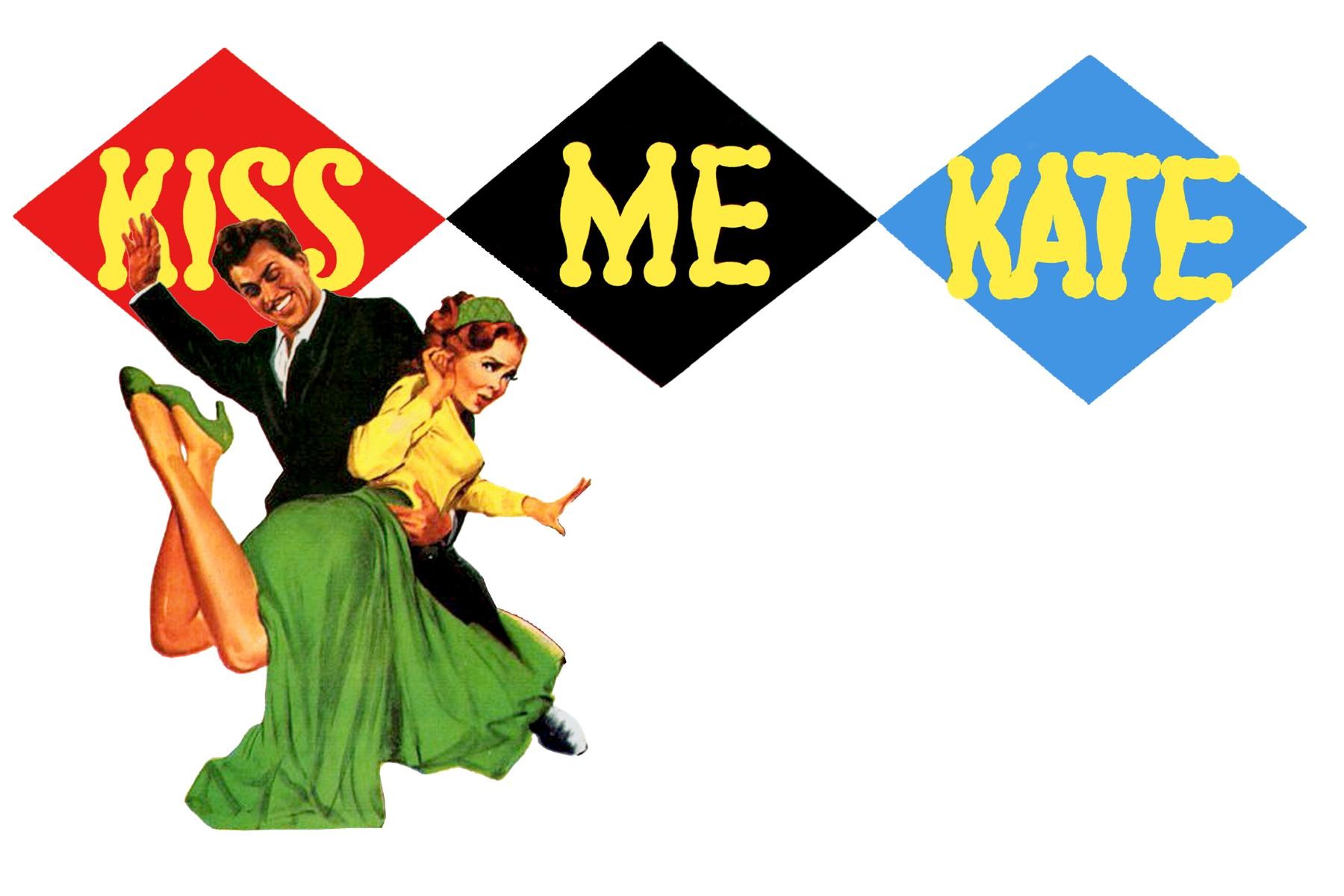
As the musical unfurled, there were clear messages about who we were supposed to be on the side of: Petruchio, the man trying to tame the willful woman, and who was supposed to be the butt of the joke: Kate. At its best, the play was oblivious to its messaging: oh, isn’t so darling how she is fighting back so strongly—silly woman. At its worst, a scene feels dangerously close to rape: Petruchio, throws Kate, who has just sung about how she will never kiss him, over his shoulder and victoriously walks away with her to their bridal suite to end Act I.


westernkateandpetruchio


In another scene, the director is displeased with his actress ex-wife acting out her real anger at him through her character and so, in front of the audience, he throws her on a table and begins spanking her. Her sore bottom becomes a running joke for the rest of the play.


kissmekate

hittingbuttKISSMEKATE1-630x473

paddlingkate


Some might say that I’m overreacting, that I’m reading into a play written over sixty years ago with a present day consciousness. And that’s true. But the fact is that the play is being produced and performed now, in our time, and as such it has strong ramifications. The art and music and theater that we engage with influences us and influences what we deem as acceptable behavior.

In an essay by Sam Hamill entitled “The Necessity to Speak,” Hamill attempts to link categories of oppression together and talks about the need to acknowledge these oppressions for what they are. He talks about the different forms violence takes, demonstrated in sexism, racism, classism, and war. One of the central focuses of his essay is the stories of women he has worked with who have been victims of domestic violence. He links the abuse of these women to the way we are taught to think of women in our culture. He writes about how James Cagney would smash a grapefruit into a woman’s face and everyone would laugh because “Nobody likes an uppity woman.” Nobody likes a woman who doesn’t know her place.

A play like this one—where the strong-willed woman needs to be tamed; where her refusal to be married is completely ignored; where her voice and her actions, no matter how loud or demonstrative, do not matter; where she is powerless because her desires are given no respect by those around her—is deeply problematic. Ultimately, this is a play in which a woman’s fiery spirit is the punchline, and her lack of volition, the happy ending

I spent the first act seething in my seat. At intermission, when I checked the playbill for what was to come, I saw that the penultimate song in the musical is entitled “I Am Ashamed That Women Are So Simple.” I pointed this out to my parents. My dad assumed the best, that the song would be tongue in cheek, a sort of meta-commentary on the sexism displayed in the play. No such luck.

In “I Am Ashamed That Women Are So Simple,” Kate decries her former choices and thus the former iteration of herself. It turns out that she was trying to make herself and her life complicated when really she, like all women, is simple. She sings, “I am ashamed that women are so simple/To offer war where they should kneel for peace,/Or seek for rule, supremacy, and sway/When they are bound to serve, love, and obey.” At the end of the song, Kate kneels before her soon-to-be husband and bows her head in a position of complete submission.

And then, with a reprise of the song “Kiss Me, Kate” (SPOILER ALERT: She kisses him), the curtain falls, with all the gender roles safely intact.

Does it sound like I’m angry? Well, that’s because I also take the play personally. I am a Kate.

By this I mean, I am a strong-willed, intelligent woman. I have opinions about things. And I speak my opinions about things. Out loud. Sometimes, I disagree with other people! Sometimes the people I disagree with are women and sometimes they are men. And it is exactly we Kates that the world is trying to shame into submission.

I spent my adolescence trying to navigate my sense of self in relation to others, particularly boys, because I grew up in the South, where there are still very clearly defined gender roles. When I read Mary Pipher’s book Reviving Ophelia in my early twenties, I began to understand the dichotomy of who I was supposed to be. In the book, Pipher examines the struggles of teenage girls who are having identity crises. They were told as young girls to work hard, to dream big, to share their ideas with others. As they grew, they were also taught to small themselves, to not make waves, to make themselves attractive to boys by being less intelligent and more conciliatory.

Towards the beginning of the play, in one of the first moments when Kate speaks for herself, she sings a song entitled “I Hate Men.” It’s so interesting to me, the whole idea of this song. Because it seems the only way writers felt they could explain why a woman like Kate wouldn’t want to marry or why she wants some volition in her life must be because she hates men. Could it be that—at Shakespeare’s time, at Cole Porter’s time, even now—she doesn’t have access to the same opportunity or the same respect as men? Or that in many place,  by the act of marrying, she becomes less than a whole person, a servant, a kind of property? I guess that’s not catchy or concise as a song title.

Men aren’t getting any favors from their depiction in the play either. Petruchio, the man who has agreed to tame Kate, comes off as a pompous player. After he has locked Kate in her bridal chamber, he sings “Where is the Life That Late I Led?”, a song detailing all the romantic dalliances he had before, the ones he gave up to be with this shrew of a woman. He names each woman and what she meant to him. There was a Lisa, actually. She “gave a new meaning to the Leaning Tower of Pisa.” How charming.

I believe so strongly in the power of discourse. A struggle I encounter when I start to talk about issues of inequality or misogyny is that oftentimes people aren’t interested in a discussion. But aren’t these the kind of discussions worth having? Aren’t they the ones that could change futures and save lives? I would have appreciated the opportunity for a dialogue after the play. Maybe I could see the play in a new way or maybe I would have had the opportunity to witness my own concerns voiced in a different way.

I have been thinking about the power of language lately. And how, at certain points in my life, certain words and stories and songs have literally saved me. When I feel compelled to write, oftentimes it is because I have butted up against some idea or concept or perspective that I am wrestling with. Writing is a way for me to work through it and to offer a different way of seeing something.

In the closing scene, Kate sings: “So, wife, hold your temper and meekly put/ Your hand ‘neath the sole of your husband’s foot/ In token of which duty, if he please/ My hand is ready/ Ready/ May it do him ease.”

And here, the dutiful woman is again restored to her position of servitude, a pursuivant to her husband’s needs. The fact that this play can be performed now without a hint of hesitation, without women in the play or women in the audience voicing discomfort, outrage, or dissonance reveals much about the society we live in. It is a society in which many religions still require the word “obey” for women as part of marriage vows. And where a woman can be sentenced twenty years for firing a warning shot when her ex-husband threatened to kill her and her child. It is a society where young men rape a young woman and brag about it on social media. Where, when given sentences for their crime, these young men are spoken of as young men of promise, put away before their time. It is a society in which to even write this and acknowledge these things, to express my perspective, is to risk me being called oversensitive, man-hating, or a bitch. But you know what? These things need attention brought to them. Because this play and pieces of art way more demonstrably misogynistic are constantly being produced without a sense of awareness about the aspects of them that are detrimental to all people, all genders.

As I was watching the play, feeling myself immersed in reactivity, I knew that when I left the theater, I could write about it. Each of us needs to complete the picture that these kind of experiences and shows leave out. We need to vocalize why we have a knot in the pit of our stomach or fire in our veins so that others can understand. Maybe then, we have an opportunity to learn from our mistakes and treat everyone with dignity and respect, honoring every single person as a whole human being.
6 Comments

Filed under weekly words

com·man·deer

 wooden-shape-blocks

com·man·deer  v.  1: a : to compel to perform military service b : to seize for military purposes  2: to take arbitrary or forcible possession of


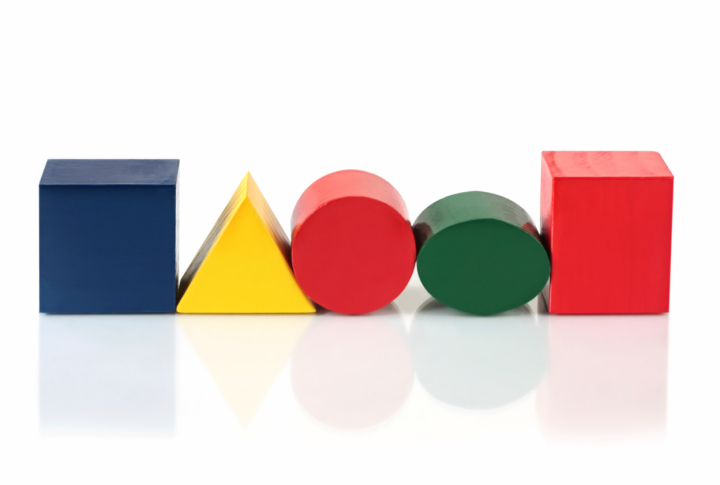
I remember vividly a toy I had at a young age. It was a sort of rectangular wooden box and at the top were holes in different shapes with a different colored border for each one. These shapes corresponded with blocks: a red circle, a blue square, a yellow triangle. I remember the utter futility and frustration of trying to make a triangle block fit into the square or the circle into the triangle opening. And I also remember the feeling of complete success, of momentous satisfaction when I slid the block into the right shape and heard the clunk of the block hitting the inside of the box.


Such a simple toy. Such a simple action. Such a complicated process of learning and development to get there.


I spent yesterday with two beings who are just over a year old. They were a sheer delight to be around. They ate their food when they were hungry and drank water when they were thirsty. They handed books to adults when they wanted to be read to. They reached out to be held. They played on musical toys. When they were amused or happy, they smiled or filled the room with laughter. When they fell or banged a limb or got tired, they cried. They squawked when they were annoyed or didn’t want to share. Because they are so new to the world, because they are so early in their development, there is no voice telling them who they are supposed to be. They simply are. And this, their being and their becoming, is a beautiful thing witness. 


As adults, it is harder to accept that we just are. We find it much more challenging to appreciate our own being and becoming.
 

I made myself a schedule for this month, full of hourly to-dos and work plans. Sometimes when I have looked at it, I have felt empowered or disciplined. There have been occasions when I have followed it to a t. Most times when I have looked at it though, I have felt a sense of impending doom. Because after teaching steadily through the year and then two intensive summer sessions in June, I am exhausted. So my aspirations, even those that feel exciting to me, begin to cull. They accumulate as demands until I feel as if I am commandeering my own life rather than committing to myself and my passions. The line between commandeering and committing feels very thin sometimes.


I think one of the most dangerous myths of our culture is the ultimate primacy given to productivity. We are taught to believe that if we aren’t constantly doing, if we aren’t always moving or busy, we are not earning our keep on the planet. We learn to count hours and output. We are trained in crunching numbers. We are encouraged to calculate the meaning of our lives based on the quantities in them: how many things we check off our to-do list per day, how much money is in our banking account, how many phone calls we made, how many many emails we sent, how many likes our status update got, how many tasks we completed at once, how many dishes done. We read up on “time saving applications” not remembering that time can never be saved, only spent. In our efforts to provide measurements of our own worth, to ourselves and others, we commandeer the time we are given. And in doing so, we miss all the subtleties.


We miss the small shifts in our own ways of thinking. We miss tiny moments. We forget to glance up at the sky when we get out of our cars. We pass by strangers walking their dogs at the park without stopping to say hello. We forget to breathe in and remember how much we enjoy the smell of creosote just before it rains. We have no time to sit still. We have no time to look at the moon.
 

I’m sure we all have moments when we are fully present, but I’m also sure we all have moments when we try to control every aspect of our experience. There is a difference between using the focused attention required to fit a circular object into a circular space and trying to jam a triangle shape into a square opening because we have decided we will make it fit.


Hungarian psychology professor Mihály Csíkszentmihályi developed and researched the theory of “flow.” Flow is a mental state wherein a person doing an activity is fully absorbed in the activity to the extent that they experience a feeling of complete focus, engagement, and pleasure. They are completely immersed in what they are doing. Think of a writer writing, a cellist playing cello, a painter painting, a child engaging in the act of playing with her toys.


Flow is not something that can be forced. We have to show up but we have to show up without demands and expectations beyond the offering of ourselves and this space and this time. The writer sits at her desk, the cellist picks up his instrument, the painter holds his brush, the child sits on the floor with her toys. Flow requires attention but it also requires a kind of letting go.


On the opposite side of the spectrum, commandeering comes out of a belief that we can control our lives in a way that will provide satisfaction, prove our own merits, and protect us from harm and suffering. Commandeering, at least in this context, seems to be motivated primarily by fear.


“When people restrain themselves out of fear, their lives are by necessity diminished,” Csikszentmihalyi said. “Only through freely chosen discipline can life be enjoyed and still kept within the bounds of reason.”


Freely chosen discipline corrects the sometimes-antagonistic aspect of the word “discipline” by adding the concepts of “choice” and “freedom.” Freely chosen discipline seems to hold space for both accountability and flexibility. We plan a schedule for ourselves and when life happens, we adapt and change while still committing to our goals. This allows time for us to move towards what we want to accomplish while not defining ourselves by what we do or make. We can choose when we work, when we play, when we do, and when we simply are.


2 Comments

Filed under weekly words