Tag Archives: lisa o’neill

nonfiction november

There Is Nothing Wrong In This Whole World, Installation by Chris Cobb, Photo by Andrea Scher


Hi Dictionary Project People,

I am very pleased to announce that we are adding a new event to our repertoire: nonfiction november.  I tend to write nonfiction essays for the regular weekly words. During November, I wanted to open the doors to other nonfictioneers. All month, we will be featuring short essays inspired by bibliomanced dictionary project words.

While we are on the subject, might I just say that I’ve always been a little unsatisfied by the word “nonfiction” as a descriptor for the genre. A definition in negation. A genre defined by what it is not. I haven’t as of yet found a word or phrase that works to be encompassing of the whole genre, but I’d love to see one. I think what most attracts me to nonfiction as a genre, to write in and to read, is the discovery of all that is true and truly bizarre in our world. I like making connections between seemingly unconnected things. I like listening to people’s stories and thinking about the ways they intersect with art and music and culture, with things I’ve read and things I believe. I like the attempt to get to the heart of the matter. Truth and reflection and beauty are of course present in all genres of writing. Nonfiction, I think offers one thread of connection between the writer and reader: here’s what I see, let’s make sense of it together.  I look forward to sharing with you the nonfiction pieces of writers this month. Stay tuned.

3 Comments

Filed under nonfiction november

the dictionary project author interview: ander monson

Today, we feature an interview with Ander Monson, author in all genres and known innovator in the world of nonfiction. I think what I appreciate most about Ander’s work is how he brings to the forefront the unexpected and neglected musings that are often relegated to the sidebar, the footnotes, the parentheses. These ideas are investigated, interrogated, violently disassembled and put back together again in surprising, compelling, and sometimes confounding ways.  As he once told me, the essayist’s job is to show the inner workings of the writer’s brain on the page. Enjoy these synapses, these nerve endings.


1. Please share a memory/story/thought in relation to a dictionary/dictionaries:


I’ve collected old dictionaries for years, starting mostly when I lived in Alabama, and happened on a whole pile of them at Alabama’s Thrift Store, now named, instead, America’s Thrift Store. I’d buy them all. I must have had forty. They were all well outdated. I wondered what worth there was in an outdated dictionary. But they had the most lovely images: etchings, woodcuts, weird handmade diagrams of things. I got excited. I kept them for four years, acquiring more, but had to discard most of them when my wife and I moved to Michigan. They weigh a ton. They take up too much space. But first I pillaged them. Now I restrict myself only to specialist dictionaries (medical dictionaries, photography dictionaries, tool-and-die dictionaries, mathematics dictionaries, etc.) and to my OED condensed, 1971, in micro-script. It comes with a magnifying glass.


2. What is your current favorite word?

Library.


3. What is the most obnoxious/insidious/annoying word?

Utilize.


4. What word has been your (recent or past) muse?

I almost never think of words as muses. To me they’re tools—sometimes worlds.


5. Could you talk a little bit about the interaction of words and space in your work? 

Well, that’s a big question. I’ll narrow it down a bit. The piece I wrote for this, Dear Sepulcher, is part of this book project I’m finishing up this fall in which I write short, associative, compressed essays in response to things happened on in libraries: five words (in this case), a passage from a book, a striking image, an snatch of overheard conversation, a human hair, a punch card, homophobic marginalia, a packet of seeds, a due date stamp, just to name a few. Once written, they are originally published back into the book in the library in which I found the originating thing. So they’re words written in response to words I found in any one of a series of particular spaces (libraries, loosely defined), and published back into that space as a communication to a future reader. In this way I’ve been thinking of the library as a medium, a meeting space for brains to find each other. I’m also collecting these short essays as 6×9 cards, unbound, unordered in a box. So in their production I’m thinking about space and language, image and design (as I often do in my work). How language can be a tool of design—or design a tool of language. Either can serve the other, but they work best when they can have a conversation.


6. Please respond to the following words and definitions*, picked exclusively at random for you:


se·pul·cher  (ˈse-pəl-kər),  n.  [ME. & OFr. sepulcre; L. spulcrum < sepelire, to bury],  1.  a vault for burial; grave; tomb.  2.  a place for the safekeeping of relics, as in an altar.  v.t.  to place in a sepulcher; bury.


Al·a·bam·i·an  (ˌæləˈbæmɪən), adj.  of Alabama.  n.  a native or inhabitant of Alabama.


ken·nel  (/ˈkenl),  n.  [ME. kenel, keneil;  OFr.  *kenil; LL. canile < L. canis, a dog],  1.  a doghouse  2.  often pl. a place where dogs are bred or kept.  3.  a pack of dogs  v.t.  [KENNELED or KENNELLED (‘ld), KENNELING or KENNELLING], to place or keep in a kennel.  v.ito live or take shelter in a kennel.


Pa·pe·e·te  (pəˈpētē), n.  a seaport on Tahitia: capital of the Society Islands and French Oceania: pop., 8500.


re·ta·li·ate  (riˈtalēˌāt),  v.i[RETALIATED (-id) RETALIATING], [<L. retaliatus, pp. of retaliare, to require, retaliate < re-, back + talio, punishment in kind < talis, such}, to return like for like; especially to return evil for evil; pay back injury for injury: as, if he is hurt, he will retailiate.  v.t.  to return an injury, wrong, etc. for (an injury, wrong, etc. given); requite in kind.


*Definitions taken from Webster’s New World Dictionary of the American Language, copyright 1955.


Ander Monson is the author of a host of paraphernalia including a decoder wheel, several chapbooks and limited edition letterpress collaborations, a website, and five books, most recently The Available World (poetry, Sarabande, 2010) and Vanishing Point: Not a Memoir (nonfiction, Graywolf, 2010). He lives and teaches in Tucson, Arizona, where he edits the magazine DIAGRAM  and the New Michigan Press.

Leave a comment

Filed under author interviews

the dictionary project author interview: kate durbin


Today, I’m thrilled to share with you an author interview with writer, performer, and transmedia artist Kate Durbin. Kate’s work brilliantly engages with pop culture, celebrity culture, teen girl culture, fashion, and media.  I first became aware of her through her Women as Objects project and Gaga Stigmata, an online arts and criticism journal about Lady Gaga of which she is founding editor.

All glitter and turquoise and bite and wit. Enjoy!


1. Please share a memory/story/thought in relation to a dictionary/dictionaries:

A few years back one of my students showed me the brilliant Urban Dictionary, an online collection of slang. The website was created by a freshman in college and the dictionary’s very first entry was a definition of “the man.” Today’s Sept. 19, 2012 entry is “penis game”: “This is a game that needs a minimum of 2 players. It can be played anywhere from the workplace to school. It starts when one player says penis ! The other player must say penis ! but louder than the first person. It goes on until one player quits or can’t get louder than the other.”

I think it’s appropriate that kids are collecting the language that expresses our cultural moment, although were Shakespeare alive today he’d likely be adding words to the Urban Dictionary too.


2. What is your current favorite word?

Chiffon. The shhh of air in my mouth when I say chiffon is like the very lightness of the material. I heart the luxurious language of fabric: duchess satin, sequined slipper silk, crushed velvet, crinoline, chantilly lace, chenille, moss crepe, sparkle organza, taffeta, liquid lame, tender buttons!


3. What, in your opinion, is the most obnoxious/insidious/annoying word?

Hipster. I feel that term has become an acceptable way to dismiss someone who you perceive to be a threat to your own coolness. Oddly, though, the people who complain about hipsters the most often seem to resemble the criteria for the term itself. But that’s beside the point, as there is no such thing as a hipster.


4. What word has been your (recent or past) muse?

iPrincess


5. Could you talk a bit about the language of youth culture, particularly teenage girls? I’m thinking specifically about your “Women as Objects” project, which collages images from different teen girls’ tumblr blogs. How does language function here? in their world? in your integration of their language? In the land of the Internet?

For Women as Objects (www.womenasobjects.tumblr.com) I not only curate images but text posts as well from teenage girls—so it is both a visual and text-based project. Some of the images have text on them, too.

I think language functions in the online teenage girl’s world as a means of radical self-expression, as tumblr is a place where they can express themselves more liberally than in their IRL existence. At the same time, language functions also as a hook for attention, and so that means they are competing with one another by creating increasingly abject or pop culturally savvy text posts. They create their own language, a sort of iPrincess language of the internet. It’s equal parts computer keyboard and Cher from Clueless.

The way I’ve integrated the girls’ language most directly is in the video art pieces I’ve done, where I’ve taken a collection of the girls’ text posts and conversations with one another and performed those texts directly, in costume, as tumblr girls in bathroom settings. By taking their texts out of context of the Internet, which is a space where the larger culture is sick of seeing girls spill their guts, makes the girls’ humor, vulnerability, abjection, cleverness, body awareness, and pop cultural savvy more apparently brilliant, glittering, pleasurable and important.


6. If you were to write a dictionary definition for Lady Gaga, what would it say?

Lady Gaga: woman having proprietary rights or authority especially as a feudal superior : woman receiving the homage or devotion of a knight or lover : dame : infatuated : virgin mary : usually used with Our : doting : woman of superior social position : crazy : woman of refinement and gentle manners : foolish :woman, female : often used in a courteous reference : marked by wild enthusiasm : show the lady to a seat : or usually in the plural in address : ladies and gentlemen : wife : girlfriend, mistress : any of various titled women in Great Britain : used as the customary title of a marchioness, countess, viscountess, or baroness or the wife of a knight, baronet, member of the peerage, or one having the courtesy title of lord and used as a courtesy title for the daughter of a duke, marquess, or earl : I can’t understand how anyone could be so gaga over golf : woman who is a member of an order of knighthood : he thinks that most artists are at least a little bit gaga : origin French, from gaga fool : of imitative origin : First Known Use 1917


7. Please respond to the following words and definitions*, picked exclusively at random for you:


2up  \əp\  adj   1 :  risen above the horizon <the sun is ~>  2 :  being out of bed (~ by 6 o’clock)  3 : relatively high <prices are ~>  4 :  RAISED, LIFTED <windows are ~>  5 :  BUILT, CONSTRUCTED <the house is ~>  6 :  grown above a surface <the corn is ~>  7 :  moving, inclining, or directed upward  8 :  marked by agitation, excitement, or activity  9 :  READY; esp: highly prepared  10 :  going on: taking place <find out what is ~>  11 :  EXPIRED, ENDED <the time is ~>  12 :  extensively aware or informed <~ on the news>  13 :  being ahead or in advance of an opponent <one hole ~ in a match>  14 :  presented for or being under consideration <~ for promotion>  15 :  charged before a court <~ for robbery>


block·ade  \bläˈkād\  n : the isolation of a place usu. By troops or ships — block·ade vb  — block·ade·er n


2sluice  \slo͞os\  vb    sluiced; sluic·ing  1 :  to draw off through a sluice   2 :  to wash with running water: FLUSH


a·sep·tic  \ āˈseptik\   adj free or freed from disease-causing germs


re·par·a·tive   \ri-ˈpa-rə-tiv\    adj   1 :  of, relating to, or effecting repairs  2 :  serving to make amends


(All images taken from tumblr)

*Definitions taken from The Merriam-Webster Dictionary, New Edition, copyright 2004.


Kate Durbin is a Los Angeles-based writer, performer, and transmedia artist. She is author of The Ravenous Audience (Akashic Books) and E! Entertainment Diamond Edition (Insert/Blanc Press, forthcoming). She has also written five chapbooks, including, most recently, FASHIONWHORE and Kept Women. Her projects have been featured in Spex, Huffington Post, The New Yorker, Salon.com, Denver Quarterly, AOL, Poets and Writers, TMobile’s Your Digital Daily, Poets.org, VLAK, Lana Turner: A Journal of Poetry and Opinion, Black Warrior Review, berfrois, Drunken Boat, NPR, Bookslut, 1913, LIT, and Yale’s The American Scholar, among others. She is founding editor of Gaga Stigmata, an online arts and criticism journal about Lady Gaga, which will be published as a book from Zg Press in 2013.


Leave a comment

Filed under author interviews

un–

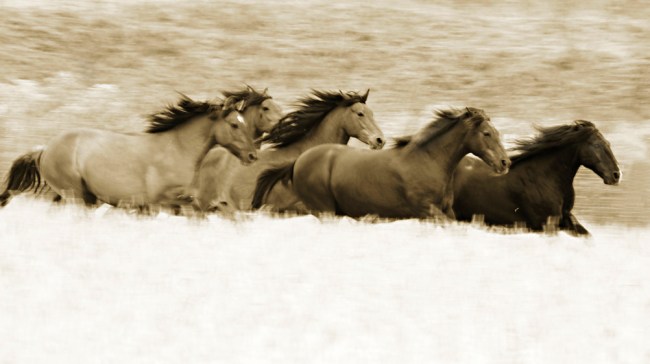
Wild Horses Running, Lisa Dearing


un2  prefix added to verbs:  denoting the reversal or cancellation of an action or state: untie | unsettle.  denoting deprivation, separation, or reduction to a lesser state: unmask unhand.  Old English un-, on-, of Germanic origin; related to Dutch ont- and German ent-

(from The New Oxford English Dictionary, copyright 2005)


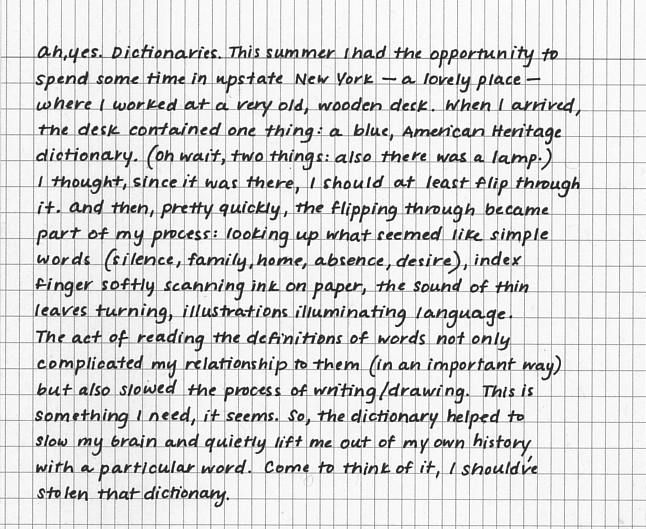
A Catalogue of Loss and Gain: The Doing of Un


Here’s a theory: we spend our whole lives trying to un ourselves.

Sometimes, the unning is good for us. We undo patterns that no longer serve us. We unfetter ourselves from belief systems that limit us. We unearth what we really desire and we unwrite the narrative that we do not deserve all these dreams, these longings. We unmask so that others can see us for who we really are. We unclutter. We unbolt. We unarm.

Sometimes, the unning does us harm. We un all over ourselves. We rename ourselves: Unable, Unacceptable, Undeserving. We declare events and situations unbearable, and thus strip ourselves of our earned and ever-present power. We decide life should be unchanging and so we hold so tightly onto what is that we can’t see what is possible. We declare our life’s work Untitled because we are too terrified to name it imperfectly. We’d rather call it nothing than be imprecise, than be exposed for our lack of poeticism.

Right now, the moon is full and in Aries. This is a time abundant with potential, but potential that comes from the deepest of rifts. We must let go and abandon previous ways of being. We must un in order to make space for what will be birthed. We must cancel that which does not serve us to make space for that which will. We un and in doing so lose our footing, our sense of who we are and what we know, in order to make room for an uncertain future which will weave us back together in ways we could never imagine. We unharness our unyielding hold on what the future must be in order to allow it to come into what it will be, one breath and one moment at a time.

Un sounds like fun but it can be the opposite: loss, separation, reduction. Un sounds like won but it is about losing. Un sounds like done but is about undoing. Un cancels. Un annuls. Un reprieves and deprives. It both lessens and augments: what’s lost is gone and yet what’s lost becomes mythic, legendary in proportion. It both no longer is and exists in a size and measure it never did when it wasn’t un.

And yet, un brings offerings. Un brings, even in its negation, the imaginings of what is possible. It speaks to possibility on the other side. If there is unbelief, belief is possible. If we deem something unworthy, how might worthiness be seen? If something is unheard of, who is not able or willing to hear? Which limitations and negations are merely semantic ones made only by our need to constrain and define?

We are talking about irony and paradox and contradiction in my writing classes. How often these instances occur in literature and in life. How can it be possible that in unfastening and unbuckling, we could be held together more securely? That unmarking sometimes brings more attention to the canvas than the mark itself? That in unwinding a spool, we become more aware of the constraint of thread? That in unmaking something, we are aware so keenly of the steps and materials that allowed the thing to take shape? That in unbridling, we find, finally, both the freedom and the restraint we seek.


4 Comments

Filed under weekly words

the dictionary project author interview: andrea scher


On this fourth Wednesday of September, the dictionary project is pleased to host the musings of the inspired and inspiring Andrea Scher. I first became aware of Andrea’s creative work–among her many creative gifts, she is an amazing photographer and thoughtful writer–through her blog Superhero Journal, which has recently been transformed into the gorgeous Superhero Life. Her work is honest, compassionate, and rooted in inquiry into the big life questions we all face. Through her creativity, Andrea invites others to embrace their own artist selves. Enjoy!
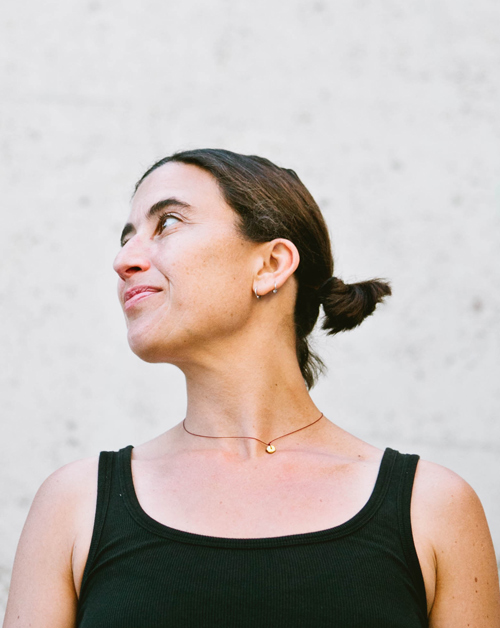
 

by Andrea Scher


1.  Please share a memory/story/thought in relation to a dictionary/dictionaries:

In college, after a long game of Balderdash over many glasses of red wine, my friends and I started asking the dictionary questions and randomly pointing to words in response.

“What should be the name of my first born child?” Drivel.

“What is the meaning of life?” Nothing.

And then, we started to get creeped out. As we passed the dictionary around, we started getting more and more accurate responses. My friend Laura, the most woo-woo in the room, asked, “Who is sending us these messages?” She got the word, magpie.

We thought this was charming, a little bird whispering in our ear. We later discovered that in Native American folklore, the magpie is the messenger between the two worlds…. I have been asking the dictionary big questions ever since.


2. What is your current favorite word?

discern.


3. What, in your opinion, is the most obnoxious/insidious/annoying word?

When people add the suffix “gasm” to other, otherwise totally harmless words.


4. What word has been your muse?

courage


5. What word feels like coming home?

Schmatta

I love Yiddish words in general, but this one feels like home. I heard it for the first time in my twenties when my first-ever Jewish friend told me, “Don’t forget your schmatta!” (little sweater) Every time I hear that word or say it myself I feel like I belong to something bigger. Something bigger than religion or culture, a kind of belonging that is everyday and homespun.


6. Please respond to the following words and definitions*, picked exclusively at random for you:


Sze·chwan  (ˈsech-ˌwän; Chin. ˈsooch-ˌwän),  n.  a province of central China: area, 156,675 sq. mi.; pop., 47,108,000 (est. 1947); capital, Chengtu; chief city, Chungking.


We are Jewish and therefore spent a lot of time at Chinese restaurants on Christmas. My parents ordered the same thing every time—cashew chicken, spring rolls (extra crisp) and Mongolian beef. For many years, I didn’t know there were any other dishes. Or menus at Chinese restaurants.


da·do  (ˈdādō),  n.  [pl. DADOES (-dōz)], [It., a die, die-shaped part of pedestal, hence pedestal < L. datum, a die, lit., what is given; see DATE],  1.  part of a pedestal between the cap and the base.  2.  the lower part of the wall of a room if decorated differently from the upper part, as with panels or an ornamental order.


Dado is what my boys sometimes call my husband. Dada. Dado.


cro·chet  (krō-ˈshā),  n.  [Fr., small hook; see CROTCHET],  a kind of knitting done with one hooked needle.  v.t. & v.i.  [CROCHETED (-shād’), CROCHETING], to knit with such a  needle.


When I was about ten I became obsessed with crocheting granny squares. Trouble is I never figured out how to weave them together into a blanket, so I had just had an ever-growing collection of squares accumulating in the closet.

This is when You Tube how–to videos would have come in handy.


ground (ground),  n.  [ME. grounde, grund; AS. Grund, sea bottom, etc. (cf. GROUND SWELL); akin to G. grund; ? IE> *ghren-to, what is touched in passing over < base *gren-, to rub against, etc.; cf. GRIND],  1.  a)  originally, the lowest part, base, or bottom of anything. b)  the bottom of the sea.  2.  the solid surface of the earth.  3.  the soil of the earth; earth; land: as, he tills the ground.  4.  any particular piece of land; especially, one set aside for a specified purpose: as, a hunting ground.  5.  any particular area of reference, discussion, work, etc.; topic; subject: as, let us go over the ground again.  6.  the distance to a goal, objective, position, etc.  7.  basis; foundation; groundwork.  8.  often pl. the logical basis of a conclusion, action, etc.; valid reason, motive, or cause.  9.  the background or surface over which other parts are spread or laid, as the main surface of a painting.  10.  in electricity, the connection of an electrical conductor with the ground: abbreviated grd.  See also grounds.  adj.  1.  of, on, or near the ground.  2.  to cause (a ship, etc.) to run aground.  3.  to found on a firm basis; establish.  4.  to base (a claim, argument, etc.) on: as, ground your claims on fact.  5.  to instruct (a person) in the elements or first principles of.  6.  to provide with a background.  7.  in aviation, to cause to remain on the ground; keep from flying: as, the plane was grounded by bad weather.  8.  in electricity, to connect (an electrical conductor) with the ground, which becomes part of the circuit.  v.i.  1.  to strike or fall to the ground.  2.  to strike the bottom or run ashore: said of a ship.  3.  in baseball, to be put out on a grounder (usually with out).


I want to be grounded. I want people to say, “She’s so grounded. I just love being with her.” Instead I am more inclined toward anxious. High strung. Vigilant. I rush to yoga. I shuttle my kids along the sidewalk quickly, for no good reason. I have to remind myself to slow down.

I get panic attacks. They crop up mysteriously at times– looking at Google maps, changing a diaper – then, post-attack, I am in for another week of anxiety. Always trying to catch my breath, afraid I’m not getting enough air. Various shades of these symptoms have plagued me for most of my adult life.

But I want to be grounded. Actually no, as I write this, I see that it’s not even grounded that I’m after. It’s light. It’s light-hearted. It’s caring a bit less. It’s trusting a bit more. It’s holding it all more lightly.


sal·ta·tion  (sal-ˈtā-shən, sȯl-),  n.  [L. saltatio, a dancing, dance < saltatus, pp. of saltare, to leap],  1.  a leaping, jumping, or dancing.  2.  sudden change, movement, or development, as if by leaping.  3.  palpitation or throbbing, as of an artery.  4.  in biology, mutation.


I have an enormous collection of jumping photos. Somehow, having my subject suspended in mid-air always has a certain magical quality — an air of celebration, of appreciating life, and aliveness. These are things that can feel hard to attain sometimes, but I am always reaching for them. These photos help.
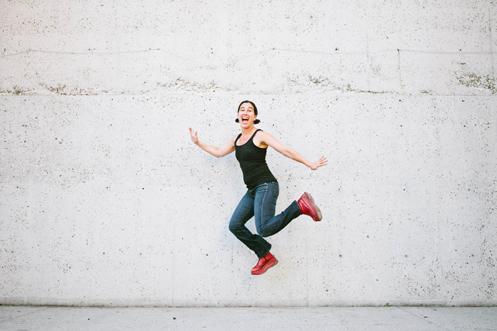
 

Andrea Scher, photo by Jen Downer


Andrea Scher is an artist, photographer, and life coach. Through her award-winning blog Superhero Journal and e-courses, Mondo Beyondo, Superhero Photo and Cultivating Courage, Andrea will inspire you to find your passions, dream big and say YES to the life you’ve always wanted.

Andrea is also a supermom (no capes, just courage) to two adorable boys named Ben and Nico. She is the co-author of a wonderful book called Expressive Photography: The Shutter Sisters Guide to Shooting from the Heart.

*Definitions taken from Webster’s New World Dictionary of the American Language, copyright 1955.
4 Comments

Filed under author interviews

the dictionary project author interview: margaret kimball


This week, I’m so pleased to share with you an interview with author/illustrator extraordinaire Margaret Kimball. Margi’s work reflects her quick mind, her quick wit, and the ease with which she navigates/blurs/confronts the (often artificial) boundaries of written language and visual image. Enjoy!


1.   Please share a memory/story/thought in relation to a dictionary/dictionaries:


2.   What is your current favorite word?


3. What, in your opinion, is the most obnoxious/insidious/annoying word?


4. Please respond to the following words and definitions*, picked exclusively and randomly for you:


padded cell, a cell, or room, lined with heavy, soft material for the confinement of violently deranged patients or prisoners.


bar·rier  (barēər)  n.  [ME. barrere;  OFr. barriere  <  barre; see BAR, n. 1.  originally, a fortress, stockade, etc. for defending an entrance or gate.  2.  a thing that prevents going ahead or approaching; obstruction, as a fence, wall, etc.  3.  anything that holds apart or separates: as, shyness was a barrier between them.  4.  a boundary or limitation.  5.  a customs gate on a country’s border.  6.  [sometimes B-], the part of the south solar ice sheet that extends into the sea.—SYN.  see obstacle.


pal·i·node  (pa-lə-ˌnōd),  n.  [MFR. palinod; LL. palinodia; Gr. palinoidia  <  palin, again  + oide, song: see ODE],  1.  an ode or poem written to retract something said in a previous poem; hence,  2.  a retraction.


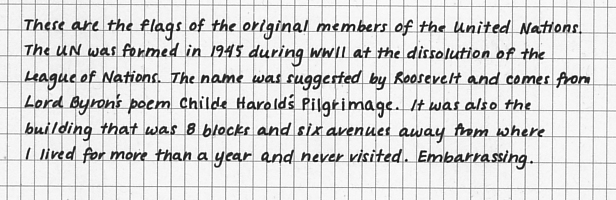
United Nations,  an international organization formed January 2, 1942, by the nations opposed to the fascist coalition of Germany, Japan, Italy, and their satellites. The 26 nations that met to form the organization were: the United States, the United Kingdom of Great Britain and Northern Ireland, the Union of Soviet Socialist Republics, China, Australia, Belgium, Canda, Luxembourg, the Netherlands, New Zealand, Nicaragua, Norway, Panama, Poland, Costa Rica, Cuba, Czechoslovakia, the Dominican Republic, El Salvador, Greece, Guatemala, Haiti, Honduras, India, the Union of South Africa, and Yugoslavia; as original members joining the preceding nations in 1945 were Argentina, Bolivia, Brazil, the Byelorussian S.S.R., Chile, Columbia, Denmark, Ecuador, Egypt, Ethiopia, France, Iran, Iraq, Lebanon, Liberia, Mexico, Paraguay, Peru, the Philippines, Saudi Arabia, Syria, Turkey, the Ukrainian S.S.R., Uruguay, and Venezuela; by 1950, additional nations that had become members were Afghanistan, Burma, Iceland, Indonesia, Israel, Pakistan, Thailand, Sweden, and Yemen. The members were organized to promote world peace and security under a permanent charter at San Francisco in May and June, 1945, and since 1946 have had their headquarters in New York City: abbreviated UN, U.N.


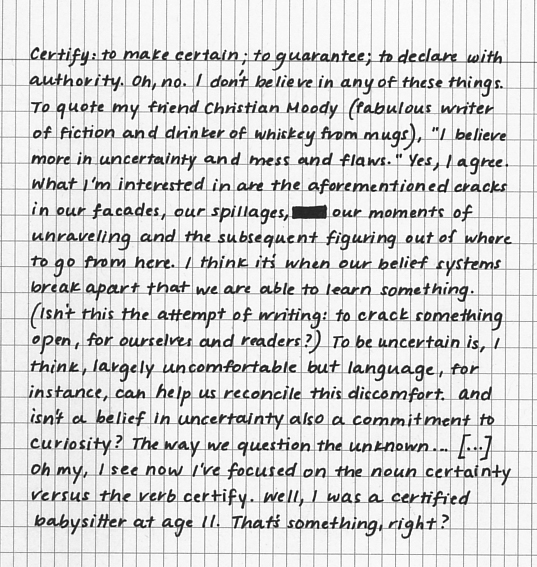
cer·ti·fy  (sər-tə-ˌfī),  v.t. [CERTIFIED (-fid’), CERTIFYING], [ME. certifien; OFr. certifier; ML. certificare; see CERTIFICATE]  1.  to declare (a thing) true, accurate, certain, etc. by formal statement, often in writing; verify; attest; hence,  2.  to declare officially insane; send to an asylum or similar institution.  3.  to guarantee the quality or worth of; vouch for; as, the bank must certify your check.  4.  [Archaic], to assure; make certain.  v.i.   to testify (to).  –SYN.  see approve.


*these definitions were bibliomanced from Webster’s New World Edition: College Edition, copyright 1955.


Margaret Kimball lives and teaches in Boston, Massachusetts. She was a resident at Yaddo this summer and her work has recently appeared in Defunct, DIAGRAM and Copper Nickel. She’s currently figuring out how to spend next summer living in a tree house in Central America.
2 Comments

Filed under author interviews

the dictionary project author interview: amaranth borsuk


Today, I am pleased to share with you an author interview with the amazing Amaranth Borsuk. Amaranth, not the author but the word, refers to “a cosmopolitan genus of herbs. Approximately 60 species are recognized, with inflorescences and foliage ranging from purple and red to gold.” And if you haven’t seen Amaranth Borsuk’s book Between Page and Screen (a collaboration with programmer Brad Bouse), you should probably check it out right about now (click here). Please enjoy her interview below!


1. Please share a memory/story/thought in relation to a dictionary/dictionaries:

When I was preparing to apply for jobs a few years ago, my friend Andrew and I did mock interviews for one another. He asked me what book I’d like to be stranded on an island with, and I drew a blank. I eventually came up with The Library of America edition of Stein’s work, but wasn’t satisfied with my own answer. His was awesome: the Oxford English Dictionary. I was terribly jealous that I hadn’t come up with it. I still love that answer, but the more I think about it, I’d rather be stranded with the American Heritage Dictionary of Indo-European Word Roots. It’s my go-to book because more than etymologies, it shows you relationships among words (often unexpected) that share a common root, which is what really drives my fascination with language. It leaves a lot up to one’s imagination. It’s also much more portable than the OED.


2. What is your current favorite word?

Saddle. I love the way it implies motion while holding one in place. One might be saddled with a burden of some kind, but the saddle itself, on a horse, a bike, a shoe, provides a means of transport.

More than that, I love that saddle has a little sadness in it—perhaps it’s the melancholy of language that wants to be in motion, but that is being held back. The word has been on my mind because I’ve been spending some time with Stein’s “Yet Dish,” which includes this delightfully conflicted poem:

Tea Fulls.

Pit it pit it little saddle pear say.

In her typically punny way (typical for this long poem in parts, anyway, written during WWI while she was developing the style of Tender Buttons), Stein reminds us that tea is made with a beautiful tea-full: a petite, pitted little saddle percée (pierced, you could say pitted, with little holes through which the tea seeps). A tea strainer thus weeps tears through its little holes because it is a little sad: a saddle. Its immobility allows the motion of water through leaves to produce a comforting hot drink. Motion and stasis, beauty and sadness all wrapped up in a pun at once linguistic and visual. Those strainers that perch across the lip of a cup do look a bit like saddles.


3. What, in your opinion, is the most obnoxious/insidious/annoying word?

For me it’s cleave. Oh the tempting cleave, with its implications of both conjunction and rupture. Cleave and cleave!! Cleave is like a drug for me. After reading my first manuscript, my father said “You use the word cleave a lot.” That’s when I knew it had become insidious. I would never, or rarely, use it in conversation, yet it keeps creeping into my poems. I’m trying to kick it out.


4. Please respond to the following words and definitions*, picked exclusively at random for you:


stare  v.  gaze steadily nlong, steady look

taser: a geeky old lead toy: zing sans volt.


e·lon·gate  v.  lengthen  — e·lon·gat·ion n. 

get·alone: navel on, gentle nothing.


sting  v.  stung, sting·ing to hurt with a sting  cause or feel sharp pain  —   n.  1 a stinging, or pain from it  sharp part in some plants, bees, etc. that pricks: also sting·er

tings: tungs, ting·ings  1 to sing with a truth  2 fail or curse neap phase — n. 1 a singing, or main profit 2 harps in some arts that respect black pen tips: also ting·ers


through·out  adv., prep. in every part (of)

our·thought: verve parade; nifty prop


bawd·y  a. i·er, —i·est  lewd yet humorous  —bawd·i·ness

weary·idea·bits: you must heel, word —bad·sinews


Amaranth Borsuk is the author of Handiwork (Slope Editions, 2012), selected by Paul Hoover for the 2011 Slope Books Prize, the chapbook Tonal Saw (The Song Cave, 2010), and, with programmer Brad Bouse, of the book of augmented-reality poems Between Page and Screen (Siglio, 2012). Her creative work spans translation, performance, book arts, and electronic literature, and she collaborates with a number of authors, including Kate Durbin, Gabriela Jauregui, and Andy Fitch. She joins the faculty in the MFA in creative writing and poetics at the University of Washington, Bothell this fall.


*Amaranth’s words were bibliomanced from Webster’s New Pocket Dictionary (copyright 2000)

Leave a comment

Filed under author interviews

rip·ple

Film still from Amelie


Today, the dictionary project is pleased to share with you the winning entry from the first write this word contest.  Here is “Carried Forward” by Kristina Roth, inspired by the word ripple!
 
 
rip·ple  (ˈripəl),  v.t.  [RIPPLED  (-id), RIPPLING], [Early Mod. Eng.; orig. of stormy, dangerous water; hence prob.  <  rip, v.  -le,  freq. suffix],  1.  to form of have little waves or undulating movements on the surface, as water or grass stirred by a breeze.  2.  to flow with such waves or movements on the surface.  3.  a)  to make a sound like that of rippling water.  b)  to proceed with an effect like that of rippling water: said of sound.  v.t.  1.  to cause to ripple.  2.  to give a wavy or undulating form or appearance to. n.  1.  a small wave or undulation, as on the surface of water.  2.  a movement, appearance, or formation resembling or suggesting this. 3.  a sound like that of rippling water.  4.  a small rapid.  SYN. see wave.


Carried Forward

 
That summer, I attend aqua aerobics classes with a handful of elderly women, where I can float and swim with no crowds. Their soft, saggy upper arms wiggle as we raise plastic dumbbells overhead. I find childlike delight in the water. I wonder if you feel as buoyant in your amniotic fluid as I do in the pool.  Sometimes I have to stop moving and stand still because the intermittent waves of morning sickness don’t combine well with the splashes and slaps of the water as we bounce up and down with our foam noodles.

My doctors are ultrasound crazy.  I see you on the screen many times and imagine waves of sound moving around your body.  At thirteen weeks, your tiny arms curl and uncurl on the screen, and I see that your vertebrae have unfurled down your spine with precision.

You travel to many places that summer. We circle the continent in our comings and goings, making loops back and forth between Houston and more beautiful places.  Your father and I trace our history and at the same time turn outward to imagine our future, turning to places we’ve already been, and some we haven’t, wondering what travel and life will be like once you arrive.

In New Mexico, I sit on the edge of the hotel bathtub and run mountain-cold water over my dusty feet. The sand from my toes is carried down the tub drain by small ripples. I buy tiny, sweet strawberries at the Santa Fe farmer’s market.  Miniscule seeds speckle their red flesh, beginning in a tight whorl at the tip of each berry and spiraling out into wider rings toward the stem.  On the way to Taos, we stop at a state park.  I stand and watch a small, clear stream running over its rocky bottom while your dad hikes up to a raging waterfall.  He shows me a picture of it later, water pounding in a steady rage over a cliff.

In South Dakota, your dad and I walk deep into the woods behind Pactola Lake, following the course of Rapid Creek.  He finds the biggest slate pieces he can lift and swings them into the moving water.  They crash loudly on the stream’s surface before sinking to the bottom, the impact sending small circular waves toward the banks.  I don’t know why he thinks this is so amusing.  Ferns are unfurling themselves along the forest floor, tips tightly closed as they lean upward and unroll themselves toward the sun.

In Minnesota, I do the dishes when we visit my mom, your grandma.  She’s only 56, but her dementia is moving quickly.  Sometimes she will pick up the dishrag and dip it into and out of the soapy water, drops puddling back into the sink from the soaked rag. We visit the largest farmer’s market I’ve ever seen – stands of vegetables, fruit, flowers, and baked goods march onward in even rows.

In Oregon, we rise early, at low tide, and chase to the shore as I did fourteen years previous.  The waves flatten on the wide beach. Each footstep in the shallow water makes a lovely splish-splash.  I scan the beach for sand dollars, wanting to find them before the flat waves that brought them in carry them back out.  Mesmerizing patterns cover the beach, ripples in the sand replicating the ripples of water that have disappeared. Rivulets begin to run into the tide pools as the morning moves toward noon.

In Pennsylvania, we baptize another godchild.  She is dunked three times into the large metal font, water splashing up and beyond the lip, white towels already piled around the base. Their folds rise and fall along the floor.  In less than a year, it will be your turn for this ancient immersion.

Your limbs move visibly across my stomach as you turn inside.  Some women call their contractions waves.  I suppose they do start slowly and then build in intensity as a wave does, and to me, they are as violent as the waves we saw pounding a rocky shore in Maine, water still pouring out of the clefts as each new wave came in. I wanted to use a tub for at least part of my labor, but medical interventions make that impossible. We watch the undulations of my contractions on the screen, another line below charting the valleys and peaks of your heartbeat.  The two lines are not as synchronized as they should be. I wear a mask, oxygen flowing into my lungs, not for myself but to try to help you. They break my water, thinking it will speed labor. White towels are put out to catch the stream.  A photo shows the doctor grasping you as you emerge, a circle of fluid radiating around your head.

You sleep next to me at home and little pools of milk spread out in circles on the sheets.  You nurse and then rest, nurse and then rest, rhythmically swallowing.  Blue-white milk streams down your chin and onto your neck.

Two weeks old, you relax visibly as the warm water I pour over your scalp trickles down your shoulders.  Eighteen months later, you still want me pour water over you in the tub, protesting with a little grunt when I stop. You are mesmerized by the thin cascades of water running down your skin. You hold your hands under the hose as water sprays in a circle onto the perennials, wiggle your fingers in the dog’s water bowl.  You pick up the bowl and dump it onto the floor into a huge spreading puddle if I don’t catch you in time.

Each month of your life expands my own, rings of experience and memory growing bigger with time, carrying the three of us forward just as the flattened waves in Oregon slide sand dollars out of the ocean depths and onto the level sand, into the wide open.


Kristina Roth is a native of South Dakota but now lives in Houston with her family and dogs. Her work has been published in Platte Valley Review, Blue Line, Relief, and other literary journals. Her artwork and photos have been published in several Somerset magazine titles and online at Shutter Sisters, WhipUp, and forthcoming at South Dakota Magazine online.
 
Notes on “Carried Forward”: I’ve been processing my son’s arrival and growth and my new identity as a mother for almost two years now. Writing has been crucial in helping me examine these topics.  The word ripple seemed to magically provide a new framework within which to reflect upon my pregnancy and son’s birth.  The idea of ripple gave me a fresh way to define and describe these events.  Having a word limit was also very freeing and refreshing, as it made me focus on key images and events without getting sidetracked. This essay was written during naptimes and came together more quickly than my pieces usually do, probably because these events have been on my mind so much.

5 Comments

Filed under contests

par·ish

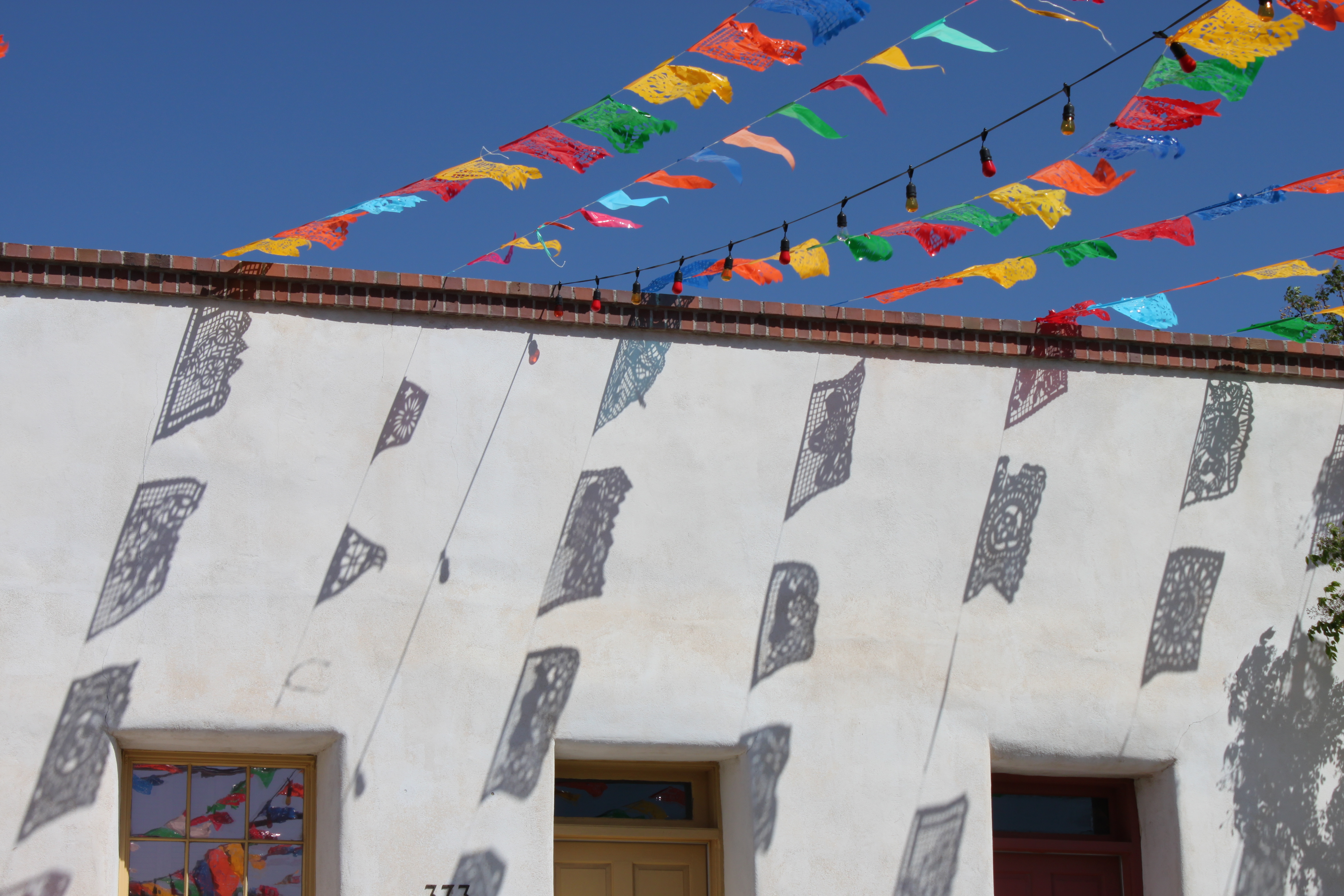
Flags in Barrio Viejo, Tucson, Lisa O’Neill


par·ish   /ˈpariSH/  n.  1  part of diocese under a priest, etc.  2  church congregation.
 
When I was small, my Sundays were ordered by ritual. By ironed dresses and clean shoes, by getting out the front door by a particular time, by entering a room with tile floors and crossing myself with water, by singing certain songs, by speaking certain words, by listening when I was made to listen and speaking when I was supposed to speak. By holding hands with my parents and shaking hands with strangers around me. By walking in a line, by receiving a white disc in my hands, by placing it on my tongue and letting it dissolve. When I was small, I loved all of this. I loved saying “Peace be with you” to those around me. I loved the smell of incense and the burn of the candles. I loved a place where I knew how things would be, and a space where others assured me God dwelled.

As I grew, I continued to take comfort in this space and these rituals, but I also came to understand that these particular ones were specific to the faith of my parents and this place.

I was raised in a place segmented and ordered by the Catholic religion. In Louisiana, the state is not divided into counties, but rather into parishes. Ascension Parish, St. Charles Parish, Vermillion Parish. An Our Father, a couple of Hail Marys and a place that rested its hopes in the sacred heart of Jesus, in the truth of the Trinity. I knew about faith long before I knew about politics and to me faith was defined in only one way, the way I knew: A parish was a place you lived. A parish was a place you worshipped. A parish was a place where you lived and worshipped. Wasn’t it that way everywhere?

In July, I went to Patti Smith’s Camera Solo exhibition at the Detroit Institute of Art Museum. From reading her memoir and viewing her art, I recognize some similarities in those of us who were born and raised Catholic. Many of us seem to carry through our lives a sense of connection to ritual, to objects as talisman, to the holiness of everyday things.

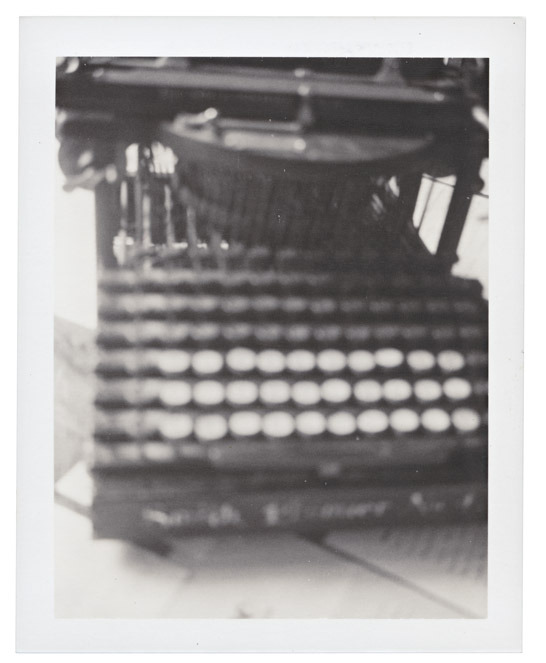
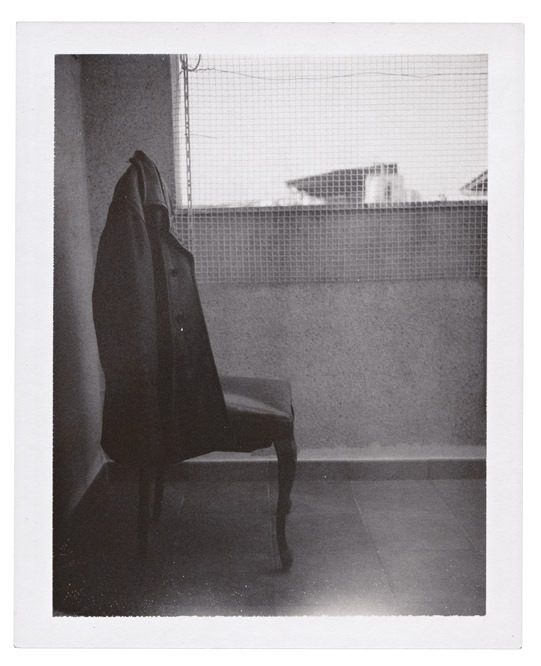
Most of Patti Smith’s photos are not of people or landscapes. They are portraits of objects, and they capture materials suspended in a moment: a tea cup, the crease on a bed, a pair of embroidered slippers.  She has photographed the beds of Virginia Woolf  and John Keats. She has photographed the slippers of her friend and former lover Robert Mapplethorpe and of Pope Benedict XV. She has photographed her father’s cup and her own guitar.
 

Virginia Woolf’s Bed 1, Monk’s House, Patti Smith

Herman Hesse’s Typewriter, Patti Smith

Robert’s Slippers, Patti Smith

Robert Bolano’s Chair, Patti Smith


In an interview for the exhibition, Patti Smith says that she has always been talismanic and that she “fell in love with art and it eclipsed everything, even religion.” She uses a Land 250 Polaroid camera to take her black and white photographs, which seem to capture both the material solidity of objects and the artist’s fleeting exposure to them at once. What I like most about her photographs are their intimacy and their immediacy. I am positioned as viewer in relation to the object, and I feel the same closeness to the subjects as Smith. There is artistry in not only in the composition but in the way Smith invites the reader into this intimate relationship with the objects, to view them as she herself experiences them. We feel the intimacy there even if we are not directly part of it. She discusses how by photographing the objects of loved ones, mentors, and artists, she is capturing a part of them. Of photographing many artists’ beds, she says: “We have extraordinary things happen in beds. We sleep, we conceive. We make love. We are ill in our beds. We recuperate. So beds are very important in our lives.” Our beds, these physical objects, hold so much of our lives, those moments both awake and dreaming, and the times in which we are most vulnerable.

When I left Catholicism abruptly after a longer period of edging away, I hadn’t yet realized that these impulses and instincts to ritual, to the sacredness of things are not particular to the Catholic Church or to religion for that matter. Afterall, the rituals of religion are inventions of the human mind; we make ritual to make sense of our life: of birth and death, of grief and struggle, of growing up and growing older, of love and sacrifice. I had a break with the church and with God as I’d known him, but the aliveness in me, the sense of something larger than myself, the knowing that we humans were not it did not go away. Neither did my appreciation for the sense of ritual and way of recognizing sacred that before I’d only recognized in my Catholic faith.


Paint on door, The Heidelberg Project, Detroit, Lisa O’Neill

Wooden Archway, Bisbee, Lisa O'Neill

Wooden Archway, Bisbee, Lisa O’Neill

Breakfast, Tucson, Lisa O’Neill

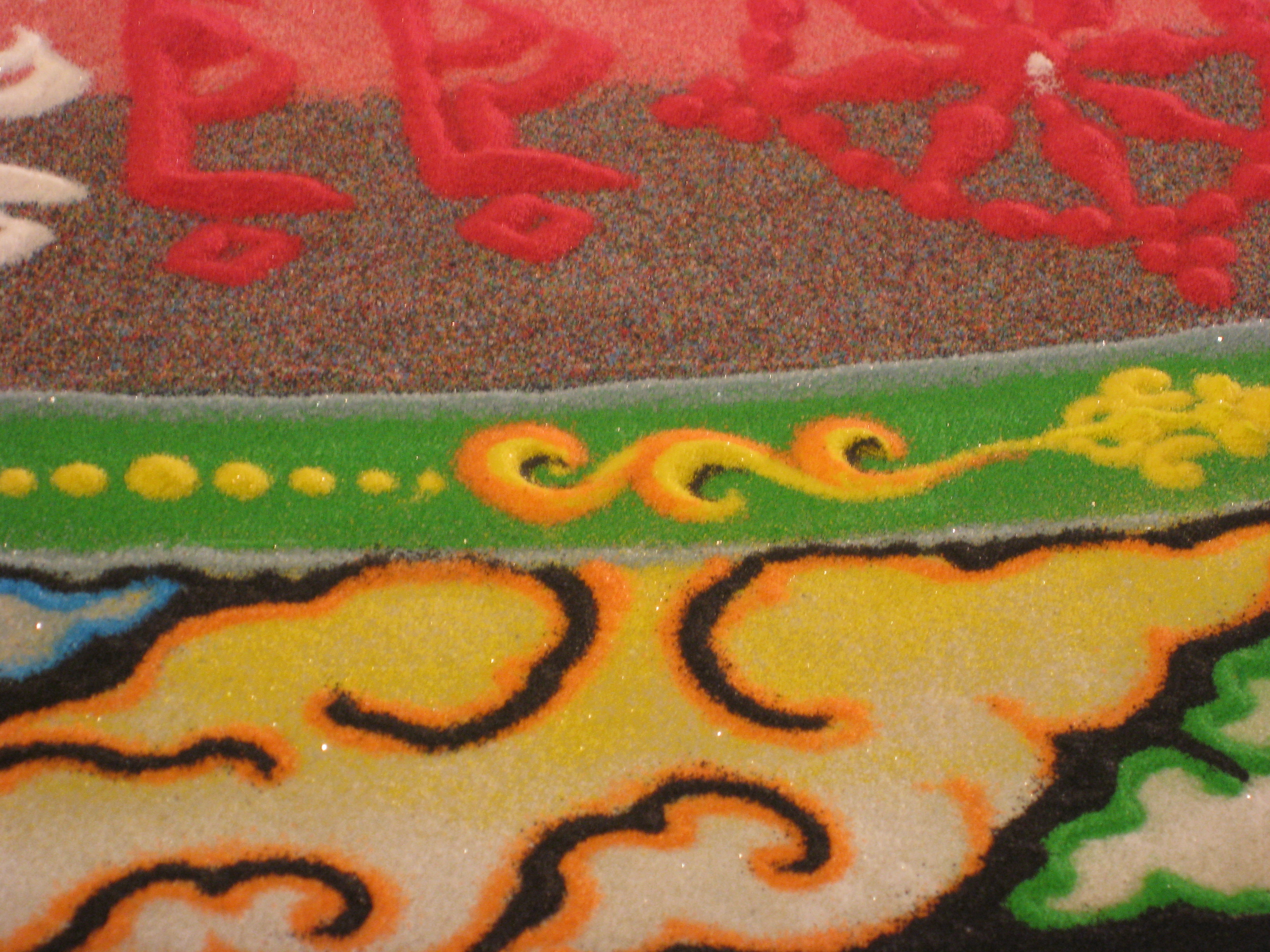
Close-up Tibetan Sand Mandala, Tucson, Lisa O’Neill

Close-up Sculpture, Phoenix Art Museum, Lisa O’Neill

Circus Tent, Venice Beach, CA, Lisa O’Neill


This recognizing the sacred is a way of looking, of being, of seeing. I don’t need to believe Jesus is savior to love Gospel music. I don’t need to know Hebrew to hear the solemnity in prayer at Pesach. The feeling of mala beads brushing up against my fingers is not so different from the feeling I used to have when my hands held a rosary. We import the meaning onto that which we celebrate, onto the things that allow us physical reminders of our more abstract beliefs. These things are both empty and full at the same time.

It took me a long time to realize that I get to decide what is sacred for me. That no one else can impose that on me. I began to realize that I can create the sacred in my own life. That I can make ritual and disassemble ritual. That I can shift and collage and shape my spiritual life, which is to say: my life, in whatever way I choose.

And so I find the sacred now whenever I think to look, which is often: in the birds that roost on branches and wires and cacti around my house, in the quick text message from my mom or dad, in the way light hits the floor in my kitchen, in the way my dog snuggles up against my chest in the morning. And in recognizing the sacred in the present moment, I don’t have to wait for the thunderbolt of divine blessing. The divine blessing is already here with me. I only have to be still, to witness it as it unfolds.

8 Comments

Filed under weekly words

m


m            \ˈem\     noun, often capitalized often attributive plural m’s or ms

a : the 13th letter of the English alphabet b : a graphic representation of this letter c : a speech counterpart of orthographic m

: one thousand — see number table

: a graphic device for reproducing the letter m

: one designated m especially as the 13th in order or class

: something shaped like the letter M

a : em 2 b : pica 2


Mmmmmmmm. In a low register or a high. Denoting pleasure. Denoting angst. Denoting agreement. Noting a passing of time or a passing away. Nothing. Noting. Noting nothing. Noting that first bite or that last. Noting the time when. Denoting no time when. The time when nothing was noted. Noting mouth on the neck, behind the ear. Noting the feeling of fingers on the body. In place of a sigh. In place of a breath. In place, a moan. Moaning. M. m. Mmmmm. The letter repeated makes a space for itself without meaning. Full of meaning. Meaning something specific. Meaning registered only in the body of the utterer. An utterance that says, this, yes, this, means yes, the moment of intake, outtake, the moment where voice must be realized, the moment sound quakes the air. M.


Leave a comment

Filed under weekly words