Tag Archives: dictionary project

vi·rus

Movin’ along By Yoshiki Arakawa and Michael Way, London Research Institute

Eye of the Storm  By Dean J. Procter (The University of Sydney), Bianca Dobson (The Australian National University), David Tscharke (The Australian National University), and Timothy P. Newsome (The University of Sydney)

Highway to infection  By Yoshiki Arakawa and Michael Way, London Research Institute

(click on photos for original post and photo credits)


Our next poem for na·po·mo comes from Valyntina Grenier. Please enjoy her poem below!

 
vi·rus,  n.  [L., a slimy liquid, poison; cf. FITCHEW],  1.  venom, as of a snake.  2.  a) any of the group of ultramicroscopic or submicroscopic infective agents that cause various diseases, as smallpox: viruses are capable of multiplyingin connection with living cells and are variously regarded as living organisms and as complex proteins.  b)  specifically, a filtrable virus. c) the exudation from the vesicles of cowpox, used as a vaccine for smallpox.  3.  anything that corrupts or poisons the mind or character; evil or harmful influence.

 
To Explicate a Virus


Venom
Vitriol
Violence
In quiet
To persist

To dissipate life

With bias or bribes as your shield
Shudder
I’ll grip
Your arm
I pull

To destring your power
I won’t let you fly through me
By my will decimate here
To cite the second amendment
To ignore the commerce of arms

To act as a stone

Annihilate arrowheads
On impact
You are a bomb
Your shrapnel propels
As arrows do

To detonate as bombs

I reach for a slave
To soothe our low-down hearts
Write a gentle embrace
To calm our frightened minds
I search virus

To find a cure

For the body sure
For plagues of belief
Only words
Shatter the star of illusion
Lay to rest all the Santas and gods

To look after the living

(whom viruses thrive on)
Follow a river of antelope
Herding through a river
Sift through a stream of diatribes
To interpret a virus as benign

To fall in with lies

I despair
To articulate something of import
We all harbor arrows
We fall
Shrapnel blasts on


IMG_0225Valyntina Grenier is a writing and visual artist.  Please visit her website  valyntinagrenier.com.

4 Comments

Filed under napomo

Diana

diana cropped


Last night, we held our third the dictionary project presents! reading at Casa Libre en la Solana. And we finally revealed the word that our writers and readers had been working with for two weeks: Diana!

We were all grateful for having to engage with Diana: Roman goddess of the hunt, of the moon and childbirth, of all things wild.

One of the most exciting things about our reading series is assigning the same word to a group of writers and seeing the different ways these brilliant minds and hearts experience and interpret that word.  I am grateful to Ian Ellasante, Hannah Ensor, Kindall Gray, Tc Tolbert, and Teré Fowler-Chapman for their writing and for reading last night. And I am grateful to everyone that came.

We will post photos and videos soon from the event, but in the meantime, I would like to share with you the piece I wrote as an introduction. Wishing you a beautiful day.


Diana!

As many of you know, whenever I bibliomance a word for tdp, I close my eyes and run my finger through the dictionary and then over a page. This time, I landed on the image of Diana.


In yoga asana practice, there are several poses named warrior. In my favorite warrior pose—I say favorite because I’m not holding the position for several minutes now—the right leg lunges forward, knee bent, while the back leg is straight and sturdy, giving the illusion of stillness even as the muscles are working and the tendons wrapping strong around bone. Arms are outstretched in a T-shape with palms facing down, hips positioned to the side. Shoulders are released. And the chest, the chest is open.


The first hundred times I did this shape, or any warrior shape for that matter, I focused on where I felt weak. My arms ached. My legs shook. Holding the position for any length of time felt impossible.


Years later, I have a different relationship to the pose. Instead of noticing my weakness, even though the pose is challenging, I can instead embrace my strength. I can feel my feet and legs holding me up. I can radiate out from the extension in my arms. I can be aware of my chest as it continues to press into the air, opening.


I realize now that the challenge of the pose also reveals my capacity to hold it, but first I have to choose to see it that way.


All week I have been thinking about the different meanings of the word warrior.


I have been tuned in to the presence of violence and the threat of violence, in our country and in the world. First, with the horrible bombings at the Boston Marathon that resulted in the death of three and injury of almost one hundred and fifty. Second, with the news of car bombs in Iraq that killed at least thirty-three people. I listened to politicians and advisors talk about the difference between the word “terrorism” and “murder” on The Diane Rehm Show. I heard a filmmaker talk to Terry Gross about how he survived an IED when he recorded footage on the frontlines in Iraq and about the documentary he just finished about his partner filmmaker who was killed from a shrapnel wound while filming the uprising in Libya. Then, I read and heard about the Senate’s decision not to pass revised gun control legislation that would require background checks before purchasing these weapons, and the responses of both our president and victims of gun violence saying “shame on you.” And finally, yesterday and today, I have watched the unfurling of armed robbery and gunfights and gun deaths and the ongoing manhunt as Boston police search for the surviving suspect of the Boston Marathon bombing. Perhaps by the time I read this, in front of all of you, he will have been found and thus we will have someone to hold accountable. Perhaps we will have some resolution to one particular tragic event that harmed so many and incited fear and anxiety in even more.


And without lessening the burden placed on those that committed all these individual atrocities, the truth is that every one of us is accountable. We are accountable for living in a culture where power and privilege aren’t always used mindfully but instead used with arrogance and thoughtlessness. Accountable for when we choose aggression over talking things through. Accountable for valuing purchasing more and more objects over spending time with our neighbors. Accountable for electing people whose job is to protect us and who have made decisions that do exactly the opposite. Accountable for every word said in anger, every aggressive face or hand gesture made while driving. Accountable when we harm ourselves or others, when we do not live up to our best potential.


At one point or another, we are all guilty of being the wrong kind of warrior.


I grew up in the South, in a city built on the backs of slaves, and in a time when I could count the African-American women who attended my private Catholic school with me on two hands. There were firm divisions by race in this town, ones I was never asked to question but merely recognize and keep. In every unspoken gesture, I read clearly who I was supposed to be friends with and how I was supposed to be. It took going to a poor bordertown in Mexico when I was ten to show me the devastating impact of poverty, as I witnessed children my age begging on the streets, because I never went to neighborhoods where I would have seen it in my hometown.


Life was constricted not only by issues of race and class but by issues of gender—by pantyhose, by scripture passages, by too few female role models giving permission by their presence for me to be creative and curious and strong. For a long time, I struggled to reconcile my femininity with my strength, so entrenched in me were the values of my culture which said that these things could not exist in one person, in one body, in a woman.


My freshman year of high school, I was assigned Edith Hamilton’s Mythology. The front cover of the paperback was black with bold white letters and an image of a man riding on the back of a winged horse. I had been an avid reader since early childhood so I was familiar with stories, but these struck a new note. These were mythological figures that I was allowed to think of as icons (as was not permitted with biblical ones). Here were stories I needed. They were the stories of men and women, trying and failing and trying and failing again. They were the stories of gods and goddesses, all of whom had tremendous power and inevitability colossal flaws. One of the goddesses that bewildered me most was the Greek Artemis, or in Roman culture: Diana. She bewildered me because I grew up in a town where pearls hung around the necks of the women who hosted garden parties and gathered children round their legs. I didn’t see any women walking around with bows and arrows, not even metaphorical ones. Even my mother, who I now see as one of the fiercest and most warrior-like women I know, didn’t appear that way when I was growing up. I read her through the lenses that were provided to me and as a result she seemed more careful and cautious than bold and brazen.


Diana, Giampietrino

Diana, Giampietrino


So when I first read about Diana, I judged her for what I perceived as her “overly masculine” behavior and I wondered how I could fit her into my perception of female heroines, who I had learned thus far were to be smart but not too smart, conversational but not in a way that took up too much space, and above all, beautiful.


Diana is the goddess of the hunt. She is also the goddess of the moon. And she is the goddess of the process of birth. In her, the power for livelihood, for the ebbing and flowing of tides, and for the creation of new beings come together. In her, masculine and feminine energies combine, and it is this balance that gives her so much power.


dianawithanimalcrescent


I’ve been thinking about Diana this week, not just because her name is the word for tonight’s event, but because I feel that her particular kind of warrior spirit is needed in our world right now. Hers is the warrior spirit that stands up against the would-be warriors who say that background checks aren’t necessary, that the solution to weapons is more weapons, that the solution to violence is to meet it with more violence. I’ve been thinking about her because her warriorship is not about using her power to benefit herself; it is not about killing innocents; it is not about encouraging war or bloodshed. Her warriorship is about living from the marrow of the bone, the tender tissue of the heart. Her warriorship is about expressing the fiery aspect of her being without entirely letting go of the reins. Her warriorship about being assertive but also compassionate. Her warriorship requires us not to back down from that which is right but also not to meet those who oppose us with unchecked anger. We will meet them with our minds, with the strength of our spirit rather than swords and shields, rifles and semi-automatics.


In 2011, the United States’ military budget totaled 644 billion dollars. We praise our servicemen  and women, but when we see images of them, we don’t so much see their human bodies as we do the items that cover them: guns, magazines, helmets. As a culture, we praise their power and bravery but when they suffer, we refuse to see their humanness, we refuse to recognize that violence does damage to everyone involved. We only honor the fierceness of these warriors without acknowledging their tenderness.


“I came to the Greeks early,” Edith Hamilton told an interviewer when she was 91, “and I found answers in them. Greece’s great men let all their acts turn on the immortality of the soul. We don’t really act as if we believed in the soul’s immortality and that’s why we are where we are today.”


Diana of Versailles, Leochares

Diana of Versailles, Leochares


In it’s most simple definition, a warrior is a brave or experienced soldier or fighter. It is up to us what we fight for. Because being a warrior at its core is not about death and is not about killing. Being a warrior is about responsible use of one’s power and energy. To be a warrior is to act with bravery and courage and to make wise choices in situations of extreme pressure.


It’s not that we don’t need warriors. We desperately need warriors. But we need the kind who soldier for love, compassion, and understanding.


When I was fourteen, I might have thought that a goddess could not be charged with the duties of hunting and also of midwifery. I might have seen these powers emerging in Diana as completely contradictory. But I don’t think that anymore. Both hunting and childbirth require intense physical and emotional strength. Both require fierceness working alongside wisdom and compassion. In both rituals, there must be encouragement, there must be patience, there must be integrity, there must be a time to hold still and a time to push forward.


–Lisa O’Neill, written for The Dictionary Project Presents!, April 19, 2013


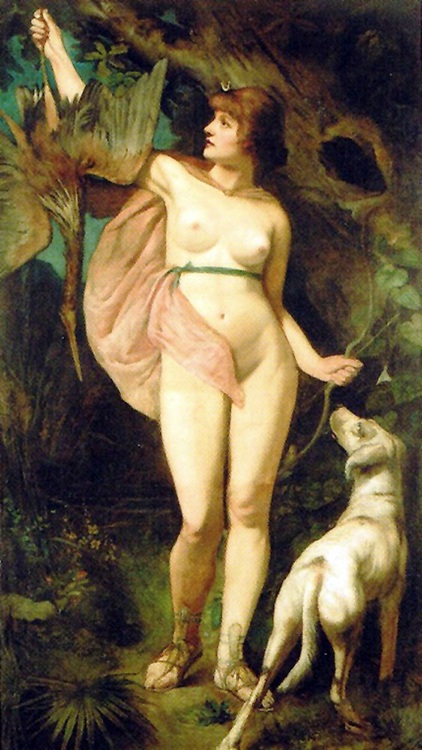
Diana, goddess of the hunt and the moon, Hans Makart

Diana, goddess of the hunt and the moon, Hans Makart


Diana bathing with her nymphs, Rembrandt

Diana bathing with her nymphs, Rembrandt


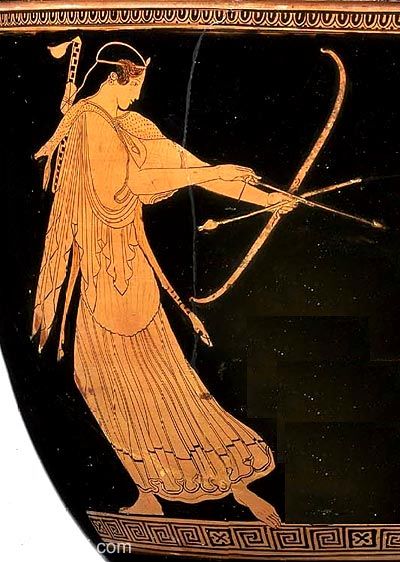
Artemis

Artemis


Diana and Cupid

Diana and Cupid


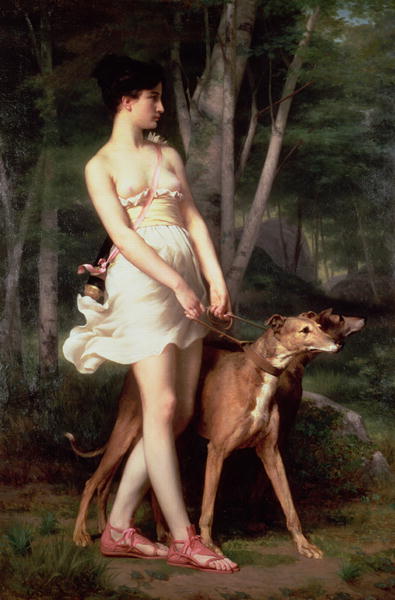
dianadogs


Diana, David Swift Photography

Diana, David Swift Photography


Leave a comment

Filed under the dictionary project presents

scold

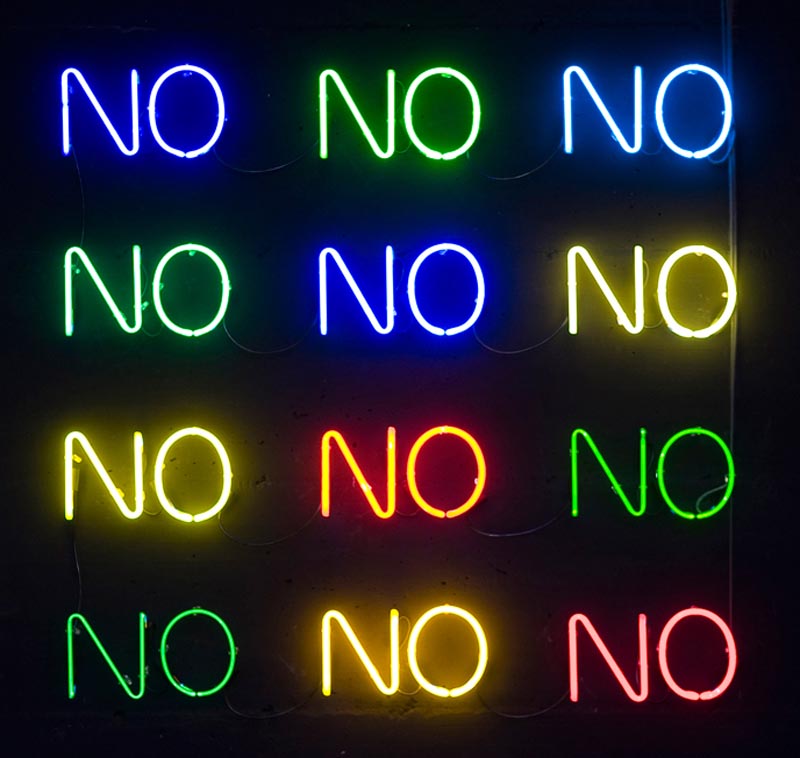
© ladiscarica, NO, (NEON. La materia luminosa dell’arte, MACRO)

© ladiscarica, NO, (NEON. La materia luminosa dell’arte, MACRO)


For our third post of na·po·mo, we have a poem from George Life. Enjoy!


scold* v. find fault with angrily —n. one who scolds.


Picture 3


george-lifeGeorge Life lives in Tucson where, among other things, he is working on a complete translation of the late poems of Du Fu. More at periplumvia.blogspot.com.


*Word was bibliomanced from a 2000 Webster’s New Pocket Dictionary.

Leave a comment

Filed under napomo

re·cep·tion

   IMG_0374

IMG_8077

IMG_0806

IMG_9595


re·cep·tion  (ri-ˈsep-shən)  n.  [ME. reception; OFr.; L. receptio  <  pp. of receptere; see RECEIVE],  1.  a receiving or being received.  2.  the manner of this: as, a very hearty reception  3.  a social function, often formal, for the receiving of guests.  4.  the act of mentally accepting or approving.  5.  in radio & television, the manner of receiving, with reference to the relative quality of reproduction: as, the storm caused poor reception.

Our second poet for na·po·mo is Christina Vega-Westhoff. Enjoy her poem below.


AFTER DIRECTION


For we are questioning how they breathe life

into the fragrant cities.

Did dust cover your nose and blind you?

Did the patterned walls beseech you?

How education advanced, or was said

to. Take care that what is painted on your

inside is not five. You came too soon to asking.


But what is given to be received.

We of the screaming action clan. Act even still.

To subvert delay reception. The moon began to speak

now silently. The boat if you stepped into it did

not sink. Was said to resemble oat.


In this painting it is the handing back of fate.

Once the gods discovered the vow broken

all sides lay still waiting. Those that didn’t

still found themselves in question.


The little young woman—how desiring she is to

take. To say the gift is precious—not to

be thought of, glossy. Too used then

to taking another and then this too.


If the police could have been an elsehood.

Stealing for selfhood.

The spider in the mouth of your swallowing.

So many times as though erased.

Calm now.


Claro, who would have been received as

departing. Led back into the cell. Before

exported/exiled/deported.

Held heavy then passive.

What was the mouth spoken of.

The daughter’s friend humping the carpet in

the basement. Truth or dare the dream

died. Across of this take flight.

How if it became too much for any one person,

having given, disappointed, and betrayed. Crossing

the country to find oneself forgotten.


IMG_3077 copyChristina Vega-Westhoff is a poet, translator, and aerialist living in Tucson. Her poetry appears or will appear in Fieralingue, Spiral Orb, The Lumberyard Magazine, 1913: A Journal of Forms, and Witness: A JLP Anthology.  Translations of Melanie Taylor Herrera’s work appear or are forthcoming in Ezra, Metamorphoses, and PRISM International.

Leave a comment

Filed under napomo

ob·late

blackberry-hand


Today is our first poem of na·po·mo 2013 at the dictionary project! We are delighted to have Margaree Little as our first poet this month. Please enjoy her take on oblate.


ob·late    (ä-ˈblāt, ˈä-ˌ),  adj.  [ML.  oblatus,  offered, thrust forward (in L., pp. of offerre; see OFFER),  1.  dedicated to a religious or monastic life.  2.   [Mod. L. oblatus; ob- (see OB-)  +  –latus as in prolatus (see PROLATE): from being thrust forward at the equator], in geometry, flattened at the poles: as, an oblate spheroid.  n.  a person dedicated to religious or monastic life.


BLACKBERRY GARDEN


As though by going back to it now it would become clear—or more than that, say what you mean, come right, a resolution of the leaves piling up in the yard, then turning to mulch, behind the house the blackberry bushes taking over the length of the garden.  In the summer the bushes thick with berries: she’d go out with a plastic tub to fill, bring it in, and I would think that letting things go like this, if that was what it should be called, was just another way of living, as a monk who also lives alone has chosen a way of living, and so it was okay, how she’d sleep in the afternoon, how when I’d first come in she’d call hello from upstairs, her voice confused at first, tentative, like a child who has learned not to speak out of place.  That fall, or rather, that month between summer and fall when I stayed with her, each day was similar to the next, running in the mornings up the road past the green field, the cemetery, the street where an old girlfriend had lived, fog on the field each morning lifting by ten.  The house an old house, dark in the living room until evening, though then that room would be flooded with light: a novel, my friend told me once, is about something ongoing.  A story is about when something shifts.  And a poem, I realized later I’d forgotten to ask, is a poem what is called dissembling?  The thick, sweet blackberries in my hands when I picked them, arms and fingers turning dark from the juice.  Her small body in the bed upstairs, not asking for anything.


headshotMargaree Little’s poems have appeared or are forthcoming in American Poetry Review, The Missouri Review, The Southern Review, New England Review, and elsewhere. She earned her MFA at Warren Wilson College and lives in Tucson.

Leave a comment

Filed under napomo

na·po·mo

IMG_1200


Well, spring has sprung. April has come. And along with being the time where things turn green and blossoms sprout from the ground, April is National Poetry Month. To celebrate, the dictionary project is hosting its second annual na·po·mo! All month, we will be featuring poems contributed by visiting poets in response to  dictionary project words. Stay tuned!

Leave a comment

Filed under napomo

spoke


spoke*  (spōk),  past tense or archaic past participle of speak.


    IMG_1019


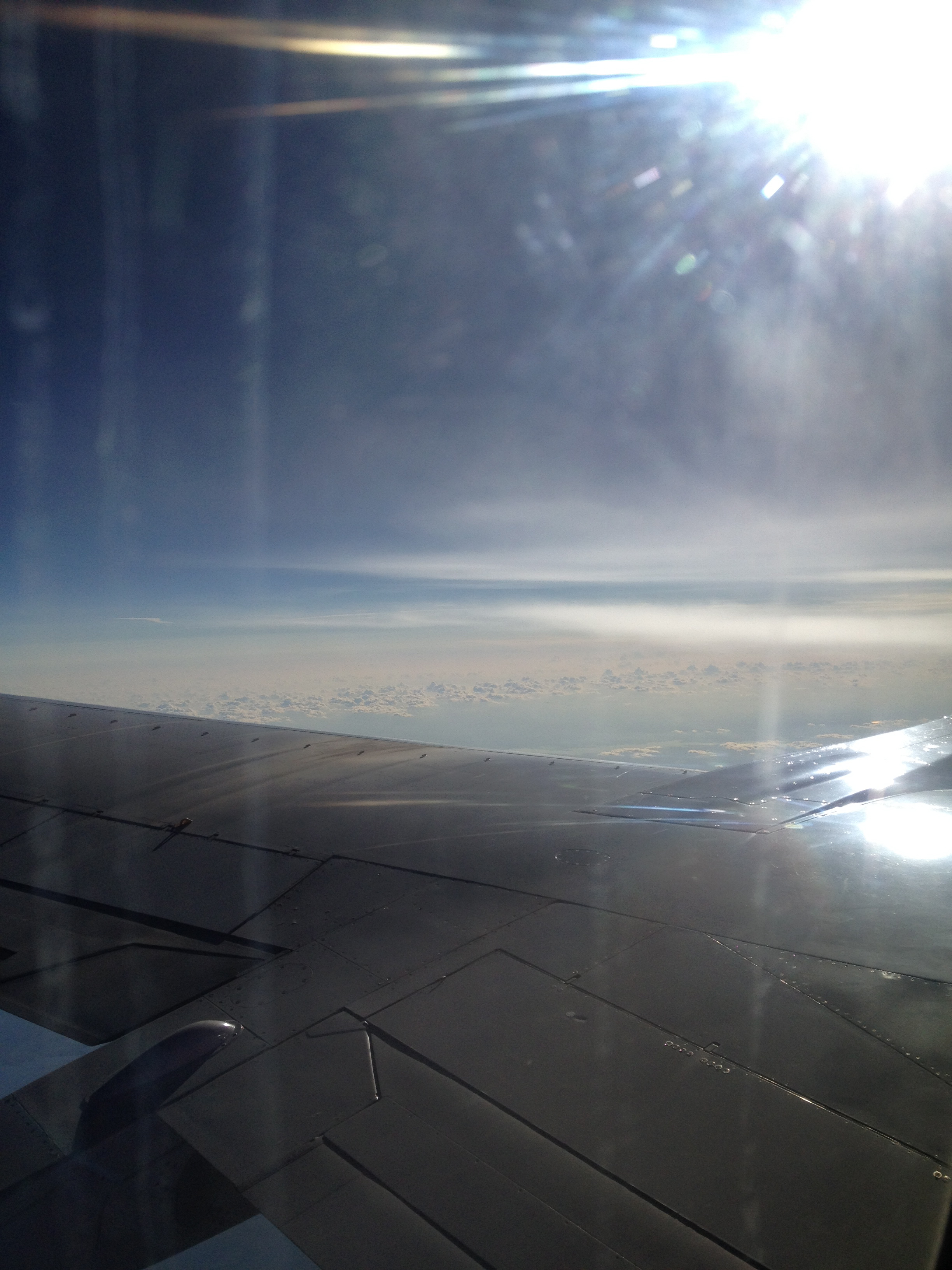
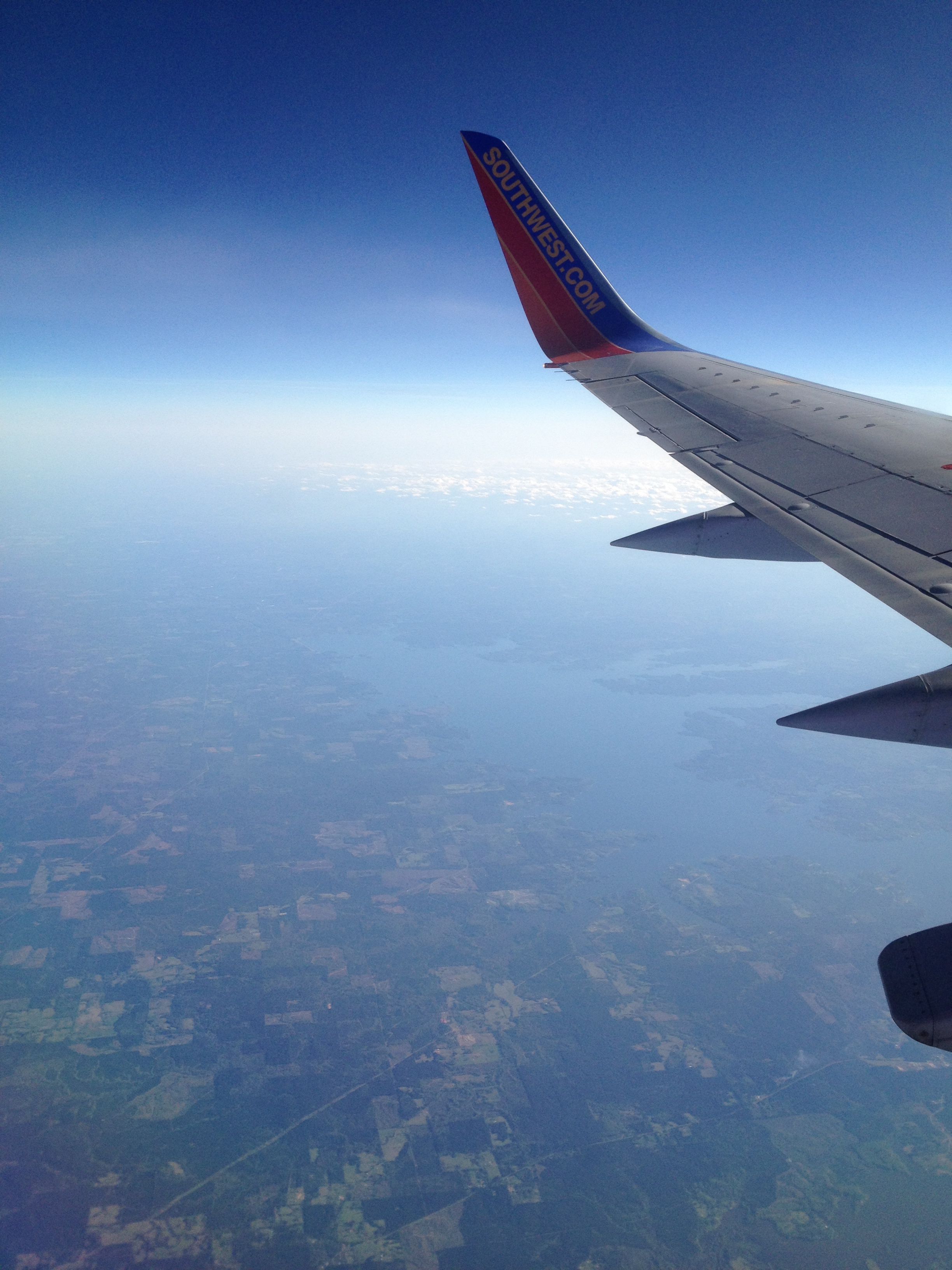
Today, I am on a plane from New Orleans, my hometown, to Dallas, and then I’ll get on another one to fly to Tucson, the desert town where I live.


Last Sunday, I was dancing—moving my feet and shaking my hips—to Rebirth Brass Band, a band from my hometown who was playing at a festival in Tucson. Trumpets and trombones. Snare drums. If there’s a sound the inside of my chest makes, I think it must sound like horns and drums. Blares and beats.


The Sunday before that, I was sitting talking with dear friends after four days of silence. Earlier that day, I prostrated myself on the floor in the direction of where my parents live, where my teachers are, where my community resides. Mala beads were placed over my head and I received a new name.


IMG_1021


I am thinking about motion and staticity. I am thinking about what it means to move forward, what it means to hold still, to hold stillness.


I met my niece for the first time this weekend and as I held her in my arms, I was struck by her substance, her solidity. She is seven months old. She has not yet said her first word. She does not have an understanding of object permanence. She does not get peek-a-boo. She does not know her name. Yet she knows how to smile and make raspberries. She has obvious preferences: from when she wants to be held  and when she wants to stand up to when she does and does not want to eat. She has already formed into a self and she is still in formation. Different each day and also still her. What a gift to watch these changes in increments. What a pleasure to watch her as she awakens to the world.


Is this then about spoke, about speaking? There is nothing more fleeting than words spoken. I spend my life impossibly torn between the desire to record every instant for posterity, to write every word spoken down, and the desire to throw away my pen and just listen, knowing I will not remember.


IMG_1032


We are flying over the river now, the Crescent City is crescent because of the way the water bends into the land. If I put my hand on the window, I could trace the river’s path, no larger than the tip of my finger. Yesterday, I stood on the bank and watched seagulls overhead. I sat with my parents. We had gone to the French Quarter on Easter Sunday as we had when I was ten. When I was sixteen. When I was twenty-four. We caught the end of the Easter Parade and shiny purple, pink, white, and green beads joined the simple brown ones hanging around my neck. There seemed something fitting and sacred about each strand. My parents said that when they were last in the Quarter, they saw the portrait artist who drew me when I was ten. That drawing lost in the floodwaters that came when the levee broke. Or as my parents said, “We lost that one in Katrina.” What made this man a good portrait artist is the way he could capture the uniqueness of each individual’s eyes. I looked at my eyes and saw it was me. A year or two later, my dad and I went alone to the French Quarter on Easter. My parents had separated. When we saw the same artist he drew me and then, on the same paper, my dad. The two of us without my mother. I don’t remember seeing that portrait after they got back together.


On my flight to New Orleans a few days ago, I was sitting next to a mother and her son. The woman looked to be in her forties. The son looked to be about twelve. He intertwined his arm with hers and later, she cradled him against her body and they slept. I thought about this intimacy, tender because of its transience. Soon, this boy will begin to pull away from his mother, from this body that birthed him. Soon, those small intimacies will be grieved by his mother. I imagine her: sitting alone at the kitchen table, hands wrapped around a mug of tea, remembering this flight or any other of the millions of tiny moments of closeness and hoping her son—now out with friends—is safe. But for now, they have each other and the closeness of their bodies, this proximity, feels like something sacred. I am both riveted by the tenderness and embarrassed to bear witness, sitting just inches away. This: the moment of a bubble before it breaks, a flower before the petals begin to fall, the last lingering note before the song is over.


Sometimes I feel awash in all the talking. Is there a time, I wonder, beyond and below what is spoken?


When I didn’t speak for four days, I noticed the energy spared. And I noticed how much could be communicated with a simple facial expression, a slow bow, the way one sits or stands. Intention isn’t always clear in language but it seems more clear in what the body says.


IMG_1033


For our family get-together, my parents rented a bouncy castle. Strong nylon whose shape is held only by air. Air pumped in. Air moving around.


Sometimes, when I am speaking while walking, I stop mid-step. I have only realized recently that I do this. Or maybe I realized it and then forgot it and then realized it again. Someone could be five steps ahead of me before I realize, before they realize we are no longer walking together. One friend called this caesura an exclamation point. “An em dash?” I offered.


“For one day,” I told my students, “your mission is to communicate only in the form of questions. Be curious. See what happens when you have more space to listen.” It was hard, they told me. But many were shocked that their friends and classmates didn’t even notice their lack of declaration. In the absence of their statements, the others easily filled the space.


IMG_1035


The flight is only an hour long. Soon we will land. Soon all the passengers will collect their purses and suitcases and plastic bags. They will move forward down the aisle. They will go home or on vacation. They will walk towards baggage claim and then on to funerals and hospitals, to weddings and baby showers. They will fall into the arms of lovers. They will get into the cars of family members. They will hug their roommates. They will stare at the gray heads of friends they haven’t seen in years. They will drive into cities teeming with people and countryside sparse with them. This flight will move from an immediate experience to an unremembered one. It will become part of a collective memory, one of many uneventful flights, defined only by its unremarkable nature: smooth air, easy takeoff, seamless landing, no delays. This time will collapse into empty space in their memory. Their slow movement through the sky will be marked only by fading numbers on cheap paper tucked into a paperback. Maybe a year from now, they will pick up the book they bought at the airport that they left unfinished. Maybe they will look at the date and the destinations and a specter of the person they sat next to will be conjured up in their memory. Or maybe they will, without looking, toss the slip of paper into the recycle pile, the last piece of evidence of this moment in the ether will be ground back into pulp from which new things will be made.


*composed 30,000 feet in the air

1 Comment

Filed under weekly words

the dictionary project author interview: janice lee


45889_1572138860803_1155476649_1641583_3252858_n


the dictionary project is happy to share with you our most recent author interview with Janice Lee. Janice’s work is insightful, intensely curious, and without bounds. In reading her work, we begin to see words and phrases we have seen before in completely new ways because of the way in which she places, considers, turns them in her work. Please enjoy.


1. Please share a memory/story/thought in relation to a dictionary/dictionaries:


I recently learned the story of W.C. Minor, one of the largest contributors of quotations to the Oxford English Dictionary. As a surgeon for the Union Army, he was given the duty of punishing a fellow soldier by branding his face with “D” for deserter, which just pushed him over the edge. He then moved to England where he murdered a man in a delusional fit, and was committed to the Broadmoor Criminal Lunatic Asylum. A lover of books and words, Minor heard of a call for volunteers (specifically for quotes from verifiable sources backing up definitions) from what was to become the Oxford English Dictionary. Minor developed a system for going through his books in search of illustrative quotes and ended up supplying the OED with a massive 12,000 illustrative quotes. Each submission was marked with the return address “Broadmoor Asylum,” so the editors assumed Minor was a doctor in charge, not a patient. It was many years later before OED editor James Murray learned of Minor’s background and visited him at the asylum.


2. What is your current favorite word?


Moosh. It’s what we call our dogs: Moosh #1 and Moosh #2.


3. What is the most obnoxious/insidious/annoying word?


Currently I’m pretty annoyed by all the filler words we use in oral speech: actually, basically, you know, like, etc. I use these words too. A lot. It’s a horrible habit. I feel like I have a disorder when I catch myself saying “You know” over and over again. It makes our speech so cluttered and ugly. I wish we were taught to care more about articulate and beautiful language in spoken speech just as in written.


4. What word has been your (recent or past) muse?


DAMNATION.


5. What can language contain? What can it not ever contain?


Language can contain almost everything, the beginning, the end, the inevitable ruin of a world, the collapse and betrayal of truth, the compacted pain of life and death, but in words, only in words. It can not contain the same permanence of time that film offers, for example. Or the power given to a viewer in the prolonged gaze of a slow-moving herd of cows.


6. In your novel Daughter, there are many places in which you invite the reader to engage, to create story with you, by asking them to draw, by having only the placeholder for [image] rather than a literal image. Could you talk about what’s said and unsaid in your work? And about the prompts to allow reader to make meaning along with you?


The momentum in Daughter partially comes from the desire for understanding. The daughter asks questions from a certain vantage point assigned to her by the author. The reader sits from a different vantage point, and any significance that arises from the language of the book is a collaboration, a microcosm of the secret discourse that occurs between wondering minds and souls. And part of this “understanding,” comes from the notion that “meaning” is not the same thing as “understanding” is not the same thing as “clarity” is not the same thing as “certainty.”


7. What role do definitions/does defining play in your work?


Defining a word freezes it momentarily. Because in the context of many other words, a single word can be flexible, in constant tension with the other words surrounding it, anticipating, inseparable. When I define a word, I can fix it, and then also subvert it, and reshape it. This is why the etymology of a word often interests me. Because words can change, and when language changes, so does thought.


8. Please respond to the following words and definitions*, bibliomanced exclusively for you:


cre·dit  (`kredit),  n.   [Fr. crédit; It. credito; L. creditus, pp. of credere; see CREED],  1.  belief; confidence; trust; faith.  2.  the quality of being credible or trustworthy.  3.  the favorable estimate of a person’s character; reputation; good name.  4.  praise or approval to which a person or thing is entitled; commendation: as, he deserves credit for telling the truth.  5.  a person or thing bringing approval or honor: as, he is a credit to the team.  6.  usually pl. acknowledgment of work done, as in the preparation of a motion picture.  7.  the amount of money remaining in a person’s account in a bank, etc.  8.  in accounting, a)  the acknowledgment of payment on a debt by entry of the amount in an account.  b)  the right-hand side of an account, where such amounts are entered.  c)  an entry on this side.  d)  the sum of such entries.  9.  in business,  a)  trust in one’s integrity in money matters and in one’s ability to meet payments when due.  b)  the time allowed for payment.  10.  in education,  a)  the certification of a student’s successful completion of a unit or course of study.  b)  a unit of work so certified.  v.t.  1.  to believe; trust; have confidence or faith in.  2.  to bring approval or honor to.  3.  to give deserved commendation for.  4.  to give credit in a bank account, etc.  5.  in accounting, to enter on the credit side.  6.  in education, to enter a credit or credits on the record of (a student).  Abbreviated cr.  –SYN, see ascribe.


It is the horse today who is the witness of credit, so that it is not significant who pulls the cart, the girl or the horse.


hin·ny  (ˈhinē),  n.  [ pl. HINNIES (-iz)], [L. hiinnus  <  Gr. ginnos], the offspring of a male horse and a female donkey: distinguished from mule.

“Say, honey, why?” says the hinny, its hair combed down and collar adjusted for a casual afternoon outing.


ex·ile  (ˈegzīl),  n.  [ME. exil, exile; OFr. exil, essil; L. exilium, exsilium  <  exul, exsul, an exile, one banished  < ex-, out + IE. base *al-, to wander aimlessly; hence skin to GR. alaomai, I wander, roam, am banished],  1.  a prolonged living away from one’s country, community, etc., usually enforced; banishment, sometimes self-imposed.  2.  a person in exile.  v.t.  (also ig-zīl’), [EXILED (-zīld, -sīld, -zīld’), EXILING], to force (a person) to leave his own country, community, etc.; banish. –SYN.  see banish.

He goes home sadly, in the rain, stops and sits for a moment at the engraved statue in the square, another figure in exile. The rain destroys everything. “What’s the point anymore?” he asks no one in particular before making a comprehensive list of all the things he won’t ever use again.


whan·gee  (hwaŋ-ˈē),  n.  [prob.  < Chin. Huang-li; huang, yellow + li, bamboo cane],  1.  any of a number of related Chinese and Japanese bamboos.  2.  a walking stick made from any of these bamboos.


It’s raining. He grasps the whangee handle until it hurts. It’s always raining. So he has no real excuse then.


com·pa·ra·ble  (ˈkämp(ə)rəbəl),  adj.  [L. comparabilis],  1.  that can be compared; having characteristics in common.  2.  worthy of comparison.

“Language–or any comparable apparatus of recognition–is the legal filter for groupings of presented multiples. It is interposed between presentation and representation.” (Badiou)


Janice Lee is a writer, artist, editor, designer, curator, and scholar. Interested especially in the relationships between metaphors of consciousness, theoretical neuroscience, and experimental narrative, her creative work draws upon a wide variety of sources. Her obsessive research patterns lead her to making connections between the realms of technology, consciousness studies, design theory, the paranormal & occult, biological anthropology, psychology, and literary theory. She is the author of two highly acclaimed novels: KEROTAKIS (Dog Horn Press, 2010) and Daughter (Jaded Ibis, 2011). She also has several chapbooks Red Trees, Fried Chicken Dinner (Parrot/Insert Press, September 2012), and The Other Worlds (Eohippus Labs, June 2012). Her newest project, Damnation, is forthcoming from Penny-Ante Editions in 2013. She currently lives in Los Angeles where she is Co-Editor of the online journal [out of nothing], Co-Founder of the interdisciplinary arts organization Strophe, Reviews Editor at HTMLGIANT, and Founder/CEO of POTG Design. She can be found online at http://janicel.com.
Leave a comment

Filed under author interviews

ex·pe·di·en·cy


Train, NYC, Lisa O'Neill

Train, NYC, Lisa O’Neill


For our fourth post this flash fiction february, we are pleased to share with you this piece by writer Katherine Hunt on expediency.


ex·pe·di·en·cy   (dē-ən(t)-sē),   n.  1. the quality or state of being expedient; suitability for a given purpose; appropriateness to the conditions.  2.  the doing or consideration of what is of selfish use or advantage rather than what is right or just; self-interest.


I saw the man on the subway. I had been pregnant nearly three months and sat with my head in my hands, feeling nauseous and trying not to think about the day ahead. That week I’d started a new episode of the TV show I produced on, a documentary series on homicide investigations. I had hours of crime scene footage to watch down. But crime scenes had begun to depress me. Also, I wasn’t sure I wanted a child. Now a woman said, It’s not your private candyland. At least that’s what I thought I heard. I glanced up but I couldn’t tell who had said it.

This is when I noticed the man, a tall man in a brown suit and the kind of dress shoes that look leather but cost nineteen dollars. He stood by the doors with his back turned so I couldn’t see his face. His hands kept me looking, though. He had nice hands, by which I mean large. I stared at them, thinking, I could just walk up and ask him to fuck me. It was the kind of thought I often had in those days: I could leave my life for another. This other life existed only in my mind but was actually more my own. I could step into it in one clean movement. Erase my husband. Erase the pregnancy. I could do it now, I thought. Then the man turned toward me and I recognized him as the murder suspect from an episode I’d worked on.

It didn’t make sense. The guy, Anton James, had shot a rival drug dealer in Dallas. He’d been arrested and charged with capital murder. Yet here we were on the A train, lurching into Manhattan. I stared at his long, sad-looking face. The dark, slow eyes. The rough skin along the jawline. I’d spent hours watching that face on video monitors. He glanced at me and I felt a thrill of terror, like in a dream when the monster struggles out of the black woods or the chasm, the black, unconscious pit.

I looked away. But when he got off the train, I followed him. We walked out into a hot, bright morning. Commuters rivered the sidewalks but the man’s height made him easy to track. Within three blocks, he went into a bank. I waited for him to come out. Minutes passed. Finally, I looked inside. He stood behind the bulletproof glass, one in a line of tellers.

I went in and waited in line, feeling increasingly nauseated and anxious. When I approached his window, he nodded. I saw you on the A, he said. He had the type of voice I’d heard in the streets my whole life, a flat voice, with an edge. Was it Anton’s voice? I couldn’t be sure. His nameplate, I noticed, was blank.

I know you from Dallas, I said.

You mixing me up with someone.

Maybe.

What can I help you with?

Nothing, I said and tried to smile. I just thought I knew you.

He nodded again and looked down along my body. For an instant, I felt he saw inside me, through to whatever it was fighting its way along in there. If he could see the fetus, I knew he would feel nothing for it. And in that cold moment, I realized how it might be to be my own child. You could come back later, if you want, he said.

All right, I said. All right.

When I work up the courage to tell this story, people ask if I went back. They ask if I had sex with him. But that wasn’t ever really the point. Though I did go back. He wasn’t there. Another bank employee said he’d left for the day.

So what kind of hours does he work? I asked.

Oh, he’s on his way out, she said. Whatever that meant.

I hadn’t liked working on the Anton James case. The killing had been captured on surveillance video. And there was something awful about watching that video. The cold eye of the camera became my own eye. I looked down on a harshly lit parking lot, everything black or gray, like the inside of a metal can. Anton leaned against the side of the store, smoking. He waited like that for three hours. I wondered what he could be thinking about. Because as soon as his victim approached, Anton pulled the gun. It was as if he’d never questioned his original decision, the one he later voiced to detectives. I said I’d get that motherfucker. So I did.

I saw the man another time, several weeks later. I’d left work with my editor. We started toward the train in a greenish evening light and I noticed the man crossing the street ahead. That’s him, I told her, pointing. The dude that look like Anton.

He reached the end of the block and vanished around the corner.

Come on, I said. Let’s catch him up.

I ran and she clomped after me, saying, Are you crazy?

He couldn’t have been Anton James. He must have been someone else. And yet I couldn’t shake the feeling that he was Anton. Or that he was a dream Anton was having about his own life.

We reached the corner and I spotted him again, walking with his head up and at a comfortable pace, as if he was any other person.


MYFACE     Katherine Hunt lives in Brooklyn.

Leave a comment

Filed under flash fiction february

identical twins

photo by E.J. Bellocq

photo by E.J. Bellocq


Welcome to our third installation for this year’s flash fiction february at the dictionary project. We are delighted to share with you this piece by Mary Woo, writing on twins. Enjoy!


identical twins,  a pair of twins who were developed from a single fertilized ovum: they are always of the same sex and show great similarity in physical appearance.


My sister, Coco, she likes them big. She likes an arm she can swing on. She likes stomachs that spill over waistbands like oversized ice cream cones. She likes big, broad shoulders with chunks of skin to hold onto.

Me, I like them small. I don’t like to feel threatened. I want to know that I can toss them across the room if need be.

In this way, we are compatible. She gets what she wants; I give her what I don’t want. But most of the time, we take what we get.

It’s funny. I know that you, and so many others, wonder about us, about this lifestyle and what damage could have possibly led to it. What loss. What depravity. An absent father? A crazy mother? I loved my mother very much, and never felt such shame as when she found us here. But what do you expect, raising two daughters and never teaching them anything about life? But I don’t want to talk about that.

What about the ones who come here? What about their damage, their sin? I don’t know why the giver, and not the taker, is always the wicked one.

Me, I fall in love all the time. Coco has been in love only once. He was a Parisian, just her type, smug and pretty. She saw him every day for two weeks, and then he disappeared. She cried and cried until I told her we were running out of money and there was no time for tears. What did she expect? Sometimes she is so…

Well, anyway. Of course we laugh! A lot, in fact. What, you think we got into this line of business for serious academic pursuit? We make fun of all the men who come here. They don’t know, they think we moan and groan and mean it. You’d be surprised how many different sizes and shapes—

Sorry.

The Parisian, he came back one fall. I was the only one here; Coco had taken a daytrip to Brussels. He waved at me through the window, held up a rose. When I finally realized who it was, I knew he was mistaking me for my sister.

I couldn’t let her go through that again.

“Coco, my love!” he said to me, cupping my cheeks, his eyes watering. He grasped me to his chest.

I took him into Coco’s room, which felt like a greater betrayal. Coco’s very particular about her stuff. She has dolls and posters and perfume bottles carefully curated from antique stores. She would be angry to know that I had been among her precious things. These are the things that belong only to her.

Don’t look at me like that, like I am some kind of monster. I was only trying to protect her. Coco’s heart has always been more fragile than mine. Even at birth, she spent two extra days in the hospital because her heart was not pumping enough blood.

The Parisian, he took me, saying over and over, “Coco, I missed you,” and in that moment I became Coco, not Anna, not the strong one, the first twin. I was weak and loved.

And then, he was gone again, just like I knew he would be, and I was pleased that I had saved Coco another lifetime of grief.

Well, it wasn’t long before I realized I was carrying the child of this man.

Yes, I’m usually very careful! But it was passionate, and we were in love. I mean, they were. Call it, getting lost in the moment. Or God’s will.

I knew I wasn’t fit to be a mother. My life revolving around someone else’s? Never. I couldn’t do it.

I had to tell Coco the truth, and we agreed Coco should raise the child as its mother.

The months passed and Coco took on more work as my stomach grew to repulsive sizes.

Was she mad? I don’t know. Coco is incapable of true anger. And with twins, well, it is so hard. Because we need each so badly, you see. Because we are parts of the same. Something changed, though. Our thoughts did not overlap as much, and our laughs were fewer.

The child was born, and in this way, Coco became a mother, and I became an aunt, and we were no longer mirrors of each other, but an ungainly triangle, feeble and diluted.

When the Parisian came back, she presented the child to him, and told him he was the father. He began sending money, and she would send him pictures. He came to visit for a few days every year, and for a few days, they were a family, whole, and I was on the outside, looking through the window of their happiness.

One day, they disappeared. Coco, child, father. She didn’t even leave a note.

Sorry, I only cry because that is the most hurtful part. No note, no word. What, did she think I would try to follow her into her ordinary, tedious life?

I suppose I am happy for her. In a way, I am with her, still. You see, we weren’t exactly identical. I’ve always had this birthmark, right here, next to my eye. And when the child was born, there it was. Same birthmark, same spot.

Every time Coco looks at the child, she will see me, and that makes me happy.

Well, there you are. What was it you asked?

I recognize you. Yes, you were here something like twenty years ago. We had a fun time, no? You were so smug back then, ordering us around, throwing dollars at us like we were circus monkeys. Now look at you. Old and gray and sad. You look like you’ve learned how life can toss things back in your face. You come here, curious. I hope that I’ve given you a good story. Not the one you were expecting, I suppose.

That is all. Now I must work. You can show yourself out, I’m sure.


pic of MaryMary Woo works as a freelance writer in Washington, DC, where she lives with her husband and dog. This story was inspired by the Fokken sisters, twins and Amsterdam’s oldest prostitutes.

Leave a comment

Filed under flash fiction february