Tag Archives: dictionary project

Ko·mo·do drag·on

Komodo dragon/ Adam Riley

Komodo dragon/ Adam Riley


Day 22 of the 30 days, 30 words challenge:


Ko·mo·do drag·on  (kə-ˈmō-dō-)  a monitor lizard, Varanus komodoensis, of Komodo and adjacent Indonesian Islands that grows to a length of 10 feet: the largest lizard in the world. Also called  dragon lizard, giant lizard, Komoˈdo lizˈard.


When the dragons came, they came all at once and they were everywhere. Dragons on the sidewalks, dragons in swimming pools, dragons at the grocery. We couldn’t tell where they had come from—they simply weren’t there and then they were. It can be alarming to find oneself surrounded, suddenly, by dragons. We tried to make the best of it. We gingerly walked around them as we went down the street. We swerved to avoid hitting them while driving. We wondered what they ate and if we fed them whether they might find other things more attractive than, say, us. We found they were fans of kale but not carrots and Cheetos but not Doritos. We noticed there were less stray cats around. We began to take provisions, snacks for us and for them, when we left the house and they began to wait for us. Once we fed them, they became accustomed to it and their appetites grew insatiable. The waddled up close with their scaly short legs and licked at ankles, nibbled on calves until they were given food. Soon, there were more incidents: thick cuts and bites, infections, loss of blood. More and more people were going to the emergency room. Something had to be done. So the human that all the humans trusted went to talk to the dragon that all the dragons trusted. The trusted human said, “When you arrived, we didn’t know where you came from. We tried to be generous with you. We fed you and now you won’t leave us alone. What is your problem?” “Well, that’s the thing,” said the trusted dragon, “before you fed us, we didn’t know to be hungry.”


2 Comments

Filed under 30 days 30 words

time

clock-hands-tn


Day 21 of the 30 days, 30 words challenge


The word time obviously has many meanings and a super long definition so I have chosen the specific section my finger landed on in the entry.


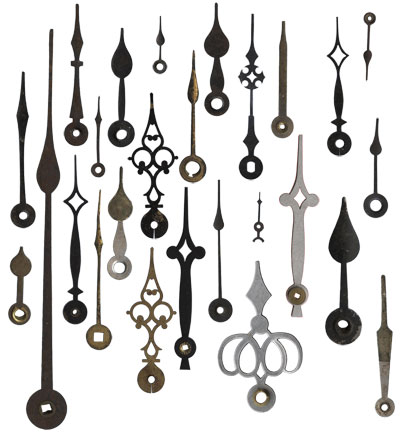
time  (tīm)  n.  6.  Often, times.  a.  a period in the history of the world or contemporary with the life or activities of a notable person: prehistoric times: in Lincoln’s time.  b.  the period or era now or previously present: a sign of the times; How times have changed!  c.  a period considered with reference to its events or prevailing contradictions, tendencies, ideas, etc.: hard times; a time of war.


This time, time is on my side, yes it is. It’s only a change of time, love, time, love, time, love, it’s only a change of time. Feels like the very first time. Ain’t got time. Ain’t wasting time no more. All of the time. All of the time in the world. All things in time. All this time: time in a bottle, nick of time, the hands of time, shades of time, sea of time, sand of time, sleepy time time, precious time, pony time, party time, pillow time, quality time, quittin’ time, crying time, closing time. Old time. Only time. One moment in time. Time after time. I can’t believe in time. Time won’t let me. Time to get away. Good time tonight. Let the good times roll. Good times never seemed so good. The best of times. Big time. Spending time, spend more time. Space and time, some other time, out of time. On borrowed time. There are bad times just around the corner. The last time I saw Richard. The last time. Hard times come again no more. Time was. Time waits for no one. Time is: a joker, runnin’, tight. Time loves a hero. If I could turn back time. Do you remember the time? One kiss at a time, one love at a time. Love takes time. Love gets me every time. I kissed you my last time, the last time I kiss you. Right on time. River of time. Some other day, some other time. Where have all the good times gone? Does anybody really know what time it is? Does anybody really care (about time)? Wasting time, wasted time. Tomorrow is a long time. Long, long time. Long time gone. Time was. Time waits for no one. It’s been a long time comin’ but I know. It’s going to take some time. A question of time. Time will tell. Time will call your name. Time passes slowly. Time stands still. Time and a half.  Time out of mind. Hard times ain’t gonna rule my mind no more. Time heals. Time for livin’. Time for a miracle. Til the end of a time. Next time. Next time you see her. The times they are a changin’. The time of my life. The time is high. Take your time. Nothin’ but time. Time marches on. Hit me baby, one more time. There was a time. What time is it?


Comprised mostly of songs with time in the title and, in some instances, lyrics from songs that contain time.

4 Comments

Filed under 30 days 30 words

her·i·ot

youarehere


Day 20 of the 30 days, 30 words challenge:


her·i·ot  \ˈher-ē-ət\  :  a feudal duty or tribute due under English law to a lord on the death of a tenant.


Today, we have a word I’ve never heard of. I found the definition a bit unclear so I went to the dictionary’s wise aunt, the encyclopedia. Here’s what Britannica has to say about:

heriot,  in European feudal society, the right of the lord to seize his tenant’s best beast or other chattel on the tenant’s death. The right grew out of the custom under which the lord lent horses and armour to those of his tenants who served him in battle. When a tenant died, the horse and equipment were returned to the lord. When the tenant became responsible for providing his own equipment, the lord claimed the right to heriot. There were various types of heriot. Heriot service was an incident of both free and unfree land tenure, i.e., both unfree, or villein, tenants and free tenants were subject to the feudal lord’s right of heriot. A tenant could make provision for the payment of heriot in his will, but if he died in battle no heriot was required.

Fucked up, right? To break this down: the lord makes his tenant serve him in battle, and because the lord has to loan him armor (because the tenant is poor and cannot afford it) to fight in the lord’s battles, when the tenant dies, the lord can take—from the tenant’s poor and struggling family—either the armor or the most expensive possession they have.

I’ve been thinking a lot lately about how often some humans decide they are better than other humans—and the manifold ways this has displayed itself over time and continues to display itself. I love this incredibly smart and funny new web series on Youtube called Ask a Slave.  Creator and actress Azie Mira Dungey plays the role of George and Martha Washington’s slave on the show, answering emailed and phone-in questions. Questions like: “What’s your favorite part of the plantation?” and “Why don’t you just go to school in Massachusetts” and “What if you are asleep and Mrs. Washington wants a cup of tea in the middle of the night?” Or there’s: “How did you get to be maid for such a distinguished founding father? Did you read the advertisement in the newspaper?” To this, Dungey’s character Lizzie Mae replies, “Why yes. It said, ‘One housemaid. No pay. Preferably mulatto. Saucy with breeding hips.”  The thing about the questions is that these were real questions asked by real visitors of George Washington’s Mount Vernon where she worked as a living character.

And this came through my newsfeed yesterday: “Parents Complain After Child Forced to Reenact Slavery on a Field Trip.” During a school field trip organized by a group called Nature’s Classroom, a 12-year-old black girl was “called the N-word, chased through the woods, and threatened with physical violence including whipping and cutting her Achilles” as part of a historical reenactment of slavery she was made to participate in.  Apparently, this “enactment” is something the group Nature’s Classroom has done in the past. And previous participants described “being similarly horrified by the experience.” The school did not and has not apologized.

In this country, we pretend we are so high above this kind of thing: one group discriminated against, one to be made better than another. We ignore history. We deny systems of privilege and pretend that everyone gets a fair shake. But the ways in which we value some people’s lives over others is visible everywhere. Yesterday, House Republications pushed through a bill that will cut food stamps by 40 billion dollars. There are 47 billion Americans currently enrolled in SNAP. We act as if hunger is some distant foreign thing, happening far away on another continent. But according to Feeding America, “In 2011, 50.1 million Americans lived in food insecure households, 33.5 million adults and 16.7 million children.” That’s one in six Americans. This is something that will only become worse when programs like SNAP are cut.

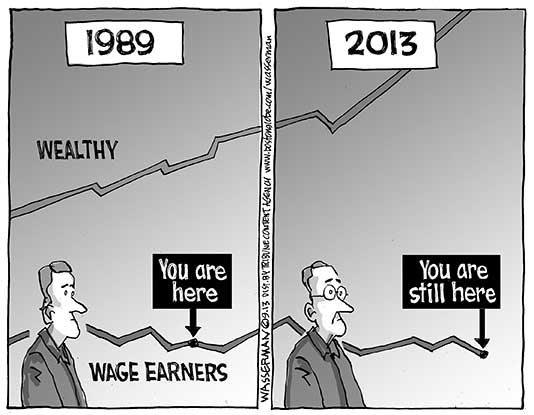
This week this article and this graph have been circulating; both discuss adjunct college instructors. Current estimates say 70 percent of all instructional faculty at colleges and universities are made up of non-tenure-track full or part-time instructor; a study just found that students learn more from adjuncts than their tenure track professors. In our country, the rhetoric is strong about the importance of education and the goal of sending each child to college. Tuition costs continue to rise, but adjunct pay does not and many adjuncts do not have access to healthcare. As tuition rises, how much (how little) of it is going to the folks who are actually teaching? We say that teaching is the most venerable profession and that we care about education above all else, but we don’t pay our teachers enough to sustain themselves. And how can we truly claim to care about education if we don’t adequately compensate our educators.

These things—and so many more—are our modern feudal system. In this system, those who are wealthy with money and privilege have all the power and those who don’t have wealth have to struggle to get by and become more and more indebted to those in power.


1 Comment

Filed under 30 days 30 words

tu·ber·ous

Botanical-Root-vegetables-4-694x1024

Day 19 of the 30 days, 30 words challenge:


Short piece today about planting. Speaking of which, I recently wrote an article about local Arizona farm, Sleeping Frog Farms. They happen to plant all kinds of tuberous vegetables. You can find the article in Edible Baja Arizona here.


tu·ber·ous \ˈtü-b(ə-)rəs, ˈtyü-\  adj.  of, resembling, or being a tuber.

(tu·ber: a short fleshy usu underground stem (as of a potato plant) bearing minute scalelike leaves each with a bud at its base)


They waited to plant until snow had almost melted off the mountain. They shoveled and hoed, digging straight, shallow trenches and planting cut potatoes inside. They planted and planned other crops and flipped through seed catalogs and ordered and  waited. When the green sprouts from the earth were eight inches high, they hilled. They raised soil up around the vines on each side. They were careful not to disturb the roots. They made sure soil was loose and the mulch had space to breathe. When the plants began to flower, they knew they could soon harvest. A few weeks after the plants flowered, they dug into the loose soil around. They pulled the tubers, red and yellow and brown from the ground. In the kitchen, sweet potato pie and potato leek soup and mashed potatoes. They roasted potatoes with butter and rosemary. They sprinkled potatoes with olive oil and salt. They worked and planned for when it was time to plant again.

Leave a comment

Filed under 30 days 30 words

rasp

insidemouthoffice


Day 18 of the 30 days, 30 words challenge:


rasp1    \rasp\  vb.  1 :  to rub with or as if with a rough file  2 :  to grate harshly on (as one’s nerves)  3 :  to speak in a grating tone

rasp2  :  a course file with cutting points instead of ridges.


Miss Mae, the eighty-year-old bar owner who’s smoked two packs a day since she was sixteen, the one who tells you in no uncertain terms to “Get off my stool,” the stool you didn’t know was hers. Your voice when you are on the cusp of losing it, but before you’ve lost it completely and before you sound like a boy going through puberty. Tom Waits, singing with his throat full of gravel. The car engine trying to turn over and then trying to turn over again. Frogs. Red foxes. That episode of Friends where Phoebe has a cold and her voice lowers and sexies itself for her gig at the coffeehouse, and then she tries to get sick again so that rasp will return. Bea Arthur as Dorothy saying to Estelle Getty over and over again in each episode: “Ma!” James Earl Jones saying, If you build it, they will come. Lauren Bacall asking, You know how to whistle, don’t you? Stevie Nicks. Rod Stewart. Bonnie Tyler. Macy Gray. Brian Adams. Louis Armstrong singing, Stars shining bright above you. Kim Carnes singing, She’s got Bette Davis eyes. Bette Davis. Linda Ronstadt has Parkinson’s and can no longer sing (she said, If there was something I could work on, I’d work on it till I could get it back. If there was a drug I could take to get it back, I would take the drug. I’d take napalm. But I’m never going to sing again). When I heard the news on the radio, I was close to crying. I knew a girl in high school, a soprano, who always refused to drink after other people, terrified of getting a cold and losing her voice.  Someone on a ventilator. Someone with a voicebox. Someone with a virus. Riff Raff. Gollum. Carface. She also wouldn’t talk on the days we had performances scheduled. She wouldn’t even whisper. Unrasping: with rest, honey, rest, apple cider, cayenne, lemon, ginger, zinc, eucalyptus, humming, using a humidifier, inhaling steam, gargling salt water, drinking tea, stopping speaking, stopping singing, quitting smoking, quitting caffeine, water, sleep.  She went to a conservatory for college, I think. Now she has four kids and lives somewhere in the South. I’m not sure if she still sings.


2 Comments

Filed under 30 days 30 words

cap

Navy Hat MO 8350jpg


Day 17 of the 30 days, 30 words challenge:


cap  (kap),  n. v.  capped, capping.  –n.  1.  a covering for the head, esp. one fitting loosely, made of softer material than a hat and usually having little or no brim.  2.  a covering of lace or similar material for a woman’s head, usually worn indoors.  3.  a headdress denoting rank, occupation, or the like:  a nurse’s cap.  4.  mortarboard (def. 2).  5.  anything resembling or suggestive of a a covering for the head in shape, use, or position: a cap on a bottle.  6.  summit; top; acme.  7.  Bot. the milieus of a mushroom.  8.  Also called cap piece, lid  Mining. A short, horizontal piece at the top of a prop for supporting part of a roof.  9.  a percussion cap.  10.  a noisemaking device for toy pistols, made of a small quantity of explosive wrapped in paper or other thin material.  11.  Naut. a. a fitting of metal placed over the head of a spar, as a mast or bowsprit, and having a collar for securing a further spar, as an upper mast or jib boom, at some distance above its lower end.  b.  a metal hand at the end of a spar.  c.  a cover of leather or tarred canvas for the end of a rope.  12.  a new tread applied to a worm pneumatic tire.  13.  Archit. a capital.  14.  Carpentry. a metal plate placed over the iron of a plane to break the shavings as they rise.  15.  Naut.  a wooden or metal place at the head of a mast, for supporting and steadying an upper mast, as a topmast or topgallant mast.  16.  Fox Hunting. See capping fee.  17.  cap in hand, humbly; in supplication: He went to his father cap in hand and begged his forgiveness. 18.  set one’s cap for, to attempt to catch as a husband: Several girls in the class were setting their caps for the new young biology instructor.  v.t.  19.  to provide or cover with or as with a cap.  20.  to complete.  21.  to surpass; follow up with something as good or better: to cap one joke with another.  22.  to serve as a cap, covering, or top to: overlie.  –v.i.   23.  Fox Hunting, to hunt with a hunting club of which one is not a member, on payment of a capping fee.  24.  cap the climax, to surpass what has been considered the limit; exceed expectations: This latest prank really caps the climax.  [ME cappe, OE cappe  <  LL capp(a) hooded cloak, cap; akin to L caput head] –capless, adj.


The skipper placed the cap on his head and pulled it down snug. It had been given to him years ago by a woman. In an old black and white photograph tucked at the bottom of a drawer, the two of them sat at a picnic: him—bearded and rough around the edges, even then—and her—pretty and pinafored, with her ruffled dress and white laced bonnet. She’d given him the cap that day and he’d taken off his military issued one, replacing it with the soft fabric, a relief to his forehead. He was on leave. They spread out a blanket by the river and then went for a walk on a trail in the nearby woods. He plucked berries off bushes, showing her which were poisonous and which were safe for eating; they harvested mushrooms, tucking the chanterelles and scarlet cups into cloth napkins. He told her he was done with the sounds of guns firing, the quick sparks. He would work commercial now, directing men on ships he commandeered. The sailors under him staying the sails, securing the caps. But the sailing meant leaving, still and always. She wanted a life on the land. The tires hit every loose rock on the road as he drove her home that day, and the jarring ride felt fitting as he listened to her. She stared out the front window telling him why her answer was no, why it couldn’t be him. He stopped the car at her house and turned, handing her his naval cap but she shook her head. She didn’t turn to look at him, not once, as she got of out the car and walked to the front door. The barriers he had taken down erected themselves quickly. He steadied himself with assurances. He couldn’t give up one love, even for another. Walking on deck, the salty air stung his eyes and he shook off the memory. He didn’t know then that storms are not meant to be borne alone. He didn’t know then that chances are as ephemeral as waves.


*In this piece, I tried to use every meaning of the word cap in the definition above. The ones I couldn’t manage to sneak in was the capping fee for fox hunting, or capital, or mortarboard. For the most part, the definitions appear in chronological order.

2 Comments

Filed under 30 days 30 words

Men·she·vik

sms-2125


Men·she·vik  (men(t)-shə-ˌvik, -ˌvēk),  n. pl.  viks, -vik·I,  (in Russia) a member of the Social Democratic party in opposition to the Bolsheviks and advocating gradual development of full socialism through parlimentary government and cooperation with bourgeois parties: absorbed into the Communist party formed in 1918.


So here we were, going along all smooth and easy with our 30 days, 30 words challenge until today, Day 16: Menshevik. I knew after so many amazing words to work with, I was going to bibliomance a tricky one sooner or later. But the rule is no do-overs. The word picked is the word picked and you have to do something with it. I’ve held myself to that since Day 1 of the dictionary project.


Don’t Know Much About (Certain Parts of) History


It’s funny because just today I was talking with students in class about history. We were discussing the advantages and disadvantages of showing (or utilizing sensory description) and telling (or exposition) in writing. We were naming different disadvantages of using exposition exclusively, one of which is the danger of being too cut and dry and thus boring. I used history books as an example. “What are most history books made of?” I asked. “Telling,” they responded. I said yes, most history books are comprised of exposition and that is exactly why I thought history was boring as hell in high school. It’s why, I’m sad to admit, I didn’t take a single history class in college. It wasn’t that I didn’t like history, it was that I had never been made to care about history, at least when it was labeled that. I always had a hard time with straight memorization. I had no interest in learning names and dates with no context. One of the stupidest things I had to do for history class was to memorize all the U.S. presidents’ names in the order they served. I would have much preferred to spend time learning a little bit about some of them then to spend all that time putting these random names in order. The people on the pages of my history books were flat characters at best and stereotypes at worst. Why should I invest in situations that happened long ago to people who I knew nothing about?


I learned more about history in my other classes, where history was made relevant for me. Like in my high school religion class where we watched Gandhi with Ben Kingsley and Romero with Raul Julia. We learned about the movements these men started, movements rooted in compassion for their fellow human beings. In Mrs. A’s religion class, we talked about real people and the injustices done to them. We talked about the ability of individuals and communities to reach out with compassion and nonviolent resistance and to make a difference. One day, we had a special guest. Mrs. A brought in her son Matthew, who was fourteen, in a wheelchair, and had severe developmental disabilities. She told us that at the orphanage, he was in a crib alone and had begun to curl up in the fetal position. None of the staff there had held him for long periods of time and when the doctor examined him, he said that the little baby boy had begun the process of dying, his organs were beginning to shut down. Infants not only need milk to survive; they cannot survive without human contact. Without touch, they fail to thrive.


I learned about history in my English classes where we read The Power and the Glory and Edith Hamilton’s Mythology and Les Miserables and Beowulf. We read Shakespeare and The Color Purple and The Adventures of Huckleberry Finn and Their Eyes Were Watching God. We read about different kinds of people from different places, all of whom were facing struggles in life, all of whom were battling with moral quandaries. We talked about them as if they were real people and we wrote about what their stories meant, why their stories were important. One day, in my English class with Mrs. T., she brought in a small boombox. The night before, a legendary sports figure in New Orleans had killed himself by inserting a tube from the tailpipe of his car into the nearly closed window and letting the car engine run as he sat inside. She played us two Simon and Garfunkel songs: “A Most Peculiar Man” and “I Am A Rock.” Simon and Garfunkel sing, “I have my books/And my poetry to protect me/ I am shielded in my armor/Hiding in my room, safe within my womb/I touch no one and no one touches me/I am a rock, I am an island/And a rock feels no pain/And an island never cries.” After the last song finished, she turned to us, her eyes wet, and asked us, please, to not be rocks or islands onto ourselves. It was clear that other people’s lives mattered to her, that we mattered to her. I’m sure that her class and her teaching is one of the reasons that I bring in current events–the ones that stir us, that remind us of both the beauty and fragility of being human–into the writing classroom for discussion. Because history is happening all around us. Because I want my students’ ideas and feelings to be part of that conversation.


I don’t know much about this particular portion of history: the Mensheviks and the Bolsheviks. I won’t pretend that I do, or that a quick look at Wikipedia will give me the information I need to write with any authority about it. I am grateful that I came to history on my own over time. I’m grateful that I now have a deep desire to learn about history, because I realize that history is simply the stories of people. People who are trying to live their lives in an imperfect world. People who disagree with one another. People who suffer deeply and sometimes act out from this suffering. People who just want to be able to feed themselves and their families. People who want to create art and language and music. People who want to discover why the planets move the way do or create inventions to make life better for all humans. People who are passionate about so many different things. People who have their own stories to make and their own stories to tell.


Leave a comment

Filed under 30 days 30 words

con·ceit·ed

Atlanta Botanical Gardens, Lisa O'Neill

Atlanta Botanical Gardens, Lisa O’Neill


Day 15 of the 30 words, 30 days challenge. We’re halfway through, y’all!


con·ceit·ed (kənˈsētid), adj. 1. having an exaggerated opinion of one’s own abilities, appearance, importance, etc.: Many performers become conceited after only modest success. 2. Archaic a. having an opinion. b. fanciful; whimsical. 3. Obs. intelligent; clever. [CONCEIT + ED2] –con·ceit·ed·ly, adv. –con·ceit·ed·ness, n.

—Syn. 1. vain, proud, eogotistical, self-important, self-satisfied.


I’m surrounded by so many phenomenal and phenomenally talented women in my life I can hardly believe it. Today alone, I had the opportunity to interact with a handful of them. Among them, a beautiful photographer whose most recent project celebrates the bodies of mothers and attempts to complete the picture of a culture that photoshops out cellulite and stretchmarks and loose skin, not only denying the beauty of women’s bodies but the experiences that changed their bodies in these ways; a yoga teacher and therapist who, through her own way of showing up as beautiful and vulnerable, supports her students and clients in finding their way to a place of vibrant openness and authenticity; and a blogger who gathers women together—both in online and physical spaces—to honor and own the beauty of their bodies exactly as they are, a women who challenges the media’s perpetual fiction that beauty only looks one way.


In conversations with my female friends who are following their passions and who, through shining brightly, allow others the permission to do the same, one theme comes up continually. That is the issue of space.


When we are children, some of us girls are lucky enough to be given lots of room to adventure and explore; we get to try on many hats and test out all the different things we could be. We could be an astronaut or a scientist or a teacher or a dancer. We could be a brain surgeon or a firefighter or an architect or a chef. But at some age, this expansiveness stops. We are told we need to shrink, to take up less room. We are told either that our vibrancy is unnecessary or that it threatens others. In any case, we are told to small ourselves. The room around us closes in. And many of us spend the rest of our lives negotiating the size of ourselves and trying to regain that space we lost.


It’s the boss vs. bitch dilemma that Nicki Minaj articulates so well. There’s a double-edged sword where women have to exude confidence in a particular way in order to be recognized as competent and yet when they do this, they are often labeled as too much. When a woman asserts herself and takes pride in her skill and work, all too often—still—she is viewed as conceited, uppity, egotistical (read: taking up too much room). Women are allowed to be successful, but not too successful (read: taking up too much room). If they become too successful, society says that everything that comes to pass is their fault; they then are solely responsible for any repercussions to their relationships, family life, and public perception. Was their success worth it? Worth this ruin they have brought to their lives?


A recent study published in the American Psychological Association’s Journal of Personality and Social Psychology revealed that while women in relationships with men are not threatened by their partner’s success, men are, overwhelmingly. In the study, heterosexual couples took part in activities and interviews to examine connections between romantic relationships and self-esteem. Lead study author Kate Ratliff writes, “this research found evidence that men automatically interpret a partner’s success as their own failure, even when they are not in direct competition.”


This is not the fault of these men. This is the fault of a culture that still regards women as inferior and which confines men to a very slim and stifling definition of success.


We have to start somewhere and I believe the place to start is with us and with art. We need more projects that complete the picture that we are only given a portion of. We need storytellers that offer up alternate stories. We need to slowly build a culture where we can celebrate one another’s success without telling the lie that someone else’s beauty diminishes our own.


Today, I stood in a room of over a hundred women: each of whom came to have her picture taken, to honor the singular beauty of her body. And in doing so, to give other women the permission to honor their own.


One thing I know for sure is this: I know that not one of us should have to crowd into a corner or crouch down to the floor. We should not be made to lessen our spectrum of light because our vibrancy makes others uncomfortable. Smalling ourselves does not make for a more expansive world. We have the space for everyone to rise to his/her/zir unique potential. When we decide we can take up the room we need, it’s amazing how there is more spaciousness than we ever imagined, enough for ourselves, enough for everyone who wants to share it.


1 Comment

Filed under 30 days 30 words

over·lap

Origami by Wingy

Origami by Wingy


Day 14 of the 30 days, 30 words challenge:
 
 
over·lap  (v. ˌōvərˈlap n. ˈōvərˌlap)  v.  –lapped, -lapping,  n.  –v.t.   1.  to lap over (something else or each other)  2.  to cover and extend beyond (something else)  3.  to coincide in part with; have in common with: two lives that overlapped each other  –v.i.  4.  to lap over: two territories that overlap; fields of knowledge that overlap. –n.  5.  the act or instance of overlapping.  6.  the extent or amount of overlapping:  The second story of the building has an overlap of ten feet.  7.  an overlapping part.  8.  the place of overlapping.  9.  (in yacht racing) the position of two yachts side by side so that the overtaking boat, to pass the other on the opposite side, must fall back or so that neither can turn toward the other without danger of collision. [OVER + LAP]


It has six petals, like lily true


I learn how to fold
the crimping side,
mark the middle
 
 
I find the square
I avoid the refolding, tricky
Achieved overlap
 
 
Do not create a new wrinkle.
 
 
I cut the equilateral triangle
There is no need to draw it you


I fold the top layer
Cut along this edge
This work is up to you


Strive hard with the aim of completion
Fold


Do not create a new wrinkle.


I can model the collapse simply
to existing wrinkles.


* I first excepted language from these origami instructions and used the found text to create a poem. Then I put the poem into Google translator from English to Japanese and then back from Japanese to English. This post is the result.


2 Comments

Filed under 30 days 30 words

fab·ric

fabric stack

By Sarah Moon/ boltneighborhood.com

Sarah Moon, boltneighborhood.com

Michelle Sinclair/Flickr

Michelle Sinclair/Flickr


Day 13 of the 30 days, 30 words challenge, and we are talking about clothes. Which is great, because I happen to love clothes.


fab·ric  \ˈfabrik\  n.  [MF fabrique, fr. L fabrica workshop, structure]  1 :  STRUCTURE, FRAMEWORK  <the ~ of society>  2 :  CLOTH; also: a material that resembles cloth.


sew

Teresa Duffy

dresspatternbackskirtsflickrwomendressesfromflickrivercom

ladiestopsfrommyflickrivercom


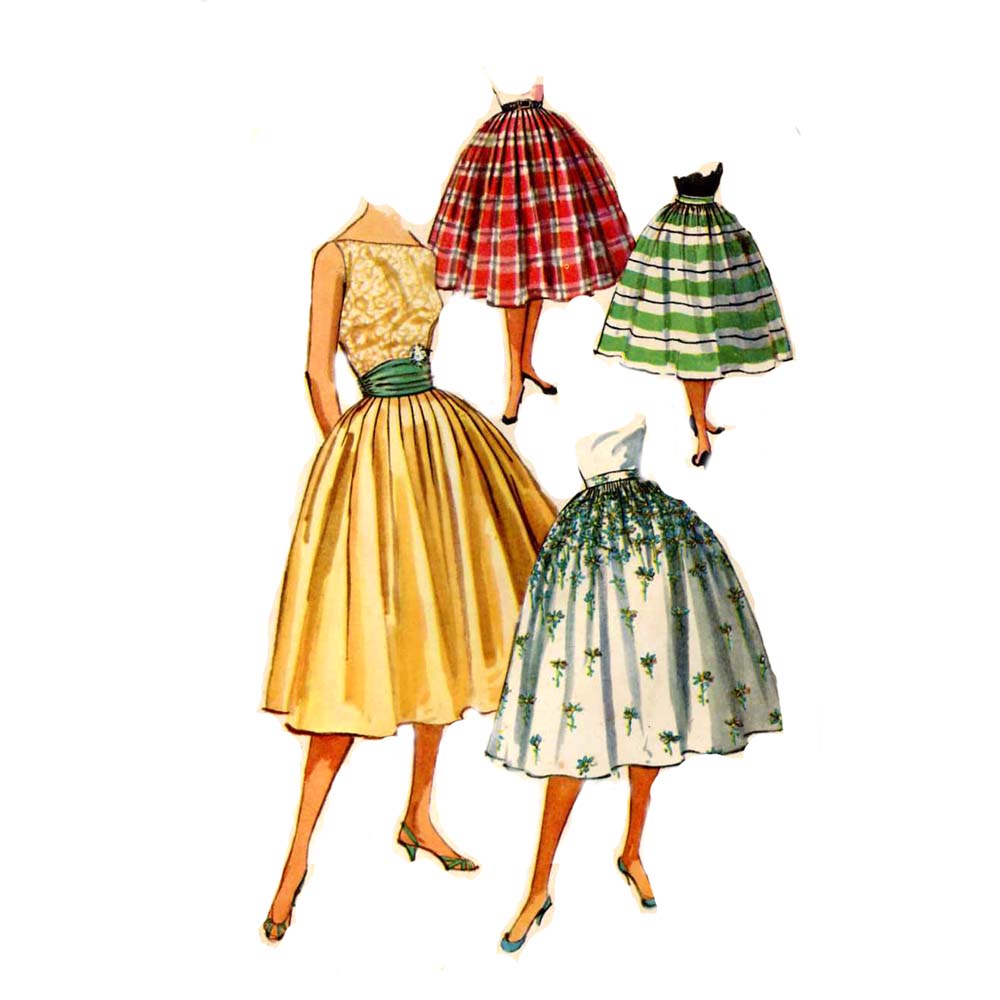
Every seam sewn tells a story. It is the story of hands pulling fabric tight and moving folds slowly forward. These fingers threading needles. These fingers pricked by accident. These hands undulating like waves, pushing fabric through. Every pattern echoes with the mind who imagined it–where to tuck and pin, where to leave holes for buttons, where to allow extra room. The pattern was made by Simplicity on thin white paper or it was made out of newsprint, a mother holding the black and gray paper against her children’s backs. A tailor drew white highway lines with chalk where the seams should be. A milliner measured the circumference of someone’s head for a new fedora.


Every garment has a history. The satin baby blanket in our crib, the ruffles on cotton Easter dresses, the little seersucker shorts, the Fun Run t-shirts, the pressed linen pants, the silk necktie, the itchy wool uniform skirt, the polyester gym shorts, the pantyhose, the green velvet sweet sixteen dress, the first pair of jeans we bought with our own money. These garments tell us the stories of who we were, who we thought we were, who we are, who we think we are, who we are–constantly in the state of–becoming. Thrift stores racks teem with records of intimate moments: first kisses, first little league games, dance recitals, costume parties, first dates, too many proms to count, weddings, divorces, first steps and last ones. Moments remembered or forgotten. Moments we wish we could remember or wish we could forget.


Every wardrobe is in a state of flux. Clothing passes in and our of our closet. We exchange with friends, we shop and trade the old for the new, we donate to Goodwill. Our closets track the patterns of our lives. We stack the things we think we might fit into again at the bottom. We tuck that item that looked so great on us at the store, but not so great on us here, at the back. We shift and rearrange as we move in the things that are us and move out the things that no longer meet that criteria. During spring cleaning, we find the sweater of an old lover and sit on the bed for a moment before we, inevitably, hold it up to our nose. Then, we see the shirt our mother gave us for Christmas one year, so thoughtful, so not our color. Or we find the shirt from that time she got it right. Either way, we miss her.  Sometimes, we wait until our favorite t-shirt is completely threadbare to throw it away, and even then, the act feels like a sort of betrayal. We need more hangers and then we need less. We have the clothes we may wear, the clothes we want to wear, and then the clothes we do wear. We allow ourselves categories: comfort, casual, exercise, work, dressy. These pieces create a framework for our days.


Every morning begins with a question. Before what will I do today and before what will I accomplish, the first question we ask ourselves in the morning is “what am I going to wear?” We agonize about it or we just throw something on, but no matter how much time it takes, this act is a sort of ceremony. We guess the weather or we step outside to check or we look it up on our phone. We open the door and evaluate. We shift hangers or we remove pants from a stack. We pull out the ironing board or we don’t. We toss the discarded options on our bed or we hang them up right away. We think about what we are doing that day and what will be most practical. We assess and we choose. Then we clothe ourselves in our choices and go about our day.


Leave a comment

Filed under 30 days 30 words