con·sort

con·sort (kon-sawrt), n. [Late ME.; OFr.; L. consors, consortis, partner, neighbor < com-, with + sors, a lot, share; cf. SORT],  1. originally, a partner; companion; hence.  2. a wife or husband; spouse, especially of a reigning king or queen.  3. a ship that travels along with another.  4. [Obs.], a) [OFr. consorte; L. consortium, community of goods < consors], association; fellowship; company. b) agreement; accord.  c) [altered  < concert] harmony of sounds.  v.i. 1. to keep company; associate.  2. to be in harmony or agreement; be in accord.  v.t. 1. to associate; join: usually reflexive.  2. [Obs.], a) to be or go with; accompany; escort.  b) to espouse.  c) to sound in harmony.

This week, the dictionary project‘s flash fiction february features a flash fiction piece by writer Kindall Gray. Enjoy!

The Cyclone

Gretchen waited at the entrance of the New York Aquarium for her former husband.  She wore a chartreuse scarf and carried a red handbag.  Above her the sky was the color of deep metal.  She tucked a hair behind her ear and looked at her cell phone again.  Nothing.  A rotund, mole-covered boy pushed in front of her to the ticket booth, and asked his mother why they’d come to Coney Island in the first place.

“To see the animals,” she told him, smiling apologetically at Gretchen.

“But I don’t want to,” he said, and stomped his feet.

Gretchen’s phone lit up and she pressed it hard against her ear. “Hello?”  She turned away from the mole child and his mother, who were now making their way into the aquarium.

“I can’t come,” Malcolm said.

Gretchen brushed hair out of her face.  The wind was cold and hard.  “What?”

“I’m not coming.”

“Why?”

“I just can’t,” he said.  “It’s stupid.  You know?  Like.  It’s useless.  It’d be cruel of me to go.”

“It wouldn’t be,” she said, and felt her fingernails digging into her palm. She could see the enormous Cyclone in the distance, rising above the Coney Island skyline like the skeleton of a dinosaur.  Even from far away the architecture looked haphazard, but still she wanted to ride with Malcolm, bump over the old, dusty tracks, and listen to carnival music.  She wanted to eat funnel cake and drink beer.

“I’m not coming,” he said again.

“But the roller coaster,” she begged.

“We’d probably have died on it.”

She waited a moment, unsure of how to respond.  This was the worst possible thing.  “I can’t believe you.”

“Believe me,” he said.  “It’s better for both of us.  I’m not going to pretend it’s okay anymore.  This thing we’re doing.”

“It doesn’t have to be okay,” Gretchen said, and meant it.

“She’s here right now.  Melanie’s here right now.”

“You said we’d still be friends.”

“I said it but I didn’t mean it the way you wanted me to mean it.”

Gretchen swallowed.  Hot tears ran down her chin.  A man passed with his jacket pulled around his shoulders.

“Fuck you,” she said, and ended the call.

She slipped the phone back into her pocket and turned to face the aquarium again.  Should she go inside?  Should she go on the coaster?  Should she locate a bar and get drunk?  Or take the subway home? Should she call her mother?

Malcolm.  Only a week earlier they’d gone to a club together, and then to a pizza place in Brooklyn.  They’d shared an order of garlic knots.  Sure, he talked about his new girlfriend most of the time, but he’d been paying attention to her, sharing with her.  He’d been her friend.

Suddenly she felt a presence at her side.  The fat boy with moles clutched her red purse.  He was alone.

“Where’s your mom?” she asked, alarmed.

“My mum’s inside,” he said.  His skin was like burnt almonds and his moles the color of dark chocolate.  They speckled his face like a constellation of stars.

“What are you doing out here?” she asked.  She glanced around and it was just the two of them.

“You’re crying,” the boy said.  “I hate maminals.”  He was too old to mispronounce such an easy word, which made Gretchen feel sorry for him.  She thought he was at least seven or eight.  “I want to go on the coaster,” he pointed.

Gretchen turned toward the coaster.  “The Cyclone,” she said.  “Why do you hate animals?”

“They’re always looking at me with their weird eyes,” he said.  “And I can’t speak to them.”

“Oh,” Gretchen said.  The boy’s reason made sense, in a way.  “You’d better go find your mother.”

“No,” he said.  “I’m going on the roller coaster.”  He turned from her, and began to walk toward the Cyclone, toward the boardwalk.

“Wait,” Gretchen said.  “You can’t.”  She couldn’t allow a smallish child to leave the aquarium.  What if somebody kidnapped him?  The mother would blame Gretchen.

The boy continued on and didn’t turn back.  Gretchen watched as his body grew smaller and smaller in the distance.  She checked her phone again and then dialed Malcolm’s number.  Her fingers were growing numb from the cold.  He didn’t answer.  She called again.  No answer.  Finally she left a message: “How dare you.”

She stood at the entrance of the aquarium for a long time and waited for the boy’s mother to come searching after him: “Have you seen my child?”  What would Gretchen say?  Would she lie?

The idea of lying to the boy’s mother filled Gretchen with a horrible guilt, and she cried harder.  She wasn’t sure if she was crying for the boy or for Malcolm or for the boy’s mother or for herself.

She took off running in the direction of the Cyclone.  She passed roller-skaters, homeless people, and couples making out on benches.  She passed tourists eating hot dogs.  At the entrance of the Cyclone she looked for the boy.  None of the heads in the crowd belonged to him.  Eventually she saw a small child standing dejectedly beside a ticket booth, staring down at his fingers as if waiting for money to appear.

She rushed over. “You’ve got to go back to the aquarium and to your mother,” she said.

“I don’t have enough money for the Cyclone,” he pointed.

Gretchen looked at the ticket booth.  Eight dollars a person.

“You’ve got to go back to your mother,” she said again.  She was still crying.  “I can’t have this on my conscience.”

“What’s wrong with you?” the boy asked.  “Will you just take me on the Cyclone?”
Gretchen looked up at the roller coaster.  The cars flew down the tracks at break-neck speeds.  They made the sound of clothes in a dryer.  She imagined the wind in her hair, the way the stale carnival air would fill her lungs and make her forget Malcolm.  Or maybe she’d even pretend the boy was Malcolm.  When they’d started having problems, and then after he moved out, she thought she’d be okay as long as he still cared for her.  Even as a friend.  Now he’d taken that care away.

“Okay,” she said to the boy.  His eyes lit up inside his face and he grinned, revealing a perfectly square gap in his smile as well as a silver filling in his back tooth.

She bought the tickets, and they waited in line.  A woman climbed off the ride, walked down the railing, and vomited in a trash can.  The boy grabbed Gretchen’s hand, and she let him.  When their car was ready, they walked to it arm and arm, and Gretchen let the boy get in first, as if he were the lady and she were the gentleman.  Gretchen felt dizzy with her own daring; taking the boy on the ride was risky, strange, out of character.

As the ride started, the boy said, “I don’t want to go on this after all.”
And Gretchen said, “You don’t have a choice, now.”

And the ride began.  As the world melted around her, Gretchen felt only air inside her lungs, icy wind on her lips, and laughter inside her throat. The laughter came out in a kind of hysterical scream.  The boy screamed too, but he was smiling.

Kindall Gray is a writer, a teacher, and an Arizona native (don’t hold that against her).  Her fiction has previously appeared in Back Room Live and Toasted Cheese, and she is currently at work on a collection of short stories and a novel. She can be reached at kindallg at g mail dot com.

On the creation of “The Cyclone”:

When I got my word, “Consort,” I immediately began brainstorming–and I kept thinking of couples, couples, couples; couples accompanying each other, “complementing” each other, and going on journeys together.  So I decided to write about unlikely couples–and the unlikeliest couples became a woman and her ex-husband, and of course a woman and a boy.  The story kind of morphed in front of me, and I let it.  At first I thought it would be more about Gretchen and her ex, but then it became about Gretchen and the boy and her reaction to the boy. — K.G.

1 Comment

Filed under flash fiction february, weekly words

flash

Screen shot from Road to Perdition (with some photo editing by me)


1flash \flash\  v 1: to break forth in or like a sudden flame  2: to appear or pass suddenly or with great speed  3: to send out in or as if in flashes <~ a message>  4: to make a sudden display (as of brilliance or feeling)  5: to gleam or glow intermittently  6: to fill by a sudden rush of water  7: to expose to view very briefly <~ a badge>  Synonyms GLANCE, GLINT, SPARKLE, TWINKLE —  flash·er

2flash n 1: a sudden burst of light  2: a movement of a flag or light in signaling  3: a sudden and brilliant burst (as of wit)  4: a brief time  5: SHOW, DISPLAY; esp: ostentation display  6: one that attracts notice; esp:  an outstanding athlete  7: GLIMPSE, LOOK  8: a first brief news report  9: FLASHLIGHT  10: a device for producing a brief and very bright flash of light for taking photographs  11: a quick-spreading flame or momentary intense outburst of radiant heat

3flash adj:  of sudden origin and short duration <a ~ fire> <a ~ flood>

4flash adv: by very brief exposure to an intense agent (as heat or cold) < ~ fry> < ~ freeze>


Welcome to flash fiction february! All month long, the dictionary project will be featuring flash fiction contributions from guest writers. Like all weekly posts, these short pieces will emerge from and be inspired by the word of the week (which I choose each week at random by closing my eyes and flipping through a dictionary). Keep tuning in and enjoy!

Leave a comment

Filed under flash fiction february, weekly words

ef·fec·tive


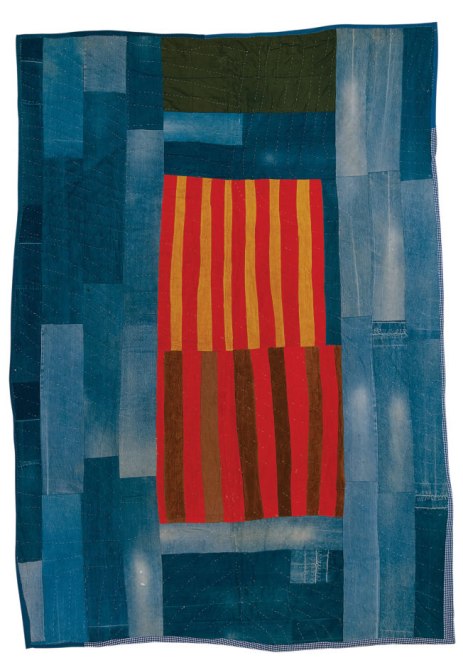
Annie Mae Young (born 1928) Work-clothes quilt with center medallion of strips. 1976. Denim, corduroy, synthetic blend (britches legs with pockets). 108x77 inches.


1ef·fec·tive adj \i-ˈfek-tiv, e-, ē-, ə-\  1  a : producing a decided, decisive, or desired effect <an effective policy> b : impressive, striking <a gold lamé fabric studded with effective…precious stones — Stanley Marcus>   2  : ready for service or action <effective manpower> 3  : actual <the need to increase effective demand for goods> 4  : being in effect : operative <the tax becomes effective next year> 5  of a rate of interest : equal to the rate of simple interest that yields the same amount when the interest is paid once at the end of the interest period as a quoted rate of interest does when calculated at compound interest over the same period — compare nominal 4

ef·fec·tive·ness noun

ef·fec·tiv·i·ty \ˌe-ˌfek-ˈti-və-tē, i-, ē-, ə-\ noun

2ef·fec·tive noun \i-ˈfek-tiv, e-, ē-, ə-\  : one that is effective (see 1effective); especially : a soldier equipped for duty

Origin of EFFECTIVE (see 1effect)  First Known Use: 1722


Lately, when I’ve considered the word effective, I have thought of the idea of being of use. Alice Water’s short story “Everyday Use,” considers both the dynamics of a family and the way in which we use things, which ones are meant to be preserved and which are best suited for everyday use. In the story, one character criticizes another who she considers foolish. “Maggie can’t appreciate these quilts!” Dee said. “She’d probably be backward enough to put them to everyday use.”

Years ago, in San Francisco, I saw an exhibit featuring the famous Gee’s Bend Quilts. These quilts, now honored and esteemed in the art world and hung on pristine white walls, were made out of scraps of clothing—jeans with knees worn out, workshirts that were torn by work in the fields. They were made to be beautiful but their primary purpose was to be effective in keeping out the cold. The items we employ every day are not effective to us if they don’t work in the way we need them to. All inventions come out of a need, however great or small. We constantly think of ways to complete the tasks we do in our day-to-day lives in a more effective way.

In this way, effectiveness is not so much about the magnitude of the task to be completed, but how that process is maneuvered through for an ideal end result.

Jessie T. Pettway (born 1929). Bars and string-pieced columns. 1950's. Cotton. 95x76 inches.

I’ve been thinking about this in relation to myself lately. Because out of all of the things I desire for myself and my life, at the top of the list is to be of use. What individual gifts or ideas or qualities do I possess and how can I be most useful to the world around me in employing them? I am of the opinion that each of us are put on this planet to fill very individual and important roles, and I think most of our soul searching, wondering and questioning, and confusion and chaos is derived from our attempts to either figure out what these roles are or, once we do, to resist them.

It can be overwhelming to consider what we want to do with our lives and how we can be most effective as a friend, partner, parent, daughter or son, member of our community. And yet somehow, I also believe that the way we listen, respond and initiate small actions in our day-to-day life gives us insight into what we are meant to do in the bigger scheme of things. We learn in these smaller moments what we can do easily. We also learn where we have resistance and we learn to differentiate where the resistance lies: do we resist because what we set out to do is something we genuinely do not want to do or do we resist because we are afraid that we cannot do it (or, sometimes even more threatening, that we can)?

In Naomi Shihab Nye’s lovely poem, “Famous,” she says: “I want to be famous to shuffling men/ who smile while crossing streets/ sticky children in grocery lines/ famous as the one who smiled back. //I want to be famous in the way a pulley is famous/ or a buttonhole, not because it did anything spectacular/ but because it never forgot what it could do.”

Gee's Bend Quilters sing at the de Young in San Francisco, September 2006. Credit: Lisa O'Neill

Lately, I have been reminded that this is what I most deeply long for: to never forget what I can do. And it is what I most long for for others. Because in the face of tragedy and suffering and despair, it is important to realize that our individual decisions and actions and creations, the small pieces we each contribute, add up. There is power in recognizing how effectively these pieces combine to a beautiful whole, not something that is manufactured in one seamless movement by one person. But, rather, a whole made of pieces, like a quilt, that when sewn together winds up being not only useful but striking in beauty—a testament to time and patience, hard work and vision, faith and action.


Leave a comment

Filed under Uncategorized

thrive

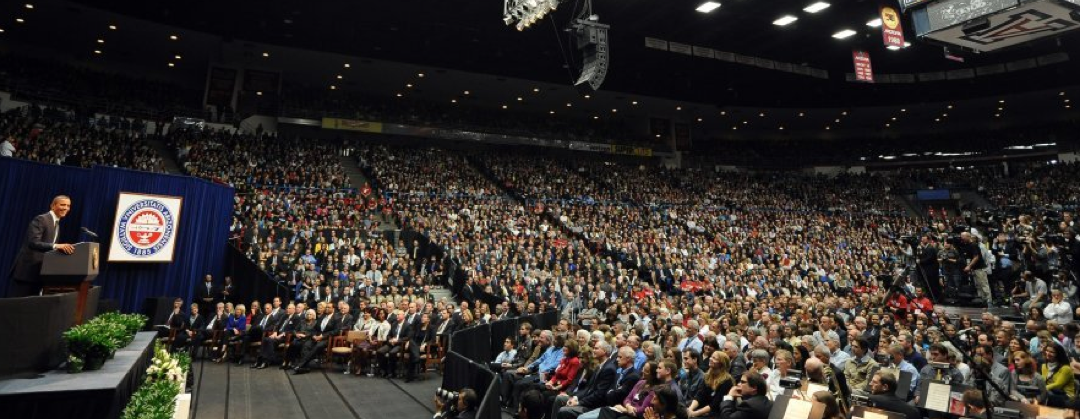
Obama Speaks At Memorial for Victims of Shooting, http://www.huffingtonpost.com

thrive* \ˈthrīv\ verb

1. To make steady progress; prosper.

2. To grow vigorously; flourish

*The title of tonight’s memorial was “Together We Thrive: Tucson & America”

I was there tonight in Tucson. I stood in line with the thousands to be able to participate in the memorial for the victims of Saturday’s tragic shooting, to be able to pray for healing of those who are still in the hospital and for all those impacted by this tragedy.

I went because I wanted to stand up with my community and remember those we have lost. I went because I wanted to pray for the healing of those who suffer. I went because I wanted to hear what our leaders had to say.

As a college instructor, I have decided to spend some of my rhetoric class time examining and discussing texts about the shooting. It not only feels relevant to talk about words and their meaning at times like this, it feels necessary to give students a space in which they can wrestle with their feelings about an act of violence taking place in their adopted town, at a grocery store that could be their grocery store.

As we discuss in class, the words we say and the way that we say them matters. We each need to take responsibility for our own words and we need to call those we listen to, particularly our media and our political leaders, to be responsible for theirs and to speak in a way that invites rather than discourages open and thoughtful conversation. Obama said it the best last night when he said: “It’s important for us to pause for a moment and make sure that we’re talking with each other in a way that heals, not in a way that wounds.”

One of the moments I valued most about tonight was when President Obama spoke about the importance of not making this an opportunity to hate one another. He said: “But what we cannot do is use this tragedy as one more occasion to turn on each other. That we cannot do. That we cannot do.”

I myself am guilty of this. When 19 people, including a congresswoman I deeply respect, were shot on Saturday, I immediately thought of the rhetoric surrounding her reelection campaign. I thought of Jesse Kelly and his screaming campaign strategies. I thought of the tea party and how often their language includes words that insinuate violence, and how whether these words are figurative or literal is often hard to tell. And on top of the enormous sadness I felt, I became really angry.

We need to listen critically to all points of view we are exposed to. But being angry and blaming those who invoke this kind of language is not ultimately the solution. The solution is not to return anger with anger, hate with hate. It seems to me that the only real solution is to move towards a society in which kindness, respect and empathy are woven into the fabric of our institutions, our neighborhoods, our daily lives. And while I do think it is important to hold our leaders and media personalities accountable for their language and encourage speech that is inclusive to understand different points of view (as Obama talked about when he emphasized the need for civil discourse), it seems to me that the most important step that each of us can take individually is to model in our day to day lives what we want our world to look like.

Meaning: we choose to be kind, to be empathetic, to be respectful, to be generous. We weigh carefully the words we use when we speak to one another. This sounds simple, but I believe it is one of most difficult things we can commit ourselves to doing. I think of how many times per day I allow myself to become annoyed with other people: because they are not moving quick enough, because they should have used their blinker, because they are being too loud. Sometimes I merely note this to myself, but sometimes this annoyance comes out in my speech or my body language, to my perceived offenders or to other people.

One of the things I have heard multiple people say about Gabby is that she is someone who genuinely loves people, someone who tries to find the good in each person she meets.

Our responsibility is not only to be kind to the people we know and love (and let’s be honest, we aren’t always even able to muster that), our responsibility is to be kind and loving to people we don’t know and yes, to people that to us, for whatever reason, feel the hardest to love.

Underneath vitriolic political rhetoric, underneath cuts to mental healthcare, underneath lax gun control laws—all of which are valid and important things to discuss and sort through together—is a society has become sick from a severe lack of connection. We don’t realize how much we need each other or how our choices and interactions impact each other. We don’t try to understand each other. We don’t love each other in the way that we need to love and be loved. This denial of our interconnectedness is a wound we all carry and it is something that we can begin to change with every interaction we have.

Tonight, as President Obama shared stories about each of the victims, we laughed and smiled and cried as we, as a community, celebrated their lives and, in turn, grieved for their loss. When the President told us that Gabby Giffords had opened her eyes for the first time, the stadium erupted in joy, people jumping out of their seats, tears streaming down cheeks.

I think of a young man I saw at the University Medical Center on Sunday night who had a piece of fabric safety pinned to the back of his hoodie with these words: Love is stronger.

Love is stronger.

The actions we take tomorrow, next month, next year will not undo the tragedy that has been inflicted on these individual souls, on their families, on our community and our nation. There will be many more tears. There will be years of recovery and struggle. There will be much sorrow and much need. And, by saying what I say here, I in no way mean to minimize the gravity and sadness that permeates all of this.

But, it seems to me that loving each other better, caring about each other more is the only answer. This will come out not only in our daily interactions but in the decisions we make collectively as a community and as a nation. I believe this kind of love is possible. I believe in its possibility because I have known too many stories, seen too many miracles, known too many people who demonstrate in their own way the decency and compassion and beauty and endurance of the human spirit.

For now, we can pray for the strength to love each other and that the ways we can do so will be shown to us all.

Sunday 1.9.11 at UMC, Tucson

4 Comments

Filed under other words

peace

peace noun \ˈpēs\  1 : a state of tranquillity or quiet: as a : freedom from civil disturbance b : a state of security or order within a community provided for by law or custom <a breach of the peace> 2 : freedom from disquieting or oppressive thoughts or emotions 3: harmony in personal relations 4 a : a state or period of mutual concord between governments b : a pact or agreement to end hostilities between those who have been at war or in a state of enmity 5 —used interjectionally to ask for silence or calm or as a greeting or farewell — at peace : in a state of concord or tranquillity


what we need now

in our hearts

in our communities

in our words and actions towards one another

in our world

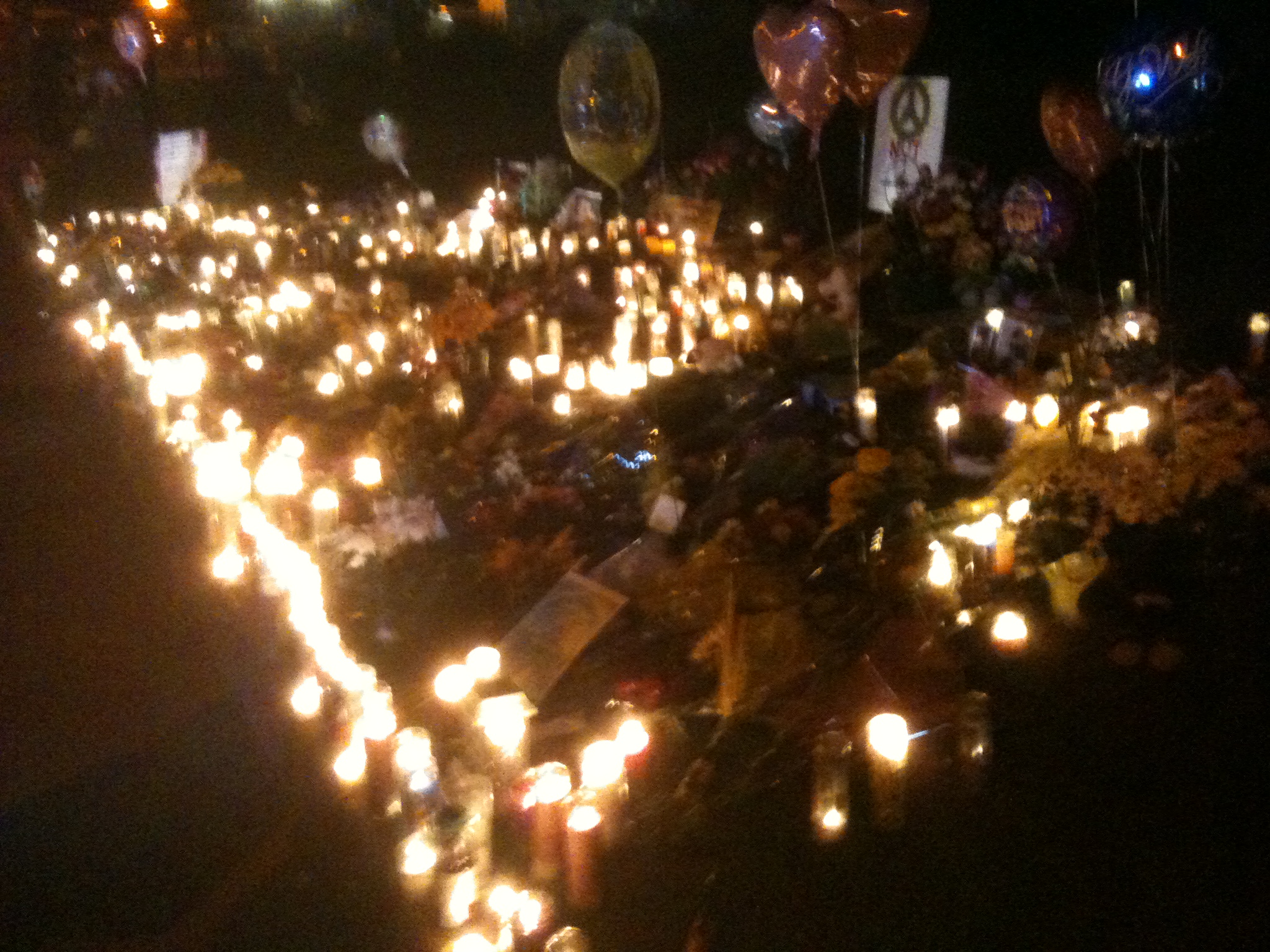
I took this outside UMC in Tucson this evening, 1/9/11

2 Comments

Filed under other words

auld lang syne

auld lang syne

auld (ôld) Scots adj. Old.

lang·syne also lang syne (lăng zīnˈ) Scots. adv. long ago; long since.  n. time long past; times past.


For times gone by. For old times. The song that no one knows*, that everyone mumbles while exchanging kisses on the striking of the New Year seems to be really all about what we all do at the end of the year. We remember. We reflect. We think back on what has happened since our last December 31st. We wonder about what the year to come will bring, and we also consider the experiences that have changed our lives in those twelve months. For me, from year to year, I seem to have polarizing reactions. Either it is “Amen, this year is over. Good riddance!” or it is “How will next year ever compare?” So this year, I challenge myself to remember all of the happenings of this past year and to move forward with a spirit of adventure, acknowledging and letting go of this past year, the joys and the sorrows, as I head forward into the next.


Happy New Year!


*The original song was written by Scottish poet Robert Burns in 1788, and, for the record, here are the original lyrics and the English translation:

Burns’ Version English Translation
Should auld acquaintance be forgot,
and never brought to mind ?
Should auld acquaintance be forgot,
and auld lang syne?CHORUS:

For auld lang syne, my jo,
for auld lang syne,
we’ll tak a cup o’ kindness yet,
for auld lang syne.

And surely ye’ll be your pint-stowp !
and surely I’ll be mine !
And we’ll tak a cup o’ kindness yet,
for auld lang syne.

CHORUS

We twa hae run about the braes,
and pu’d the gowans fine ;
But we’ve wander’d mony a weary fit,
sin auld lang syne.

CHORUS

We twa hae paidl’d i’ the burn,
frae morning sun till dine ;
But seas between us braid hae roar’d
sin auld lang syne.

CHORUS

And there’s a hand, my trusty fiere !
and gie’s a hand o’ thine !
And we’ll tak a right gude-willy waught,
for auld lang syne.

CHORUS

Should old acquaintance be forgot,
and never brought to mind ?
Should old acquaintance be forgot,
and old lang syne?CHORUS:

For auld lang syne, my dear,
for auld lang syne,
we’ll take a cup of kindness yet,
for auld lang syne.

And surely you’ll buy your pint cup !
and surely I’ll buy mine !
And we’ll take a cup o’ kindness yet,
for auld lang syne.

CHORUS

We two have run about the slopes,
and picked the daisies fine ;
But we’ve wandered many a weary foot,
since auld lang syne.

CHORUS

We two have paddled in the stream,
from morning sun till dine ;
But seas between us broad have roared
since auld lang syne.

CHORUS

And there’s a hand my trusty friend !
And give us a hand o’ thine !
And we’ll take a right good-will draught,
for auld lang syne.

CHORUS


And here’s a clip from one of my favorite movies of all time:

Leave a comment

Filed under other words

strum*

1strum \ˈstrəm\  noun : an act, instance, or sound of strumming

2strum \ˈstrəm\ verb strummed  strum·ming

transitive verb 1.  a : to brush the fingers over the strings of (a musical instrument) in playing <strum a guitar>; b: to play (music) on a stringed instrument <strum a tune>           2. : to cause to sound vibrantly <winds strummed the rigging — H. A. Chippendale>

intransitive verb

1: to strum a stringed instrument 2: to sound vibrantly

strum·mer noun

(definitions this week taken from merriam-webster.com)

I took piano lessons for eight years. I started when I was six. I don’t remember if I asked for lessons or whether my parents just signed me up. In any case, the decision would have been a logical one as I adored music. From an early age, I loved to sing and did so pretty much all the time to anyone who would listen. My dad remembers me sitting fixated in front of the television as a young child, watching ballet and opera. As a toddler, I carried around my Fisher Price tape recorder with attached microphone everywhere I went.

I was always very moved by music, but as memory serves, I never really enjoyed playing or practicing the piano. I appreciated the delicacy of the movements of fingers over the keys and the sort of sweetness that emerged when a classical piece was played by someone who understood the instrument. It’s just that I always had the feeling that that someone was not me.

My father played the guitar in the evenings when I was small. If he knew more than two songs, I don’t know them. My memories are of dancing around in my Annie nightgown and accompanying him with my toy tambourine to the sounds of Peter, Paul and Mary’s “I’m in Love with a Big Blue Frog” and Captain and Tenille’s “Muskrat Love.”

When I was in seventh grade and a guitar class was being offered at my new school, I decided to take it. I packed up my dad’s old Takamine in a soft case and toted it with me to school. The first week we learned “He’s Got the Whole World in His Hands” (This was a logical choice for the instructor: All of us attended a Catholic school and the entire song is two chords: G and D). We also learned to pick the riff to “Can’t Touch This”: neer-neer-neer-neer-neer-neer-neer-neer (And by now, you should be able to pretty accurately assess my exact age). I scanned the room that first day, and I noticed quickly that I was the only girl there. I didn’t know hardly any women who played guitar. I had vaguely heard of Joni Mitchell and Joan Baez, but I hadn’t heard of Joan Jett, Bonnie Raitt, Sarah McLachlan. Instead of feeling empowered, I felt like I didn’t belong, and I quit.

Dar Williams

In college, I met my friends Julie and Sarah, who both played guitar, and I became curious again. I was also exposed to a world of music I hadn’t heard before. I found a home in contemporary folk music and here there were women playing guitars all over the place: Dar Williams, the Indigo Girls, Ani Difranco, Erin McKeown, Lucy Kaplansky, And yes, some of my early attempts at finger picking were to songs from Jewel’s first album.

I got a guitar for Christmas my freshman year of college and I began to play. And immediately, there was something different here than with piano. From that first strum, I felt a current in my body. It sounded like a heart beat. It sounded like a footstep. It sounded like the hitting of a boot on a plank of wood, like the hollow clang of a metal, like a voice echoing in a tower.

Woody Guthrie

Also, I was really, really bad. It took me three hours to make chord changes, and initially, I couldn’t sing when I played unless I phrased my singing in time with chord changes. But I didn’t care. There was something about the sound that kept me coming back. There was something about the sound that was satisfying, even if I wasn’t good. There was something about the sound that made me want to be better at making it.

The music I am most attracted to is music that over all else feels sincere. I love music that is sung on porches or in living rooms. I love music that has imperfections, where voices crack or one note is picked a lot louder than the rest. It gathers its beauty not from its proficiency but from its earnestness. It is beautiful because I can tell that the person making it needed to make it. This music is made to fill a void or to celebrate a milestone. This music is made because in the making, life becomes a little easier. Or suffering is shared. Or something needs to be said and this is the way to say it.

Sonny Terry and Brownie McGhee

One of the definitions of strum is: “to cause to sound vibrantly.” I guess this is what drew me to the guitar and what draws me to folk music, to the blues, to old country. There is a vibrancy in these songs that ultimately reminds me of what it means to be alive—in all its loveliness and heartbreak, in its seamlessness and messiness.

A few years ago, a very talented singer/songwriter friend of mine and I recorded some songs together. We had sung together in college and after years apart, we reconnected and we sang again. The first time we attempted to record one song, Stephen Foster’s “Hard Times,” we did it in parts. I played the guitar. Then I sang. Then she did. But it felt mechanical. It didn’t work. We decided to do it the way we actually performed it. And when we sang, I played guitar and we harmonized, singing together with eyes closed because we didn’t need to look at each other to know when to begin or when to end. And that creation of sound is one of my favorite moments.

Elizabeth Cotton

Just a few songs that come to mind in relation to strum:

Disclaimer: Some of these don’t have “strumming” at all, the first one is acapella, actually. Many of them are finger-picked. But I mean strum as in “to sound vibrantly.”

Hazel Dickens “Little Pretty Bird” (even though there is no strumming involved in this one; it’s acapella)

Gillian Welch & David Rawlings “Time (the Revelator)”

Stephen Foster “Hard Times (Come Again No More)”

Elizabeth Cotton “Freight Train”

Woody Guthrie “Do Re Mi”

Dar Williams “If I Wrote You”

Bob Dylan “Don’t Think Twice”

Mark Erelli “The Only Way”

Lucinda Williams “World Without Tears”

Joni Mitchell “A Case of You”

Sonny Terry & Brownie McGee “A Better Day”

Doc Watson “The Coo Coo Bird”

Patty Griffin “Sweet Lorraine”

Po’Girl “Old Mountain Line”

Jeff Buckley “Hallelujah”


*It’s funny that this word is assigned this week as I’m playing a gig with an old bandmate Mark at The Neutral Ground in my hometown New Orleans.

1 Comment

Filed under weekly words

re·cline

re·cline \ri-ˈklīn\ transitive verb : to cause or permit to incline backwards

intransitive verb 1. to lean or incline backwards 2. repose, lie

Origin: Middle English, from Anglo-French or Latin; Anglo-French recliner, from Latin reclinare, from re- + clinare to bend. First Known Use: 15th century

(from Merriam-Webster.com)

The Lazyboy was a sort of garish orange threaded through with white. Susan picked at the worn section on the left arm, as if she could do no further harm to this eyesore of a chair that had no business existing in the first place. She could tell it was annoying her therapist, her picking not the chair itself, which he had apparently chosen after all. He had just asked her what she presumed was a pivotal question in her “therapeutic process” and he had a look of expectation on his face, although he was trying to hide it. This was the moment, she imagined, when she was supposed to have an epiphany. No, wait, it was called an epiphany in novels. In therapy, it was called… What the hell was it called again? Well, anyway, she was supposed to be overcome with emotion. She was about to disclose something major, something life-changing, something she had never realized until this exact moment. Maybe she would cry, a river or perhaps a single dramatic tear. A tear which she would let slide down the length of her cheek without wiping it away, feeling the poignancy of the moment grow as it slid and slid and then dropped below, leaving a mark on her cotton t-shirt.

But the truth was, she didn’t feel a damn thing. Hours and hours of therapy, hundreds of dollars and she had arrived at the moment when she was supposed to finally come to some sort of realization, perhaps provide herself with some restitution for years of self-harm and self-doubt. She almost felt bad for her therapist, who sat there calmly waiting for her to speak. He had worked hard to get her here and for what? For her to feel nothing at all? Perhaps she could fake it. Make some shit up. Babble about her subconscious desires. But no. This, she imagined, was one of the few things in life impossible to fake. You cannot feign knowledge about something if you have no idea what that something is supposed to be.

She looked down at the arm of the chair and realized what she had done. There was a large oval area on the chair’s arm that now resembled the bald spot on a mangy dog. Through one sliver at the side, you could even begin to see the metal rod inside the chair.

“Oh my God, I’m so sorry,” she said, only it came out muddled and muted.

“What was that?” her therapist asked.

“I said I’m so sorry. I wasn’t paying attention. I ruined your chair. I’ll pay for it.”

He dismissed the idea with a wave of his hand. “It’s not a problem, Susan. I’ve been meaning to re-cover or replace that chair for months. Really, you helped me out.”

“But shit, I just, I mean, I can’t believe I did this without noticing.”

“Really, it’s fine. If I was worried, I would’ve said something or asked you to stop.”

She could tell by the calmness of his eyes that he was telling the truth, but she couldn’t let it go.

“How much do you think a new chair costs? I can add it to my check for today. Really, I’d feel better.”

“Why do you feel it is necessary to compensate me for the chair when I’ve told you that it’s not important? Do you not believe that I’m telling you the truth?”

“No, I do believe you.”

“Then what it is it?” he asked.

“I messed it up, okay? I messed it up and I can make it right. This, this I can fix. I can fix this stupid fucking chair that is the ugliest goddamn thing I have ever seen. And it’s something that shouldn’t even be fixed because it’s that worthless. But I have the power to fix it and I know I can. So will you let me fix the fucking chair?”

She suddenly felt like she was going to vomit. She could feel the sensation of fullness in her belly and knew that the accompanying nausea would soon be followed by a warming of her esophagus as everything rose. But just as she felt it coming, she instead began to sob. Her whole body shook, convulsing in a way she had never experienced before. She did not fight it. She didn’t try to make herself stop. She put her head in her hands and she felt the water teem. Her nose was running but she didn’t reach for the tissues. She wanted to feel like the mess that she was. Oh right, she thought, it’s called a breakthrough.

1 Comment

Filed under weekly words

under sail

under sail, from my dictionary

under sail, sailing, with sails set.

SAILS ON A FULL-RIGGED SHIP

1. flying jib; 2. jib; 3. fore-topmost staysail; 4. foresail; 5. lower fore-topsail; 6. upper fore-topsail; 7. fore-top-gallant sail;  8. foreroyal;  9. fore-skysail;  10. lower studding sail;  11. fore-topmost studding sail;  12. fore-topgallant studding sail;  13. foreroyal studding sail;  14. main staysail;  15. main-topmast staysail;  16. main-topgallant staysail;  17. main-royal staysail;  18. mainsail;  19. lower main topsail;  20. upper main topsail;  21. main-topgallant sail;  22. main royal; 23. main skysail;  24. main-topmast studding sail;  25. main-topgallant studding sail;  26. main-royal studding sail;  27. mizzen staysail;  28. mizzen-topmast staysail;  29. mizzen-topgallant staysail;  30. mizzen-royal staysail; 31. mizzen topsail; 32. lower mizzen topsail;  33. upper mizzen topsail; 34. mizzen-topgallant sail;  35. mizzen royal; 36. mizzen skysail; 37. spanker

1. flying, we 2. left 3. them, headed to sea 4. without 5. without manuals 6. we’ll learn to survey 7. the water, the wind 8. with no map 9. we, map-less               10. lower our demands 11. low, we go in cabin 12. foreswear the compass, foreswear 13. those running rigging lines 14. we will steer 15. using other tools  16. mid-wives of this vessel 17. mid-breath, we assist  18. with limbs  19. used as wood rutters 20. with balance, from scales 21. we climb, to check sails 22. main royal 23. we tighten 24. that which needs tightening 25. and we loosen just to see 26. what billows, what flies out 27. we need staysails 28. we need this, to stay, sail 29. and to hoist, to work, to move 30. to handle, steer, manage          31. beneath shape sheets 32. needing only to spread 33. and to catch and deflect 34. this full air, this strong wind  35. no, we are not 36. prepared, only             37. steady.

Leave a comment

Filed under weekly words

con·duct

Pullman Parlor Car, 1883

con·duct (ˈkän-dəkt)  n. [<  L.  conductus, pp. of conducere; see CONDUCE],  1. a leading; guidance.  2. management; handling.  3. behavior; deportment; way that one acts.  4. [Obs.], an escort; convoy  v.t. 1. to lead; escort.  2. to manage; control; direct; carry on.  3. to direct (an orchestra, etc.) 4. to behave (oneself).  5. to be a channel for; convey; transmit: as, this wire conducts electricity.  v.i. 1. to lead.  2. to act as a conductor.

SYN.—conduct, in this comparison, implies a supervising by using one’s executive skill, knowledge, wisdom, etc. (to conduct a sales campaign); direct implies less supervision of actual details, but stresses the issuance of general orders or instructions (to direct the construction of a dam); manage implies supervision that involves the personal handling of all details (to manage a department); control implies firm direction by regulation or restraint and often connotes complete domination (the school board controls the system). See also behave.

For a long time, I had a tin can in which I kept prized items. One of the items was a brass button that had been removed from the blazer jacket of my paternal grandfather. On it were the raised letters: P-U-L-L-M-A-N.

Grandpa was a superintendent for the Pullman Company. When I explained his job as a child, I often mistook him for the conductor, imagining my portly Grandpa donning one of those navy and white striped caps and, for some reason unbeknownst to me, always carrying a clipboard. I imagined him standing on the step leading up to the car, holding onto the sidecar handle as the train pulled away.

The truth is that he had at one point been a conductor. He worked himself up the ranks from positions I don’t even know the names of to conductor to vice-superintendent in St. Louis and then superintendent in New Orleans.

My Grandpa was a self-made man. Although he never went to college, he had an insatiable appetite for learning. He always had a stack of a dozen books on the coffee table: library books about sociology, about history, about psychology. He encouraged his children’s curiosity, asking them questions and engaging in their learning process. He died when I was seven so I did not get to know him well. Much of my memory of him has been fleshed out in hearing stories from family members.

Pullman Car Built in 1928

In 1952, he relocated his wife and, at the time, four children from St. Louis to New Orleans to take a promotion to be superintendent there. The family traveled by train.

My dad told me that he and his siblings used to love to look out the windows at the countryside, as they did on every trip they made from New Orleans back to St. Louis to visit extended family. It was still the heighday of trains and the riding coaches. Their sleeping cars not only featured pull-down beds but sofas to relax on. The dining car served passengers their meals on fine china. On their laps lay linen napkins. At night, Grandpa would leave his shoes in a locker and the porter would put a fresh coat of polish on them by morning.

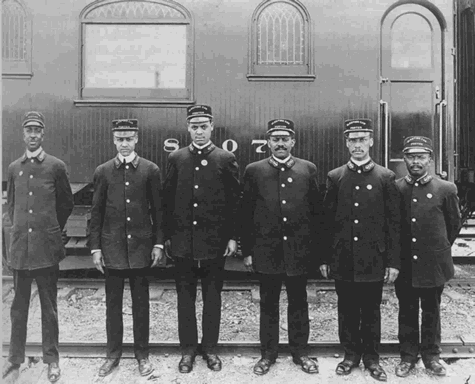
Pullman Sleeping Car Porters

As superintendent, Grandpa was in more of a behind-the-scenes role, managing staff and schedules, making sure everything ran on time. He was in charge of hiring and supervising employees like porters and conductors, cooks and waiters. He had to ensure the cars were in condition to roll on the rails and that his staff took care of their responsibilities. Although he did a lot of this from his office, sometimes he would ride on trips himself, like from New Orleans to Baton Rouge on LSU game days, to directly supervise and make sure everything ran smoothly.

***

The first time I traveled by train was when I was nine years old. As I recall, I was traveling from New Orleans to Atlanta to visit family there. All that I remember about that trip is playing travel Yahtzee and eating Little Debbie snack brownies from the concession car. I had expected the concession car to be more like dining cars I had seen in movies so imagine my disappointment when I saw that it more closely resembled the snack bar at our community pool.

When I studied abroad in Rome in college, I traveled by train frequently, throughout Italy and Europe. Traveling by train felt exotic to me. It was a symbol of my independence and each new trip felt like an adventure. Although I was nowhere near a vagabond, I sometimes indulged myself in feeling like one. I have a vivid memory of traveling through Ireland with my friend Heidi and looking out the window at the blur of the hills, thinking I had never seen anything so green. I remember trying to journal about it and being so dissatisfied with all the descriptions I attempted: verdant, fresh, like a football field. The green there was a sort of violent green, impatient with its beauty.

And then there was the time when I mistakenly filled out my Eurorail pass before the train porter came to my cabin. At this point, I was traveling alone from Barcelona to Madrid, and I didn’t speak Spanish or Catalan. I couldn’t explain myself to the porter. Some compassionate middle-aged women in the cabin tried to communicate with me, me in Italian and them deciphering through Spanish. They tried to argue with the porter for me, but it was to no avail. I had lost one of my trip tickets, and I was angry at myself and frustrated. As I lay on my bunk crying, I felt the opposite of independent.

When the train trips meld together, I experience them in a whirring sort of way that replicates the sounds of metal on metal, the echo of wind banging up against the sidecar. These rides were a contrast of things for me—the calm of watching the landscape pass by and the exhilaration, but sometimes fear, of the unknown. These trips were about discovering new worlds and also about overcoming my hesitancy and timidity to enter these worlds alone.

While I know that my journey to feeling more independent and understanding myself better was a gradual one, I remember a breaking point. It was my last week in Rome, and there were some things I wanted to do: return to the Spanish steps, find an Italian cookbook at this specific bookstore, wander back to the Pantheon. None of my friends wanted to do these with me. Instead of abandoning my mission, I had the sudden realization that I could do this on my own. This might seem like an obvious progression. However, I had spent much of my adolescence deciding  what I would do based on other people’s decisions. I did not like to be alone.

And here, there were added intimidations. I was in a foreign country with a foreign language. I had to navigate public transportation in this other language. I had to risk being lost. I had to risk making a fool of myself. I had to risk being alone. I had to risk finding my way by myself.

However, I had lived in Rome at this time for four months, and I could speak the language enough to get by. I knew how to read the bus maps. I knew how to get around. The biggest motivator, though, was that I wanted to do these things and I didn’t care whether someone else was with me or not. I would get myself there. And also, I felt at that moment that I was enough. I remember intense satisfaction when I returned home from my day adventure. I had figured out how to navigate the terrain, without needing anyone else.

***

My dad speaks of his father with pride, not only because he was good at his job but because he had a commitment to equality and justice in the South during times of deep prejudice and injustice. It was his desire to treat everyone fairly.

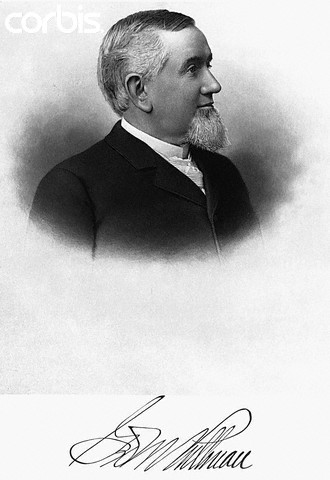
Inventor of the Pullman Railroad Car, George Mortimer Pullman --- Image by © CORBIS

While I had misremembered that he retired, Grandpa actually left that job when the Pullman Company went out of business in the late 60s, the company no longer able to keep afloat with competing business from air and interstate travel.

My uncle was still living at home at that point and he remembers that on his last day, Grandpa brought a card table and chair to work because the office furnishings had been sold. When the day was done, he packed them up and came home.

I wonder how it felt to him to have worked his way up the system like that, based on his own willingness to learn and develop his skills. I wonder what it felt like to have to experience that loss, to have to make a change not out of desire but out of necessity. I wonder what it felt like to watch a world, a way of life, so unique and compelling become obsolete. And I wonder what it felt like to him to live a life defined by motion, to hear the wheels, to look out the window as states flew by. I wonder what it felt like to walk from car to car, talking to passengers and reviewing schedules, seeing the inner mechanisms of the railroad run like the engine at the front of the train. I wonder what it felt like to witness family vacations and business trips and honeymoons unfold and know that, in simply doing his job, he had played a role in making them happen.

5 Comments

Filed under weekly words