Tag Archives: dictionary project

sa·bot


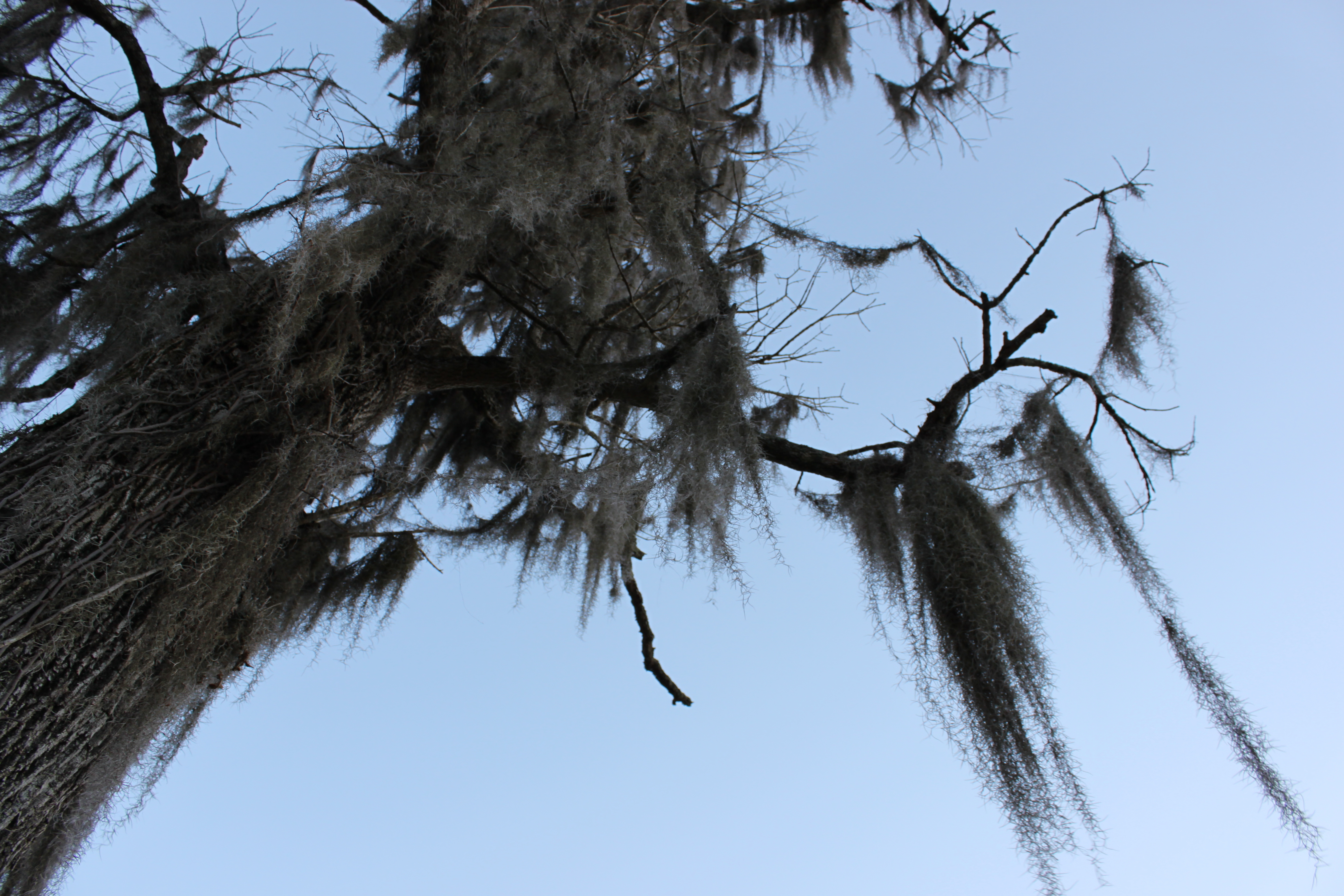
Tree, Lisa O’Neill


sa·bot    (sab-oh)  n.  [Fr.; altered (after bot, a boot)  <  savate, old shoe; via Turk.  <  Ar. sabbat, sandal]  1.  a kind of shoe shaped and hollowed from a single piece of wood, worn by peasants in Europe.  2.  a heavy leather shoe with a wooden sole.  3.  a small sailing dinghy whose hull somewhat resembles a shoe.  4.  in military usage, a wooden disk or soft metalclip fastened to a projectile, formerly used in muzzle-loading canon.
 
 
“Where would I possibly find enough leather
With which to cover the surface of the earth?
But (just) leather on the soles of my shoes
Is equivalent to covering the earth with it”

–Shantideva


The ground was rough. So the girl decided to carve herself some shoes. She was tired of stepping on thorns. She had enough of cuts from tiny pieces of glass. Her toenails were torn. Her arches were sore. Her feet were calloused from walking the stubborn earth.
 
She had tried looking carefully at where she was walking. She had tried looking ahead at where she was going and hoping for the best. She had tried praying for the ground to be other than it was. She had tried laying out a mat which she would pick up and throw in front of her every few steps. All of these were tiresome. None of these worked. So at long last, she decided, though she was no carver, to carve herself some shoes.
 
She went walking to the place where there were many trees and once she arrived there, she considered them keenly. She placed her hand against the bark. She felt the smoothness of their leaves between her fingers. She considered the maple, the mesquite, the magnolia. She sat on the roots of mighty oaks. She pressed her nose to the skin of the cedar. She did this for days, or was it weeks? She smelled the sassafras. She leaned her back against the bark of the elm. She touched the ashes. She tasted the sap of the pine.
 
She wondered which wood would give best, which would mar her feet. She considered what she knew about the rings inside those trees, the color of the wood. She considered the way the wood would sound when it met the earth, in walking or in dancing.
 
She walked to where the water met the trees, she waded, and finally, she settled on something. Cypress.
 
She pulled something sharp from within her coat and she began to saw. She thanked the tree and took her branch with her.
 
The girl found a place on the earth to sit and placed her large branch across her lap. She had never made a pair of shoes before. She had never carved anything besides letters into words, color into walls. She wondered where to begin. Begin with this wood, she heard. Begin with this tool. Begin with this time.
 
So she did. She found the process long, this slow hollowing. The only indicator of time spent was a small curve in the center of the block. And yet there was something satisfying about the sound of her knife cutting into the wood and the sight of curled shavings falling to her feet.
 
She scraped and she notched and she pulled. She worked and as she worked, she sang. These were the songs she had been taught over the years. Her mother had sung them. And her mother’s mother had sung them. They were songs about truth and what it means to sit in the presence of another human being. She became lost in the music and the slow rhythm of scraping and when she came out of her haze, she saw she had cut a hole clean through.
 
So she began again, slowly carving, this time not forgetting where she was. People passed her as she worked, some offered to help her carve, some gave her suggestions. She thanked them, she listened, and then she continued to work. The light turned to dark then to light then to dark again, and still she carved. She noticed the rings in the wood. She noticed the changes in color. She noticed the smell of its skin. She chipped, she chiseled, she cleaved and divided. She etched, she hacked, she hewed. She molded and modeled and patterned and sculpted and shaped. She, at long last, whittled the last bit of excess away.
 
And then she looked at her work. These wooden shoes were not entirely even. They were not exactly smooth. She held one in each hand and considered their weight. She thought about her efforts and why she had begun in the first place. These would not be the most comfortable shoes. They would not be the most attractive. They looked like they had been made by a beginner. And they had. These shoes would not spare her the miles walked in them. They would not spare her the wrong turns. They would not keep her from encountering hard rain or hot sand or a horizon obscured by too much foliage. These shoes would not do this. No shoes ever would. But still, the girl had made these.
 
She slipped on the shoes.
 
She began to walk.


2 Comments

Filed under weekly words

the dictionary project author interview: ander monson

Today, we feature an interview with Ander Monson, author in all genres and known innovator in the world of nonfiction. I think what I appreciate most about Ander’s work is how he brings to the forefront the unexpected and neglected musings that are often relegated to the sidebar, the footnotes, the parentheses. These ideas are investigated, interrogated, violently disassembled and put back together again in surprising, compelling, and sometimes confounding ways.  As he once told me, the essayist’s job is to show the inner workings of the writer’s brain on the page. Enjoy these synapses, these nerve endings.


1. Please share a memory/story/thought in relation to a dictionary/dictionaries:


I’ve collected old dictionaries for years, starting mostly when I lived in Alabama, and happened on a whole pile of them at Alabama’s Thrift Store, now named, instead, America’s Thrift Store. I’d buy them all. I must have had forty. They were all well outdated. I wondered what worth there was in an outdated dictionary. But they had the most lovely images: etchings, woodcuts, weird handmade diagrams of things. I got excited. I kept them for four years, acquiring more, but had to discard most of them when my wife and I moved to Michigan. They weigh a ton. They take up too much space. But first I pillaged them. Now I restrict myself only to specialist dictionaries (medical dictionaries, photography dictionaries, tool-and-die dictionaries, mathematics dictionaries, etc.) and to my OED condensed, 1971, in micro-script. It comes with a magnifying glass.


2. What is your current favorite word?

Library.


3. What is the most obnoxious/insidious/annoying word?

Utilize.


4. What word has been your (recent or past) muse?

I almost never think of words as muses. To me they’re tools—sometimes worlds.


5. Could you talk a little bit about the interaction of words and space in your work? 

Well, that’s a big question. I’ll narrow it down a bit. The piece I wrote for this, Dear Sepulcher, is part of this book project I’m finishing up this fall in which I write short, associative, compressed essays in response to things happened on in libraries: five words (in this case), a passage from a book, a striking image, an snatch of overheard conversation, a human hair, a punch card, homophobic marginalia, a packet of seeds, a due date stamp, just to name a few. Once written, they are originally published back into the book in the library in which I found the originating thing. So they’re words written in response to words I found in any one of a series of particular spaces (libraries, loosely defined), and published back into that space as a communication to a future reader. In this way I’ve been thinking of the library as a medium, a meeting space for brains to find each other. I’m also collecting these short essays as 6×9 cards, unbound, unordered in a box. So in their production I’m thinking about space and language, image and design (as I often do in my work). How language can be a tool of design—or design a tool of language. Either can serve the other, but they work best when they can have a conversation.


6. Please respond to the following words and definitions*, picked exclusively at random for you:


se·pul·cher  (ˈse-pəl-kər),  n.  [ME. & OFr. sepulcre; L. spulcrum < sepelire, to bury],  1.  a vault for burial; grave; tomb.  2.  a place for the safekeeping of relics, as in an altar.  v.t.  to place in a sepulcher; bury.


Al·a·bam·i·an  (ˌæləˈbæmɪən), adj.  of Alabama.  n.  a native or inhabitant of Alabama.


ken·nel  (/ˈkenl),  n.  [ME. kenel, keneil;  OFr.  *kenil; LL. canile < L. canis, a dog],  1.  a doghouse  2.  often pl. a place where dogs are bred or kept.  3.  a pack of dogs  v.t.  [KENNELED or KENNELLED (‘ld), KENNELING or KENNELLING], to place or keep in a kennel.  v.ito live or take shelter in a kennel.


Pa·pe·e·te  (pəˈpētē), n.  a seaport on Tahitia: capital of the Society Islands and French Oceania: pop., 8500.


re·ta·li·ate  (riˈtalēˌāt),  v.i[RETALIATED (-id) RETALIATING], [<L. retaliatus, pp. of retaliare, to require, retaliate < re-, back + talio, punishment in kind < talis, such}, to return like for like; especially to return evil for evil; pay back injury for injury: as, if he is hurt, he will retailiate.  v.t.  to return an injury, wrong, etc. for (an injury, wrong, etc. given); requite in kind.


*Definitions taken from Webster’s New World Dictionary of the American Language, copyright 1955.


Ander Monson is the author of a host of paraphernalia including a decoder wheel, several chapbooks and limited edition letterpress collaborations, a website, and five books, most recently The Available World (poetry, Sarabande, 2010) and Vanishing Point: Not a Memoir (nonfiction, Graywolf, 2010). He lives and teaches in Tucson, Arizona, where he edits the magazine DIAGRAM  and the New Michigan Press.

Leave a comment

Filed under author interviews

sur·ren·der


By Lisa O’Neill. Image of a collaboration of artist Gregory Sale and poet Tc Tolbert at the Phoenix Art Museum (click image for more details)


sur·ren·der (­­­­­­­­­­səˈrendər) v.t.  [OFr. surrender; sur-, upon, up + render, to render],  1. to give up possession of or power over; yield to another on demand or compulsion.  2. to give up claim to; give over or yield, especially voluntarily, as in favor of another.  3. to give up or abandon; as, we surrendered all hope.  4.  to yield or resign (oneself) to an emotion, influence, etc.  5. [Obs.], to give back or in return.  v.i.  to give oneself up to another’s power or control, especially as a prisoner; yield.  n.  [Anglo-Fr.  <  OFr.  surrender  (see the v.);  inf. used as n.],  1. the act of surrendering, yielding, or giving up.  2.  in insurance, the voluntary abandonment of a policy by an insured person in retrun for a cash payment (surrender value), thus freeing the company of liability.

SYN.—surrender commonly implies the giving up of something completely after striving to keep it (to surrender a fort, one’s freedom, etc.); relinquish is the general word implying an abandoning, giving up, or letting go of something held (to relinquish one’s grasp, a claim, etc.); to yield is to concede or give way under pressure (to yield one’s consent); to submit is to give in to authority of superior force (to submit to a conqueror); resign implies a voluntary, formal relinquishment and used reflexively, connotes submission or passive acceptance (to resign an office, to resign oneself to failure).


On Saturday, I heard Amy Goodman speak. I knew she was a brilliant journalist, having read her work and listened to Democracy Now!, but I was taken aback at what a consummate storyteller she is and at her capacity to be a vessel for so many people’s stories. She moved seamlessly in and out of political events, uprisings, movements, historical dates and figures, details of the stories of people she’d met and words they had told her. She talked about the responsibility of journalists (“to go where the silence is and let people speak for themselves”), about what one immigrant fighting for rights said when Goodman asked why there was a butterfly on their sign (“butterflies know no borders; butterflies are free”). She quoted Gandhi: “First they ignore you. Then they laugh at you. Then they fight you. Then you win.”

I think what surprised me most is that in the face of all of the stories of tremendous, often inconceivable, injustice and oppression, she exuded warmth and humor and a presence that spoke to her overall trust in the kindness and goodness of human beings. Was there corruption of power? Absolutely. Were people, all over the world, suffering in unconscionable ways? Without a doubt. Was much of this suffering caused directly by the policies of our country and were we Americans thus accountable to and responsible for much of this injustice? Yes, certainly.

Was this a signal that we should give up? That nothing could be done? That things were fucked up beyond repair and we should retreat into our homes to eat Cheetos and watch reality television for the rest off our lives? A definitive no.

Here’s the thing about surrender, about surrendering. Surrendering is not something that people in positions of power have any authority or control over. The surrendering must come from the person who chooses to submit. Obviously, the stakes are higher for some than others. Some of us enjoy expansive freedom in our day-to-day lives; freedoms we often take for granted and don’t practice gratitude for. Others live each day faced with imminent threats and dangers to their personal safety and that of their loved ones and communities, oppressed in their own countries and homes.

The one thing that steadily continues to amaze and humble me is the resiliency of the human spirit. That even when beared down upon, when suffering, when up against impossible obstacles, human beings consistently stand up and refuse to concede, to resign, to relinquish, to surrender. This is at the heart of our humanness, our ability to take ownership of our bodies, minds, hearts, souls, even if others beat us down, abuse us, tell us we are worthless. There is power in the unwillingness to cower or be made less than. There is strength in taping up wounds and walking even when broken. We may not have control of the conditions around us, but we do have a responsibility to the flickering of light inside.

Goodman took us through uprisings during the Arab Spring and back to the civil rights movement. She reminded the audience of the media’s dismissive and oversimplified take on Rosa Parks (“she was just a tired seamstress”) that doesn’t take into account that she was trained at the Highlander school and held the position of secretary of the local NAACP. Not only was she actively involved in the fight for civil rights for African-Americans, but she was chosen by the movement to take a stand in this way and to pave the way for the entrance of a new as-yet-unknown preacher to help lead the movement.


Goodman conferred some information that was shocking in its irony:

Mitt Romney’s father, George Romney, Jr., when being considered for a presidential run in 1968, warned the Republican party against extremism. He voiced his concerns about and opposition to organizations such as the John Birch Society, a radical right-wing organization that stood in opposition to the civil rights movement. The Koch Brothers’ father Fred Koch was a founding member of the Birch Society. The Koch Brothers have been one of the biggest supporters of Mitt Romney’s campaign.

Because Frederick Douglas was a “difficult” slave, he was sent to Ed Covey, known as a “slave breaker.” The place where Covey lived and enacted his torture on slaves, located in Saint Michael’s, Maryland, was known as Mount Misery. The current owner of Mount Misery? Donald Rumsfeld, the former Secretary of Defense, under whose leadership torture, like that at Abu Ghraib, was conducted. Mount Misery is the site of his vacation home.


I think it is easy to point at the many freedoms we have in our culture and to ignore systemic ills that reveal the ways in which we oppress and are oppressed every day: the United States holding the largest incarceration rate in the world (International Centre for Prison Studies); classism and racism embedded in our criminal justice system; our use of the death penalty and also its continued use even in cases of extreme doubt (as with Troy Davis). Dostoevsky said, “The degree of civilization in a society can be judged by entering its prisons.” And too, I think, by the way in which we choose to acknowledge or not acknowledge how often we tuck people away, out of sight and out of mind.

Goodman spoke of “breaking the sound barrier,” and I think in all the discussion of the economy and the two party candidates batting accusations at one another, the real discourse and debate gets lost. How are we taking care of our citizens? And how are we not? How are we being good citizens of the world? And how are we not? How are we being caretakers of the planet? And how are we not? What are the ways in which our current policies make it impossible for some of our fellow citizens to survive much less thrive?

Here’s another thing about surrendering. Not surrendering becomes easier when we see ourselves as part of a community with others. The greatest myth of our individual-focused U.S. society is that we don’t need one another, that it is okay to take care of “me and mine” and not care about “you and yours,” that we can fill our lives with objects to substitute for intimacy with other human beings, that life is about personal success and that this success is measured by how we appear on the outside and how much money we have in the bank.

This is a myth that pains us because, in our deepest selves, we know it is a lie. We see everyday in countless ways the impact we have on one another. We are interdependent and to propagate the idea within ourselves and our culture that we are not leads to suffering and disillusion, confusion and blame.

From community comes strength and connection, something we all need. When I was in high school, I had a teacher who had adopted a severely mentally and physically disabled child. She and her husband were told by doctors after they adopted him that this infant, now their child, had been within hours of dying. Not because he didn’t have adequate food, but because he, unlike the other babies, had not been regularly held. He was dying from lack of human touch.

The desire to connect with others is at our very core—no matter our political affiliations, no matter the distinctions in our religious or ethical views.

But you know what is required to be a part of community? The vulnerability of being who we really are and speaking from that place, the willingness to have difficult and uncomfortable conversations about how we got to where we are and about the problems that need solutions, the bravery to not turn away when we see someone suffering because it makes us feel dissonance, because we know that in different circumstances that could be us.

Goodman’s new book, written with fellow producer Denis Moynihan, is called The Silenced Majority. The title speaks to the idea that most Americans, even despite differences in opinion, have compassion at their core. They want opportunities to be available not only for themselves but for their fellow citizens. But when the rhetoric is too narrow, too many stories get left out. And it is only through hearing each others’ stories that we learn to understand one another and then act from that space of understanding. Goodman relayed the story of when a joint targeting committee made of staff from The Manhattan Project and the United States Air Force sent suggestions of potential nuclear bomb sites in Japan to Secretary of War Henry Stimson. On the list were Kokura, Hiroshima, Niigata, and Kyoto. Stimson told them to remove Kyoto, not only from the nuclear list but from the list of targets for conventional bombing as well. Why? Because he and his wife had visited Kyoto and they appreciated the beauty and history of the city and enjoyed the people they met there. Through this personal connection, the town of Kyoto was saved. Nagasaki was added in its place.

Amy Goodman said it is movements that make this country great.

And what are movements? Just people. People who have decided to commit themselves to a collective vision that says: we can do better than this. People who, despite the odds and obstacles that face them, do the work anyway. People who, leaning on the strength and knowledge of one another, do not surrender.
5 Comments

Filed under weekly words

the dictionary project author interview: kate durbin


Today, I’m thrilled to share with you an author interview with writer, performer, and transmedia artist Kate Durbin. Kate’s work brilliantly engages with pop culture, celebrity culture, teen girl culture, fashion, and media.  I first became aware of her through her Women as Objects project and Gaga Stigmata, an online arts and criticism journal about Lady Gaga of which she is founding editor.

All glitter and turquoise and bite and wit. Enjoy!


1. Please share a memory/story/thought in relation to a dictionary/dictionaries:

A few years back one of my students showed me the brilliant Urban Dictionary, an online collection of slang. The website was created by a freshman in college and the dictionary’s very first entry was a definition of “the man.” Today’s Sept. 19, 2012 entry is “penis game”: “This is a game that needs a minimum of 2 players. It can be played anywhere from the workplace to school. It starts when one player says penis ! The other player must say penis ! but louder than the first person. It goes on until one player quits or can’t get louder than the other.”

I think it’s appropriate that kids are collecting the language that expresses our cultural moment, although were Shakespeare alive today he’d likely be adding words to the Urban Dictionary too.


2. What is your current favorite word?

Chiffon. The shhh of air in my mouth when I say chiffon is like the very lightness of the material. I heart the luxurious language of fabric: duchess satin, sequined slipper silk, crushed velvet, crinoline, chantilly lace, chenille, moss crepe, sparkle organza, taffeta, liquid lame, tender buttons!


3. What, in your opinion, is the most obnoxious/insidious/annoying word?

Hipster. I feel that term has become an acceptable way to dismiss someone who you perceive to be a threat to your own coolness. Oddly, though, the people who complain about hipsters the most often seem to resemble the criteria for the term itself. But that’s beside the point, as there is no such thing as a hipster.


4. What word has been your (recent or past) muse?

iPrincess


5. Could you talk a bit about the language of youth culture, particularly teenage girls? I’m thinking specifically about your “Women as Objects” project, which collages images from different teen girls’ tumblr blogs. How does language function here? in their world? in your integration of their language? In the land of the Internet?

For Women as Objects (www.womenasobjects.tumblr.com) I not only curate images but text posts as well from teenage girls—so it is both a visual and text-based project. Some of the images have text on them, too.

I think language functions in the online teenage girl’s world as a means of radical self-expression, as tumblr is a place where they can express themselves more liberally than in their IRL existence. At the same time, language functions also as a hook for attention, and so that means they are competing with one another by creating increasingly abject or pop culturally savvy text posts. They create their own language, a sort of iPrincess language of the internet. It’s equal parts computer keyboard and Cher from Clueless.

The way I’ve integrated the girls’ language most directly is in the video art pieces I’ve done, where I’ve taken a collection of the girls’ text posts and conversations with one another and performed those texts directly, in costume, as tumblr girls in bathroom settings. By taking their texts out of context of the Internet, which is a space where the larger culture is sick of seeing girls spill their guts, makes the girls’ humor, vulnerability, abjection, cleverness, body awareness, and pop cultural savvy more apparently brilliant, glittering, pleasurable and important.


6. If you were to write a dictionary definition for Lady Gaga, what would it say?

Lady Gaga: woman having proprietary rights or authority especially as a feudal superior : woman receiving the homage or devotion of a knight or lover : dame : infatuated : virgin mary : usually used with Our : doting : woman of superior social position : crazy : woman of refinement and gentle manners : foolish :woman, female : often used in a courteous reference : marked by wild enthusiasm : show the lady to a seat : or usually in the plural in address : ladies and gentlemen : wife : girlfriend, mistress : any of various titled women in Great Britain : used as the customary title of a marchioness, countess, viscountess, or baroness or the wife of a knight, baronet, member of the peerage, or one having the courtesy title of lord and used as a courtesy title for the daughter of a duke, marquess, or earl : I can’t understand how anyone could be so gaga over golf : woman who is a member of an order of knighthood : he thinks that most artists are at least a little bit gaga : origin French, from gaga fool : of imitative origin : First Known Use 1917


7. Please respond to the following words and definitions*, picked exclusively at random for you:


2up  \əp\  adj   1 :  risen above the horizon <the sun is ~>  2 :  being out of bed (~ by 6 o’clock)  3 : relatively high <prices are ~>  4 :  RAISED, LIFTED <windows are ~>  5 :  BUILT, CONSTRUCTED <the house is ~>  6 :  grown above a surface <the corn is ~>  7 :  moving, inclining, or directed upward  8 :  marked by agitation, excitement, or activity  9 :  READY; esp: highly prepared  10 :  going on: taking place <find out what is ~>  11 :  EXPIRED, ENDED <the time is ~>  12 :  extensively aware or informed <~ on the news>  13 :  being ahead or in advance of an opponent <one hole ~ in a match>  14 :  presented for or being under consideration <~ for promotion>  15 :  charged before a court <~ for robbery>


block·ade  \bläˈkād\  n : the isolation of a place usu. By troops or ships — block·ade vb  — block·ade·er n


2sluice  \slo͞os\  vb    sluiced; sluic·ing  1 :  to draw off through a sluice   2 :  to wash with running water: FLUSH


a·sep·tic  \ āˈseptik\   adj free or freed from disease-causing germs


re·par·a·tive   \ri-ˈpa-rə-tiv\    adj   1 :  of, relating to, or effecting repairs  2 :  serving to make amends


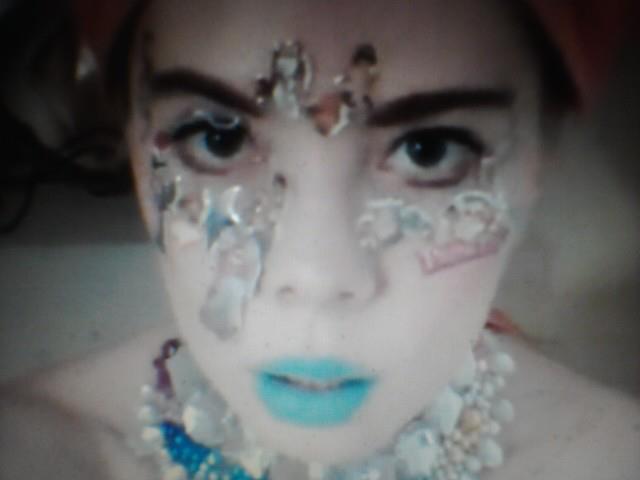
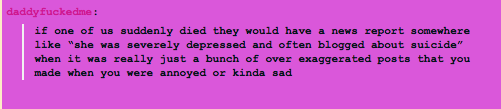
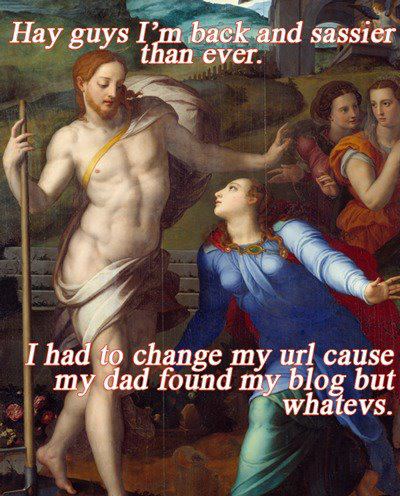
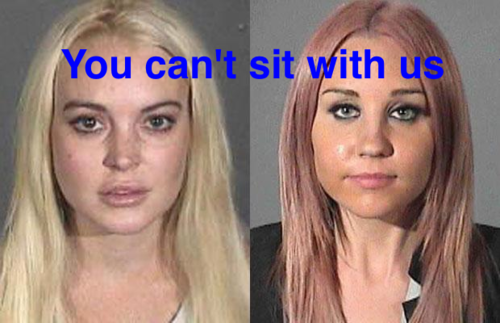
(All images taken from tumblr)

*Definitions taken from The Merriam-Webster Dictionary, New Edition, copyright 2004.


Kate Durbin is a Los Angeles-based writer, performer, and transmedia artist. She is author of The Ravenous Audience (Akashic Books) and E! Entertainment Diamond Edition (Insert/Blanc Press, forthcoming). She has also written five chapbooks, including, most recently, FASHIONWHORE and Kept Women. Her projects have been featured in Spex, Huffington Post, The New Yorker, Salon.com, Denver Quarterly, AOL, Poets and Writers, TMobile’s Your Digital Daily, Poets.org, VLAK, Lana Turner: A Journal of Poetry and Opinion, Black Warrior Review, berfrois, Drunken Boat, NPR, Bookslut, 1913, LIT, and Yale’s The American Scholar, among others. She is founding editor of Gaga Stigmata, an online arts and criticism journal about Lady Gaga, which will be published as a book from Zg Press in 2013.


Leave a comment

Filed under author interviews

un–

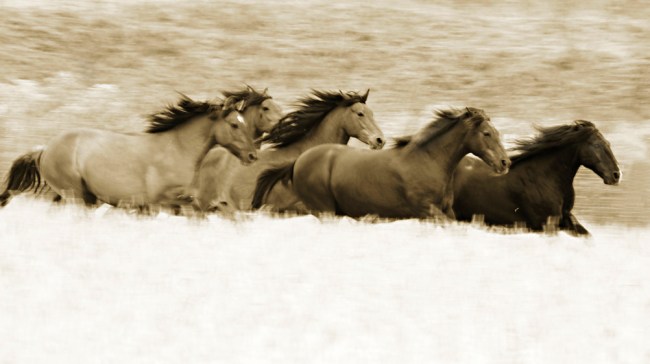
Wild Horses Running, Lisa Dearing


un2  prefix added to verbs:  denoting the reversal or cancellation of an action or state: untie | unsettle.  denoting deprivation, separation, or reduction to a lesser state: unmask unhand.  Old English un-, on-, of Germanic origin; related to Dutch ont- and German ent-

(from The New Oxford English Dictionary, copyright 2005)


A Catalogue of Loss and Gain: The Doing of Un


Here’s a theory: we spend our whole lives trying to un ourselves.

Sometimes, the unning is good for us. We undo patterns that no longer serve us. We unfetter ourselves from belief systems that limit us. We unearth what we really desire and we unwrite the narrative that we do not deserve all these dreams, these longings. We unmask so that others can see us for who we really are. We unclutter. We unbolt. We unarm.

Sometimes, the unning does us harm. We un all over ourselves. We rename ourselves: Unable, Unacceptable, Undeserving. We declare events and situations unbearable, and thus strip ourselves of our earned and ever-present power. We decide life should be unchanging and so we hold so tightly onto what is that we can’t see what is possible. We declare our life’s work Untitled because we are too terrified to name it imperfectly. We’d rather call it nothing than be imprecise, than be exposed for our lack of poeticism.

Right now, the moon is full and in Aries. This is a time abundant with potential, but potential that comes from the deepest of rifts. We must let go and abandon previous ways of being. We must un in order to make space for what will be birthed. We must cancel that which does not serve us to make space for that which will. We un and in doing so lose our footing, our sense of who we are and what we know, in order to make room for an uncertain future which will weave us back together in ways we could never imagine. We unharness our unyielding hold on what the future must be in order to allow it to come into what it will be, one breath and one moment at a time.

Un sounds like fun but it can be the opposite: loss, separation, reduction. Un sounds like won but it is about losing. Un sounds like done but is about undoing. Un cancels. Un annuls. Un reprieves and deprives. It both lessens and augments: what’s lost is gone and yet what’s lost becomes mythic, legendary in proportion. It both no longer is and exists in a size and measure it never did when it wasn’t un.

And yet, un brings offerings. Un brings, even in its negation, the imaginings of what is possible. It speaks to possibility on the other side. If there is unbelief, belief is possible. If we deem something unworthy, how might worthiness be seen? If something is unheard of, who is not able or willing to hear? Which limitations and negations are merely semantic ones made only by our need to constrain and define?

We are talking about irony and paradox and contradiction in my writing classes. How often these instances occur in literature and in life. How can it be possible that in unfastening and unbuckling, we could be held together more securely? That unmarking sometimes brings more attention to the canvas than the mark itself? That in unwinding a spool, we become more aware of the constraint of thread? That in unmaking something, we are aware so keenly of the steps and materials that allowed the thing to take shape? That in unbridling, we find, finally, both the freedom and the restraint we seek.


4 Comments

Filed under weekly words

the dictionary project author interview: margaret kimball


This week, I’m so pleased to share with you an interview with author/illustrator extraordinaire Margaret Kimball. Margi’s work reflects her quick mind, her quick wit, and the ease with which she navigates/blurs/confronts the (often artificial) boundaries of written language and visual image. Enjoy!


1.   Please share a memory/story/thought in relation to a dictionary/dictionaries:


2.   What is your current favorite word?


3. What, in your opinion, is the most obnoxious/insidious/annoying word?


4. Please respond to the following words and definitions*, picked exclusively and randomly for you:


padded cell, a cell, or room, lined with heavy, soft material for the confinement of violently deranged patients or prisoners.


bar·rier  (barēər)  n.  [ME. barrere;  OFr. barriere  <  barre; see BAR, n. 1.  originally, a fortress, stockade, etc. for defending an entrance or gate.  2.  a thing that prevents going ahead or approaching; obstruction, as a fence, wall, etc.  3.  anything that holds apart or separates: as, shyness was a barrier between them.  4.  a boundary or limitation.  5.  a customs gate on a country’s border.  6.  [sometimes B-], the part of the south solar ice sheet that extends into the sea.—SYN.  see obstacle.


pal·i·node  (pa-lə-ˌnōd),  n.  [MFR. palinod; LL. palinodia; Gr. palinoidia  <  palin, again  + oide, song: see ODE],  1.  an ode or poem written to retract something said in a previous poem; hence,  2.  a retraction.


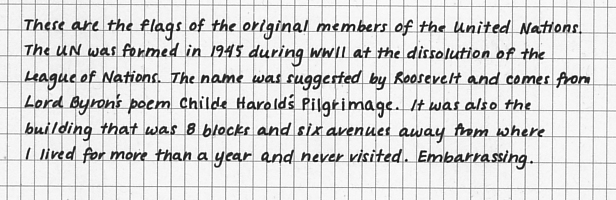
United Nations,  an international organization formed January 2, 1942, by the nations opposed to the fascist coalition of Germany, Japan, Italy, and their satellites. The 26 nations that met to form the organization were: the United States, the United Kingdom of Great Britain and Northern Ireland, the Union of Soviet Socialist Republics, China, Australia, Belgium, Canda, Luxembourg, the Netherlands, New Zealand, Nicaragua, Norway, Panama, Poland, Costa Rica, Cuba, Czechoslovakia, the Dominican Republic, El Salvador, Greece, Guatemala, Haiti, Honduras, India, the Union of South Africa, and Yugoslavia; as original members joining the preceding nations in 1945 were Argentina, Bolivia, Brazil, the Byelorussian S.S.R., Chile, Columbia, Denmark, Ecuador, Egypt, Ethiopia, France, Iran, Iraq, Lebanon, Liberia, Mexico, Paraguay, Peru, the Philippines, Saudi Arabia, Syria, Turkey, the Ukrainian S.S.R., Uruguay, and Venezuela; by 1950, additional nations that had become members were Afghanistan, Burma, Iceland, Indonesia, Israel, Pakistan, Thailand, Sweden, and Yemen. The members were organized to promote world peace and security under a permanent charter at San Francisco in May and June, 1945, and since 1946 have had their headquarters in New York City: abbreviated UN, U.N.


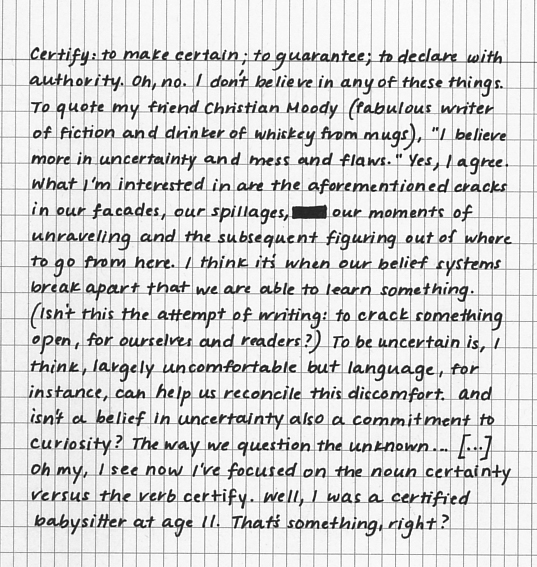
cer·ti·fy  (sər-tə-ˌfī),  v.t. [CERTIFIED (-fid’), CERTIFYING], [ME. certifien; OFr. certifier; ML. certificare; see CERTIFICATE]  1.  to declare (a thing) true, accurate, certain, etc. by formal statement, often in writing; verify; attest; hence,  2.  to declare officially insane; send to an asylum or similar institution.  3.  to guarantee the quality or worth of; vouch for; as, the bank must certify your check.  4.  [Archaic], to assure; make certain.  v.i.   to testify (to).  –SYN.  see approve.


*these definitions were bibliomanced from Webster’s New World Edition: College Edition, copyright 1955.


Margaret Kimball lives and teaches in Boston, Massachusetts. She was a resident at Yaddo this summer and her work has recently appeared in Defunct, DIAGRAM and Copper Nickel. She’s currently figuring out how to spend next summer living in a tree house in Central America.

2 Comments

Filed under author interviews

the dictionary project author interview: amaranth borsuk


Today, I am pleased to share with you an author interview with the amazing Amaranth Borsuk. Amaranth, not the author but the word, refers to “a cosmopolitan genus of herbs. Approximately 60 species are recognized, with inflorescences and foliage ranging from purple and red to gold.” And if you haven’t seen Amaranth Borsuk’s book Between Page and Screen (a collaboration with programmer Brad Bouse), you should probably check it out right about now (click here). Please enjoy her interview below!


1. Please share a memory/story/thought in relation to a dictionary/dictionaries:

When I was preparing to apply for jobs a few years ago, my friend Andrew and I did mock interviews for one another. He asked me what book I’d like to be stranded on an island with, and I drew a blank. I eventually came up with The Library of America edition of Stein’s work, but wasn’t satisfied with my own answer. His was awesome: the Oxford English Dictionary. I was terribly jealous that I hadn’t come up with it. I still love that answer, but the more I think about it, I’d rather be stranded with the American Heritage Dictionary of Indo-European Word Roots. It’s my go-to book because more than etymologies, it shows you relationships among words (often unexpected) that share a common root, which is what really drives my fascination with language. It leaves a lot up to one’s imagination. It’s also much more portable than the OED.


2. What is your current favorite word?

Saddle. I love the way it implies motion while holding one in place. One might be saddled with a burden of some kind, but the saddle itself, on a horse, a bike, a shoe, provides a means of transport.

More than that, I love that saddle has a little sadness in it—perhaps it’s the melancholy of language that wants to be in motion, but that is being held back. The word has been on my mind because I’ve been spending some time with Stein’s “Yet Dish,” which includes this delightfully conflicted poem:

Tea Fulls.

Pit it pit it little saddle pear say.

In her typically punny way (typical for this long poem in parts, anyway, written during WWI while she was developing the style of Tender Buttons), Stein reminds us that tea is made with a beautiful tea-full: a petite, pitted little saddle percée (pierced, you could say pitted, with little holes through which the tea seeps). A tea strainer thus weeps tears through its little holes because it is a little sad: a saddle. Its immobility allows the motion of water through leaves to produce a comforting hot drink. Motion and stasis, beauty and sadness all wrapped up in a pun at once linguistic and visual. Those strainers that perch across the lip of a cup do look a bit like saddles.


3. What, in your opinion, is the most obnoxious/insidious/annoying word?

For me it’s cleave. Oh the tempting cleave, with its implications of both conjunction and rupture. Cleave and cleave!! Cleave is like a drug for me. After reading my first manuscript, my father said “You use the word cleave a lot.” That’s when I knew it had become insidious. I would never, or rarely, use it in conversation, yet it keeps creeping into my poems. I’m trying to kick it out.


4. Please respond to the following words and definitions*, picked exclusively at random for you:


stare  v.  gaze steadily nlong, steady look

taser: a geeky old lead toy: zing sans volt.


e·lon·gate  v.  lengthen  — e·lon·gat·ion n. 

get·alone: navel on, gentle nothing.


sting  v.  stung, sting·ing to hurt with a sting  cause or feel sharp pain  —   n.  1 a stinging, or pain from it  sharp part in some plants, bees, etc. that pricks: also sting·er

tings: tungs, ting·ings  1 to sing with a truth  2 fail or curse neap phase — n. 1 a singing, or main profit 2 harps in some arts that respect black pen tips: also ting·ers


through·out  adv., prep. in every part (of)

our·thought: verve parade; nifty prop


bawd·y  a. i·er, —i·est  lewd yet humorous  —bawd·i·ness

weary·idea·bits: you must heel, word —bad·sinews


Amaranth Borsuk is the author of Handiwork (Slope Editions, 2012), selected by Paul Hoover for the 2011 Slope Books Prize, the chapbook Tonal Saw (The Song Cave, 2010), and, with programmer Brad Bouse, of the book of augmented-reality poems Between Page and Screen (Siglio, 2012). Her creative work spans translation, performance, book arts, and electronic literature, and she collaborates with a number of authors, including Kate Durbin, Gabriela Jauregui, and Andy Fitch. She joins the faculty in the MFA in creative writing and poetics at the University of Washington, Bothell this fall.


*Amaranth’s words were bibliomanced from Webster’s New Pocket Dictionary (copyright 2000)

Leave a comment

Filed under author interviews

m


m            \ˈem\     noun, often capitalized often attributive plural m’s or ms

a : the 13th letter of the English alphabet b : a graphic representation of this letter c : a speech counterpart of orthographic m

: one thousand — see number table

: a graphic device for reproducing the letter m

: one designated m especially as the 13th in order or class

: something shaped like the letter M

a : em 2 b : pica 2


Mmmmmmmm. In a low register or a high. Denoting pleasure. Denoting angst. Denoting agreement. Noting a passing of time or a passing away. Nothing. Noting. Noting nothing. Noting that first bite or that last. Noting the time when. Denoting no time when. The time when nothing was noted. Noting mouth on the neck, behind the ear. Noting the feeling of fingers on the body. In place of a sigh. In place of a breath. In place, a moan. Moaning. M. m. Mmmmm. The letter repeated makes a space for itself without meaning. Full of meaning. Meaning something specific. Meaning registered only in the body of the utterer. An utterance that says, this, yes, this, means yes, the moment of intake, outtake, the moment where voice must be realized, the moment sound quakes the air. M.


Leave a comment

Filed under weekly words

the dictionary project author interview: cheryl strayed

Today is the second Wednesday of July and time for an author interview at the dictionary project. I’m thrilled to share that today we have an interview with Cheryl Strayed, author of the bestselling memoir WILD and the voice of “Dear Sugar” at The Rumpus. Her newest book Tiny Beautiful Things, released yesterday, culls together many of her “Dear Sugar” columns along with some new additions. I first became familiar with Cheryl’s writing when she was writing anonymously as the voice of Sugar. I was immediately captivated not only by her beautiful writing but by the compassion, sincerity, and strength of her voice. Cheryl’s voice is so needed in our world. Her writing wrestles the with big questions and does so with insightful, smart, beautifully-crafted language.  Please enjoy this sampling.


Photo Credit: Brian Lindstrom


1.   Please share a memory/story/thought in relation to a dictionary/dictionaries:

“Look it up in the dictionary” was a common refrain in my childhood. It was what my mother said to me whenever I asked her what a particular word meant. I would sigh and pretend to be put out, but really I loved looking up words in the dictionary. I still do. When I was 12 or so I spent several weeks reading my family’s dictionary in search of antiquated words. When I found one I liked, I’d add it to a list I kept, along with its definition. This is how I learned words like prick-me-dainty, flibbertigibbet, and honeyfuggle. I’ve spent the subsequent years using them in conversation whenever I can.


2.   What is your current favorite word?

I think supercalifragilisticexpialidocious will always be my favorite word. There’s just so much joy in it. Favorite words have been on my mind a lot over this past year, during which I did the final edits of my two most recent books—WILD and TINY BEAUTIFUL THINGS. In that process I got to see what my favorite words were because my editor, Robin Desser, pointed them out to me with her all-seeing editor’s pencil. In the first draft of WILD I used the word ache an awful lot. In TINY BEAUTIFUL THINGS my overused word was heal. Funny how those two words are opposites in many ways and there they were in my two back-to-back books. We heal our aches. We ache to heal


3.  What, in your opinion, is the most obnoxious/insidious/annoying word?

Maiden. As in one’s “maiden name.” Whenever anyone asks me what my maiden name is I have an internal hissy fit. The string of assumptions that go along with the notion that women have “maiden” names makes me crazy—the primary one being that a woman married a man and took his name. I do not have a maiden name, but I do have a different name than the one I had when I was younger and that name change has nothing to do with my status as a so-called “maiden,” nor does it have to do with my husband. When I explain this to the various customer service people who dare to inquire about my maiden name they generally act as if I’m speaking Latin, but I persist anyway. It’s my small part for the advancement of humankind.


4.  Please respond to the following words and definitions, picked exclusively and randomly for you:


pho·to·graph·ic  (fō-tə-ˈgra-fik),  adj.  1.  of or like a photograph or photography: as, his photographic writing.  2.  used in or made by photography, as equipment, records, etc. Abbreviated phot. photog. 


There has been too much photography in my life lately. Too many times when I’m standing there in front of the camera trying to figure out what the hell to do with my mouth. In my experience it’s the mouth that’s hardest to get right. One must hold it in a position that conveys intelligence and attractiveness, calm approachability as well as serious intensity. Usually I just give up and smile.


bar·ris·ter  (ˈber-ə-stər),  n.  [< bar  (court of justice)],  in England, a qualified member of the legal profession who presents and pleads cases in court; counselor-at-law: distinguished from solicitor: abbreviated barr., bar.—SYN. see lawyer.


I’ve never understood this word, so I tend to avoid it. Even reading this definition, I still feel unsure. Is a barrister an attorney? What’s a solicitor? When I hear the word barrister I picture a man in a white shirt with lots of ruffles at the front. It isn’t a good thing.


roup  (rüp),  n.  [prob.  < ME. roupen, to cry, shout  < ON., but akin to AS. hropan, G. rufen, to call],  1.  a poultry disease characterized by hoarseness and a catarrhal discharge from the eyes and nasal passages.  2.  hoarseness; huskiness.


Interesting that the roup is so close to the word croup—one is a respiratory disease in birds, the other in humans. My kids never had croup, I’m glad to say, but I always liked the sound of it. It’s a word I’m attracted to, you could say. It reminds me of the American pioneers. Did Laura Ingalls Wilder have croup? Did her family’s flock of chickens have roup? I had chickens as a teenager, mostly hens whom we called The Girls. They never got roup to my knowledge, but one of them nearly died after she got an egg stuck inside of her. My mother devised a homemade hen douche and douched her, thereby saving her life. True story.


stay  (stā),  v.i.  [STAYED (stād) or archaic STAID (stād), STAYING], [ME. staien; Anglo-Fr. estaier; OFr. ester; L. stare, to stand] 1.  to continue in the place or condition specified; remain; keep: as, stay at home, the weather stayed bad for three days, these clothes won’t stay white.  2.  to be located for a while, especially as a guest or resident; live, dwell, or reside (for the time specified).  3.  to stand still; stop; halt.  4.  to pause; tarry; wait; delay: as, stay a little before going on with your labors.  5.  [Colloq.], to keep up, as with another contestant in a race.  7.  [Archaic], to cease.  8. [Archaic], to make a stand, stand one’s ground.  9.  in poker, to remain in a hand by seeing, or meeting, a bet, ante, or raise.  v.t.  1.  to stop, halt, or check.  2.  to hinder, impede, restrain, or detain.  3.  to postpone or delay (legal action or proceedings).  4.  [Rare], to quell or allay (strike, etc.).  5.  to satisfy or appease for a time the pangs or cravings of (thirst, appetite, etc.).  6.  to remain through, during, for, or (with out)to the end of: as, stay the week (out).  7.  [Archaic], to await; wait for.  n.  1.  a)  a stopping or being stopped.  b) a stop, halt, check, or pause.  2.  a postponement or delay in legal action or proceedings: as, the main was given a stay of execution.  3.  a)  the action of remaining or continuing in a place for a time.  b)  time spent in a place: as, she had a long stay in the hospital.  4.  [Colloq.], staying power.  5.  [Archaic], a standstill.  6.  [Obs.], a)  a hindrance. b)  restraint or control.  c)  delay.


My favorite use of this word is the fifth definition: “to satisfy or appease for a time the pangs or cravings of….” I don’t use it nearly enough.


sift  (sift),  v.t.  [ME. siften; AS. siftan  <  sife, a sieve; askin to G. sichten; cf. SIEVE],  1.  to pass through a sieve so as to separate the course from the fine particles.  2.  to scatter (a pulverized substance) by or as by the use of a sieve.  3.  to inspect or examine with care, as by teasing or questioning; weigh (evidence, etc.).  4.  to separate; screen; distinguish: as, he sifted fact from fable.  v.i.  1.  to sift something.  2.  to pass through or as through a sieve.


The question I have is who sifts flour? Is it necessary or is it just another way of convincing ourselves we have more control than we do? I have wondered this often. The only time I’ve ever sifted flour is in the home economics classes I took in school, when I was required to follow specific steps and the tools were all laid out before me. Nothing bad has happened to me for not sifting my flour so far. No cakes have fallen. No bread ruined. I’ve taken my chances and it’s turned out okay. I’m lucky that way.


Cheryl Strayed is the #1 New York Times bestselling author of the memoir WILD (Alfred A. Knopf), and the critically acclaimed novel, Torch (Houghton Mifflin). She has been writing the “Dear Sugar” advice column for The Rumpus since March 11, 2010 and her latest book, Tiny Beautiful Things (Vintage Books), is a collection of those columns.Her writing has appeared in the New York Times Magazine, the Washington Post Magazine, Vogue, Allure, Self, The Missouri Review, Brain, Child, Creative Nonfiction, The Sun and elsewhere. She lives in Portland, Oregon.


2 Comments

Filed under author interviews

the dictionary project author interview: aisha sabatini sloan


It’s the fourth Wednesday of June and time for another author interview at the dictionary project. Enjoy the wit and words of Aisha Sabatini Sloan!


1. Please share a memory/story/thought in relation to a dictionary/dictionaries:

When I went to Lisbon last year, I brought a very pretty, pink pocket dictionary for Portuguese. I never opened it. The only word I managed to remember the entire trip was “obrigada,” which means “thank you very much.” I couldn’t even say “hello.”  I love languages, and normally enjoy learning new words, so I can’t figure out what happened to me to prevent me from even trying. It makes me wonder about what they say, how your brain sort of shuts off to learning new languages after your late twenties. I am determined to overcome  this, though, especially if it means that I have to move overseas, or marry someone for whom English is not their first language.


2. What is your current favorite word?

Airport.


3. What, in your opinion, is the most obnoxious/insidious/annoying word?

No. Although, this was my first word.


4. Please respond to the following words and definitions, picked exclusively and randomly for you:


L, l  (el),  n.  [pl. L’s, l’s, Ls, ls (elz)],  1.  the twelfth letter of the English alphabet: from the Greek lambda, a borrowing from the Phoenician: see alphabet, table.  2.  the sound of L or l: in English, it is normally a voiced alveolar continuant formed by the tongue apex, IPA [l]; in many words, l  preceding f, k, m, and v is silent (e.g., half, balk, calm, and salve) ; in most varieties of American speech, final and preconsonantal l  (e.g., feel, field) has the cavity friction, and hence the sonority, associated with vowels.  3.  a type or impression for L or l.  4.  a symbol for the twelfth (or the eleventh if J is omitted) in a sequence or group.  adj.  1.  of L of l.  2.  twelfth (or eleventh if J is omitted) in a sequence or group.


“A voiced alveolar continuant formed by the tongue apex.” Lovely. I am having trouble thinking of a word that starts with ‘l’ that I don’t like. Lilt. Languid. Lyrical. Laughter. Lounge. Laura Linney. I think this is the letter that best describes how I’d like to spend the next several months of my life. Months? Years. The rest of my life. Don’t tell me about the word that starts with ‘l’ that means genocide right now I don’t want to hear it. OK, shoot. Lynch. There is no perfect letter.


aye  (ā),  adv.  [ME. ai. ay  <  ON. ei], [Archaic], always; ever.


Aye? Really? This word reminds me of my friend, Radhika, for some reason, who must have been speaking with a Minnesotan accent at some point. Also of pirates, who was I talking about pirates with recently? Paula. She was saying that there were female pirates who captained ships in drag. And then she started talking about scuba diving. She and her sister and some man put on their gear off the coast of, I think it was Venezuela, and just started walking into the ocean. They were up to their knees, their shoulders, then under water. It was bizarre for her because she said it was just like going on a hike. Except that they were swimming into canyons, moving along the contour of the mountains.


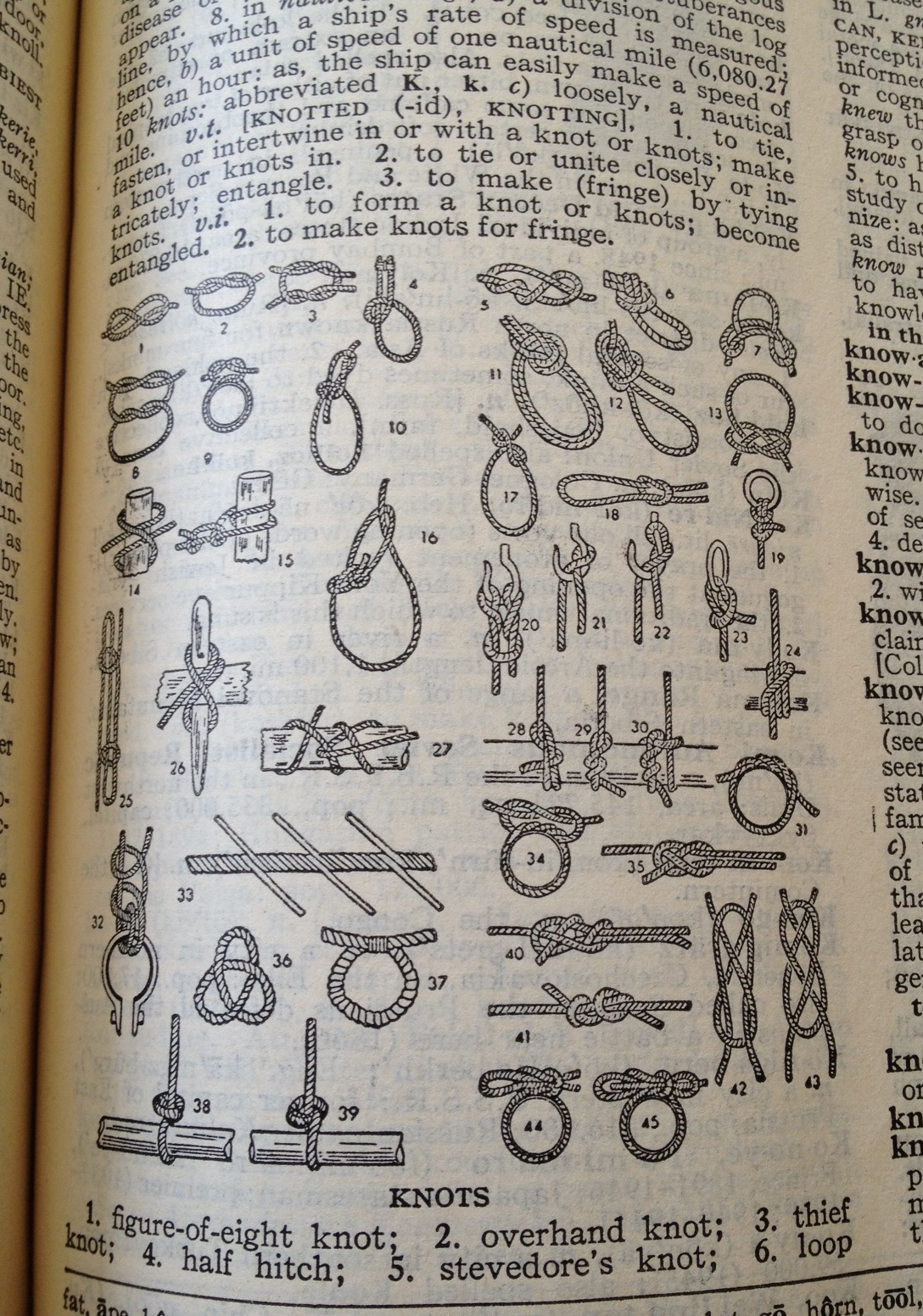
(Editor’s Note: For the word knot, I actually landed on the numerical labels for a  diagram for knot pictured below)

KNOTS  1.  figure-of-eight knot; 2.  overhand knot;  3.  thief knot;  4.  half hitch;  5.  stevedore’s knot;  6.  loop knot;  7.  harness hitch;  8.  reef knot;  9.  granny knot;  10.  bowline knot;  11.  bowline on a bight;  12.  bowline with a bight;  13.  prolonge knot;  14.  clove hitch; 15.  round turn and two half hitches  16.  running bowline;  17.  slide knot;  18.  slipknot;  19.  fisherman’s bend;  20.  cat’s paw;  21.  single Blackwall hitch;  22.  double Blackwall hitch;  23.  studding-sail tack bend;  24.  magnus hitch;  25.  sheepshank;  26.  half hitch over pin;  27.  rolling hitch;  28.  studding-sail halyard hitch;  29.  timber hitch;  30.  timber hitch and a half hitch;  31.  surgeon’s knot  32.  anchor knot;  33.  long splice;  34.  surgeon’s knot;  35.  sheet bend;  36.  trefoil knot;  37.  throat seizing.  38.  outside clinch;  39.  inside clinch;  40.  double sheet bend;  41.  Englishman’s tie;  42.  single carrick bend;  43.  double carrick bend;  44.  single bowknot;  45.  double bowknot.


Knots. It’s difficult for me to even think about this word without feeling all of my energy migrate to my stomach and my heart is now definitely beating faster. The only non-negative meaning of this word seems to be an “Englishman’s tie.” I want very badly to undo this word, disempower it somehow, go up to it on the street and loosen it, even it it’s pink, so everybody can breathe better. I am tempted to add a “g” to the beginning, and then to pronounce the “g,” make the word into “ganot” or “ganat” and then just pull the tension loose. I do not like this word at all.


py·ro·lig·ne·ous  (pī-rō-ˈlig-nē-əs),  adj.  [FR. pyroligneux  <  pyro- + L. lignum, wood],  1.  produced by the destructive distillation of wood.  2.  designating or of a reddish-brown liquid (pyroligenous acid), chiefly acetic acid and methyl alcohol, obtained by the destructive distillation of wood.  3.  designating or of methyl alcohol, especially when obtained from wood.


Pyroligneous! I went to get a massage recently, and was told that, I guess in terms of Chinese medicine, my insides were on fire. I have been out of balance, vis-a-vis the five elements. I need to find a way to get more wood to feed the fire and more water to keep it from burning out of control. I say this because pyroligneous is “produced by the destructive distillation of wood.” I don’t like the idea that I’m walking around, creating methyl alcohol just by living and breathing. But it makes a lot of sense, actually. I think it’s part of the reason that I need to leave Tucson.


twig  (twig),  n.  [ME. & AS. twigge; indirectly akin to G. zweig; IE. *dwi-gho  <  base  *dwou-, two (cf. TWO): prob. with reference to the forking of the twig], a small branch or shoot of a tree or shrub.


Twig. I just used this word metaphorically a few days ago, and felt a little uneasy afterward. Now what’s this about, “prob. with reference to the forking of the twig.” Is it just me, or is it kind of cute when a dictionary says “prob”? Do you ever think about the person writing these entries? Are we allowed to see the dictionary as having subjectivity, facial hair, pajamas, even a soul? There is an old man in a room somewhere, thinking about the best way to explain the etymology of the word twig. I have affection for this man. He is so detail oriented: listen to him talk about “a small branch or shoot of a tree or shrub.” Shrub seems like such an outdated form of vegetation. I think that, wherever he is, he wants us to feel curious and optimistic about the ways of the world.


Aisha Sabatini Sloan grew up in an apartment building five miles from the ocean. Because the blue condo at the end of the block with porthole style windows was built around the same time that she was born, she always assumed she was going to be given one of the apartments for free.


Leave a comment

Filed under author interviews