Tag Archives: dictionary project

under sail

under sail, from my dictionary

under sail, sailing, with sails set.

SAILS ON A FULL-RIGGED SHIP

1. flying jib; 2. jib; 3. fore-topmost staysail; 4. foresail; 5. lower fore-topsail; 6. upper fore-topsail; 7. fore-top-gallant sail;  8. foreroyal;  9. fore-skysail;  10. lower studding sail;  11. fore-topmost studding sail;  12. fore-topgallant studding sail;  13. foreroyal studding sail;  14. main staysail;  15. main-topmast staysail;  16. main-topgallant staysail;  17. main-royal staysail;  18. mainsail;  19. lower main topsail;  20. upper main topsail;  21. main-topgallant sail;  22. main royal; 23. main skysail;  24. main-topmast studding sail;  25. main-topgallant studding sail;  26. main-royal studding sail;  27. mizzen staysail;  28. mizzen-topmast staysail;  29. mizzen-topgallant staysail;  30. mizzen-royal staysail; 31. mizzen topsail; 32. lower mizzen topsail;  33. upper mizzen topsail; 34. mizzen-topgallant sail;  35. mizzen royal; 36. mizzen skysail; 37. spanker

1. flying, we 2. left 3. them, headed to sea 4. without 5. without manuals 6. we’ll learn to survey 7. the water, the wind 8. with no map 9. we, map-less               10. lower our demands 11. low, we go in cabin 12. foreswear the compass, foreswear 13. those running rigging lines 14. we will steer 15. using other tools  16. mid-wives of this vessel 17. mid-breath, we assist  18. with limbs  19. used as wood rutters 20. with balance, from scales 21. we climb, to check sails 22. main royal 23. we tighten 24. that which needs tightening 25. and we loosen just to see 26. what billows, what flies out 27. we need staysails 28. we need this, to stay, sail 29. and to hoist, to work, to move 30. to handle, steer, manage          31. beneath shape sheets 32. needing only to spread 33. and to catch and deflect 34. this full air, this strong wind  35. no, we are not 36. prepared, only             37. steady.

Leave a comment

Filed under weekly words

an·ni·ver·sa·ry

an·ni·ver·sa·ry (ænɪˈvɜːsərɪ) adj. [L. anniversaries < annus, year + versum, pp. of veriere, to turn],  1. recurring at the same date every year; occurring annually.  2. of or connected with an anniversary.  n. [pl. ANNIVERSARIES (-iz)], 1. the yearly return of the monthly date of some event  2. the celebration of this.

Today is the one-year anniversary of The Dictionary Project. Thanks to all of you for reading and being a part of this experience. Anniversaries are times to reflect and be grateful. This project has been a wonderful way for me to explore different ideas and thoughts. The constraint of blindly selecting each week’s word has forced me to think about words and definitions I might have never considered otherwise. This has been a challenging and enriching experience. Beyond that, I have become even more sensitive than I was before about the use of language, how we imbue words with meaning and how we bring our own experiences, ideology, and environment to each word we use and consider.

Throughout this week, I will be posting writing from guest contributors who are writing on the first random word selected when I began The Dictionary Project last year. The word is portance.

Thank you again for being part of this journey.

Leave a comment

Filed under other words

in·gra·ti·a·tor·y

in·gra·ti·a·tor·y* /in-ˈgrā-sh(ē-)ə-ˌtȯr-ē/ a. tending to ingratiate, ingratiating

in·gra·ti·ate /in-ˈgrā-shē-ˌāt/ v. [f. L in gratiam into favour + -ATE, after It. Ingratiare, ingraziare.}  1. v. refl. Get oneself into favour; gain grace or favour (with); make oneself agreeable to). 2. v.t. Bring (a person or thing) into favour (with someone); make (a person or thing) agreeable (to).  3. v.i. Gain grace or favour (with)

When I was twenty-three and living back home in New Orleans, I began working for a community center that offered a coffeehouse with pastries and coffee a couple of times a week for homeless men. This was the first time I had real conversations with people who were living without a home, instead of encounters in passing on the street. Through them and through Unity for the Homeless, I learned more about what they were facing, where they came from, why it was near impossible for many of them to hold down a steady job and residence.

I also learned about the different places around town that provided services for homeless men and women, and I learned the different expectations that came with those places. At more than one place, the men and women who sought shelter and food were given it only after they attended a spiritual service, for whatever denomination was there. They were emphatically told they were sinners and to repent. And it was only after sitting through this condemnation. “Sermon for your sandwich,” the guys told me. Many would rather go hungry than go there.

In my experience, people who are homeless, who are addicted, who have committed crimes, who have estranged themselves from their families—hell, people, like me, who have messed up in anyway, have the knowledge that they have messed up. They don’t need a reminder of the ways in which they are flawed or the damage they have done. Most often, they need the hope that healing is possible. If all you have known is brokenness in your life, how are you to even begin to believe that wholeness is something that can be achieved? No wonder your behavior is to continue to break, to break with, to behave in ways that shatter your self or connection to other people.

And to begin to heal oneself, one’s primary concern cannot be the needs or desires of others.

This is not only because one needs to take care of oneself, but because one needs to be real about who one is while making oneself whole. People need to know that they, as they are, are worthy of rich, fulfilled lives, and they don’t have to act a way they are not, believe something they do not believe, or ingratiate themselves to others to do so.

When I was in my mid-twenties, I continued working with homeless and low income people in San Francisco, for St. Anthony Foundation, a Franciscan based organization in San Francisco’s Tenderloin neighborhood. The reason I was attracted to the organization was largely due to its mission statement. Part of this statement was that every human being is worthy of dignity and respect just by being.

I don’t mean, by this post, to undermine the reality that people make awful mistakes and cause wounds that are sometimes so difficult to heal. But I do think it is important for us to remember that all of us have the capacity to make mistakes, to fuck up in ways we would never think possible. And because we all have that capacity within us, we also have the responsibility to offer grace to those are hurting whenever we can, not because they can do something for us but because they need it and we are in the position to give that grace.

*I am house-sitting right now so this word was not selected from one of my home dictionaries but from this one:

The Newer Shorter Oxford English Dictionary (Thumb Index Edition), Volume A-M 1993

1 Comment

Filed under weekly words

man·ner

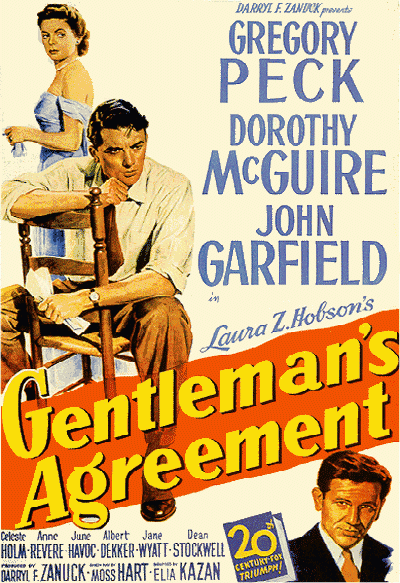
Film Poster for Gentleman's Agreement, 1947

man·ner [man er] n. [<L manus, a hand] 1. a way of doing something; mode of procedure 2. a way, esp. a usual way, of acting 3. [pl.] a) ways of social behavior / bad manners b) polite ways of social behavior / to learn manners/ 4. Kind; sort.

The first thing that pops into my head when I think of the word “manner” is the concept of “minding your manners,” attending to the guidelines we are given as a child. Usually this involves gentility, how we treat other people and how we present ourselves. It is about character, about respect for self and others. These ways of doing something were created to provide structure in our society and our communities. But oftentimes, manners are used synonymously with the idea of good moral behavior and this is not always the case. I think of it being good manners for the host family to sit at one table while the servants ate in the kitchen. I think of outdated rules like not wearing white after Labor Day or women wearing girdles and pantyhose, which once implied—and in some places still do—good manners and an acceptable way of dressing.

The second thing that I think of when I think of “manner” is those people who have a distinctive way of being. I think of old Hollywood celebrities who were recognizable not only for their appearance, but for the characteristics of their demeanor. Celebrities like Katherine Hepburn, Cary Grant, Rita Hayworth, Gene Kelly, and Gregory Peck.

I have been thinking about Gregory Peck often lately. I saw Roman Holiday when I was younger, but I don’t think I saw To Kill a Mockingbird until I was in my mid-twenties. Unlike many people, I wasn’t assigned the book in high school. I read it when I was twenty-one or twenty-two and I was struck by the book’s poignancy and universality. Although I had not grown up in the same time as Scout, I had grown up in the South very aware of class and racial differences around me. I had grown up with a very keen desire to understand injustice, which I saw seemingly everywhere around me. I identified with Scout and revered her father Atticus Finch as an upstanding citizen and moral voice amidst a community ruled by lunacy and fear.

I didn’t see the movie until years later. I was living in San Francisco at the time and had visited my local independent video store. I picked up To Kill a Mockbird then. I was again moved by the story, now told through film, and by the way each character works through their own relationship to the trial of Tom Robinson, a black man accused of raping a white woman in a rural Southern community. I was particularly moved by Peck’s performance as Atticus. I watched the special features, which included a documentary about Peck’s life.

Atticus Finch (Gregory Peck) and Tom Robinson (Brock Peters) in court

Here, I thought, was a man with a unique manner. It was he who had pushed for the production of To Kill a Mockingbird after having read the book. He devoted himself to films whose stories also held a greater social importance. I remember watching the documentary and feeling a real affection for him. This feeling was renewed when, that same year, I saw the film again on the big screen of San Francisco’s Castro Theatre. The screening included a question and answer period with Mary Badham, the actress who had played Scout as a child. She described Peck as having been very much a father figure to her. He was so similar in real life to the character he played in the film, she said.

To Kill a Mockingbird Poster, 1962

Recently, I watched the film The Gentlemen’s Agreement, which stars Peck. Dennis Hopper had just died and I decided I wanted to watch Rebel without a Cause, his first film in which he played a minor role. While browsing the Classics Section at Casa Video, I picked up The Gentlemen’s Agreement, read the back, and decided to rent it. The film is about a newspaper reporter Phillip Skylar Green who is asked to write a feature on anti-Semitism. He is searching for an angle for his story and arrives at pretending he himself is Jewish for a given period of time. No one is to know except his boss, his mother, and his fiancé, who he has just recently met. As the story unfolds, his interpersonal relationships are challenged by this choice to pretend to be Jewish. His fiancé doesn’t understand why he needs it to be a secret amongst her family. His son is threatened at school. His Jewish friend Dave even advises him against it. He is used to discrimination because he has been Jewish his whole live, but he fears that Skylar will not be able to handle it in one concentrated time period.

The film asks large questions of the viewer and challenges the viewer by the subtlety with which the characters come to realizations. The effect of prejudices like anti-Semitism, is revealed through interpersonal relationships, where the impact is felt in real life, and there are no true villains only complicated people. The film also makes a strong statement about people who are good-hearted and thoughtful but who remain silent or apathetic.

Another thing that makes this film so remarkable is its context. The film was released in 1947, just after World War II, just after anti-Semitism so strong it resulted in the genocide of over six million Jews in Europe. When Elia Kazan (who himself is a complicated character as he testified in 1952 in front of the House Un-American Activities Committee and named eight Hollywood associates who were former members of the Communist Party) decided to make the film, several Jewish studio heads told him not to make it. One said it would be “like stirring up a hornets’ nest.” That conversation ended up being worked in as a scene with the newspaper’s editorial board and its dissenting voice against the “anti-Semitism” story.

Skylar Green is a character who has manners but who is unwilling to abide by social constructs without critical thinking. He embodies a persecuted group in order to challenge certain social norms and to understand better where anti-Semitism is rooted and what impact it has on individuals. And yet, it is not Skylar who ends up being the hero, but his friend Dave, who in a strong speech talks about the eventual impact of being silent while others are mischaracterized, mistreated, and oppressed.

The actor who played Dave, John Garfield, was an actor who was a headlining leading man at the time, and he took a supporting role in the film because he so believed so strongly in the worth of the project.

The film’s title itself refers to a unspoken agreement that allows and endorses discrimination. At one point, Skylar Green goes to a hotel that he has reserved for his honeymoon and asks point-blank if they allow people who practice Judaism to stay there. The manager comes out and asks in a nuanced way if that is a hypothetical question or not. Eventually, he is asked to leave.

I think of today’s celebrities who get more attention for their outrageous, scandalous and often disgraceful behavior instead of getting revered for who they are. They become caricatures of how not to behave instead of models of how to be. And oftentimes, their loud lives are more recognizable than their body of work. I am grateful to actors like Peck who were more concerned with the impact they made with their work than with being famous and who picked their roles carefully, choosing the stories that were worthy, that asked questions and that ultimately modeled a way of being and asked viewers to question the way they themselves moved in the world.

1 Comment

Filed under weekly words

sal·e·ra·tus


Bonneville Salt Flats


Today, we have a guest post from writer and friend of the project, Julie Lauterbach-Colby*:

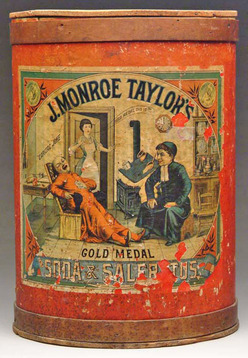
sal·e·ra·tus (sal’e’ra’tes), n. [Mod. L. sal aeraius, aerated salt], sodium (or sometimes potassium) bicarbonate; baking soda, as used in cooking.

A space opens to provide context—topographic lines separating what runs away (what I have run from). Almost as soon as we crossed the Californian border into Nevada we start to see the dried salt flats. What used to be lakes, appear as opening voids on the altas. Points, here. An exact location rendered gone. Those first explorers into the open lands: the badlands, wastelands. Where the earth has dried and cracked, opened up from sudden change, sudden pressure (the constant ebb of flow of life, of family units), chasms of depth and darkness. How deep is each cut (of the earth)? Around the outer rims, white powder still visible. Traces of. Portraits of. The past. Water marks: where seawater dug its way gently into the sides of the land. With each receding, circular line: a closing in upon itself. Earth’s vacuum effect. From a bird’s eye view, cartographers map each concentric shape wider, farther apart from the last. On a map, what we have is an inverse mountain, a valley that appears to create a wide vortex but which, from the ground, appears nothing but flat for miles and miles and miles.


saleratus cannister


The cake, too: flat and even when I peek into the oven to check its progress. Sudden change, sudden pressure: my mother, a lesson. Set on the counter to cool, the soft center closes in upon itself. Baking soda, saleratus powder, likes heat and time to converge with the flour. What I have is (What appears from my bird’s eye view.) cartographic crater.

My family, driving the winding Californian coast each summer, past Carmel and Monterey out to the coast where we dug for abandoned shells and overturned abalone. On the edge, where saltwater plunges itself into porous rock, what remains? Collected in shallow pools, sun-evaporated during low tide, this white powder. Remains of after collected on the tip of one’s finger.

Ground up and put next to each other, sodium chloride (sea salt) and sodium bicarbonate (baking soda) look almost identical. (As in the saying, Like mother, like daughter.) But we must think back to the tracing of one’s concentric circles: each enclosed within the other (Do we interpret those inner rungs, those that, on a map, appear to be digging themselves into a hole?) but standing on the edge one sees that no: what we have is (       ).


*Julie Lauterbach-Colby is a writer, teacher and artist living in Tucson. She is currently working on a project that incorporates cartography, mathematical equations and cadavers, and owns her own editing business called Chicken Scratch Editing.

1 Comment

Filed under weekly words

belle

belle (bel) n. [Fr., fem. of beau; see beau],  1. A very attractive woman or girl.  2. The most attractive or most popular woman or girl of a certain place or on a given occasion: as, the belle of the ball.

Rue McClanahan as Blanche Devereaux

This is one of those uncharacteristic times when I choose a word to ruminate on in addition to the word of the week. And this word is “belle.”

In the last month and a half, we have lost two iconic actresses who created iconic characters: Dixie Carter as Julia Sugarbaker and Rue McClanahan as Blanche Devereaux.

I have been uncharacteristically sad about these celebrity deaths. I have always loved Designing Women. As an avid fan of The Golden Girls, I grieved the loss of both Bea Arthur and Estelle Getty this past year. However, there

Dixie Carter as Julia Sugarbaker

was something different about the loss of Rue.

Let me offer some context. I was born and raised in New Orleans, Louisiana—in a place where, despite modern times, I learned that women were supposed to dress, act, and behave in certain ways. I wore tights as a little girl and at about age eleven switched to pantyhose (even in summer, in Louisiana). My mother never let me leave the house without something being pressed. I learned to have pride in my appearance, in the way I dressed and the way I conducted myself.

I learned that there was no white after Labor Day. I learned about pearls and handkerchiefs and linen and seersucker. I learned the importance of presenting oneself in a certain way. I also learned that women were to be smart (but not too smart), interesting (but not too interesting).

I was fortunate enough to be raised by progressive parents, who encouraged me to do whatever I wanted to, who believed I could do anything a boy could do. They encouraged me to follow my dreams and to pursue whatever held my interest. However, despite their support, I always had a feeling that I might have to sacrifice one part of myself for the other. I would have to cover up my femininity in order to be strong. I would have to pretend to be passive to maintain my girl-ness.

I watched The Golden Girls and Designing Women during formative years in my life. The first time I remember watching The Golden Girls was when I went to my grandmother’s house after school in junior high. It was a hard time for me. My parents were separated, which had come to me as a total shock. I was at a new school for the first time, and for the first time, I was in class with boys. I felt like I didn’t fit in and had no chance of being popular. I have always loved these two shows, but it wasn’t until the stunning sadness at the loss of these two women that I have begun to understand why.

I realize now that in Julia and in Blanche, I found role models of what it means to be a real Southern belle. Not a Scarlet O’Hara or a Blanche DuBois, but a belle for modern times. A belle who is self-defined instead of defined by men’s expectations of her.

These were woman who were attractive and not just because of what they looked like. These were women who were smart and educated. They had family lives and professional lives. They had quick wits and were quick to use them. They were classy, well-dressed and gorgeous. They had beautiful, intimate friendships and sometimes challenging but fulfilling romantic relationships. They had grown into themselves and were responsible for that growing.

And they were older. Rue McClanahan once said of The Golden Girls: “that when people mature, they add layers.” And the show was a revelation of that fact, a fact that women need to hear. Because I think there is still an idea in our culture, which is much too rampant, especially in the South. That being that women are to be respected because of their beauty and when they are older, they become washed-up, objects to be forgotten about or thrown away. The show proved that women become even more assured and knowledgeable and interesting with every year that passes. Women become more beautiful with more life experiences and lessons learned, with more laugh lines and wrinkles.

The shows themselves had substance, unlike most shows today, and were not afraid to tackle controversial issues, like HIV/AIDS and racism. Because the writing was so good and the acting was so strong, these issues worked seamlessly into the dialogue and action of episodes. And one of the commonalities between them was a strong feminist thread. In their episodes, Designing Women and The Golden Girls dealt with: abusive relationships, domestic violence, sexism and sexual harassment, violence towards women and self-defense courses, expectations for women’s beauty, and sex and sexuality.

These shows weren’t produced as Public Service Announcements but as powerful dramatic and comedic programming that revealed real characters working through and struggling with these realities in their day to day lives. And so, when I was young, I learned vicariously what it meant to stand up for myself, and how I should be treated, with respect and love.

I want to use these women to redefine the conception of Southern belles. The thing about real Southern belles is that they don’t restrict themselves. At the same time, and in the moment they sashay their hips, they are feminine and strong, they are classy and kitschy, they are sweet and what some may call bitchy. They are bold with their own ideas and receptive to others’. They are sexy and innocent. They are the ultimate hostesses and vulnerable to making mistakes. They refuse to be defined as one thing or another. They can be both and all.

I learned from these women that it was okay to be myself, that it was fullness and contradiction that makes women beautiful. I learned to accept all my qualities as valuable. Some might call Julia a bitch because she spoke her mind. Some might call Blanche a slut because she took charge of her own sexuality. I call them strong Southern women who I was lucky to see as an impressionable little girl. I will always be grateful to Dixie and to Rue for creating such lovely and lovable complicated women who became role models of how to be it all, how to have it all, and most of all: how to be myself.

3 Comments

Filed under other words

bat·tle

Francisco José de Goya, Y no hay remedio (And there's no help for it), 1810-1820 Plate No. 15 from Los Desastres de la Guerra, etching on paper

bat·tle (bat´’l),  n. [ME. & OFr.  Bataile; L.  battalia, battualia, exercises of gladiators and soldiers in fighting and fencing  <  battuere; see BATTER (to beat)],  1. a fight, especially a large-scale engagement, between armed forces on land, at sea, or in the air.  2. armed fighting; combat or war.  3. any fight or fighting; conflict.  v.t. & v.i. [BATTLED (-‘ld), BATTLING], to fight.  give (or do) battle, to engage in battle; fight.

When I was a senior in college, I took a class on “Catholic Social Thought.” We went through the different teachings the Church had about equality and justice and we ended the semester with the idea of peace and of just war. I remember vividly a day when we were talking about war and the need to step in with things that got out of hand. Dr. Barbieri, the instructor of the course, was very good about exposing us to charged issues and the different sides and then getting out of the way to let us hammer it out on our own. On that day, an outspoken senior, who was on ROTC, sitting far down the conference table from me talked about how war was justified in many cases. He said that war had happened since the beginning of time and that man’s natural tendency was towards war, was towards fighting as a way to resolve issues.

Although I was an outgoing person, I hesitated to speak in that class. I was worried I would say something wrong, and the absence of a set way of thinking from the professor meant I had to decide for myself. What if I decided the “wrong” thing. But that day, I disagreed with him. I opened my mouth, not knowing exactly what I was going to say, and I told him that I didn’t believe men and women’s natural tendencies were towards violence but towards compassion. I said that I didn’t think war was ever justified.

He brought in World War II. How were we not to fight in that instance? And I surprised myself in that moment in saying that I didn’t know the answer to that, but that neither did any of us. Did I believe that the Nazis needed to be stopped? Yes, absolutely. But how could we know we could not have been stopped in another way if it hadn’t have been through war? History had already played out and we were living with the reality of what had occurred. But none of us knew what would have happened if the war hadn’t occurred. Could the mess of Nazi Germany have been conquered in a way absent of violence and war? Maybe not. I certainly didn’t know the answer. But neither did he.

The definitions listed above are all literal battles. They refer to physical battles, to violence that involves bodies. But the newer Webster’s dictionary also refers to battles as “an extended controversy.” A controversy has been brewing in the state where I reside, Arizona. The controversy is in regards to HB1070, a bill that passed on Friday, April 23. Jan Brewer signed into law a bill that mandates police officers to pull over anyone that they have “reasonable suspicion” may be in the country illegally.

Native American Dancers at May Day Rally, Tucson, May 1, 2010

We are a proud nation and we often forget the legacy of our forefathers, that our foundation was built upon genocide and slavery. We feel so proud of our citizenship that we forget that unless we are Native American, our ancestors were once citizens of another country. And many of them didn’t come over here with any legal papers on hand. They came on boats for a better life. Mexicans often come by car or on foot. The difference is that we have decided that we want our country to ourselves. That “they” are too much.

It is in these kind of battles that I think it is important to bridge the divide between those on different sides. It doesn’t help for us to yell at one another. It doesn’t help for us to categorize each other as “those people.”

My mother’s first language was Cajun French. When she and her classmates began kindergarten, they were forbidden from speaking French. Many of them didn’t know any English but they were expected to communicate nonetheless. As punishment, six-year-olds were made to kneel on dry rice in the corner or write “I will not speak French in school” hundreds of times on the blackboard. The ensuing result for my mother is that she didn’t teach me French and until ten years ago when it was required by her job, she barely spoke it herself.

I genuinely believe that much of the problem white citizens have with Mexicans immigrating here is not because they take jobs away or because they don’t come here legally. I believe many Americans of European heritage feel threatened by the Mexican culture, which has a rich language and deeply rooted traditions. I believe that White Americans have suffered a great loss and are still grieving for it.

We came here from our European countries in search of a new land and a place where we could be ourselves, to practice our own religion and our own traditions. And the truth is that America has not always supported this. Many of our ancestors abandoned their traditions to become American and we don’t like seeing other people have their cake and eat it too. We didn’t have that chance. Why should they? They should because no one should have to abandon their cultural traditions when they go to another country. Our culture is embedded in us. The places we come from, the people who love us are within us and that doesn’t change when we change physical locales.

This country was founded on the tragedy of one culture dominating another, but does that mean we should continue in this very dangerous path? It seems that now White Americans want immigrants from other traditions to give up what we had to, to sacrifice their cultural roots to be part of this country. But just because we had to go through this suffering doesn’t mean we should continue this cycle.

It seems to me that beyond this being a political battle or even a cultural battle, this law and many other anti-immigrant laws are about the internal battles within all of us. What do we need to do to find our own identity so that we don’t feel threatened by others? What can we do to appreciate our country as a place that is full of people of all different ancestral roots, people who come from rich, cultural traditions? Can we learn from what has been lost before we ask others to sacrifice who they are and where they come from? What can we personally do to reclaim our own traditions so that we can make ourselves whole again?

Leave a comment

Filed under weekly words

myth·i·cize

I guess "Perfection" does have a zipcode. Perfection, North Carolina. Photo by Wessel Kok

myth·i·cize (mith´i-siz´),  v.t. [MYTHICIZED  (-sizd´),  MYTHICIZING], to make into, or explain as, a myth.

&

myth (mith),  n. [LL. mythos; Gr. mythos, a word, speech, story, legend],  1. a traditional story of unknown authorship, ostensibly with a historical basis, but serving usually to explain some phenomenon of nature, the origin of man, or the customs, institutions, religious rites, etc. of a people: myths usually involve the exploits of gods and heroes: cf. legend.  2. such stories collectively; mythology.  3. any fictitious story.  4. any imaginary person or thing spoken of as though existing.

I think it is almost impossible for us to not buy into certain cultural myths. The myth of what is beautiful. The myth that “truth” has one clear-cut meaning. And, of course, the myth of perfection. Much of the time—and much of that time without awareness of it—I live under the myth that I have to be perfect. Somewhere in my head is a stubborn part of me that believes that if I do not take the right steps, if I don’t have every aspect of my life in order, if I do not appear to be always together, the world—or at least my personal world—will crumble.

This is not a new myth in my life. I went to nationals in speech and debate my senior year of high school with an original oratory entitled “The Art of Perfectionism.” Using advertising, psychology, and personal narrative, I crafted a speech, a cautionary tale of shorts, that documented the dangers of trying to be perfect all the time, the dangers of believing that perfection was even possible. When I was a child, I was anchored in doing things right. I tried to be the model child and my desire to please others and to be perceived as strong and smart and creative has continued in my adult self.

I know this myth of perfection is inherently flawed, impossible and ultimately undesirable, and yet I tend to apply that knowledge to everyone but me. Why is it that I am able to be so generous when it comes to other people and their slip-ups and simultaneously be so hard on myself?

I think of a quote from Anne Lamott’s book Bird by Bird. She writes: “I think perfectionism is based on the obsessive belief that if you run carefully enough, hitting each stepping-stone just right, you won’t have to die. The truth is that you will die anyway and that alot of people who aren’t even looking at their feet are going to do a whole lot better than you, and have a lot more fun while they’re doing it.”

Beyond not having fun, the problem with buying into the myth of perfection is that it is just that: a myth. It is a story, a legend, a fiction. I am not perfect. No matter how hard I try to juggle all the balls in my day-to-day life, I always end up dropping one. And this week, I was reminded in very visceral and difficult ways that I am not perfect and that I have to let go of the myth and embrace the reality.

Scenario #1 or “The Scenario In Which I Beat The Crap Out Of Myself”

Wednesday. 9:30 a.m. I have just crawled out of bed and am going to get food to feed my dog. It’s April 14, the day before tax day. I have not started my taxes. I have opened my computer to tackle this task, but first I have to feed the dog. I am not quite awake yet as I have not yet made the coffee. On the way into the kitchen, I open a high kitchen cabinet and get out some napkins to blow my nose (as I have been stopped up from allergy season). Leaving the door open, I get my dog some food and put it in a bowl. On any other day, I would have looked up as I exited the kitchen, avoiding the open cabinet by stepping to the right. Or perhaps as I passed it, I would close the cabinet with my free hand, laughing at my absentmindedness. But this is not any other day. This is the day when, with Maggie’s bowl in hand, I walk directly into the cabinet, my forehead hitting the sharp metal clasp that is meant to close the cabinet. I keel over to the floor in pain, still trying to process what just happened. Maggie runs around me, fixated on her food dish, and I yell at her, “Mama’s hurt. How can you be worried about food right now?”

At first, I think I just hit my head really hard, but when I put my hand to my forehead, I feel the blood before I see it. Running into the bathroom, I pull my bangs backed and look at my forehead and see a vertical red line where the skin had broken open. Too deep to be a scratch. Too surface for the emergency room. I grab a soda out of the freezer and put it to my head with a Kleenex to catch the blood. I call my mom and dad to ask for advice. They tell me to check it out. I call some friends, but I only get voicemails.

I decide to go to urgent care. Sitting there, all I can do is chastise myself. Why hadn’t I been more careful? Why hadn’t I closed the cabinet? Why hadn’t I watched where I was going? Why was I such a klutz? I wondered whether I had messed up my face forever. I wondered whether I needed stitches. About a half an hour into my stay, my friend E called. She was just getting done with class and got my message. She was coming to meet me there. I wonder what would have happened if she would have asked what I needed.


What can I do?

Oh, it’s okay, I’m just here waiting.

or

I’ll be okay by myself.

or

Well, really, if you don’t mind too much. I mean, it would be kinda cool to have company.

It is so hard to ask for help.

She comes and the doctor puts a strip on the wound to help the skin close. He says I am young and the laceration doesn’t look bad. I still don’t know how it will heal. I don’t know if there will be a mark. I hope there won’t be, or that it will be slight if there is one, but I don’t know. And I have to accept myself regardless. I too have to accept that I am capable of great things and also of accidents, of fuck-ups, of times when I bleed and cry. And I can’t see myself reflected only in the flaw of my bumping into the cabinet or the potential flaw of the wound. I am not my flaws alone.

Scenario #2 or “The Scenario in Which I Run On Empty…Literally”

Friday. 7 p.m. Because of the difficult emotionality of the past few days, I have decided to treat myself to some Dairy Queen. I noticed the other day that I was running low on gas but I forgot about it. I put it on a list of things to do later. On the way back from the DQ, driving down a four-lane street near the university, I think about whether I should stop at the Circle K for gas on the way home. That would probably be a good idea. Then, just a block away from the Circle K, I feel the car begin to shake. The needles are pulsing up and down. The car is sputtering. Please, I think to myself, I only have a block to go. Please, please let me make it to the gas station.

But I don’t make it. I stall in the middle of the street. I put my hazards on and just sit there, beginning to panic. Headlights of other cars brighten as they swerve around me, no doubt pissed that I am in their way. What am I going to do? I can’t move the car by myself. I step out of the car.

I see two college kids walking down the sidewalk.

“Hey, I’m out of gas. Y’all think you could help me out?”

They shrug and tell me “sure.” I don’t know what to do, I tell them. This has never happened to me.

“Put it in neutral.”

We begin to push. With them in the back and I by the driver’s side, I turn the wheel to keep us moving straight. Then another girl and guy come up and ask if we need help.

“You had almost made it,” the girl said, smiling at me.

More quickly than I would have thought possible, the five of us push car to the station. They didn’t needed to help me, but they had. There was something reassuring in that.

I thank them and offer them slushies, offer them a drink, anything. But they wave off my offer, heading back down the street in direction they were headed before.

I fill the tank up all the way, telling myself I will not let it come that close again. Before the light went on, I will fill the tank up. I get in the car, still feeling grateful for help in a bad situation.

In the car, I turn the key. The engine turns over for a minute, then nothing. I try again. Again. I call my mom, on the verge of tears.

“I ruined the engine. I ran out of gas and then filled it up. Now the car won’t start. I ruined the engine.”

“You can’t ruin the engine for being out of gas. Oil, yes. Water, yes. Not gas. Let it fill up the pipes. Wait five minute and try again.”

I wait and the car did start. I move slowly back home.

Two scenarios in which I messed up and had to suffer the consequences. Two scenarios in which I was humbled. And two scenarios in which I had to ask for help. The thing about letting go of the dream of perfection is that we also have to admit that we cannot do everything ourselves. Let me remove the plural pronoun: I cannot do everything by myself. We, and I, need other people. I spend many of my days under the illusion that I have crafted for myself that I can handle all I need to handle on my own. And I am reminded almost every day that this is another fallacy. I cannot handle everything on my own. There is, however, one some trick to getting others to help you… you have to ask for help. My friend E wasn’t going to telepathically sense that I needed her to sit with me in the urgent care office. The students walking may have responded, may have realized I needed help, but they also might have easily walked on by. What I had to do in both of these situations is admit, not only to myself but to other people, that I needed help, that I was not perfect, that I was in a dilemma that I could not get out of on my own.

Mythology and legend often depicts the feats of heroes as we humans attempt to understand the planet we live on and the nature of the human spirit. These stories are useful in some ways. They are creative and exuberant. They depict both the beauty and the imperfections of gods as a way to help us understand our own beautiful and imperfect natures. And these stories, just like the people they feature, are limited. We can mythicize as long as we also understand that myths are only one part of a longer, much more complicated story.

[full disclosure: I considered chucking this whole post and rewriting it because it doesn’t feel totally done and because some of the material here makes me vulnerable. But in the interest of what this post discusses (dispelling the myth of perfection, accepting that I am not perfect), I’m letting the post stand. Thank you for accepting it as is]
1 Comment

Filed under weekly words

fa·ble

fa·ble (fa´b’l), ), n. [ME; OFr. <  L.  fibula, a story < fari, to speak; see FAME],  1. a fictitious story meant to teach a moral lesson: the characters are usually animals.  2. a myth or legend.  3. a story that is not true; false-hood.  4. [Archaic], the plot of a literary work.  v.i. & v.t. [FABLED   (-b’ld),  FABLING], to write or tell (fables, fiction, falsehoods).

When I was small, my dad used to read to me every night before bed. One of my favorite books for a time was an illustrated paperback collection of Aesop’s Fable. Although I’m sure I would remember more if I thought about it, the one that stands out most vividly to me is the story of “The Fox and the Grapes.” Maybe it was because I liked the way that the fox was drawn (or at least how I remember him begin drawn) with a bright orange in a suit and bowtie or because I liked grapes. For whatever reason, I remember requesting that story more than the others.

The Fox and the Grapes

The Fox and the Grapes (although not the same image from the book I grew up with)

I thought the story was much longer (maybe because the story was interspersed with drawings) but the fable itself is short:

One hot summer’s day a Fox was strolling through an orchard till he came to a bunch of grapes just ripening on a vine which had been trained over a lofty branch.

“Just the thing to quench my thirst,” quoth he.

Drawing back a few paces, he took a run and a jump, and just missed the bunch.

Turning round again with a One, Two, Three, he jumped up, but with no greater success. Again and again he tried after the tempting morsel, but at last had to give it up, and walked away with his nose in the air, saying: “I am sure they are sour.”

It is easy to despise what you cannot get.

Perhaps one of the reasons I loved Aesop’s fables is because I was a very serious child. I was a very serious child who was good at following rules. I liked rules and structure. For some reason, from a very young age, even though I was in a home that was stable with two parents who loved and supported me, I had a sense that the world was an instable, chaotic place. Rules and boundaries brought order. They made me feel safer.

When I was in fourth grade, I decided to run for student council representative. My parents and I spent hours coming up with a campaign and writing “For a good deal, vote Lisa O’Neill” on the edges of playing cards covered in red hearts and diamonds, black spades and clubs. But when the day came to make speeches, I was terrified. I cried. I made myself sick with worry and my parents let me stay home from school. Problem solved, I remember thinking. I was relieved that it was all over and even though I still wished to be on student council, I felt better. But when I returned to school, I found that they had postponed the election for me. Mrs. King, my fourth grade teacher, asked me to come to the front and give a speech. I was stunned and completely unprepared. I said something I don’t remember for about ten seconds and then sat down. Liz Heard won (her campaign had involved something with lizards). I remember being caught off guard by having a chance to give the speech even though I wasn’t there the day the election was scheduled. Mrs. King was not following the rules, and I found it disconcerting.

I also sought out clear moral lines as a child. In my endless effort to be good, I needed more and more examples of how to be good and what to avoid so as to not be bad. Aesop’s Fables were appealing to me because there was a clear moral answer to each story:

“It is easy to despise what you cannot get.” (The Fox and the Grapes)

“It is best to prepare for the days of necessity.” (The Ant and the Grasshopper)

“Better no rule than cruel rule.” (The Frogs Desiring a King)

“We would often be sorry if our wishes were gratified.” (The Old Man and Death)

I took solace in the clarity of each story, the simple answers, the ease with which I could understand how Aesop arrived at each moral.

The problem is that these morals are without context. There are no tips or explanations of  how to apply them to our lives. “Better no rule than cruel rule” is a nice enough saying, but what do you do if you have no control over who the ruler is? How do we “prepare for days of necessity”? What does “days of necessity” even mean?

When I was ten years old, my parents and I traveled to the Southwest to explore the Grand Canyon. We flew from our home in New Orleans to El Paso, Texas. Because we had arrived early in the day, my dad decided it would be fun to take an impromptu trip to Mexico. This was before you needed a passport to make the passage. Neither one of my parents had been to Mexico and neither knew what to expect when we crossed over into Juarez.

Crossing the border only took a few minutes and then we were there. I had been lying down resting in the back seat. I remember sitting up and immediately being greeted with the faces of children my age, but skinnier and with brown skin, who reached their arms out, cupped hands towards our car and the cars in front of us. I don’t remember if we gave any of them change, but I think we kept driving. Ten feet later, there were more children, and then more. Their clothes were torn. Their eyes were vacant. Watching them, I began to cry. I asked my parents where their parents were. I asked them why they had to beg on the street for money. I don’t remember exactly what my parents offered up as an explanation, but I do remember that for the first time ever, my parents did not have a real answer. They couldn’t give me a good reason why these children were poor instead of me or why they didn’t have any food. They couldn’t explain my grief away.

I wish that life was as easy as “We would often be sorry if our wishes were gratified” but the truth is that we often would be satisfied or healthy or happy if our wishes were gratified and we struggle when they are not. Fables are helpful only to explain values to young children who don’t yet have the level of understanding to understand that morality is complicated.

"A Portrait of Aesop"; a marble figure in the Villa Albani, Rome

Although biographies of Aesop’s life hold contradictory information, most concur that he was a slave and many reference that he was not attractive or even that suffered from physical deformity. Some mention that he had a speech impediment from early youth. Given this information, I see his fables differently. It seems possible that, for him, these moral lessons were a coping mechanism. “It is easy to despise what you cannot get” seems fitting for someone born into slavery, someone who cannot be handsome, someone who cannot speak clearly. Were the stories he created ways for him to reconcile with his own challenges and impediments? Did they serve as a way to make him feel better regardless of his limitations? Did he create moral lessons that made his individual problems feel more tolerable?

There can be beauty in simplicity, but sometimes there is real limitation. I think of people who quote a Bible verse with no regard for the verses before or after to make their argument. Sometimes, we just have to be okay with the fact that the choices that we make in this life and the way that our lives are intertwined with others are infinitely complicated.

This somewhat relates to the third definition of the word: “a falsehood.”  We have all heard of lying by omission. Although fables tell us a moral through story, they assume that our lives will play out the same as in the stories. But the truth is that there are no easy solutions for how to make decisions or how to be a good person. We do the best we can. We make mistakes. We discern given our situation what the best steps to take are. And sometimes, the fables may apply. And other times, we have to tap into our own mind and heart and write the parting lesson ourselves.

The Old Man and Death

The Old Man and Death

The Ant and the Grasshopper

The Frogs Desiring a King

The Frogs Desiring a King

Aesop's Fables

Leave a comment

Filed under weekly words

de·pop·u·la·tor

de·pop·u·la·tor n. a person or thing, as war or famine, that depopulates.

This word feels appropriate given recent disasters and the current state of the world. Massive earthquakes in Haiti and Chile. The tsunami in Indonesia and hurricanes of growing strength in the Gulf of Mexico. Two wars being led by the United States—one against Iraq, one against Afghanistan. When you add perpetual famine and civil wars in Africa, we are already up to a sizable amount of depopulation.

What seems to be shocking is not that depopulators happen, but that we seem to encourage them and to act in ways that only add to the problems when depopulators occur. Indebted countries that don’t have the resources for building infrastructure or planning for natural disasters become further indebted just to meet the basic needs of their citizens, while lending countries thrive. Citizens of wealthier countries, we who can afford it, give money after the fact, but this money is not enough to rebuild, just to provide in the moment so that people do not starve or die from lack of medical attention or access to prescription drugs. Even our act of population, of producing children, in the United States means more depopulation elsewhere. For it is our children who utilize so many resources. It is we who leave the largest footprints. Our needs and desires mean that people in other countries get less.

Today is the vote for healthcare in Congress. One search of “depopulator” leads me to “Obama Depopulation Policy Exposed” on a website called “infowars” run by a man named Alex Jones. The video’s caption explains that panelists “warn of the revival of eugenics under Obama’s modern healthcare through the denial of care to millions who would be judged ‘not fit to live’, just as in Nazi Germany.” Besides the obvious offensive idea that a man who is half African and who has faced racism all his life would institute policies similar to a race genocide in Europe, I wonder if the spread of misinformation and the encouraging of talking points over a real conversation are not other forms of depopulators. Because the truth is that if healthcare is not more accessible in this country, more citizens will die. And the right is doing everything possible to encourage Americans that healthcare options for all will make us all suffer, financially and physically. This is just not an accurate representation of the bills proposed by Congress nor of the ideals of those in power.

I worked for three years at a San Francisco nonprofit that served the city’s poor and homeless. One of our programs was a free medical clinic. Many of the people we served were skilled workers or people with multiple degrees but they were unable to afford health insurance (http://www.soundpartners.org/node/1606). Because of this, so many poor and homeless people do not receive preventative care. This means that when they actually get to a clinic or hospital, their conditions are critical. And they can’t pay. We are paying for people who can’t afford insurance now, but we are paying more than if we would provide preventative care for everyone in this country.

Yesterday, I was taking a walk with a Canadian friend, who has not paid much attention to the debate here. I told her the vote was today. “What’s the big deal? I can’t understand why people don’t want to have universal healthcare,” she said.

“Well, this isn’t even for universal healthcare,” I told her. “It is just to give people who don’t have insurance an option besides through private companies.”

She looked at me, stunned. “That just seems ridiculous to me.”

I am a writer and an educator. I teach adjunct at a local university and community college. I make meager pay, but I do it because I love teaching writing. I am encouraged when students can tap into their own voice and I appreciate being a person who conveys to them that their voice matters. As a writer, I create work that seeks connectivity. In answering questions for myself, I hope to invite others into my journey and have a pseudo conversation with them. However, I do not receive benefits for my work. I currently pay forty-seven dollars a month for a plan that does little more than cover catastrophic or emergency care. I don’t want to be uninsured and my parents don’t want that. So I pay the money, even though I can’t really afford it. But I don’t know how much longer I will be able to. And I don’t know when or if I’ll have a job that offers benefits. I don’t believe that I, or anyone else, should have to do work we are dispassionate about to be healthy. I don’t think we should abandon the work that is important to us so that we are protected in case of accidents or chronic disease.

I think there is an undercurrent of the health care debate that is seldom identified. I wonder how many people who are adamant about opposing health care reform are uninsured. My guess is not many. If people who have continued to obtain jobs and stay in jobs not because they are following their passions or using their gifts but because they are steady jobs with good health insurance, I can imagine that offering healthcare to everyone could engender a bit of bitterness. What if artists, musicians, writers, freelance educators, woodworkers, pottery makers can have insurance that allows them to be well in their body and still produce art? When then did many people stay in their jobs for? What if people who don’t have “real jobs” get the same benefits as them? What if these freeloading lazy artists get to produce their crappy art on the public’s dime? My sense is that people who have not allowed themselves to create may not want to be a part of a program that takes care of artists, who often sacrifice stability and security because they have to produce their work.

Physical depopulation is a dangerous thing. But so is depopulation of the mind and soul. We need to be mindful of starting wars or of turning away from those in our world that are hungry. We also need to be mindful of spreading untruths or of discouraging people from pursuing what is important to them. Through aid, through dialogue, through healthcare for all, and through a genuine attempt at understanding, we can work against depopulators of our community and of the wellness of our community members. We cannot blame the environment or the government for these casualties for they are our responsibility as well.

2 Comments

Filed under weekly words