Shiva

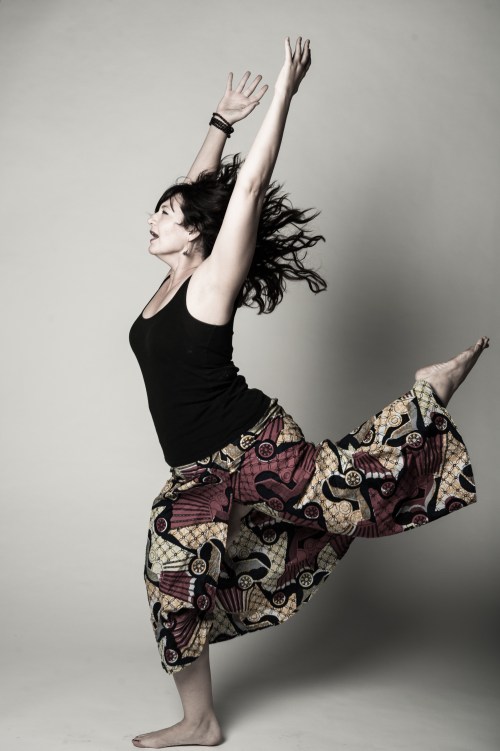
Photo by the amazing Jade Beall. Taken July 5, 2013.

Photo by the amazing Jade Beall. Taken July 5, 2013.


Śiva (ˈshi-və, ˈshē-)  n.  one of the principal Hindu deities, worshiped as the destroyer and restorer of worlds and in numerous other forms. Shiva is often conceived as a member of the triad also including Brahma and Vishnu.


Shiva is a god of contradiction. He is the destroyer, who incinerates the world as it is, and the creator, who transforms the world out of the ashes. He is the ultimate ascetic, abstaining from all worldly pleasures, and he is the dedicated lover and husband to Shakti/Parvati, the intensity of their love quaking the earth. He is the practiced yogi sitting calmly in meditation with no distraction and the dancer trembling his limbs furiously, his movements destroying and remaking the world.


He is, in many ways, all of us. He models the ways in which we defy categorization and solidity, each of us shifting and changing over time, letting go—with acquiescence or with fighting—of that which no longer serves us and making room for that which does.


For as long as I can remember, I have internalized the words “I am not a dancer.” This, despite that the fact that I love dancing. This, despite the fact that the sound of music and particularly the rhythmic beat of drumming is what makes me feel most myself and most alive. After quitting ballet at six and auditioning for and not making the cut for several dance teams during my time in adolescence, I decided that this was not an identity I could own. I could dance peripherally, at weddings and, if I was not too demonstrative, at clubs. I allowed myself hip sways and arms held in the air when I danced to brass bands back home in New Orleans. Over the years, I increasingly gave myself more permission to dance. But I did not allow myself the moniker dancer.


Rumi said, “Whosoever knoweth the power of the dance, dwelleth in God.”
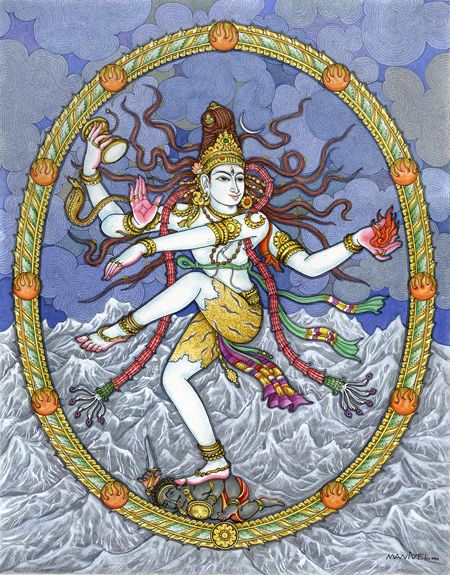


Dancing Shiva

Dancing Shiva


Another manifestation of Shiva is as Nataraja or The Lord of Dancers. Shiva holds the world in balance and this is seen too in his dancing. In Tandav, the cosmic dance of death, he dances to destroy the universe. Peter Marchand and Christine Gruenwald write, “Shiva Nataraja’s dance represents both the destruction and the creation of the universe and reveals the cycles of death, birth, and rebirth….Under his feet, Shiva crushes the demon of ignorance called Apasmara Purusha, caused by forgetfulness. One hand is stretched across his chest and points towards the uplifted foot, indicating the release from earthly bondage of the devotee. The fire represents the final destruction of creation, but the dance of the Nataraja is also an act of creation, which arouses dormant energies and scatters the ashes of the universe in a pattern that will be the design of the ensuing creation.” On the night of Shiva workship, devotees honor him by imitating him: singing songs in his praise and dancing all night rhythm of the drums.


Last fall, I started going to African dance classes in Tucson. As a white woman born and raised in New Orleans, a still deeply segregated city, I had strong hesitations to attend out of worries of appropriation of a dance that was not from my ancestry. I went with these hesitations and concerns, which still remain as part of the process, but I stayed because of the drums, because there was something about these drums and this dance that propelled me, not only across the floor but into a more complete and authentic version of myself.


Still, in those first few classes, I held myself back. I told stories about how I didn’t belong there, about how the other dancers were so much better than me, about how I was making a fool out of myself, about the lack everyone could clearly see in my body and in my movements. But around my third class, the stories quieted down. I could see the stories for what they were: irrelevant and untrue. The deepest truth was that I love being there. That I love dancing. And this love and this love alone made me into the thing I could not call myself before. Only when I destroyed the story that I was not a dancer was I able to really dance.


I used to think it was important to preserve containment at all costs. I believed that to avoid any kind of spillage or cracks or breakage was to make myself safe. But in the past several years, I have realized the vitality that comes from things breaking apart. I see that it is only this breaking that allows for new forms to take shape, for new breath to be invited in. From the ashes can rise new ways of being that would have never appeared while the old ways were immaculately intact.


July 5 was my birthday. For a few years, I’ve had a tradition of bibliomancing, randomly and blindly selecting, words from a dictionary on my birthday. To me, this feels like a way to honor my birthday and to invite in any messages or words that may be helpful in this new journey around the sun.


This year, I used a Pictorial Webster’s Pocket Dictionary just given to me for my birthday from my friend Amelia. The picture I turned to depicts Lord Shiva, Hindu god of destruction and transformation. That I turned to his image—when I could have easily turned to “Sequoia,” the page before, or “Skeleton of Dinosaurs,” the page after—feels significant and fitting. For years, I have listened to my yoga teacher talk about the ways different gods and goddesses are allies in the path. And I see these gods and goddesses as helpers, as models, as examples of the ideas and concepts they represent. Shiva, like Kali, can be given a bad rap because he brings powerful destructive forces. But as I understand it, these forces are sent to destroy the attachments our ego clings to, the ones we no longer need. In getting rid of attachments that limit us, we make room and create spaciousness for the most fluid and most authentic version of ourselves to emerge. Shiva encourages us to destroy, to dissolve, to deconstruct in order to make way for more genuine creation.


Shiva may be capable of destruction but he also wants to give offerings, to save lives. Shiva is almost always depicted with blue skin from the myth in which he saves humanity by holding in his throat poison that was churned in waters and threatened womankind and mankind. Shiva is painted carrying a trident, the three tips representing creation, protection, and destruction of the universe. Shiva is seen as a source of both evil and good, of destruction and rebirth. In his embodiment, he shows us the light and dark contained in this world and within each of us. He shows us the capacity to hold it all.
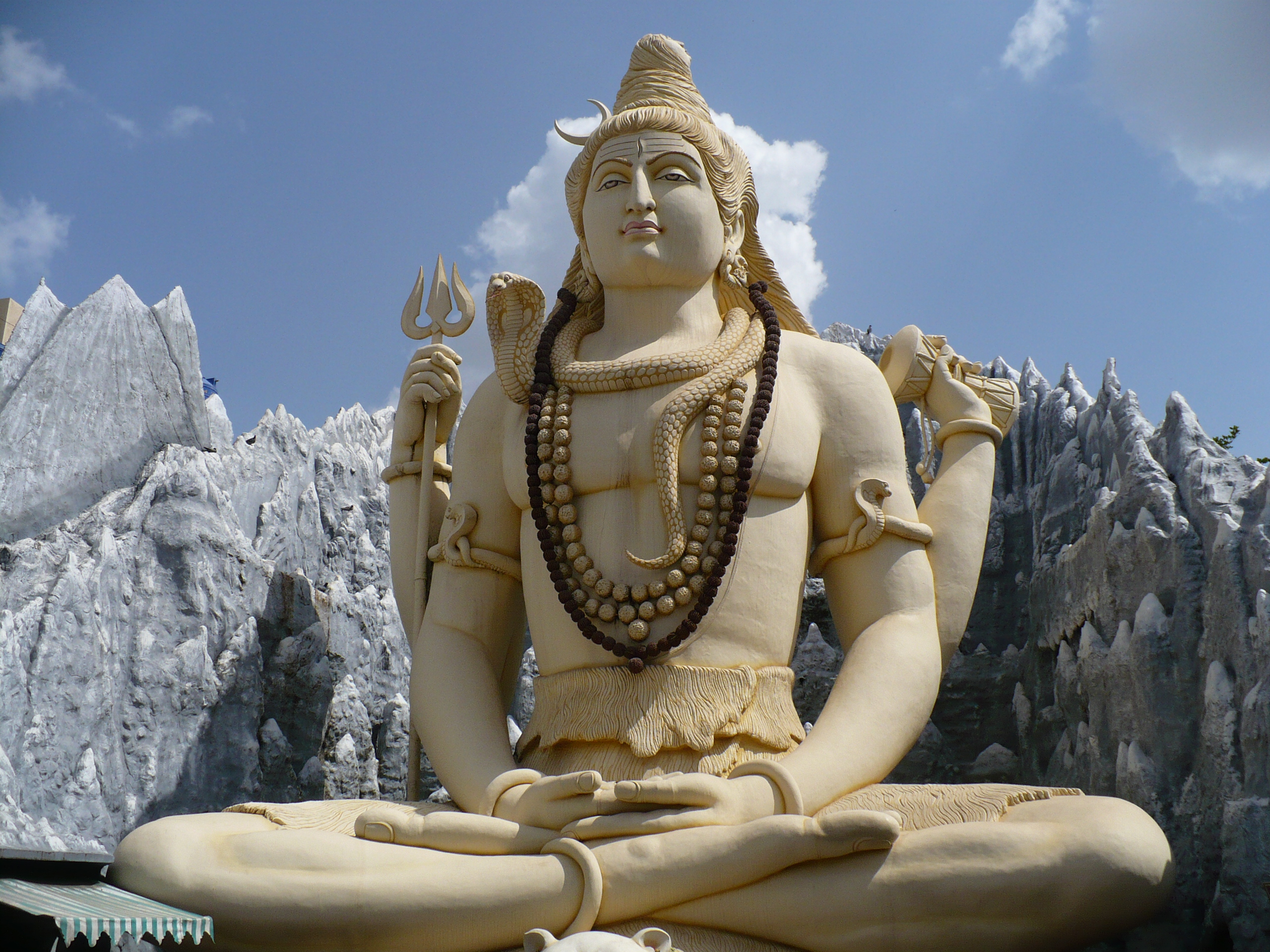


Shiva statue in Bangalore, Karnataka, India

Shiva statue in Bangalore, Karnataka, India


I have a Rumi of the Day book that I read from each morning before I sit in meditation. And each year on my birthday, I am struck by the poem for July 5. However, the time and distance of a year gives me time to forget and then to appreciate it anew. In “The Tree of Awe,” Rumi acknowledges the inherent contradiction of life’s joy and suffering and the necessity of both light and darkness. He writes, “No matter how fast you run, your shadow more than keeps up. Sometimes it’s in front. Only full, overhead sun diminishes your shadow. But that shadow has been serving you. What hurts you blesses you.” And “Darkness is your candle. Your boundaries are your quest.” And “You must have shadow and light source both.”


We may think we want only full brightness, but I can tell you from recent experience of 109 degree heat and high humidity in Tucson, that sometimes shade is most welcome. Sometimes we need the shadow to appreciate the beauty and warmth of the light.


When I dance now, I do so because the dance is in me and wants out. Instead of self-consciousness, I come to dance with a deep appreciation for those around me and for this life and for this body that carries me through it. Some days I dance to burn off old stories and some days I dance in appreciation and honor of the beauty in my life.


I am grateful to Shiva for appearing on my birthday to remind me of the power of destroying and razing and of renewing and recreating. These are the makings of a life, and I am grateful to experience both the light and dark offered in mine.


11 Comments

Filed under other words

inv.

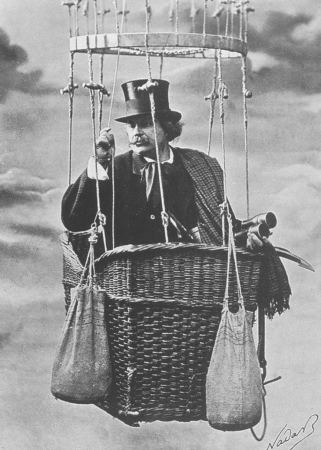
Gasper Felix Tournachon Nadar, who took aerial photos via hot air balloon.

Gasper Felix Tournachon Nadar, who took aerial photos via hot air balloon.


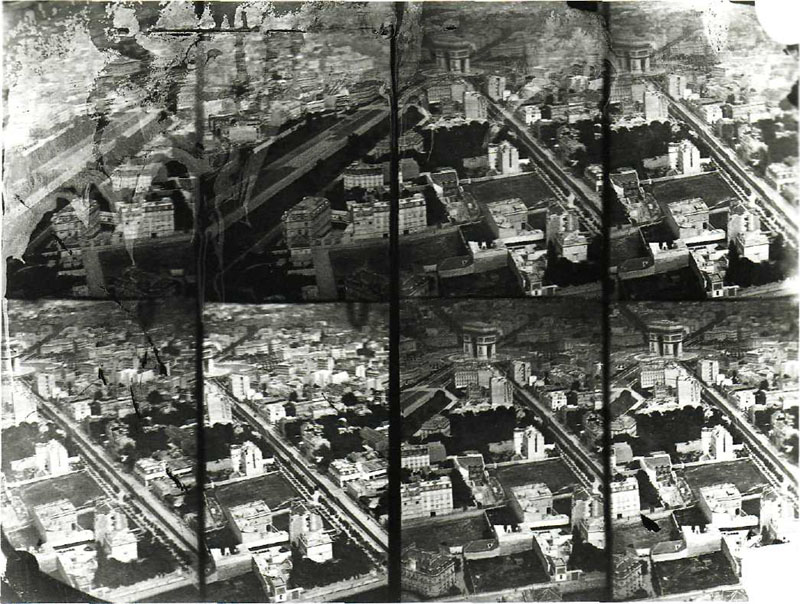
Felix Nadar Aerial Photograph

Felix Nadar Aerial Photograph


Julius Neubronner, who invented a camera to take aerial photographs using pigeons (he was an apothecary and also used pigeons to deliver medicine). All Neubronner photos courtesy of retronaut.com

Julius Neubronner, who invented a camera to take aerial photographs using pigeons (he was an apothecary and also used pigeons to deliver medicine). All Neubronner photos courtesy of retronaut.com


Camera-ed pigeons: In 1903 Dr. Julius Neubronner patented a miniature pigeon camera activated by a timing mechanism. The invention brought him international notability after he presented it at international expositions in Dresden, Frankfurt and Paris in 1909–1911. Spectators in Dresden could watch the arrival of the camera-equipped carrier pigeons, and the photos were immediately developed and turned into postcards which could be purchased.” - Public Domain Review

Camera-ed pigeons: In 1903 Dr. Julius Neubronner patented a miniature pigeon camera activated by a timing mechanism. The invention brought him international notability after he presented it at international expositions in Dresden, Frankfurt and Paris in 1909–1911. Spectators in Dresden could watch the arrival of the camera-equipped carrier pigeons, and the photos were immediately developed and turned into postcards which could be purchased.”
– Public Domain Review

Photos from Dr. Julius Neubronner's pigeon cameras.

Photos from Dr. Julius Neubronner’s pigeon cameras.


inv.,  1.  invenit,  [L.], he (or she) designed it.  2.  invented.  3.  inventor  4.  invoice


The other day on All Things Considered, a reporter was talking to the man who “invented” the 401K. I don’t remember what he did before that, but he wasn’t in finance. He said he thought if an employer matched an employee’s retirement fund there might provide more of an incentive for the employee to participate. The inventor didn’t intend for this to replace the pension, although it essentially has, but rather he liked the idea of providing a way to supplement someone’s retirement.

What the discussion brought to mind for me was the idea of invention and creation. And ownership. This man was given credit for establishing the 401 K plan, but surely, he wasn’t the first one to think of it or to maybe to even try it out. We often act as if inventing happens in a vacuum and inventors are some sort of isolated geniuses instead of a product of the thinking and ideas of an entire culture.

We human beings are part of a collective, whether we choose to recognize it or not. Why else would similar deities and mythologies and folk tales and rituals and systems have arisen on separate continents even at times where there was little or no contact between these peoples?

In the United States, one of our most valued ideologies is that of independence. We can make it as individuals, on our own. What arises with this value is the encouragement of and the desire for perpetual uniqueness. We must be different to be special. While this ideology may drive ambition and creative work in ways, it can also lead to suffering. These ideas take away from the very reality of interdependence. We suffer if we feel like we are not different enough to distinguish ourselves from the crowd. And we suffer if our desire to be unique leads us to isolate from others rather than draw our inspiration and support from community. In other places, where people strongly identify with their clan or community, I imagine there is less selfishness and less worry about own’s place and that this frees up space to just be.

In Reality Hunger, David Shields culls together his book entirely from quotes y taken from other people’s writings in order to make a statement about reality and about the idea that it is impossible for to claim anything as one’s own because of the ever-present influence of others.

The “Reader’s Guide” to the book reads, “‘Who owns the words?’ asks a disembodied but very persistent voice throughout much of William Burroughs’s work. Who does own them now?  Who owns the music and the rest of our culture? We do. All of us. Though not all of us know it, yet. Reality cannot be copyrighted.”

Our obsession with copyright in this country feels less about the intellectual property rights of inventors than it does about ownership and profit. I just heard on the news last Wednesday that the Supreme Court voted that companies could not patent human genes. Well, thank God. That’s insane. But the fact that this is even a question, that a case involving this issue is coming before our highest court shows how askew we currently are in our ownership and entitlement culture.

Copyright can be a useful way to protect the ideas and livelihood of inventors and creators. As a writer, I get that. But this becomes a problem when the letter of the law ends up being more dominant than the spirit of the law. The laws that are in place to protect the little guy end up benefiting the larger organizations who have money for lawyers and lawsuits. Look at Monsanto, who sues small farmers when they “steal their property” when seeds fly off their loosely-tarped trucks and are mixed in with the small farmers’ crops. Many of these farmers have lost their farms and others have committed suicide when faced by financial ruin from these lawsuits, lawsuits that are meant to protect the “rights” of billion dollar corporations (see the illuminating documentary The Future of Food for more on this).

In the end, the questions I have lead to more questions:

Where is the line between invention and that which was always going to emerge? Did someone “invent” singing—or even a particular style of singing—when it is an act our bodies were made to do? How do we trace every influence of a particular style of dance that came out of a given country? How does it shift when it is brought to another group of dancers? Can we still call this dance by the same name?

What is the connection between independence and invention? We don’t talk about one individual inventing a language, do we? We recognize ways of communicating as emerging from a community. But when we shape those words together in certain ways, is that when invention comes in? Or just because someone got something right and their invention works, does that mean that all the work of those who weren’t able to get it right before her/him doesn’t count? That their process of trial and error isn’t worth anything in the end?

A decade ago, I wrote an essay on Rosa Parks on the anniversary of the day she sat down in the white section of a segregated bus, the event that began the Montgomery Bus Boycott. I lauded her role but, as many others have also pointed out, dismissed the idea that she was a solitary hero. Parks had studied at the Highlander School in social justice leadership and had served as the secretary of the Montgomery Chapter of the NAACP. She was chosen by her community of activists to be the next person to take this action because of a potential to establish credibility because of who she was: “a married woman with a stable job… everyone’s next-door neighbor, their best friend, their aunt, their fellow parishioner at church.”

There is a temptation, even with something as ephemeral as community movements, to locate the person or persons responsible (just as, on the flip side, when something horrible occurs, the first response of media and officials is to try to find someone to blame, instead of looking at all the complexities at play, including the culture’s role). Some may argue this is to give credit where credit is due or to praise those involved. But there is something dangerous that can underlie this action. If we praise inventors, of products or of social movements, as remarkable individual human beings, this can have one of two effects.  We can become inspired to be remarkable (but maybe in a way more encouraged by ego and need for attention than altruism). Or we can become disempowered as we fear we are not “remarkable” enough to accomlish what these inventors have achieved. A healthier medium is to realize that each of us has an important contribution to make and in making this contribution, we can help fill in the missing links in a chain of which we are all a part. We don’t have decide between one or the other. We can choose to collaborate. We can invent together.

1 Comment

Filed under weekly words

re·cep·ti·bil·i·ty

The Fantasy

The Fantasy


glitterartglitterblog.blogspot.com

The Reality


re·cep·ti·bil·i·ty  n.  the quality or state of being receptible.


re·cep·ti·ble  adj.  [LL. recptibilis  <  L. receptus, pp. of recipere] able to receive or be received.


re·ceive  v.t.  1.  To take into one’s possession (something given, offered, sent, etc.); get; accept; acquire  2.  To encounter; experience: as, she received much acclaim.  3.  To undergo; submit to; suffer; have inflicted on one: as, h ereceived punishment.  4.  To bear; take the effect or force of: as, all four wheels receive the weight equally.  5.  To take from another by hearing or listening: as, his confession was received by the priest.  6.  To apprehend mentally; get knowledge of or information about; learn: as, they received the news.  7.  To accept mentally as authentic, valid, etc.  8.  a) to let enter; admit; hence, b) to have room for; hold; contain: as a cistern receives rain water. 9.  To give admittance to or greet (visitors, guests, etc).  v.i.  1.  To get, accept, take, or acquire something; be a recipient. 2. To receiveguests or visitors; be a host.  3.  In radio & television, to convert incoming electromagnetic waves into sound or light, thus reproducing the sounds or images being transmitted.  4.  In religious usage, to receive the Eucharist.  5.  in tennis, etc., to return or prepare to return, a served ball; be the striker.


On My Mess or Life Refuses Containment


I have a confession. Every now and then when I’m at the drugstore or the supermarket, I pick up the magazine Real Simple. Pretty much everything about that magazine appeals to me. Its clean simple font, its crisp lines, its excess white space. The title indicates what the magazine promises: how to make your life not just simple but real simple. The cover guarantees ingenious organization techniques you’ve never heard of before, how to do more with less, how to add color and light and beauty to your home. Really, it is the same exact magazine each month with slightly altered material.


I buy it and I read it, but the magazine never satiates me. On occasion, reading it when I am in a mental or physical space of disorder actually has the complete adverse reaction of what I want: I feel like even more of a mess when I finish reading than when I start. I look at the smiling ecstatic faces of the “after” homeowners (who own their home, unlike renting me) beaming after the clutter experts have come in to declutter their homes and with every fiber of my being I feel this thought: my mess is unredeemable. Read: my life is utter chaos.


Most often, however, I close the last page and feel absolutely nothing. Or perhaps nothing twinged with slight disappointment but not an unexpected disappointment. I have come to this magazine for answers on how to fix my life and the answers are not in this magazine. The only one who has the answers: me. And not all at once, not right now. Over time, the answers are delivered and sometimes the time frame feels achingly slow.


Author and social work researcher Brené Brown said in her TED talk on vulnerability that she comes from the social work community, a school of people who say, “Life’s messy: deal with it.” Whereas, her way of being for most of her life was more: “Life’s messy: clean it up, organize it, and put it into a bento box.” “But,” she says, “it doesn’t work.” Any attempt we make to impose structure on our lives fails before we begin because life is not predictable, life is not organizable, life is not neat. Life spills over and out of the containers we have so carefully made for it. Life refuses to contain itself in the parameters we have set.


Last week, in a moment of desperation, I called out to facebook friends for advice when I was in the midst of trying to clear space and get rid of stuff in my house. I was sitting on the floor of my living room surrounded by stacks of paper and files and books and all kinds of other ephemera and, overwhelmed by the barricade of stuff surrounding me, I found myself wanting to pour a glass of wine and watch Netflix for hours instead. The responses were ones of solidarity and suggestion. People offered their own struggles or ideas of what works for them. And I was very grateful for everyone’s input. But one particular piece of advice, offered by several people, was unexpected to me and jolted me back to my intentions. Several friends suggested I scan old notes and photos so I could keep them in digital form and let the physical copies go.


While I’m sure this works for many folks, this mere thought raised my degree of anxiety and panic. My goal is to become less attached to these things instead of changing my form of attachment. Even in digital form, these objects and items would continue to fill my psychic space. I don’t want them to change material form. I want to let them go.


I want them to go because I feel like there is only so much I can contain internally at one time, although I am constantly working on growing more space. There are more experiences to be had, more words waiting to enter, but if I hold too tightly to the ones that have led me here, there is no room for the new to rush in.


When I lived in San Francisco, I worked for a nonprofit agency serving low-income and homeless citizens. There was a woman who came to our dining room who was working with someone from our agency to clear her home. Deidre had fallen off a bunk bed when she was a young girl, which resulted in a traumatic brain injury and one of the repercussions of that injury was her impulse to hoard. She couldn’t bathe because her bathtub was full: of clothes, old recipes, newspaper clippings, canned goods, books, old correspondence. Magazines and newspapers were stacked up so that she had very narrow pathways through which to navigate her small apartment. This coworker Ben befriended her and gained her trust and slowly she began to allow him to take things out of her apartment. At some point though, the process stalled. She stopped returning his calls. Letting go was too threatening.


My Maw Maw was Cajun and lived through the depression. She and my Paw Paw ran a general store. He died first and when she died, our family found enough stuff inside their home to start up another store. There were stacks of tube socks in cabinets, dozens of canisters of shoe polish and boot leather stuffed in drawers. There were knick-knacks and glasses and cleaning products and pajamas. She had Alzheimer’s for the last ten years of her life, but it was clear that this process started much before. She needed these things, just in case.


While these are extreme examples in comparison to my own desire for order and inability to clear away, I think they reveal something about our humanness. Our compulsion to hold onto objects reveals our desire to concretize life. If only we have these things, we think, we will be protected, okay, safe from death. If we take all the right steps, maybe that will ensure our security. If we can control what we have, we can control who we are. If we can control who we are, we can control whether or not we get our heart broken, we can control whether or not our body is injured, we can control our own death.


In an episode of The Golden Girls, Sophia becomes addicted to shopping at bulk store Shopper’s Warehouse. She buys 10,000 toothbrushes. “Half blue, half pink,” she says to her daughter Dorothy. “So you and your brother won’t have to fight over your inheritance.” At one point, she says to Dorothy, “Say you have ten cases of sardines—” Dorothy interrupts saying, “This better be hypothetical.” Following the revelation of the situation’s reality, Dorothy becomes infuriated and asks her mother why she would do that. Sophia says, “It makes me feel immortal. You think: God wouldn’t make me waste good sardines. He’ll wait until I’m done with them to let me die.”


We have seen time and time again that what we possess has no bearing on what choices or challenges life will bring us. Appliances break down, cameras are stolen, computers crash, photographs burn, old letters are flooded underwater. Even our bodies, the vessels that carry us through life, betray us. Muscles tear from bone, vessels burst, bones break.


I think less important than the things of life themselves is our ability to receive them and let go of them with a degree of understanding that these things do not ultimately matter. One of the great lessons of my life in relation to this was when my childhood home flooded during Hurricane Katrina. Was it awful, seeing so many of my family’s memories underwater? Do I wish had my childhood journals to look back and see who I was at thirteen and what I thought was important during my study abroad days when I was twenty? Of course it was. Of course I do. But the fact that my parents were able to rebuild their lives and that we have lived without these things that made up our lives for so long  reveals to me that what is most important about life is retained inside of us. If we have connections with the people in our lives, we can rebuild the collection of our memories together. And these moments of connectivity allow for even more memories to be made.


What if we were to let go of our old definitions of order? What if we were to care less about attainment and containment? Would this make room for us to better receive the words of the loved one sitting across from us? Might we learn better how to be in touch with the sensations in our own skin?


In her Letter in the Mail for The Rumpus, Lidia Yuknavitch wrote about hands and death and dying. She wrote, “Well here’s the deal. We die all the time. I think maybe we are supposed to. I think when you let yourself fall all the way into art that moves you, for example, you experience a little death, and yes I know the other meaning of the phrase ‘little death’ so it just makes even more sense. Maybe if we stopped being scared to talk about dead things and hands we could get somewhere beyond the nonsense and violence of cultural poisons–capitalism and the cult of good citizenship and car ownership and house ownership and fame and money and image culture and rape culture and kill the planet culture and conquer culture and erase the indigenous and ‘insert your poison here.'”


I love that she says nonsense. I love that she says violence. Because these ways of being are both: violent and nonsensical. They take away from our own authority, and they drain us of what it really means to be fully and deeply alive, in all its messy and beautiful glory.


Is it possible in acknowledging our own mortality and our own vulnerability that we could truly see one another?


That we could allow ourselves to receive one another?


That we could allow ourselves—as we truly and fully are, without control or expectation—to be received?


3 Comments

Filed under weekly words

the dictionary project author interview: brent hendricks

Photo by Kate Bernheimer

Photo by Kate Bernheimer


I read Brent Hendricks memoir A Long Day At the End of the World on an airplane ride, flying from the desert where I live to the swamp where I was born. And this liminal space was a fitting and somewhat eery space for musings on death and life; on the disintegration of expectations, relationships, bodies; on the apocalypse. My friend and writer Frankie Rollins once talked about how driven we are as humans to stories and to story our existence. “Look at all the post-apocalyptic novels and films,” she said. “We can’t even imagine the ending without more story.” And when we are through with these stories, we return to ones of creation. The big questions like that of our own mortality, as individuals and as a collective, jar us into story-making. I think what I appreciate most about Brent’s book is its meditative quality, returning and returning to unanswerable questions and events to try to make sense of them, to hold them to the light in an attempt at understanding. Please enjoy his interview below.


1. Please share a memory/story/thought in relation to a dictionary/dictionaries:


At some point in college, I think after reading Walker Percy’s The Moviegoier, I decided I’d look up every word I came across that I didn’t know. This meant lugging around a dictionary in my book bag or paging through one of those giant dictionaries propped up at the library in the old days. After a while, because it took some commitment, there was a degree of ritual to the gesture and the dictionary became a kind of sacred text for me. A monkish act, in the only way I knew how.


2. What is your current favorite word?

Dark, because it feels so ancient and old-school Anglo-Saxon. You know there’s that Auden poem, “The Wanderer,” where he explicitly employs pre-Norman invasion words to create that weird (as in “fated”) Dark Age effect: “Doom is dark and deeper than any sea-dingle.” Doom’s a pretty good one, too, come to think of it.


3. What is the most obnoxious/insidious/annoying word?


Dingle, of course, because if not connected to “sea-dingle” I automatically think of dingleberry. I doubt I’m alone in this irritation. The compound word is an Americanism that, in single conflation, reveals the essential difference between the two cultures.


4. What word has been your (recent or past) muse?


Well, “berry” was one of then. Remember that terrific Robert Hass poem, “Meditation at Lagunitas,” ending with “blackberry, blackberry, blackberry”? “Berry” is also of Old English derivation and, at the risk of revealing too much, I’d have to say I used to love eating blueberries and blackberries. However, those innocent days are all but past due to the above corruption.


5. I have been reading your new book A Long Day at the End of the World: A Story of Desecration and Revelation in the Deep South. I remember talking to you about this book at a party at the side of a pool a few years ago when it was still in draft form and many of questions and ideas you expressed then reverberate through the book now: particularly the “whys” of death and life and our attempts as humans to reconcile our own deaths and the life and death of our world. I think we all have stories from our lives we need to write our way into and out of. What was at the root of your need to write this particular story?


Money, first, which I wanted more of. And second, fame, which I also callously desired. I’m really much more famous than I used to be. Third, though obviously an ancillary cause, I truly felt the gothic nature of the Tri-State Crematory Incident — the largest mass desecration in modern American history — deserved some storyline expansion, particularly as my father’s body was one of those left abandoned at the crematory site for five long years. There were bodies piled up in pits, bodies stuffed into metal vaults, bodies scattered through thick brush of a North Georgia crematory — blackly fantastic, all of it. And fourth, less overtly significant than the first three, I was demonically captured by Giorgio Agamben’s take on Walter Benjamin’s take on Saint Paul’s take on messianic time, or “now-time,” or “the time of the now.” My thralldom, if that’s what you call it, led me to believe I could project, contemporaneously, many different histories unto the present. That I could bring past events forward onto the page.  It’s a method really, a dark one, forcing me to cast onto my otherwise expiatory road trip (a terrific and rarely used narrative device) such unrelated and “shoehorned” events as the conquistador Hernando de Soto’s rampage through the South, the civil war and civil rights, environmental degradation and its consequences, the Book of Revelation, and some other botanical stuff about flowers. The causes, then, are many, involving most of the deadly sins and my own demonic possession.  It’s really quite disturbing.


6. Could you define “desecration” and “revelation”?


In ancient Greek, the original language of the New Testament, “apocalypse” means “revelation.” In this context, for me at least, a revelation reaches far beyond the realm of personal insight so as to suffuse a moment of “now time” with the fullest of  possibility, while intimating, in relation to the horizon of that moment, some inevitable end-point. Usually happens if I have a second cup of coffee.


Desecration is just everything else — all the non-illuminating instances that exist outside the glow of that second cup of coffee.


7. Please respond to the following words* and definitions, picked exclusively at random for you:


hole  (hōl),  n.  [ME.; AS. hol.  orig. neut. Of holh, adj. hollow; hence akin to G. hohl, hollow; IE. base *qaul-, *qul-, hollow, hollowed thing, as also in L. caulis, stalk, cabbage (cf. COLE, CAULIFLOWER],  1.  a hollow or hollowed-out place; cavity; specifically a) an excavation; pit: as, he dug a hole in the ground.  b)  a small bay or inlet; cove: often in place names. c) a poor or deep, relatively wide place in a stream: as, a swimming hole. d) an animal’s burrow or lair; den; hence  2.  a small dingy, squalid place; any dirty, badly lighted room, house, etc.  3.  a prison cell. 4. a) an opening in or through anything; break; gap; as, a hole in the wall.  b)  a tear or rent, as in a garment.  5.  a flaw; fault; blemish; defect: as, we found holes in his argument.  6.  [Colloq.], an embarrassing situation or position; predicament.  7.  in golf, a) a small, round hollow palce into which the ball is to be hit.  b) the tee, fairway, greens, etc. leading ot this: as, 18 holes of golf.  v.t.  [HOLED (  ), HOLING],  1.  to make a hole or holes in.  2.  to put, hit, or drive into a hole.  3. to create by making a hole: as, they holed a tunnel through the mountain.


Following the medieval practice of sortes biblicae — in which a person with a question randomly opens the Bible to seek God’s answer — I’ll do my best to seek guidance in these similarly plucked words. I’ll therefore use these offerings to assist with my primary existential question: Should I actually dig a hole in the backyard and climb in it? I wonder about this a lot. I am not kidding.


ha·bit  (ˈhabit),  n.  [ME.; OFr.; L. habitus, condition, appearance, dress; pp. of habere, to have, hold], 1.  costume; dress.  2.  a particular costume showing rank, status, etc.; specifically, a)  a distinctive religious costume; as, a monk’s habit.  b)  a costume worn for certain occasions: as, a woman’s riding habit.  3.  habitual or characteristic condition of mind or body; disposition; as, a man of healthy habit.  4.  a thing done often and hence, usually, done easily; practice, custom, act that is acquired and has become automatic; hence, 5. a tendency to perform a certain action or behave in a certain way; usual way of doing: as, he does it out of habit.  6.  an addiction: as, the alcohol habit.  7.  in biology, the tendency of a plant or animal to grow in a certain way; characteristic growth; as, a twining habit.  v.t.  1. to put a habit on; dress; clothe.  2.  [Archaic], to inhabit.


Okay, so I will dig a hole in my backyard and climb in it — because, over time and with practice, the act might be “done easily” and even lead to a certain “tendency” in the ground, “as, a twining habit.” This “twining” sounds like something pretty revelatory, too, as long at can still happen to an animate object.


ten·der·foot (ˈtendərˌfo͝ot),  n.  1.  a person who tends, or has charge of, something.  2.  a small ship for supplying a large one.  3.  a boat for carrying passengers, etc. to or from a large ship close to shore.  4.  a railroad car carrying coal and water for a steam locomotive, to the rear of which it is attached.


Okay, now I’m totally confused as to the dictionary god’s will, because I thought a tenderfoot was a “novice” or “greenhorn.” Is God (or the dictionary god) telling me that I’m a greenhorn at interpreting signs and divine wishes. Are the heavens mad at me? I guess I’ll just stand out in the backyard for a while, shovel in hand, and try to think it all through.


Jute  (jo͞ot), n.  [AS, Iote, Yte: L. Iuta], a member of any of several Germanic tribes that lived long ago in Jutland: Jutes invading southeastern England in the 5th century A.D. spearheaded the Anglo-Saxon conquest.


Okay, back on track, right? Angles, Saxons, and Jutes — in naming the third Germanic peoples who originally invaded England and so helped to create all those Old English words in the first place, I think we have a winner. I should definitely dig that hole and lie in it. That’s exactly what a Jute would do.


Philemon  (fəˈlēmən), [L.; Gr. Philemon, lit., affectionate], a masculine name.  n.  1.  the Epistle to Philemon, a book in the New Testament which was a message from the Apostle Paul to his convert Philemon: abbreviated Phil.  2.  in Greek mythology, an old man who, with his wife, Baucis, shared what little he had with the disguised Zeus and Hermes.


Wait a second. What is Saint Paul (by way of the dictionary god) trying to tell me here … that I should free the slaves within me? Maybe he’s saying it doesn’t matter what I do. Dig or not dig. Lie or not lie. According to Paul — am I being directed to this? — the messianic vocation is to seek the revocation of every vocation (1 Cor 7:29-32) (Agamben, The Time That Remains), with my vocation being to wonder continually about my particular existential question. Forget about it, Paul seems to be saying. Remember there’s not much time left, which may or may not be self-evident, and which may or may not necessitate climbing in a hole. After all, and like always, there’s only the time that remains. 


Brent Hendricks is the author of A Long Day at the End of the World (Farrar, Straus and Giroux 2013).


*Definitions taken from Webster’s New World Dictionary of the American Language: College Edition, copyright 1955


Leave a comment

Filed under author interviews

the dictionary project author interview: tc tolbert

Today, I’m delighted to share an author interview with tc tolbert. TC is a brilliant poet and essayist whose work asks important questions about space, about the body, about how we interact with one another in regard to space and the body and about how we might do that better, about both the tenacious and the tender aspects of the human heart. In addition to his own writing, he is committed to seeking out, sharing, and providing spaces for the work of others. He has two chapbooks, spirare and territories of folding, and his first book Gephyromania comes out in 2014.  Troubling the Line: Trans and Genderqueer Poetry and Poetics, an anthology he co-edited, just came out in March of this year. He also co-curates Trickhouse Live, a reading series affiliated with the online journal Trickhouse, which features artists working in different media sharing their work. Please enjoy his words below!


Photo by Sam Ace

Photo by Sam Ace


1. Please share a memory/story/thought in relation to a dictionary/dictionaries:


I found the title of my first book, Gephyromania, in this thing called an “Illustrated Reverse Dictionary.” I bought it at a garage sale, strictly for the title. I don’t totally understand it but it’s got lots of random lists – kinds of boats, -ologies and –ographies, types of garden predators, etc – and from those lists you can either find the word you were looking for or find the word you didn’t know you were looking for but the word you clearly need. That’s what happened to me. I was just picking through it and I came across the list of phobias and manias and there was “gephyromania” – “an addiction to, or an obsession with, bridges.” And I had been working in a notebook I titled “bridge” – both for the idea that it was to carry me over some daunting (emotional) terrain and as a nod to the musical bridge that signals a contrast or a tangent. I desperately needed both and thus, the writing, the poems.

Also, I’m truly obsessed with what it takes, how it happens that two bodies (of any kind) come to connect. And what, then, is passed or carried over, along, or between them.


2. What is your current favorite word?


My favorite words have always been swear words. I grew up Pentecostal in Tennessee and there was a very real belief that how one used language could determine not just one’s experience of the current moment but all of eternity. Of course that’s dramatic but look at it this way. All you had to do was say, “I accept Jesus as my Lord and Savior” and boom, you were golden. My Papaw had cancer in his lymph nodes and people in the church laid hands on him and said, “you are healed” and, yep, he was. It was the words that made identity and body real. The flip side of that sort of literal relationship to language was with swear words – where certain words were off-limits and could cause eternal damnation (as opposed to salvation). So, “taking the Lord’s name in vain” was imbued with such a level of sacrilege and terror that I genuinely believed if I ever uttered the word “goddamn” I would be sealing my fate right then and there.

But I’ve never been one for just following the rule without testing it. So, as a kid I would wander into the woods near my house and sit in a little ditch and practice smoking cigarettes and saying “fuck” with different inflections. I tried to imagine every context possible in which I could toss around the f-bomb with clarity and grace. Then I would do the same with “goddamn.” Each day I was a little bit surprised and emboldened to find that I could swear and not be killed on the spot. But then again, I spent thousands of hours with major stomach aches and the shits thinking god was getting me back for all of the swearing (and masturbating) I’d done. As it turns out, I just have a gluten sensitivity and I ate too many Little Debbies. The god of my upbringing was not only severe but fantastically so.


3. What is the most obnoxious/insidious/annoying word?


Judge. I don’t like it b/c I think it’s too often wielded as an attempt to shame folks for being discerning or having boundaries. I don’t like the way judgment has taken on a sort of blanket negative connotation. To say, “I like that” or to have a clear sense that “I don’t want that in my life” or “I do want this in my life” that seems like a good and healthy way to move through the world. We make positive judgments all the time. That’s how we determine everything from what to wear in the morning to life partner to favorite ice cream!

When I worked at the queer youth center and I worked closely with the anti-violence project, I saw too many instances of people being abused and trying to get out of it but experiencing a kind of public shaming for “judging” the abuser and for “not being compassionate enough.” The words judgment and compassion became these linguistic vortexes to keep people in very damaging situations so I’m wary anytime I hear someone speak or act as if judgment is a universally negative thing.

That said, I also understand that judgment can easily turn into a sort of rigidity that is then used as a measuring stick for what others should like or believe and that is obviously counterproductive.

I’d like to see the word judge used in a less “judgy” way, I suppose. I mean, it’s a complex word and idea and I think that’s what people are pointing at when they use the word judge in a negative way (do we ever complain when someone judges us positively? I don’t think I do) – that lack of context and complexity.


4. What word has been your recent or past muse?


Troubled and troubling. I like these words especially for the bl sounds – how silly they make our mouths – how you can’t actually be that serious when you say trouble – it’s so buoyant and playful. I like the contrast between their vocalization and meaning. I also think it’s hilarious – this idea of “being in trouble.” I mean, it’s something I worry about so much (see above – Pentecostal) and yet I recognize the absurdity. It’s an adolescent kind of word, I think, with grown-up aspirations.

Also, both words reference Judith Butler and the Bible, simultaneously. I love how they conflate danger/threat and healing/freedom. These themes and references all went into the title Troubling the Line: Trans and Genderqueer Poetry and Poetics, a book I just co-edited with Tim Trace Peterson. (link to purchase book: http://www.upne.com/1937658106.html) I think trans and genderqueer poets and poetries are dangerous/threatening to our gendered cultural confines and we (trans and genderqueer poets and poetries) offer multiple avenues of freedom and healing from those confines.

Also, fricative. I love that word. How it makes your mouth do what it means. I want all of my poems to be that embodied.


6. I bibliomanced a word from the anthology and that word was “splendor.” What would be your personal definition of “splendor”?


I think of splendor as an undetermined space – the space of the question – Rilke imploring that we “love the questions themselves.” I’m picturing the component parts of a computer caught on film in midair – are they falling or flying? I have no idea.

The space of unknowing. Pause. A kind of holy attention.

That moment in Virginia Woolf’s To the Lighthouse, this:

“What is the meaning of life? That was all—a simple question; one that tended to close in on one with years. The great revelation had never come. The great revelation perhaps never did come. Instead there were little daily miracles, illuminations, matches struck unexpectedly in the dark; here was one. This, that, and the other; herself and Charles Tansley and the breaking wave; Mrs. Ramsay bringing them together; Mrs. Ramsay saying “Life stand still here”; Mrs. Ramsay making of the moment something permanent (as in another sphere Lily herself tried to make of the moment something permanent)–this was of the nature of a revelation. In the midst of chaos there was shape; this eternal passing and flowing (she looked at the clouds going and the leaves shaking) was struck into stability. Life stand still here, Mrs Ramsay said.”

I feel myself moving into that space of splendor right now, actually. As Troubling Tucson: Trans and Genderqueer Poetry Symposium is only 2 days away and my life has been so completely consumed with logistics for the symposium and yet here I am – on the cusp of seeing it realized – in that liminal space right where the thing moves from an idea into a being. It’s thrilling, a little bit terrifying, and a way of focusing my attention so clearly on exactly where I am. There is a beautiful and open calm right now – it feels like a gift to me.


7. Where do words reside in the body?


Well, my words reside in my right trapezoid. I know that because for quite some time now I’ve had an overuse injury there and I literally feel the words start there when I write.


8. Please respond to the following words* and definitions, picked exclusively at random for you:


ca·ba·na  (kəˈbanə; Sp. kəˈbanyə),  n.  [Sp. cabaña; LL. capanna, hut], 1.  a cabin, cottage, or hut.  2.  a small shelter used as a bathhouse. Also cabaña


“Oh, Mandy. You came and you gave without taking. And I need you today, oh, Mandy. When you kissed me, you stopped me from shaking. And I need. You.”

 The next person to sing this to me (which would also be the first person to sing this to me) will have my ever-lasting devotion. I’m just saying. I fucking love Barry Manilow. Now you know the way to my heart.


dis·place·ment  (disˈplāsmənt),  n.  1. a displacing or being displaced.  2.  the weight or volume of air, water, or other fluid displaced by a floating object, as a balloon or a ship.  3.  the difference between a later position of a thing and its original position; hence, 4. in geology, a fault.  5.  in psychiatry, the transference of an emotion to a logically inappropriate object.


I used to hate my body. I thought it betrayed me. Then John Cage said, it’s lighter than you think.


di·e·sis  (ˈdī-ə-səs),  n. [pl. DIESES (-sez’], [L.;Gr. diesis  <  diienai, to send through  <  dia-, through + hienai, to send], a reference mark ( ‡ ) used in printing: also called double dagger.


The first woman I fell in love with was the 3rd base woman on my softball team. We were in 6th or 7th grade. I suppose you could say we were girls.


keep  (kēp),  v.t.  [KEPT (kept), KEEPING], [ME. kepen; AS. cepan, to behold, watch out for, lay hold of; ? akin, via *kopjan, to ON. kopa, to stiffen, gape, MLG. Kapen, to gape, stare at, AS. capian up, to look up at; ? IE. base *gab-, to look at or for],  1.  to observe or pay regard to; specifically, a) to observe with due or prescribed acts, ceremonies, etc.; celebrate or solemnize; as, they kept the Sabbath. b) to fulfill (a promise, etc.). c) [Archaic], to show observance by regularly attending (church, etc.).  2.  to take care of, or have and take care of; specifically, a) to protect; guard; defend. b) to look after; watch over; tend. c) to raise (livestock). d) to maintain in good order or condition; preserve. e) to supply with food or lodging for pay: as, she keeps boarders. g) to have or maintain in one’s service or for one’s use: as, they keep servants. h) to set down regularly in writing; maintain (a continuous written report or record): as, he keeps an account of sales in the store. i)  to make regular entries in; maintain a continuous record of transactions, accounts, or happenings in: as, businessmen keep books, she keeps a diary. j) to carry on; conduct; manage.  3.  to maintain, or cause to stay or continue, in a specified condition, position, etc.: as, keep your engine running. 4.  to have or hold for future use or for a long time. b) to have usually in stock for sale.  5.  to have or hold and not let go; specifically a) to hold in custody; prevent from escaping. b) to prevent from leaving; detain. c) to hold back; restrain: as, the rain kept us from going out. d) to withhold. e) to conceal; not tell (a secret, etc.)  f) to continue to have or hold; not lose or give up. G) to stay in or at; not leave (a path, coruse, or place).


Three women were found alive in a Cleveland home last night. One of them has a 6-year-old daughter. All of them have been missing for over 10 years.


medium bomber  (B-25 Mitchell, 1940 from image: Types of Airplane)


It’s in me. That’s the thing. It arrived in me, too.


TC Tolbert is a genderqueer, feminist poet and teacher. Assistant Director of Casa Libre en la Solana, instructor at University of Arizona and Pima Community College, and wilderness instructor at Outward Bound, s/he is the author of Gephyromania (forthcoming, Ahsahta Press, 2014) and chapbooks spirare (Belladonna*, 2012), and territories of folding (Kore Press, 2011). TC is co-editor, along with Tim Trace Peterson, of Troubling the Line: Trans and Genderqueer Poetry and Poetics (Nightboat Books, 2013). TC writes monthly lyric essays on the trans body, intimacy, architecture, and public space for The Feminist Wire and s/he recently curated a trans and queer issue of Evening Will Come for the Volta. TC is a regular curator for Trickhouse, an online cross-genre arts journal and s/he is the creator of Made for Flight, a youth empowerment project that utilizes creative writing and kite building to commemorate murdered transgender people and to dismantle homophobia and transphobia. Thanks to Movement Salon and the Architects, TC keeps showing up and paying attention. John Cage said, it’s lighter than you think.


*Definitions taken from Webster’s New World Dictionary of the American Language: College Edition, copyright 1955

Leave a comment

Filed under author interviews

sur·ren·der

Photo by Francesca Woodman

Photo by Francesca Woodman


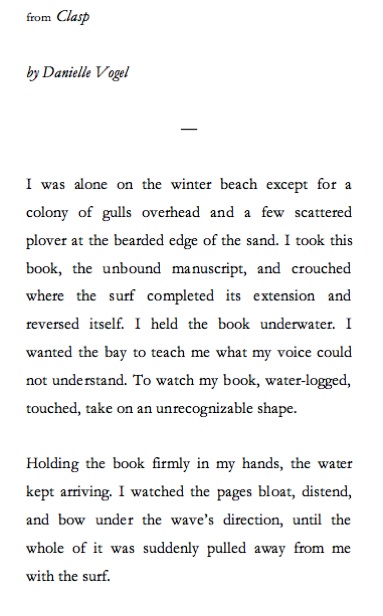
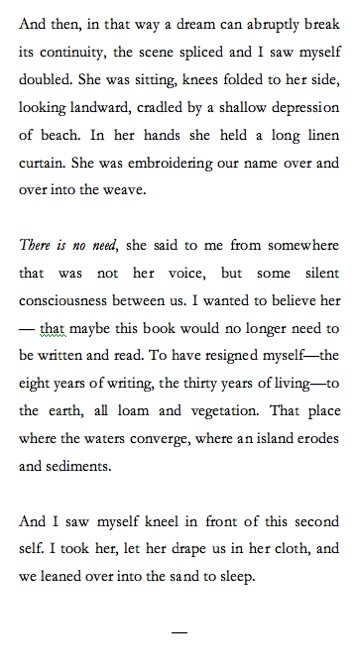
Well, here we are at the conclusion of a wonderful na·po·mo at the dictionary project! I’m grateful that poetry gets its own month and also grateful that we can continue to read and support poets, to write and share our own poetry all year. I want to thank all of our wonderful poets for the work they have written and shared with us and special thanks goes to our last poet, Danielle Vogel. 

And in the first time in the history of this literary community, a word was bibliomanced for the second time. I guess this is appropriate because it is a word we probably all need to be reminded of from time to time. The word is surrender. Those of you who have been regular followers of the dictionary project will remember that I first wrote about surrender in the fall in relationship to an Amy Goodman reading I attended. I am delighted to share with you Danielle’s gorgeous and evocative take on the word. Thanks go to Danielle for providing the image as well.

And thanks to you, today and always, for reading and being part of this process.


sur·ren·der (səˈrendər)v.t. [OFr. surrendre: sur-, upon, up + rendre, to render], 1.  to give up possession of or power over; yild to another on demand or compulsion.  2.  to give up claim to; give over or yield, especially voluntarily, as in favor of another.  3.  to give up or abandon; as, we surrendered all hope.  4.  to yield or resign (oneself) to an emotion, influence, etc.  5.  [Obs.], to give back or in return.  v.i.  to give oneself up to yield.  n.  [Anglo-Fr.  < OFr.  surrendre (see the v.); inf. used as n.],  1.  the act of surrendering, yielding, or giving up.  2.  in insurance, the voluntary abandonment of a policty by an insured person in return for a cash payment (surrender value), thus freeing the company of liability.
SYN.–surrender commonly implies the giving up of something completely after striving to keep it (to surrender a fort, one’s freedom, etc.); relinquish is the general word implying an abandoning, giving up, or letting go of something held (to relinquish one’s grasp, a claim, etc.); to yield is to concede or give way under pressure (to yield one’s consent); to submit is to give in to authority or superior force (to submit to a conqueror); resign implies a voluntary, formal relinquishment and, used reflexively, connotes submission or passive acceptance (to resign an office, to resign oneself to failure).


dv1 dv2 dv2again dv4


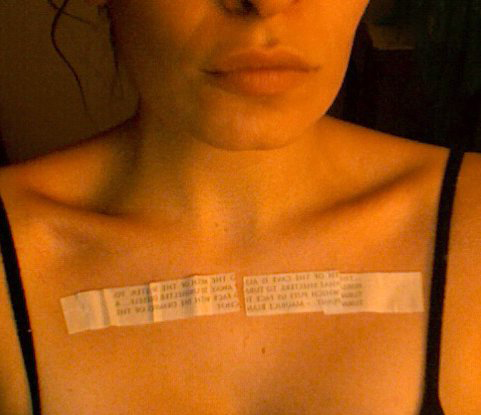
Vogel, Dictionary Project author photoDanielle Vogel’s textile scroll-works and ceramic book artifacts, which explore the ceremonial gestation of a manuscript as it is written, have been exhibited in galleries across the country. Her most recent collection, Narrative & Nest, is a cross-disciplinary study relating the construction of nests to the writing of books — both as complex sites of composition, habitation, instinct, and narrative. She is the author of Narrative & Nest (Abecedarian Gallery, 2012) and lit (Dancing Girl Press, 2008). She received her MFA in Writing & Poetics from Naropa University, and is currently a PhD candidate at the University of Denver. She lives in Providence, Rhode Island, where she is writing toward the completion of her book Clasp, excerpted here. Her author photo was bibliomanced by Maurice Blanchot’s The Writing of the Disaster and reads: “a turning point which puts us face to face with the demand of the turning point.” Danielle wrote, ‘I often carry books alongside the books I am writing. I dip into them for messages the way one might visit the Tarot. One such book is Maurice Blanchot’s The Writing of the Disaster. While writing the middle section of Clasp, I asked Blanchot’s book to interrupt my writing practice with a message and this is what I received.”


Leave a comment

Filed under napomo

sur·veil·lance

"What Are You Looking At?", Banksy

“What Are You Looking At?”, Banksy


Today is the last day of April and the last day of na·po·mo 2013. We have a double-decker day with one poem now and one poem later in the day. Our first poem today is by Logan Dirtyverbs. Enjoy!


sur·veil·lance,  n.  [Fr.  <  surveiller, to watch over; sur- ( < L. super), over + veiller  < L. vigilare, to watch],  1.  watch or observation kept over a person, especially one under suspicion or a prisoner.  2. supervision or inspection.


TO NEITHER CONFIRM NOR DENY
 

a legible surveillance disclaimer
TO OBSERVE WITH INTENT
a distinct whine in blue sky
TO NOTICE AGGRESSIVELY
where drones roam freely
TO ACTIVELY TAKE NOTE
soon drones will keep quiet
TO KEEP CLOSE WATCH
a more convenient freedom
TO INTERCEPT PREEMPTIVELY
the windchime sounds unstable
TO ASCERTAIN CULPABILITY
the bee conducts search flower-by-flower
TO AGGREGATE EFFICIENTLY
a swarm of self-directing drones
TO SECURE THE HOMELAND
an obtuse infestation of bugs
TO PHOTOGRAPH PUBLIC SPACES
a budding nest of security cameras
TO TRANSMIT ELECTRONICALLY
the trains of thought in choreography
TO IRREVOCABLY CONNECT DOTS
a gold rush of data mining geology
TO PRACTICE NONADMISSION
a twenty twenty all aerial eyesight
TO UNMAN AERIAL SYSTEMS
an officious and casual voyeurism
TO SPEAK FREELY IN PUBLIC
a vain culture easiest to surveil
TO SEARCH FOR IDENTITY
a watched society most secure
TO ASSOCIATE WITH OTHERS
social media a great diy fbi fyi
TO KNOW THE LATEST
a clear evolutionary craving
TO SEE AND BE UNSEEN
knowing what others are doing
TO RECOGNIZE THE FACES
security for whom & by whom
TO AUTOMATE REDACTION
certain cannot be used
TO SPEAK SUSPICIOUSLY
prison regulates unemployment
TO WAGE WAR ON FEAR
war a fantastic job creator
TO TRIGGER WORDS
self-surveillance smaller govt
TO POLICE STATE SECRET
the alibi sousveillance hobby
TO THREATEN PRIVACY
policing the self in private
TO USE DANGEROUS SPEECH
a homegrown wet orwellian orgasm
TO STATE & PLAUSIBLY DENY
or what do you have to hide anyway
TO JUST ASK A FEW QUESTIONS
you don’t know what you have to hide
TO AGREE TO TERMS & CONDITIONS
until it has been finally found
TO PLEASE SIGN HERE
x___________________________


Photo by Trish Santangelo

Photo by Trish Santangelo

 
logan dirtyverbs is a bilingual poet, performer and dj based in tucson, az. to see more of his work, check out: dirtyverbs.com and @dirtyverbs on twitter.

Leave a comment

Filed under napomo

yore

photo courtesy of retronaut.com


photo courtesy of retronaut.com


photo courtesy of retronaut.com

all photos in this post courtesy of retronaut.com


We have two days left of April and three poets’ work still to share with you for na•po•mo 2013.

Enjoy Shelly Taylor’s take on yore.


yore  (yôr),  n.  [ME., fr. yore, adv., long ago, fr. OE, gedra, fr. gear year]: time long past < in days of ~  


Na•Po•Mo The Dictionary Project:  Yore

Shelly Taylor / Apr 25, 2013


Stop the death music:  city a body

leashed a fastened quagmire:  city sky lean

back:  a wreck eschewed our righteous

inhabitants, one carousel livened your last

disposal:  wait—women weaving raffia

—their city hands tied furiously an earthen tree.

Go around the brawling in the street:

our fortunes buried post-Sherman

set the South aflame—his gods reflecting

opaque the horizon:  general gaze of

yore, its forgotten fauna:  glint in the light of fog:

never manage it:  your restless eye:  what happened then?

Shoulders back to please the ladies:  break the same

as rise:  our rooster forgetting its agrarian foothold

fenceline morning:  brown from your mama—

this black horse you will her forget about. 

Scales & carapaces:  each city

namesake, go one & believe me:  or: 

fight man’s possession:  antennae of light

—they who were happiest at one time: 

make them endure it.     


shellypicfornapomoBorn in rural southern Georgia, Shelly Taylor resides in Tucson. She is the author of Black-Eyed Heifer (Tarpaulin Sky Press: 2010) & four chapbooks: Peaches the yes-girl (Portable Press at Yo-Yo Labs: 2008), Land Wide to Get a Hold Lost In (Dancing Girl Press: 2009), Dirt City Lions (Horse Less Press: 2012), & the forthcoming, The Doldrums (Goodmorning Menagerie: 2013).


Leave a comment

Filed under napomo

vi·rus

Movin’ along By Yoshiki Arakawa and Michael Way, London Research Institute

Eye of the Storm  By Dean J. Procter (The University of Sydney), Bianca Dobson (The Australian National University), David Tscharke (The Australian National University), and Timothy P. Newsome (The University of Sydney)

Highway to infection  By Yoshiki Arakawa and Michael Way, London Research Institute

(click on photos for original post and photo credits)


Our next poem for na·po·mo comes from Valyntina Grenier. Please enjoy her poem below!

 
vi·rus,  n.  [L., a slimy liquid, poison; cf. FITCHEW],  1.  venom, as of a snake.  2.  a) any of the group of ultramicroscopic or submicroscopic infective agents that cause various diseases, as smallpox: viruses are capable of multiplyingin connection with living cells and are variously regarded as living organisms and as complex proteins.  b)  specifically, a filtrable virus. c) the exudation from the vesicles of cowpox, used as a vaccine for smallpox.  3.  anything that corrupts or poisons the mind or character; evil or harmful influence.

 
To Explicate a Virus


Venom
Vitriol
Violence
In quiet
To persist

To dissipate life

With bias or bribes as your shield
Shudder
I’ll grip
Your arm
I pull

To destring your power
I won’t let you fly through me
By my will decimate here
To cite the second amendment
To ignore the commerce of arms

To act as a stone

Annihilate arrowheads
On impact
You are a bomb
Your shrapnel propels
As arrows do

To detonate as bombs

I reach for a slave
To soothe our low-down hearts
Write a gentle embrace
To calm our frightened minds
I search virus

To find a cure

For the body sure
For plagues of belief
Only words
Shatter the star of illusion
Lay to rest all the Santas and gods

To look after the living

(whom viruses thrive on)
Follow a river of antelope
Herding through a river
Sift through a stream of diatribes
To interpret a virus as benign

To fall in with lies

I despair
To articulate something of import
We all harbor arrows
We fall
Shrapnel blasts on


IMG_0225Valyntina Grenier is a writing and visual artist.  Please visit her website  valyntinagrenier.com.

4 Comments

Filed under napomo

Diana

diana cropped


Last night, we held our third the dictionary project presents! reading at Casa Libre en la Solana. And we finally revealed the word that our writers and readers had been working with for two weeks: Diana!

We were all grateful for having to engage with Diana: Roman goddess of the hunt, of the moon and childbirth, of all things wild.

One of the most exciting things about our reading series is assigning the same word to a group of writers and seeing the different ways these brilliant minds and hearts experience and interpret that word.  I am grateful to Ian Ellasante, Hannah Ensor, Kindall Gray, Tc Tolbert, and Teré Fowler-Chapman for their writing and for reading last night. And I am grateful to everyone that came.

We will post photos and videos soon from the event, but in the meantime, I would like to share with you the piece I wrote as an introduction. Wishing you a beautiful day.


Diana!

As many of you know, whenever I bibliomance a word for tdp, I close my eyes and run my finger through the dictionary and then over a page. This time, I landed on the image of Diana.


In yoga asana practice, there are several poses named warrior. In my favorite warrior pose—I say favorite because I’m not holding the position for several minutes now—the right leg lunges forward, knee bent, while the back leg is straight and sturdy, giving the illusion of stillness even as the muscles are working and the tendons wrapping strong around bone. Arms are outstretched in a T-shape with palms facing down, hips positioned to the side. Shoulders are released. And the chest, the chest is open.


The first hundred times I did this shape, or any warrior shape for that matter, I focused on where I felt weak. My arms ached. My legs shook. Holding the position for any length of time felt impossible.


Years later, I have a different relationship to the pose. Instead of noticing my weakness, even though the pose is challenging, I can instead embrace my strength. I can feel my feet and legs holding me up. I can radiate out from the extension in my arms. I can be aware of my chest as it continues to press into the air, opening.


I realize now that the challenge of the pose also reveals my capacity to hold it, but first I have to choose to see it that way.


All week I have been thinking about the different meanings of the word warrior.


I have been tuned in to the presence of violence and the threat of violence, in our country and in the world. First, with the horrible bombings at the Boston Marathon that resulted in the death of three and injury of almost one hundred and fifty. Second, with the news of car bombs in Iraq that killed at least thirty-three people. I listened to politicians and advisors talk about the difference between the word “terrorism” and “murder” on The Diane Rehm Show. I heard a filmmaker talk to Terry Gross about how he survived an IED when he recorded footage on the frontlines in Iraq and about the documentary he just finished about his partner filmmaker who was killed from a shrapnel wound while filming the uprising in Libya. Then, I read and heard about the Senate’s decision not to pass revised gun control legislation that would require background checks before purchasing these weapons, and the responses of both our president and victims of gun violence saying “shame on you.” And finally, yesterday and today, I have watched the unfurling of armed robbery and gunfights and gun deaths and the ongoing manhunt as Boston police search for the surviving suspect of the Boston Marathon bombing. Perhaps by the time I read this, in front of all of you, he will have been found and thus we will have someone to hold accountable. Perhaps we will have some resolution to one particular tragic event that harmed so many and incited fear and anxiety in even more.


And without lessening the burden placed on those that committed all these individual atrocities, the truth is that every one of us is accountable. We are accountable for living in a culture where power and privilege aren’t always used mindfully but instead used with arrogance and thoughtlessness. Accountable for when we choose aggression over talking things through. Accountable for valuing purchasing more and more objects over spending time with our neighbors. Accountable for electing people whose job is to protect us and who have made decisions that do exactly the opposite. Accountable for every word said in anger, every aggressive face or hand gesture made while driving. Accountable when we harm ourselves or others, when we do not live up to our best potential.


At one point or another, we are all guilty of being the wrong kind of warrior.


I grew up in the South, in a city built on the backs of slaves, and in a time when I could count the African-American women who attended my private Catholic school with me on two hands. There were firm divisions by race in this town, ones I was never asked to question but merely recognize and keep. In every unspoken gesture, I read clearly who I was supposed to be friends with and how I was supposed to be. It took going to a poor bordertown in Mexico when I was ten to show me the devastating impact of poverty, as I witnessed children my age begging on the streets, because I never went to neighborhoods where I would have seen it in my hometown.


Life was constricted not only by issues of race and class but by issues of gender—by pantyhose, by scripture passages, by too few female role models giving permission by their presence for me to be creative and curious and strong. For a long time, I struggled to reconcile my femininity with my strength, so entrenched in me were the values of my culture which said that these things could not exist in one person, in one body, in a woman.


My freshman year of high school, I was assigned Edith Hamilton’s Mythology. The front cover of the paperback was black with bold white letters and an image of a man riding on the back of a winged horse. I had been an avid reader since early childhood so I was familiar with stories, but these struck a new note. These were mythological figures that I was allowed to think of as icons (as was not permitted with biblical ones). Here were stories I needed. They were the stories of men and women, trying and failing and trying and failing again. They were the stories of gods and goddesses, all of whom had tremendous power and inevitability colossal flaws. One of the goddesses that bewildered me most was the Greek Artemis, or in Roman culture: Diana. She bewildered me because I grew up in a town where pearls hung around the necks of the women who hosted garden parties and gathered children round their legs. I didn’t see any women walking around with bows and arrows, not even metaphorical ones. Even my mother, who I now see as one of the fiercest and most warrior-like women I know, didn’t appear that way when I was growing up. I read her through the lenses that were provided to me and as a result she seemed more careful and cautious than bold and brazen.


Diana, Giampietrino

Diana, Giampietrino


So when I first read about Diana, I judged her for what I perceived as her “overly masculine” behavior and I wondered how I could fit her into my perception of female heroines, who I had learned thus far were to be smart but not too smart, conversational but not in a way that took up too much space, and above all, beautiful.


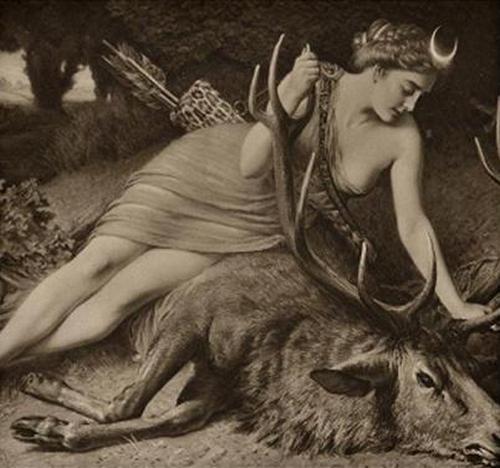
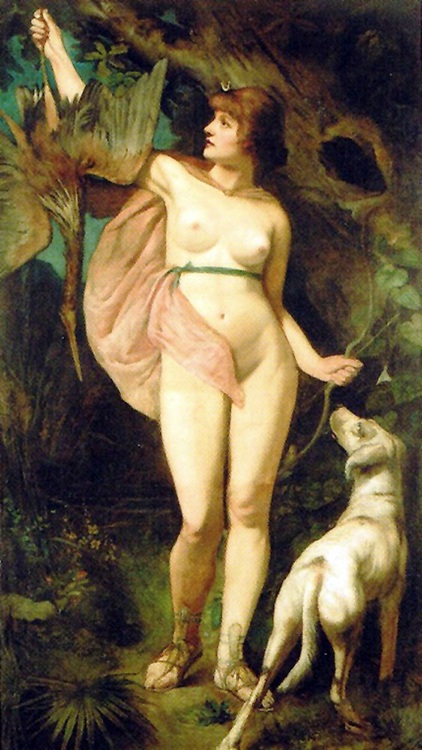
Diana is the goddess of the hunt. She is also the goddess of the moon. And she is the goddess of the process of birth. In her, the power for livelihood, for the ebbing and flowing of tides, and for the creation of new beings come together. In her, masculine and feminine energies combine, and it is this balance that gives her so much power.


dianawithanimalcrescent


I’ve been thinking about Diana this week, not just because her name is the word for tonight’s event, but because I feel that her particular kind of warrior spirit is needed in our world right now. Hers is the warrior spirit that stands up against the would-be warriors who say that background checks aren’t necessary, that the solution to weapons is more weapons, that the solution to violence is to meet it with more violence. I’ve been thinking about her because her warriorship is not about using her power to benefit herself; it is not about killing innocents; it is not about encouraging war or bloodshed. Her warriorship is about living from the marrow of the bone, the tender tissue of the heart. Her warriorship is about expressing the fiery aspect of her being without entirely letting go of the reins. Her warriorship about being assertive but also compassionate. Her warriorship requires us not to back down from that which is right but also not to meet those who oppose us with unchecked anger. We will meet them with our minds, with the strength of our spirit rather than swords and shields, rifles and semi-automatics.


In 2011, the United States’ military budget totaled 644 billion dollars. We praise our servicemen  and women, but when we see images of them, we don’t so much see their human bodies as we do the items that cover them: guns, magazines, helmets. As a culture, we praise their power and bravery but when they suffer, we refuse to see their humanness, we refuse to recognize that violence does damage to everyone involved. We only honor the fierceness of these warriors without acknowledging their tenderness.


“I came to the Greeks early,” Edith Hamilton told an interviewer when she was 91, “and I found answers in them. Greece’s great men let all their acts turn on the immortality of the soul. We don’t really act as if we believed in the soul’s immortality and that’s why we are where we are today.”


Diana of Versailles, Leochares

Diana of Versailles, Leochares


In it’s most simple definition, a warrior is a brave or experienced soldier or fighter. It is up to us what we fight for. Because being a warrior at its core is not about death and is not about killing. Being a warrior is about responsible use of one’s power and energy. To be a warrior is to act with bravery and courage and to make wise choices in situations of extreme pressure.


It’s not that we don’t need warriors. We desperately need warriors. But we need the kind who soldier for love, compassion, and understanding.


When I was fourteen, I might have thought that a goddess could not be charged with the duties of hunting and also of midwifery. I might have seen these powers emerging in Diana as completely contradictory. But I don’t think that anymore. Both hunting and childbirth require intense physical and emotional strength. Both require fierceness working alongside wisdom and compassion. In both rituals, there must be encouragement, there must be patience, there must be integrity, there must be a time to hold still and a time to push forward.


–Lisa O’Neill, written for The Dictionary Project Presents!, April 19, 2013


Diana, goddess of the hunt and the moon, Hans Makart

Diana, goddess of the hunt and the moon, Hans Makart


Diana bathing with her nymphs, Rembrandt

Diana bathing with her nymphs, Rembrandt


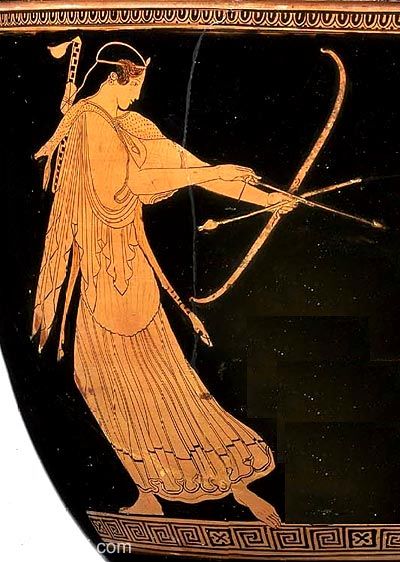
Artemis

Artemis


Diana and Cupid

Diana and Cupid


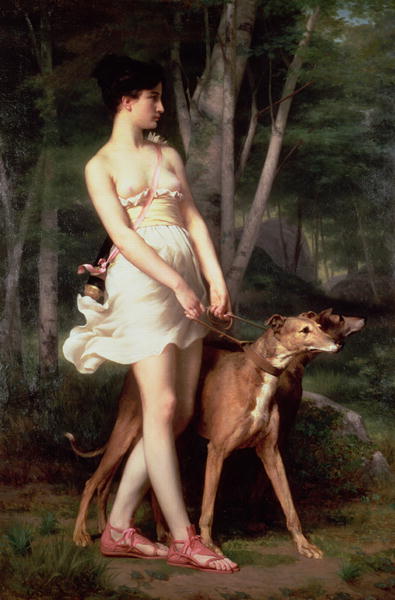
dianadogs


Diana, David Swift Photography

Diana, David Swift Photography


Leave a comment

Filed under the dictionary project presents