jad·ed

jad·ed (jā-dəd),  adj. [pp. of jade, v.I],  1. Tired; worn-out; wearied.  2. Dulled or satiated, as from overuse.

The interesting thing about language is how just one letter can create a seismic-size shift in meaning. For example, jaded is a word that means disillusioned, worn down, made dull, apathetic or cynical. One form of the word “jade” is also a verb signifying these sentiments. But the noun version of jade is of course, a gem, a green natural stone that in Chinese culture is revered for the qualities it signifies.

When I think of certain aspects of my life lately, I think of the grooves that form in wood after wheels have run over the same patch over and over again. My creative life feels as if it has stalled. I have moved to a new house and although it is beginning to feel like home, there is more I want to do to personalize my space and make it my own. After some difficult experiences over the past few months, including the break-ins I wrote about here on the blog, I don’t feel like I have the energy or inventiveness to jump the track.

So, I reordered a Feng Shui book I owned years ago in the hopes of at least manifesting what I want in my life in my personal space. Maybe by being intentional about the qi (pronounced chee) in my house, I thought, I would find some insights into what to work on now. Feng Shui literally translates to “wind-water”. Feng Shui, for those unfamiliar, is an ancient Chinese practice in aesthetics that is based in the idea that the energy in your home can be enhanced by the ordering of your home and the placement of the items within it. With intention, you can enhance areas of your life. Your space is divided into baguas, or zones. There are nine baguas: prosperity, fame & reputation, relationships & love, family, health, creativity & children, skills & knowledge, career, and helpful people & travel.

Jade Plant, photo by Matt Baume

For each, there are associated colors, elements and shapes that can be used to enhance the area. By enhancing the qi in your space, you enhance the qi in your life.

I think there is something to this stirring of energy. It makes logical sense to me that the way in which our home is structured would affect our internal structures. I think most readily of clutter. When clutter infests our homes, it also takes up space in our lives. Instead of taking the time needed to do some clearing, we live with the knowledge that there are bills to be paid, paintings to be hung, dishes to be attended to. And those items and the knowledge of them takes up psychic space that could be better used focusing on more important matters. If we neglect the spaces we live in, that neglect can wear us out.

The first year I lived in San Francisco, my room was painted a fluorescent green color. This green was a compromise with the prior resident, who agreed to paint over his one royal blue accent wall with this green. “I was envisioning the colors of the earth when I painted,” he told me. “Uh huh,” I responded. It was hideous.

I intended to paint over it immediately, but little did I know that I was entering one of the most difficult periods in my life. I had a hard time functioning much less considering things like decorating or qi (maybe I should have). So through that difficult time, the fluorescence remained. When I was starting to come out of it and began to reconsider how to organize my space to restore balance and wellbeing in my life, I finally went to the hardware store down the street and bought some paint.

I don’t remember the chip name, but I picked a sagey, jade-toned green. Green has always been one of my favorite colors. I remembered that it was said to be a calming color, fitting for a bedroom. I just needed a shade that suited me.

Chinese Jade

In Chinese culture, jade symbolizes beauty, nobility, perfection, constancy, power, and immortality. There is a Chinese saying that states: “God has a value; jade is invaluable.”  Stones have been found in the country that date back to 5,000 B.C. Whomever wears jade is believed to be protected from misfortune (Could it be said that in wearing jade, this person is “jaded”?)

Chinese Jade

I wonder what attracts me to this shade of green. The color is pleasant to me. It reminds me of Louisiana, of the color of leaves when lit by the sun.

I know for sure that it wasn’t repainting my walls that made me reconnect with important parts of myself that had been neglected. I do know that when it was time to paint, I felt a sense of urgency about it. I went from waiting a year to take care of it to feeling like I needed to paint immediately. So, I bought the paint and brushes, moved all my furniture to the center of the room, draped the floor and the furniture with dropcloths, and began to cover the walls with a new color.

When I was done, my arms were covered in specks of jade that would take a week to finally come off. I found them funny, these stubborn bits of paint. While I tried my best to scrub them off, I also took a kind of pleasure in the testament to small changes I was making in my life.

I know for sure that painting my walls didn’t change my life. But I also know for sure paying attention to my environment was a step in taking care of myself and my needs. I was paying attention to all the spaces I lived and moved and breathed in, the spaces without and within.

My room in the Western Addition, San Francisco
 

Leave a comment

Filed under weekly words

Germany

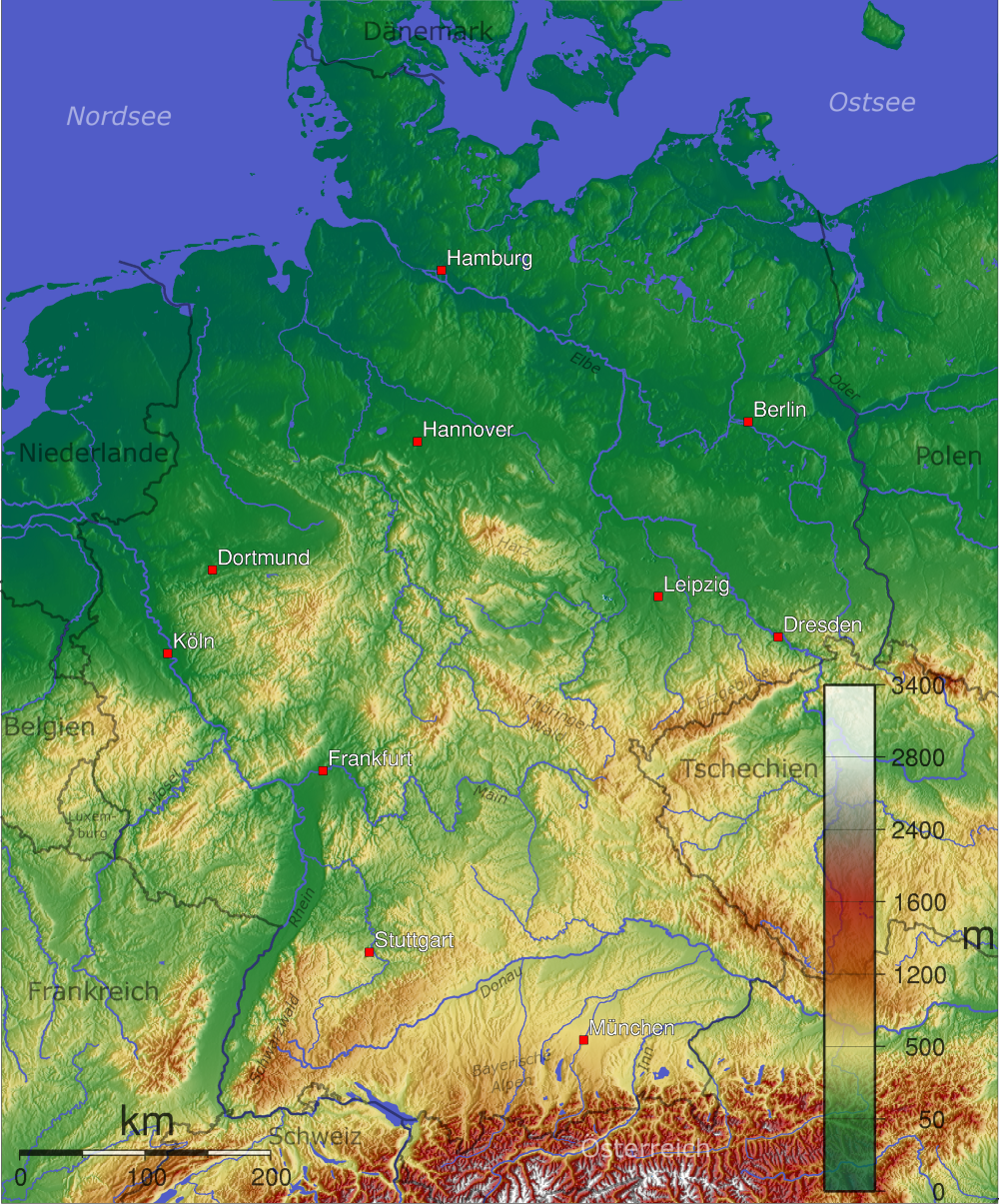
Germany* (jûr m -n ), n. a country in north central Europe, on the North and Baltic Seas; area, 182,471 sq. mi.; pop., 65,899,000 (1946): in 1945, Germany was divided into four zones of occupation, administered respectively by France, Great Britain, the Soviet Union, and the United States, in 1949, the United States, British, and French zones were constituted as (the Federal Republic of) West Germany and the Soviet zone was constituted as the East German Democratic Republic (East Germany): capitals, Bonn (West Germany), Berlin (East Germany): German name, Deutshland: abbreviated Ger., G.
*reminder that the dictionary I typically pick from is from 1955

What is it that defines a place? Its borders? The way it is placed in our collective memory, in our history books? How is that a place comes to conjure certain emotions? What about the way in which people use the land? What about the personalities, values and passions of the people that live there? How do these people’s way of life embed the place with meaning? The study of geography fascinates me because of all these questions. When people move thousands of miles from their native land, why do they often choose places with similar topographic features or climate? How do their bodies or souls gravitate there? How do they know where to go—to the place that feels most like where they come from, the home they left behind? And how does what humans do in a given space define it permanently?

Although my last name is Irish and my mother’s side is mostly Acadian French, a good chunk of my ancestry is German. And I remember when I found this out not wanting this to be the case. I had learned about the Holocaust and was horrified by the stories I read, the black and white photos I saw. I remembered the image that Elie Wiesel wrote of in Night that described babies being thrown up in the air and speared by German soldiers bayonets. And I wanted to not be from there, from the place that produced ethnic genocide, suffering, death, pain. I wanted to not be associated with or related to people who were able to participate in the mass slaughter, in a very methodical and personal way, of millions of people solely because of the God they worshipped and the way their features were shaped.

In knowing that my ancestors came from there, even if it was long before the Holocaust, it somehow made them and me complicit or related to these unimaginable actions, this behavior so divorced from the human capacity for compassion, understanding, kindness. So I found pride in my Irish roots, my Cajun roots, and I ignored my German ones.

And I wonder how we untether a place from its history. We can’t, I guess. And we shouldn’t. But what if a place only becomes about the painful parts of its history? I grew up in the South, in Louisiana—a place lush with cypress and magnolia trees, with humidity, with music streaming out of bars and out of the bells of brass instruments. This is also a place with long ugly celloid scars from the scourge of slavery and the racism that followed (and continues to follow) long after the Civil War was over. And yet it is my home. There are so many things about my home that I am proud of. I see that it is not one thing or the other, not evil or good, not about suffering nor about the overcoming of it. This place, as with all places, is defined by it all.

I also don’t know how to reconcile the fact that the suffering of a place and its peoples also shapes and informs the important and positive cultural identification of that place. Before Katrina, New Orleans was 65 percent African-American, and it is the spirit, music, family and cultural values of the African-American community that is the foundation of the streets we walk on back home. Without this community, New Orleans is not New Orleans. And this community is there because their ancestors were brought over to be slaves to white colonizers.

Germany is not just the Holocaust, but the scars are there. And the scars are visible not only to Germans but to me and the rest of the world. When I went to Germany on a high school trip to Europe, we went to two places. We walked around the cobblestones streets of Munich, where we visited the Hofbräuhaus and watched the Glockenspiel tell the hour in the evening. And yet all the time, I was thinking of the next place we were to visit: Dachau. It was raining and cold when we visited Dachau. We walked around and saw the empty plots, with wooden borders to show where the camps had been. We saw one of the brick ovens (a reconstructed one? A remaining one? I don’t remember now).

At some point, I distanced myself from the crowd and went with my umbrella to stand off alone taking in the scene. I remember thinking: This is where the Jews were persecuted. This is where they stood in rain and cold like this except with threadbare clothing and shaven heads. And I wanted more than anything to cry. But I couldn’t cry. The truth was that I could not feel their pain. How could I? I had never had to experience the sort of suffering they had undergone. So all I could do was stand there and try to understand.

I have had a hard time writing this post because whenever I thought of Germany, these thoughts came to my mind. And I thought, is that all there is to write about? I guess that’s not what matters because this is what, I suppose, I needed to write about. That my Grandma’s name is Rothermich. That my great grandfather’s name was Hupfer. And that it is problematic to come from a place—from multiple places—in which human beings were impossibly cruel to other human beings.

The key to understanding a place, I suppose, resides in the ability to not only read or understand but absorb the feeling of it all as much as possible. To see the broken down barns as well as the stately mansions, the dead trees and the ones that bear fruit. I guess it is about never forgetting the human-created sorrow that will never be absent from the place and yet to not allow that feeling of sadness to be the only feeling. To know a place, in my mind, is to know that it is a space in which both hurt and healing can occur. What happens in that space, all of it, should never be forgotten. And our responsibility to that place is to try to tip the scales, to be better to each other than future generations were and to repeat their kindness but not their cruelty.

Leave a comment

Filed under weekly words

Ash Wednesday

photo by Bob Thayer for The Providence Journal


Ash Wednesday, the first day of Lent and seventh Wednesday before Easter: so called from the practice of putting ashes on the forehead as a sign of penitence.


Remember, you are dust and unto dust you shall return.


The words were a litany about life, about death, and about sins that need forgiving.

I took these words to heart, with the seriousness and face value only possible from a small child. And as the years went by and the words were repeated, I learned not only that I was going to die but that because of this death, I better repent from my sins. Oh my God, I am heartily sorry for having offended thee.

What are the sins of a five-year-old, seven-year-old, eleven-year-old? Breaking a glass? Saying a bad word? Talking back to a parent?


Remember, you are dust and unto dust you shall return.


The occupation of chimneysweep is (debatedly) one of the oldest in the world. The act of collecting soot, of piling dust, of preparing the hearth for a new fire.


Remember


The ash felt dirty on my forehead. Oftentimes, I would look in the mirror and forget, wondering how the smudge got on my forehead, going to wipe it before remembering that today is a day for penitence, a Holy Day of Obligation.


Remember, you are dust.


*How often should my chimney be cleaned?

All chimneys should be inspected yearly by a certified professional and cleaned as required. The inspection is necessary to ensure that the chimney has adequate draft, is free of debris and cracks, has no loose or missing mortar joints and is otherwise free of damage.


Remember, you are dust.


I knew that the ashes came from the palms that were folded into pretty crosses for Palm Sunday. I knew this because my father told me so. One time, when we missed Ash Wednesday services (what kind of sin is it to miss a Holy Day of Obligation meant for repenting one’s sins?), my dad took the folded palms from the previous year and burned them in a small ceramic bowl. Then he pressed his thumb into the dark gray specks and moved his finger from left to right, then up and down on my forehead. He did this because I was worried. I thought God would be irreparably mad at me for not going to mass.


Remember, you are dust.


*Will the chimney sweep cause a mess in my home?

No. By cleaning the chimney from inside your home we maintain control over the dust. All our equipment is laid out on clean drop cloths in front of your fireplace. The hose of our chimney vacuum collects the debris as we brush the chimney.

We can only brush the chimney as fast as our vacuum collects the dust.

The dirtier the chimney flue, the slower we brush.


Remember, you are dust.


When I was twenty, I spent a semester in Rome. While in Ireland on spring break, a friend and I went to Dublin. The only day the Guinness Brewery was open during our time there was on Wednesday, Ash Wednesday. She was Episcopalian and I Catholic. We found a church. I remember the urgency of finding somewhere to receive ashes. Then, we went to the Guinness Brewery. We took pictures with our heads inserted in ridiculous old advertisements with parrots holding pint glasses. At the end of the tour, we drank our free pints with the marks on our foreheads, marking a day of penitence and abstinence and fasting. Later, I joked about this time to friends. Wasn’t that funny? But at the time, I remember sipping my pint slowly, aware of each swallow as it sank down my throat.


You are dust.


*Does a chimney sweep remove the black from the wall of the fireplace?

No. We can only clean off the soot on the surface of the brick. Each time you burn a fire, this black changes according to how hot you burn your fire.


Remember, you are dust and unto dust you shall return.


I don’t remember the last time I went to Ash Wednesday mass. I still observe Mardi Gras, as any good New Orleanian should. But I don’t feel the desire to have ashes on my head to remind me of my mortality or of the need to be a good person. Sometimes though, when I remember, I fast. And the absence of food in my belly, that gnawing feeling, reminds me of what it means to be cleared out, cleaned out, purified and also, of my need for sustenance.


Note:   FAQ on chimney-sweeping taken from Clements Chimney Sweep and Repair in Feasterville-Trevose, Pennsylvania.

6 Comments

Filed under weekly words

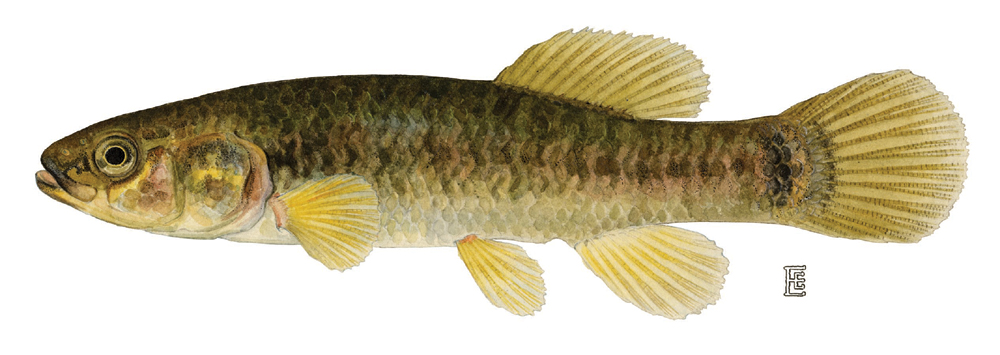
mud·min·now


mud·min·now /ˈmʌdˌmɪnoʊ/ [1865–70, Americanism]  n. any of several small, carnivorous fishes of the genus Umbra, found in muddy streams and pools.

Continuing in the elusive word of the week club, this week is “mudminnow.”

(Sorry for the late posting, hectic does not even begin to describe my last month)


What can be said of the resiliency of creatures on this planet?


I remember watching the Oceans movie with horribly cheesy narration by Pierce Brosnan. The voiceover was awful, but the footage itself was breathtaking: In part for the revelation of underwater creatures that we had never seen before. And in part for the revelation of the crazy adaptive features these creatures had to allow them to survive in deep deep water.


look at love
how it tangles


Mudminnows make their home in the muck. They thrive in it, actually.


They live with low levels of oxygen and low water temperature. And when they need to escape, they escape into layers of soft sediment. They bury themselves underground.


They have adapted to do so.


look at spirit
how it fuses with earth


Mudminnows come from the genus Umbra. In Latin, “umbra” means shade. It is the root word for antumbra (negative shadow on the Earth’s surface as the Moon moves across the face of the Sun), penumbra (a partial shadow where the cast light is partly cut off by a body between the light source and the shadowed surface), umber (a brown earth darker in color than ocher and sienna due to manganese and iron oxides, used as a pigment by painters because it is permanent), and of course, umbrella.


In the case of the fish, umbra likely refers to where they choose to live most of their lives, underground, in the shadows.


why are you so busy


These are fish that are hardy. They are resilient. They can make it even with very little light, very little air.


with this or that


Bogs, marshes, small ponds, ditches, slow-moving streams. These places, undesirable to many fish, are where the mudminnows make their home.


or good or bad


They are tiny, approximately three inches long, and perhaps it is because of their size that they have adapted the way they have, sinking underground and away from predators.


pay attention


They also survive times of low water levels by burrowing into the ground.


to how things blend.


(Notes: Some definitions for “umbra” words taken from http://www.billcasselman.com/wording_room/antumbra_umbra.htm. Italicized lines from translation of Rumi by Nader Khalili)

1 Comment

Filed under weekly words

sco·to


sco·to /sko-to/ [<Gr. skotos, darkness; akin to Eng. shade] a combining form meaning darkness

This week’s post is by writer Elena Aguilar.


scoto:

prefix meaning darkness.


But it wasn’t the darkness that caught my attention; it was the light that streamed through the corridor and bounced off the freshly polished floors, scrubbed tile walls, and gleaming lockers. The light flooded the space, suggesting a way out of the despair that has long engulfed this middle school deep in East Oakland, in the flatlands inhabited by only the dark-skinned, the dark-haired.

I have worked in the Oakland Unified School District for fifteen years, many of those as a teacher and now as a leadership coach, supporting principals to transform their schools. I arrived at Frick Middle School early. I like to be early. In the last few years, this school has slowly, steadily been getting better. I had time to appreciate the generic appearance of the hallway, devoid of the tagging that will soon be scrawled on walls. The summer cleaning was complete; the new year would start in a few days.

I meandered into the office, where I met the administrator who was expecting me, where I was told: “One of our kids was killed last night. An eighth grader, 13 years old. He was walking down the street with his brother and was shot.”

I want information, I seek it out. But as the details emerge, the official and the unofficial, they make no sense, none at all; they create a sad, messy narrative of poverty and violence, another grim end result of centuries of institutionalized racism and classism. Yet the details also raise uncomfortable questions about individual responsibility, because ultimately, one man chose to pick up a gun and kill another human being. I reach for academic theories, spiritual explanations, words and meditations, but they offer nothing to quell the senselessness.

It is very unlikely that my own son, my own dark-skinned child, will be another black man killed in the ghetto. I know why my boy is most likely assured of a different outcome than thousands of other boys in Oakland. And yet, on a fundamental level, I do not understand why I will sleep well tonight while Jimon Carter’s mother will not.


scotopia:  vision in dim light; the ability of the eye to adjust for night vision.


I returned to Frick the following week. The principal reported that the opening days had been smooth, that grief counselors had been on site, and that learning was underway. “We have to preserve this place as a refuge,” I was told. “We try to keep it as normal as possible.”

Jimon was shot three blocks away on a bleak boulevard traversed by hundreds of kids every day on their way to and from school. I stood on the narrow sidewalk, imagining the body of the teenager on the ground. When he saw Jimon fall, his brother ran to get an uncle who was nearby. The uncle described holding the boy: “I wanted to see if he would flinch to let me know he was there, but there was nothing there. His eyes were closed, his mouth was open, and I saw the hole in the back of his head.”

A couple of girls approached me. “Did you know Jimon?” asked the tall one with long braids. “He was my neighbor.” They exchanged memories of Jimon and his identical twin brother, Jivon; then they listed the men they knew who’d been shot, stabbed, beaten, and “messed up” on the streets of East Oakland.

“I wonder if he saw that light when he died,” said the short one. “My granny told me you see a bright light and you just have to go into it and that’s where you get to find all your loved ones who’ve already passed.”

I had to leave. I had to pick up my boy from school. We’d walk the three blocks home, along streets lined with oak trees and rose bushes, where no child has ever been gunned down, where there are no memorials to remind children of their murdered neighbors, memorials that another mother walking her six year old home from first grade will have to explain.


Elena Aguilar is a writer and educator in Oakland, California. She writes about education for Edutopia www.edutopia.org/spiralnotebook/elena-aguilar and has a personal blog at www.elenaaguilar1.wordpress.com

Leave a comment

Filed under weekly words

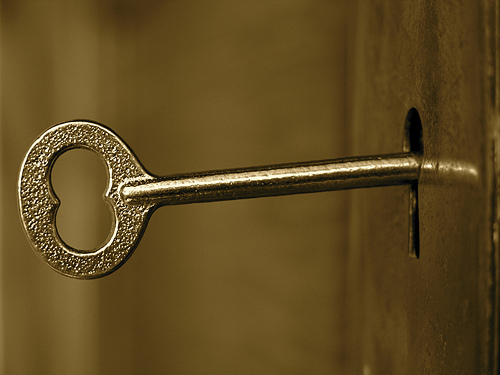
key·way

key·way (kēˈwā) n. 1. a groove or slot cut in a shaft, hub, etc. to hold a key (metal piece to fasten a wheel or pulley to the shaft) 2. The slot for a key in a lock operated by a flat key.

*

My childhood bedroom was locked using a skeleton key. I remember holding the wrought-iron key in my hand and feeling there was something exotic about it. The way the key inserted in the keyhole and the substantial turning of the lock was way more satisfying than with a plain old dead bolt. I would stand there, only slightly taller than the knob and turn the key back and forth, practicing locking and unlocking.

I knew the key was old. I knew it was different than other keys. I was a kid and had neither the fear required to lock my door or anything to hide, but the fact that I had this thing that could give me privacy, that could keep my things and myself stored away, made me feel important.

That room no longer has a door, no longer has walls. The floor that had been covered in brown carpet is stripped down to bare wood. And the key is gone as well. I’m not sure when I lost it or where it got tossed, amongst knick-knacks and cleaning supplies in the bathroom closet? In a spare drawer?

*     *     *

The front door of the house had been warped by the humidity so that you had to hold it in a little when you turned the key in the front door. Otherwise the latch wouldn’t lock or come unlocked.

I remember fighting with that lock over the years:

When, on a trip from the grocery store as a child, my mom handed me a key and asked me to unlock the door.

When, returning home from a date in high school, I tried and failed to make a seamless and graceful exit and had to resort to banging my hip up against the door.

When I came home for holidays on break at college and moved in and out of the house, going out to hear music and then returning home to visit with my parents.

When I unlocked the front door to bring in Christmas trees and furniture, to let in family members, best friends, and potential suitors.

When I unlocked the front door to allow myself inside.

*     *     *

The side door, like the front door, was wooden with glass panes. It used to be the back door but then my parents added on to the house when I was eight. We hardly ever used the side door except when going to the side yard to or to the shed. Sometimes, we would open the door to let the dog out.

Now, when you look in, you can see crumbs of sheetrock lying on the ground. The rooms are no longer rooms but a skeletal wooden frame. The house looks much smaller this way, without all of our stuff to take up the space.

You can see straight through from the living room to the dining room to my bedroom to the guest room. You can see all the way to the front of the house to the kitchen, without walls to block your view. You can see the entire house at once and yet you see none of it.

*     *     *

When we arrived there on October 1, 2005, there was a large yellow X spray painted on the front of the door. And there were numbers. The numbers were code for rescue workers. Zero dead bodies. Zero dead animals.

The house had been filled with five and a half feet of water. But now the water was drained. So there was only the reminder of the water, in the form of wet furniture and mold covering the walls.

We put on masks and went in through the side door. We surveyed the damage. We carried our possessions out the front door and dumped them in a heap on our front lawn.

When we left that day, my dad locked the front door. Out of habit? Surely there was no longer anything worth taking.

*     *     *

Every time I come home, I drive to my old neighborhood. I park in front of my childhood home. I get out and walk up the front stairs and peek through the front door. I don’t know what I am expecting, to see our house as it was before brought back to its original state? Maybe I just need to be reminded of what’s gone so I can handle missing it.

*     *     *

I talked to my mom just an hour after my parents had sold our home to the city of New Orleans. They had met with a Road Home officer and after they signed the paperwork, they gave her the keys to the house.

Afterwards, my parents went to the house to say goodbye. My mom told me that before she left, she walked around the house, taking pictures.

I picked up some stuff we’d left at the house, she said. Remember the books there. I took all that. And I don’t know why but I took a picture of all the doors. I just kept thinking of that image. Doors closing. Doors opening.

*

1 Comment

Filed under weekly words

di·u·ret·ic

di·u·ret·ic /dī’ə-rĕt’ĭk/ adj. : tending to increase urine flow—diuretic n.

[NOTE: Okay, seriously, dictionary gods?!?!?! Last week, “reins” and now “diuretic?” These last two words were really the first ones that I have felt pretty stumped by. I mean, what does one really care to write about “urine flow.” I can answer for myself, nothing, nothing at all. But rules are rules. This was the word I landed on this week. I could try to fool y’all and say I landed on the word just below it, which was “diurnal”: daily; of, relating to, occurring, or active in the daytime. That would be pretty easy to write from. But that wouldn’t be honest. But no matter the word, I will not subject you to talk about my own bathroom habits. So please don’t be concerned about that.]

This is maybe going to sound silly or too big of an analogy to make here, and you have every right to think that and to stop reading. But I think sometimes about bodily functions, our response to these functions and what they have to say about the ways in which we move through life. For example, I think about the sensation of having to go to the bathroom when the situation becomes urgent. It requires your entire focus. You can’t imagine a more uncomfortable feeling. You are going to explode. You are literally going to die.

And then the moment you go, you feel that instantaneous relief. It is hard to conjure or even imagine the feeling of hopelessness and anxiety that existed a mere thirty seconds before.

I feel that way about life sometimes. This is especially true because right now I am in the midst of one of those “gotta go” moments. I can’t even begin to explain the amount of brokenness I have experienced and witnessed in the last few months (and even more so in the last few weeks)—broken relationships, broken engines, broken windows, broken words, broken trust. Everywhere, everything is broken and I’m not sure what to do. It feels silly and naïve to just pick up the pieces: almost like, what is the point when something else is bound to break again? Why not just live in the battered shell? Why not just abide in the wreckage?

And it is hard for me, in the midst of these experiences, to have any comfort in the idea that relief will come. When? For how long before something else happens? For how long must I endure this feeling of powerlessness or the deep desirous need for relief whose arrival I cannot predict? I don’t know. And I don’t have a ribbon with which to tie up this post or answer these questions. These feelings are very real and palpable to me.

I am someone who believes in redemption and repair, and yet in this very moment, all of this feels so far away from reality. The only thing that gets me through moments like are the little things that are not broken. The phone call of a friend to check in. The offer of a safe place to stay or a car to drive. A compassionate embrace.

And these little gestures, these moments of connectivity do not do away with the brokenness. The pieces are too small to fill the cracks. But they do help clot the bleeding. They do hold back the dam from bursting further. They stop the cool air from rushing in.

Someone once told me that a religious leader was talking about the beauty of a broken heart. It had to be broken open, he said, so that more love could pour in, could pour out. I have definitely experienced moments of brokenness in my life that led to more fullness and beauty than I could have ever imagined. But that didn’t make the breaking nor the putting back together any easier. That didn’t make me know that relief would someday come. Maybe there is something about the intensity of these moments, their never-ending quality and the feeling that we might not make it through them, that makes us truly love the act of letting go.

1 Comment

Filed under weekly words

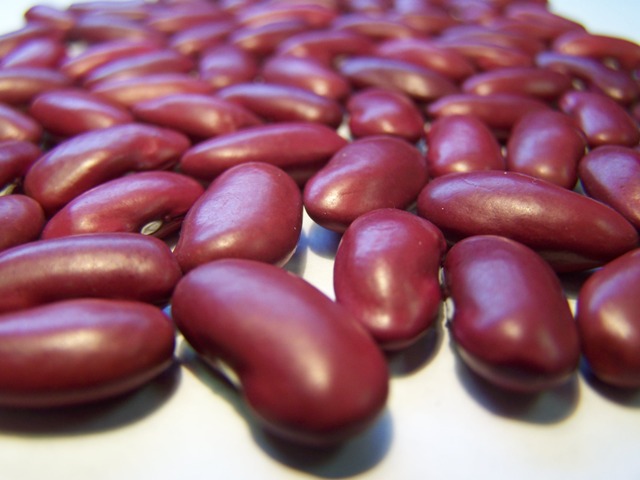
reins

reins (rānz) n. pl. [ME. Reines; OFr. Reins; L. renes, pl. of ren, kidney], [Archaic], 1. the kidneys, region of the kidneys, or loins 2. the loins as the seat of the emotions and affections; hence 3. the emotions and affections.

In using a dictionary from 1955, there is always the possibility of coming up with words that are now defunct or seldom used. However, for this week, I came upon a word that I was familiar with but whose listed definition is no longer associated with the word.

After searches on multiple online dictionary sites, I was unsuccessful in finding this dictionary definition anywhere. Everywhere reins involved horses and the strap used to make them yield. It was about the act of restraint, of pulling back. But a search with reins and the word kidney revealed that the word in this context was used often biblically:

Psalms 16:7 My reins also instruct me in the night.
Proverbs 23:16 My reins shall rejoice.
Psalms 7:9 God trieth the hearts and reins.
Isaiah 11:5 Faithfulness the girdle of his reins.
Job 16:13 He cleaveth my reins asunder.

In ancient Hebrew tradition, the kidney was of equal value to the heart. According to Dr. Giovanni Maio at the University of Lübeck’s Institute for the History of Medicine and Science in Germany, the kidneys were where the deepest emotions and passions resided. Kidneys were representative of the secret inner world all humans have and were a metaphor for deep reflection. Kidneys were also referenced as both a place of great strength and also one of great vulnerability.

It is compelling then that the definition of reins that we use currently relates to and tempers the older one. Reins are something that facilitate control: of a horse, of a passion, of our innermost desires. Instead of, as it was, the organ that produces those desires themselves.

In traditional Chinese medicine, the kidney is responsible for growth and maturation as well as for reproduction. So, when the kidney is malfunctioning or imbalanced, the person suffering can emotionally manifest this by feeling fearful or isolated or insecure.

I guess it makes sense too that kidneys were seen as the site of passions because when kidneys are working properly, they regulate the body, keeping it balanced. They filter the system and get rid of waste. And when they don’t, there is build up. The rest of the body suffers. These are passions that need to be honored for their power and also controlled.

1 Comment

Filed under weekly words

port⋅ance, v2


port⋅ance (pôr/t’ns), n. [Early Mod. Eng. < porter, to bear, carry; cf. –ANCE], [Archaic], conduct; bearing; carriage; demeanor

This post by the fabulous Drew Krewer


:::::::::::::::::::::::::::::::::::::::::       :::::::::::    ::::::::::::::    : : :     :

From Kindergarten until I left my small, rural school in Georgia as a Junior, the same man took my yearbook photograph every year.  He had a stuffed frog named, appropriately, “Mr. Froggy.”  For all the kids who didn’t want to smile, Mr. Froggy hopped out of his frog cave to be animated by a wide-faced, mustached Mr. Photographer.

I didn’t want to smile.  At least in the way he wanted me to smile.  To him, smiling meant teeth, and I really didn’t want teeth in my pictures.  When it came my turn, I would give a slight, tight-lipped smile, and out would come Mr. Froggy.  The photographer would switch on his goofy frog voice––personable, perhaps child-friendly on the surface, but beneath it there was this impatience, this sense that I was the one cattle who wouldn’t listen to his herding call.  Finally, he would take the picture anyway, teeth or no teeth.  I think over my school career I alternated between the tooth and non-tooth yearbook photos, depending on how annoyed I was with the frog voice that year.

This scenario has continued to happen throughout my life––why the long face?  Cheer up.  Give me a little smile.

Just because I don’t walk around with a continual, pep-rally grin on my face does not mean that I’m sad.  In fact, I’m content 80% of the time.  Well, maybe 70%.

But why are people, even strangers, so concerned about it anyway?  Maybe that’s what the song “It’s My Party and I’ll Cry if I Want To” is really about:  the freedom to come off as sad or as happy as one damn well pleases.  Maybe a happy demeanor became expected with the rise of consumerism, salesmanship, and retail; the expectation that if one looks happy enough, talks friendly enough, stands upright enough, that the customer will feel happy and perfect, too.

Stop frowning.  You’re invading everyone’s HAPPYSPACE!

But I’m not frowning.  I’m content.

One day, I was driving back home with a friend, and she asked me about the word “content.”  I had always had a positive relationship with the word “content.”  But my friend said, “Content means that things are routine, normal, and satisfactory.  Happiness is so much more than that.”

So, maybe people just aren’t content with being content anymore.  The world can never be too Technicolor.  A world flash-flooded with routine yet vibrant compliments.  A world where Mr. Froggy hops out at unsuspecting, content strangers, convincing them that no matter how wide their smiles may be, they’ll never be wide enough.


*Drew Krewer’s work has appeared in Trickhouse, Poor Claudia, Pequod, and Quick FictionArs Warholica, a chapbook of poetry, was recently published by Spork Press.  He holds an M.F.A. from University of Arizona, where he received the Academy of American Poets prize.  He runs the multimedia culture site mars poetica.

Leave a comment

Filed under weekly words

port⋅ance, v1

As I mentioned in my last post, this week I will be featuring posts by guest contributors who are offering their own insights and observations on the first word ever randomly selected for the dictionary project:

port⋅ance (pôr/t’ns), n. [Early Mod. Eng. < porter, to bear, carry; cf. –ANCE], [Archaic], conduct; bearing; carriage; demeanor

This first post is from Julie Lauterbach-Colby*.

“Lines Appearing, Distant Points”

We study the line. From point A to point B we have the closest distance. Draw a footpath, map out a solid trail of breadcrumbs. Denote journey and begin.

Intersection of lines, latitude and longitude, a knitting, a stitch. Sense of security; single location of one self in space. I say one, because, can we ever possess our whole selves in any given moment? Denote a journey, a beginning.

We are all familiar with the history of the GPS (I wasn’t). Devloped by the military to deliver an exact point, an exact location. We are talking precision here: the most authoritative mode of travel, point A to point B and nothing else, nothing outside. Similar to (and at the same time, nothing like) medieval road maps.

Matthew Paris, an English monk from the 1200s, was famous for them. He made the maps in likeness to Roman army parchment maps: thin strips, the maps only showing road and important places along that journey. Most often, these journeys were spiritual: how to travel from London to Jerusalem for a holy pilgrimage.

(How to, with accompanying pictures for each: Start in London [A]; cross the English Channel [B]; through France [C, where the whole country was drawn as a single castle with three spires]; into Italy [D]; across the sea [E]; onward to the holy land [J, with a few undeciphered points in-between].)

Notes in the margin of the parchment scaled distance, how long it would take one to travel between destinations. Roads were straight—study the line: from point A to point B we have the closet distance. Nothing exists outside the frame, no chance for wandering minds, no detail for lay of the land. These maps were about getting. About time-management, efficiency. Exactness, with a clear sense of exclusion. As in, “Shoulders back, chin up.” Presentation of one self and oneself. (I cannot seem to stress this enough.)

It was from a fear of its exactness that military personnel insisted that the GPS technology remain hidden from the world citizen. In 199__ the Clinton administration “unscrambled” the codes and put the GPS on the public’s radar.

Take a GPS and map out a ten-mile radius from where you are (your house, your car, your supermarket, your post office, your church) and follow that breadcrumb trail from each direction: go N, NE, E; SE, S, SW; W, NW. Upon arrival, turn 360° and take in the view.

You’re going to this one spot, and it’s a dictated spot. Once you get there, infinite possibilities. The first sea cartographers used x to mark not treasure but danger. Define trespassing: there are a million ways in which I lie.

*Julie Lauterbach-Colby is a writer, teacher and artist living in Tucson. She is currently working on a project that incorporates cartography, mathematical equations and cadavers, and owns her own editing business called Chicken Scratch Editing.

Leave a comment

Filed under weekly words