Tag Archives: dictionary project

es⋅cutch⋅eon

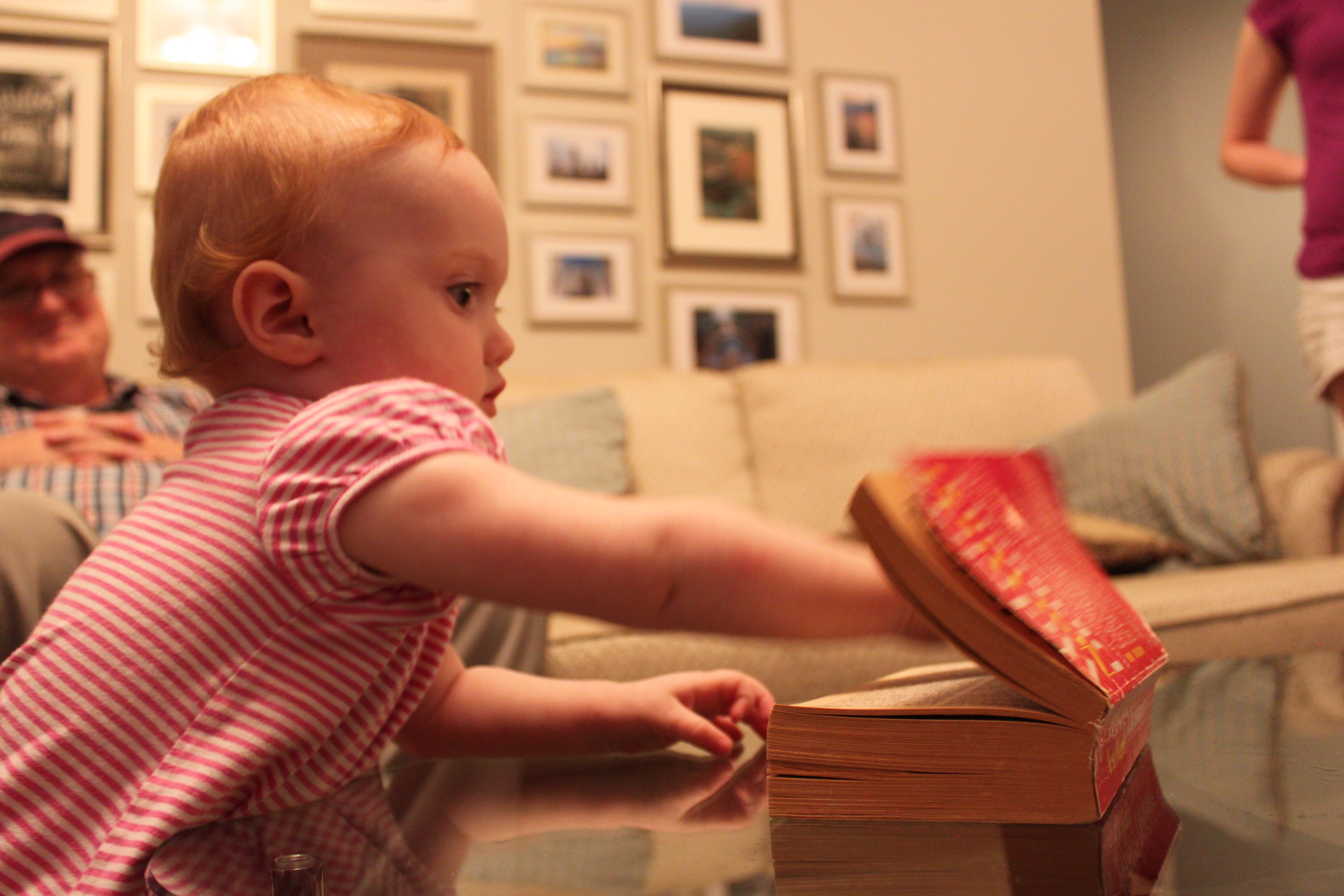
Ellie's first bibliomanced word: escutcheon!

Ellie’s first bibliomanced word: escutcheon!
IMG_0867

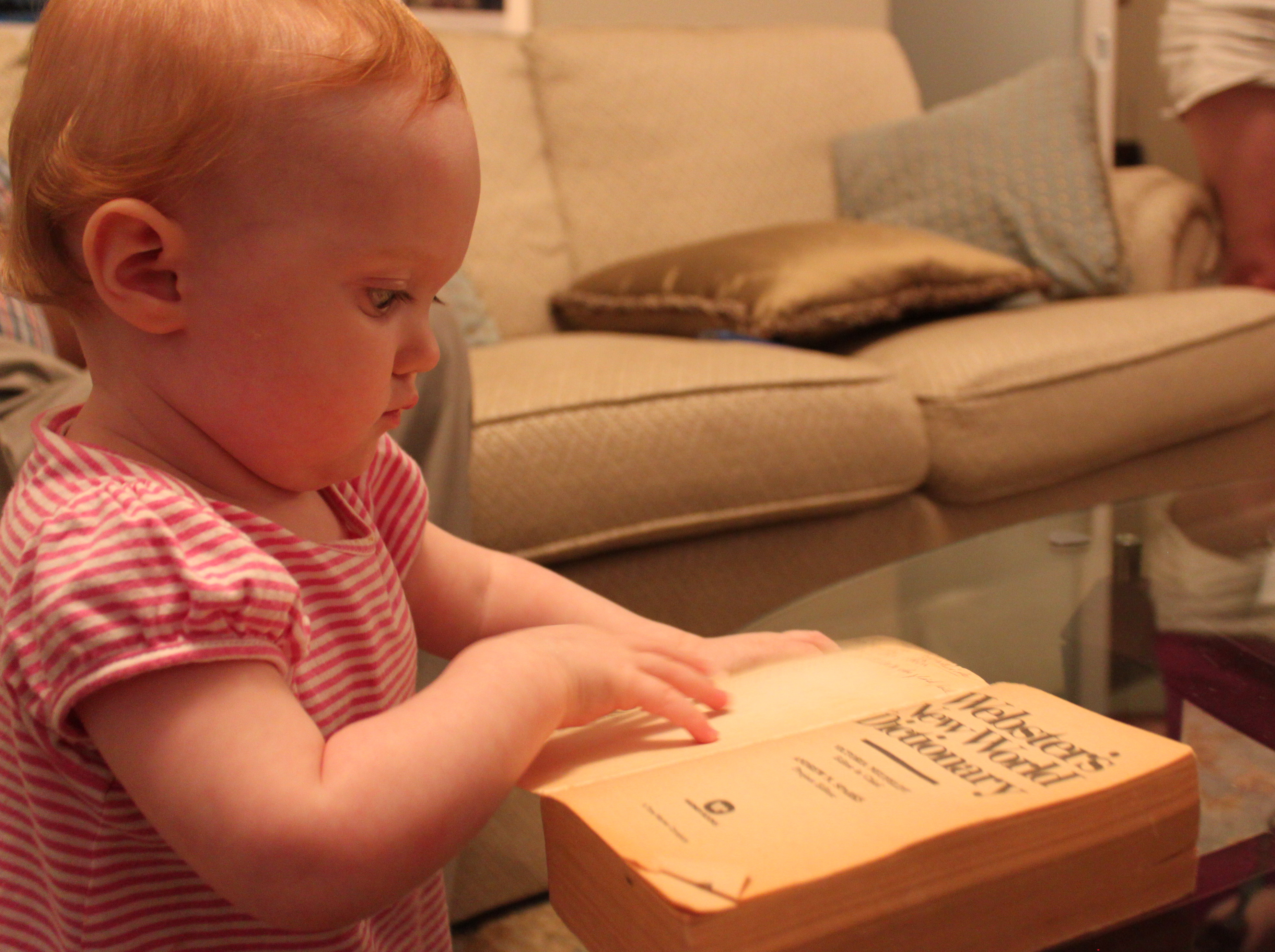
"So, what if I can't read yet? I'm into this dictionary thing."

“So, what if I can’t read yet? I’m into this dictionary thing.”


escutcheon* \is-ˈkə-chən\  n. 

1: a shield or emblem bearing a coat of arms.

2: a flat piece of metal for protection and often ornamentation, around a keyhole, door handle, or light switch.

3 : the part of a ship’s stern on which the name is displayed

*My sweet little niece Ellie picked this word in her first ever bibliomancy. She just turned a year old. I got the chance to visit with her, my cousins, and my aunt and uncle in July in Atlanta.


Growing up as an only child, I spent a lot of time thinking about my proximity to others and about being alone. When I was surrounded by other people, I often wanted solitude. But when I was by myself, I worried about being alone. Sometimes, I was lonely.

It wasn’t until my twenties that I could actually enjoy time spent by myself without the fear of missing out or being left out. I learned when I wanted to spend time with others and when I wanted to be on my own.

In July and August, I had the opportunity to spend time with family. I come from a large extended family on both sides, and I know at times I have taken this family, and the warmth and connection of this family, for granted. There have definitely been moments when I have focused more on our differences than what we share. And in these times, I have felt isolated or judged, as if I didn’t belong. What I have not always realized is that often I was the one who was stepping back and creating rifts, even if this was out of a sense of protection.

Of all of my relatives, I am one of the few to move away, out of Louisiana, living outside the state for the past decade. Most of my cousins live within a mile or two of their parents and in close proximity to one another. There is a beauty to this kind of cohesion, this intimate distance. In my mid-twenties, some part of me knew that only by leaving would I be able to come into my own and discover who I wanted to be. I knew that I must separate from my family in order figure out who I was and how I wanted to build my life. Yet, I also believe that knowing that my parents and my family are there and that I can return at any time is one of things that has allowed me to have the confidence needed in moving away, in experimenting with risks, in encountering old wounds and healing them.

Traditionally, coat of arms were used as a way to identify individuals and clans and to proclaim military prestige. In heraldry, one part of the coat of arms is the escutcheon, where symbolic images are identified that often have to do with the individual wearing the shield. Another portion is the crest, which looks like a scroll, where a family surname is identified. Although typically described as “family crests,” coat of arms are not just representation of a clan or family; one portion of the coat of arms identifies the family and another part identifies the individual family member. At my grandparents’ house, there was a plaque that hung on the wall with the O’Neill coat of arms. In the escutcheon are two lions, representing the tribes of Judah and the lions are upright holding a red hand. The legend of the hand’s meaning was told to me many times growing up. When boats of ancestors were headed for Ireland, there was a promise that the first man to touch the land would rule so one of my ancestors chopped off his left hand and threw it ahead onto the land before the boat came ashore.


oneill

O’Neill Coat of Arms


When I was visiting my aunt, uncle, and cousins in Atlanta this July, my Uncle Danny O’Neill pulled out old family photo albums: ones my grandmother made of she and my grandfather’s courtship, older ones of my grandfather as a young boy, and his mother, my-great-grandmother. My uncle had scanned the pages and pulled them up on the TV. As we scrolled through, looking at these people we came from, I felt a sense of closeness that I don’t know if I’ve recognized before. All of us—with our individual noses, our particular way of seeing the world, our penchant for kinds of food—all of us are made up not only of the same matter as all humans but of particular matter made from shared people. Somehow remembering this grew in me a sense of deep appreciation and gratitude. We may not agree on everything, we may live in different places in different kind of houses, we may have different beliefs or priorities, but we also have in common character traits, upbringings, a shared history. It seems not to matter that this shared history has patches missing. We share both the known and the unknown and somehow the legacy of those people that came before us lives in our blood.

When my grandfather was about my age and already had a pack of mouths to feed, he began taking night classes in journalism. I have his journalism notebook and the attention he took with his notes reveals to me that this was something he deeply cared about. Writing was something he loved and wanted to be better at. My most vivid image of my grandpa is him laying on a couch with a stack of fifteen books on the coffee table in front of him. He was insatiably curious. About everything: psychology, sociology, literature, history, politics. He liked to ask what other people thought and have rousing conversations. I bet he would have made an amazing journalist. As it happened, his father had died young and he had to begin work when he was a young teenager to support his mother and his brother, seven years his junior. He worked as a porter for the Pullman Railroad, packing laundry and shining shoes, and eventually worked his way up to superintendent in New Orleans. When he had made enough money to support a family, he married my grandmother and they had five children.

Somehow, I find some sense of assurance. Because the story didn’t end with him. His second son inherited his curiosity and his love of reading and conversation. And this son’s daughter inherited this from him. I like to think that the passions and creativity of my grandfather did not die with him but rather live on in me. As I write, he is here too, in the blood coursing through my veins and the skin on my fingertips. In this way, family is about more than our individual selves or even the dynamics, both helpful and harmful, that we play out over and over again. Family is an intricate web we are a part of, a web that spans out. And when we die, our dreams and struggles and faith and beliefs are still there in the presence of those we share this link with. This web gives a sort of reassurance in a country that prizes the self above all else. We can rely on one another, and we can, if we are lucky, see the intricately woven ways in which we are connected.

I have at times felt disconnected from my Cajun family, who live in rural Louisiana, three hours and yet a world away from New Orleans. I have felt somehow different for growing up in a big city, for moving away, for loving my family and yet needing to be on my own. I was never greeted with anything but enthusiasm. I was certainly never made to feel unwelcome. This anxiety about belonging came as I aged and saw differences I didn’t know how to reconcile. Over the years, I have felt connected and disconnected in varying degrees. When, I visited family this time, my focus was not on this question of belonging. I was instead just grateful to spend time with everyone. Much of my mom’s family had gathered with very little notice to have lunch together. I saw my cousins’ kids who I remember holding when they were born. I congratulated one of them, Jada, on her recent marriage. I heard about school and sports and new jobs and new pets and recent successes and struggles. I was able to deeply hear and engage because I wasn’t stuck inside my own stories. I wasn’t concerned about whether I belonged or not, because I somehow understood that I did. I see now that we share more than we don’t and this is a gift, this deeper wisdom.


Louisiana Acadian Flag

Louisiana Acadian Flag


When we create our own families, not only by joining in marriage or procreating but by forming relationships with friends and being part of communities, we look to find people who share similar values. And these chosen families are tremendously supportive and beautiful. I have people in my lives who show up consistently and with care to celebrate and to grieve. But I also know, that if I were to call on my blood family, they would show up, too.

For those of us lucky enough to have families who enjoy each other’s company and who love one another regardless of whether we approve of every choice made, we have a refuge not to be taken for granted. I think of the image of two hands, palms up and open to form a vessel. We have a place to be held.

When I was a kid, I used to both love and hate to play freeze tag. I remember the exhilaration in running around and making it back to home base, safely. I remember the terror when I was about to be caught and the visceral sense of relief when my fingers tapped the wall, or the tree bark, or the metal of the jungle gym. Although that fear was real, the stakes are not very high in freeze tag. Okay, so someone freezes you in place. Then a team member comes and unfreezes you. Maybe you are frozen again. But eventually, the recess bell rings and you go back into the classroom, you go on about your day. But in life, running around without a sense of when we might be caught—by fear, by grief, by illness, by loneliness, by scarcity—the stakes are much higher. So, it feels all the more important that we have people we feel connected to. Family can be a sort of home base. A place to rest even when resting does not mean relief. A place where we are deeply known and accepted. A place where we can gain strength to launch back out into the uncertainty of life.

1 Comment

Filed under weekly words

port⋅ance

four.preview 


Wednesday was The Dictionary Project’s 4th Birthday! So, according to four-year-old development, at this point The Dictionary Project “wants to try new experiences” and is “developing greater self-control and ingenuity”; also, “pretend play is more complex and imaginative and can be sustained for longer period.” The Dictionary Project “approach[es] the world with great curiosity and uses its imagination to help understand it.”*


This project has been a beautiful unfolding, and I want to thank each and every one of you for your part in watching The Dictionary Project grow and develop over the years. I am looking forward to what this new year brings. As is tradition, we’ll start enter this fifth year of posts with a post about our first-ever bibliomanced word: portance.


One of the goals this year is to make the project even more interactive, to invite you more and more into the conversation, so please feel free to comment on your thoughts on our posts or words. We can start with this one. What does the word portance bring up for you?


port⋅ance (pôr/t’ns), n. [Early Mod. Eng. <Fr. portance < porter, to bear, carry; cf. –ANCE], [Archaic], conduct; bearing; carriage; demeanor


My Carriage Is Missing A Wheel, Too


Our culture is very concerned with appearance. How we look, how we dress, how we cut our hair, how we walk, how we speak. According to The Economist, Americans spend more on beauty annually than they do on education. We are encouraged to give such care and scrutiny to our own carriage and the way others carry themselves.


When I switched schools, from an all girls school to a co-ed school, in seventh grade, I walked nervously across the blacktop that first day to find where my classmates were sitting before the bell rang. I was a chubby, shy twelve-year-old. I began to look around and the girls in my class seemed so much older than me.  With their hair piled atop their heads in high ponytails, they walked with confidence, swaying their hips; they giggled and flirted with the boys. They had a sort of sureness about them. And I realized, to my dismay, that they all had shaved legs. I found a spot and sat cross-legged on the ground, pulling my light blue plaid skirt tight across my knees, and waited for the bell to ring. The rest of the day, instead of focusing on meeting new friends or teachers or how to navigate around the school building, I contorted myself into as many shapes and directions as possible in the hopes that no one would notice the hair on my legs. The last thing I wanted was to be exposed as unaware, as deeply uncool.


Underneath the entire obsession with appearance—plastic surgery and weight loss plans and new workouts and wrinkle creams and and and—rests deep fear of our own vulnerability. We want to be perceived on the outside as what we don’t always feel on the inside: whole, complete, okay. The word portance comes from the root porter: to bear, to carry. We believe we have to carry our selves, our lives, our burdens, our shames, our wounds on our own, and in this belief is rooted one of our deepest sources of suffering: the feeling of alienation and separateness from others. Also resting underneath is a deep yearning to belong. In trying to bear our hardest heartaches alone, we deny ourselves the very connection we so deeply desire and that would help us through these difficult moments.


I read a very powerful article in The New York Times the other day entitled “The Trauma of Being Alive” by Mark Epstein. He speaks about his mother who says she still grieves for his father, her husband of sixty years, four years after his death and that she “should be over it by now.” Our own grief and others’ grief makes us uncomfortable because we are reminded that we are capable of fracture. We are reminded that, no matter how careful we are, we will break. And our own denial of this inevitable breaking only makes our fear stronger. So we tell ourselves to “get over it,” we tell others to “move on” because we want to deny the reality that we live in an uncertain world.


Epstein explains that each of us experiences unavoidable traumas, both big and small, that are simply a part of being alive. He writes, “Trauma is not just the result of major disasters. It does not happen to only some people. An undercurrent of trauma runs through ordinary life, shot through as it is with the poignancy of impermanence. I like to say that if we are not suffering from post-traumatic stress disorder, we are suffering from pre-traumatic stress disorder. There is no way to be alive without being conscious of the potential for disaster.”


Often, we measure our degree of being okay in relation to our perception of the ease of others’ lives. Look at their sweet family, look at their published book, look at their high-powered job, look at their happy facebook status, look at their fancy house. We assume from our external examination of their carriage that they are getting it right while we are somehow getting it wrong. We assume they live without struggle. Or we assume that they have learned an easy and infallible way to bear.


American Buddhist nun and teacher Pema Chödrön says, “None of us is ever OK, but we all get through everything just fine.”


carriage-parts


One of the meanings of the word portance is “carriage.” It would be nice if our carriages maintained their fresh paint, their newness. But as vessels, they are meant to be used. And use results in wear. Paint peels, curtains fray. Doors get nicks and scrapes. We are on our way somewhere and we suddenly feel a jostling and hold on as we are thrown by a lost wheel. We have to stop for repairs. We look underneath the carriage for gear adjustments that need to be made. We put on a fresh coat of paint. We travel on.


What if we strove for a different kind of bearing? One that had less to do with the posture of our body and more to do with the posture of our spirit—a posture that we can accept regardless of its changing nature based on where we are in our lives? What if instead of worrying so much about the timbre of our speech, we committed to saying words that are true? What if instead of thinking of good bearing as where we were born or how much money we make or how “successful” we are, we defined good bearing as the ability to bear life, even when it is hard, with grace or without.


We don’t have to look for every nick, scrape, or paint peel on the outside of other people’s carriages. We can choose to knock on the window and look at the person inside. When stranded on the roadside with a bad wheel, we can invite another to help us whole our carriage so we can travel again. The very nature of this life requires us to bear, to carry, but it does not require that we do it alone. In order to connect with others, we have to be honest with ourselves, to speak our truth aloud. In acknowledging our struggles and imperfections, we give the people in our lives—our friends and neighbors and even those people who challenge us—the opportunity to safely acknowledge their own.


And a little 4th Birthday song for you:


*http://www.pbs.org/parents/childdevelopmenttracker/four/

Leave a comment

Filed under other words

com·man·deer

 wooden-shape-blocks

com·man·deer  v.  1: a : to compel to perform military service b : to seize for military purposes  2: to take arbitrary or forcible possession of


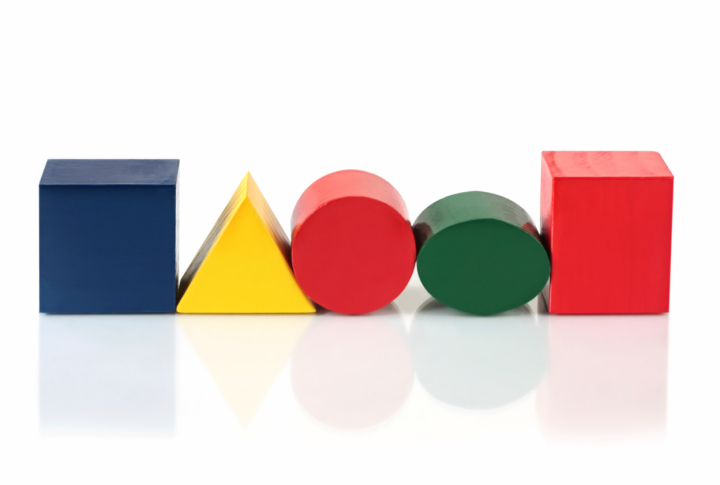
I remember vividly a toy I had at a young age. It was a sort of rectangular wooden box and at the top were holes in different shapes with a different colored border for each one. These shapes corresponded with blocks: a red circle, a blue square, a yellow triangle. I remember the utter futility and frustration of trying to make a triangle block fit into the square or the circle into the triangle opening. And I also remember the feeling of complete success, of momentous satisfaction when I slid the block into the right shape and heard the clunk of the block hitting the inside of the box.


Such a simple toy. Such a simple action. Such a complicated process of learning and development to get there.


I spent yesterday with two beings who are just over a year old. They were a sheer delight to be around. They ate their food when they were hungry and drank water when they were thirsty. They handed books to adults when they wanted to be read to. They reached out to be held. They played on musical toys. When they were amused or happy, they smiled or filled the room with laughter. When they fell or banged a limb or got tired, they cried. They squawked when they were annoyed or didn’t want to share. Because they are so new to the world, because they are so early in their development, there is no voice telling them who they are supposed to be. They simply are. And this, their being and their becoming, is a beautiful thing witness. 


As adults, it is harder to accept that we just are. We find it much more challenging to appreciate our own being and becoming.


I made myself a schedule for this month, full of hourly to-dos and work plans. Sometimes when I have looked at it, I have felt empowered or disciplined. There have been occasions when I have followed it to a t. Most times when I have looked at it though, I have felt a sense of impending doom. Because after teaching steadily through the year and then two intensive summer sessions in June, I am exhausted. So my aspirations, even those that feel exciting to me, begin to cull. They accumulate as demands until I feel as if I am commandeering my own life rather than committing to myself and my passions. The line between commandeering and committing feels very thin sometimes.


I think one of the most dangerous myths of our culture is the ultimate primacy given to productivity. We are taught to believe that if we aren’t constantly doing, if we aren’t always moving or busy, we are not earning our keep on the planet. We learn to count hours and output. We are trained in crunching numbers. We are encouraged to calculate the meaning of our lives based on the quantities in them: how many things we check off our to-do list per day, how much money is in our banking account, how many phone calls we made, how many many emails we sent, how many likes our status update got, how many tasks we completed at once, how many dishes done. We read up on “time saving applications” not remembering that time can never be saved, only spent. In our efforts to provide measurements of our own worth, to ourselves and others, we commandeer the time we are given. And in doing so, we miss all the subtleties.


We miss the small shifts in our own ways of thinking. We miss tiny moments. We forget to glance up at the sky when we get out of our cars. We pass by strangers walking their dogs at the park without stopping to say hello. We forget to breathe in and remember how much we enjoy the smell of creosote just before it rains. We have no time to sit still. We have no time to look at the moon.


I’m sure we all have moments when we are fully present, but I’m also sure we all have moments when we try to control every aspect of our experience. There is a difference between using the focused attention required to fit a circular object into a circular space and trying to jam a triangle shape into a square opening because we have decided we will make it fit.


Hungarian psychology professor Mihály Csíkszentmihályi developed and researched the theory of “flow.” Flow is a mental state wherein a person doing an activity is fully absorbed in the activity to the extent that they experience a feeling of complete focus, engagement, and pleasure. They are completely immersed in what they are doing. Think of a writer writing, a cellist playing cello, a painter painting, a child engaging in the act of playing with her toys.


Flow is not something that can be forced. We have to show up but we have to show up without demands and expectations beyond the offering of ourselves and this space and this time. The writer sits at her desk, the cellist picks up his instrument, the painter holds his brush, the child sits on the floor with her toys. Flow requires attention but it also requires a kind of letting go.


On the opposite side of the spectrum, commandeering comes out of a belief that we can control our lives in a way that will provide satisfaction, prove our own merits, and protect us from harm and suffering. Commandeering, at least in this context, seems to be motivated primarily by fear.


“When people restrain themselves out of fear, their lives are by necessity diminished,” Csikszentmihalyi said. “Only through freely chosen discipline can life be enjoyed and still kept within the bounds of reason.”


Freely chosen discipline corrects the sometimes-antagonistic aspect of the word “discipline” by adding the concepts of “choice” and “freedom.” Freely chosen discipline seems to hold space for both accountability and flexibility. We plan a schedule for ourselves and when life happens, we adapt and change while still committing to our goals. This allows time for us to move towards what we want to accomplish while not defining ourselves by what we do or make. We can choose when we work, when we play, when we do, and when we simply are.


2 Comments

Filed under weekly words

Shiva

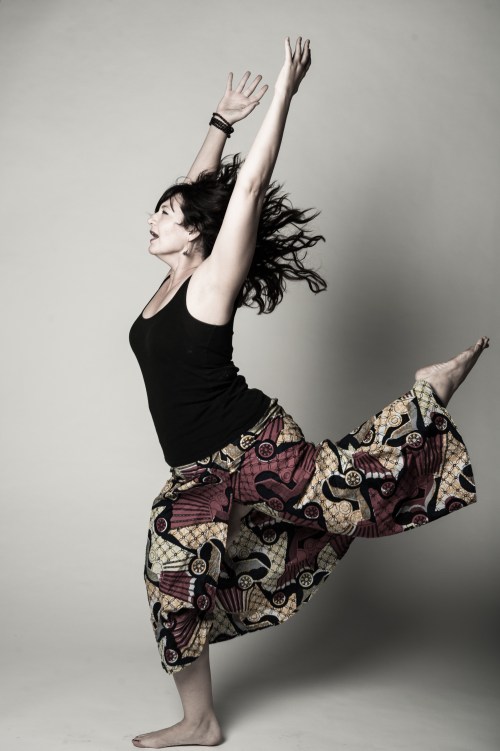
Photo by the amazing Jade Beall. Taken July 5, 2013.

Photo by the amazing Jade Beall. Taken July 5, 2013.


Śiva (ˈshi-və, ˈshē-)  n.  one of the principal Hindu deities, worshiped as the destroyer and restorer of worlds and in numerous other forms. Shiva is often conceived as a member of the triad also including Brahma and Vishnu.


Shiva is a god of contradiction. He is the destroyer, who incinerates the world as it is, and the creator, who transforms the world out of the ashes. He is the ultimate ascetic, abstaining from all worldly pleasures, and he is the dedicated lover and husband to Shakti/Parvati, the intensity of their love quaking the earth. He is the practiced yogi sitting calmly in meditation with no distraction and the dancer trembling his limbs furiously, his movements destroying and remaking the world.


He is, in many ways, all of us. He models the ways in which we defy categorization and solidity, each of us shifting and changing over time, letting go—with acquiescence or with fighting—of that which no longer serves us and making room for that which does.


For as long as I can remember, I have internalized the words “I am not a dancer.” This, despite that the fact that I love dancing. This, despite the fact that the sound of music and particularly the rhythmic beat of drumming is what makes me feel most myself and most alive. After quitting ballet at six and auditioning for and not making the cut for several dance teams during my time in adolescence, I decided that this was not an identity I could own. I could dance peripherally, at weddings and, if I was not too demonstrative, at clubs. I allowed myself hip sways and arms held in the air when I danced to brass bands back home in New Orleans. Over the years, I increasingly gave myself more permission to dance. But I did not allow myself the moniker dancer.


Rumi said, “Whosoever knoweth the power of the dance, dwelleth in God.”


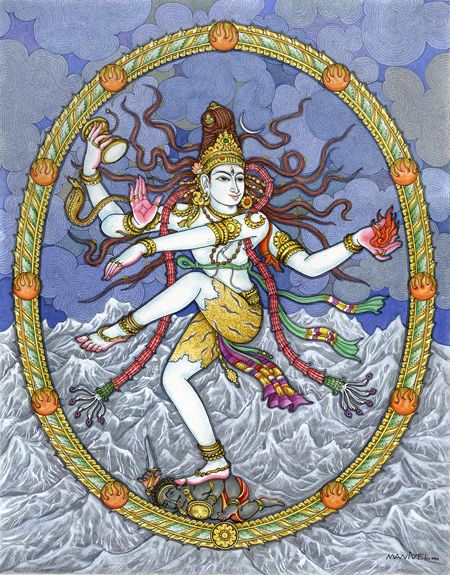
Dancing Shiva

Dancing Shiva


Another manifestation of Shiva is as Nataraja or The Lord of Dancers. Shiva holds the world in balance and this is seen too in his dancing. In Tandav, the cosmic dance of death, he dances to destroy the universe. Peter Marchand and Christine Gruenwald write, “Shiva Nataraja’s dance represents both the destruction and the creation of the universe and reveals the cycles of death, birth, and rebirth….Under his feet, Shiva crushes the demon of ignorance called Apasmara Purusha, caused by forgetfulness. One hand is stretched across his chest and points towards the uplifted foot, indicating the release from earthly bondage of the devotee. The fire represents the final destruction of creation, but the dance of the Nataraja is also an act of creation, which arouses dormant energies and scatters the ashes of the universe in a pattern that will be the design of the ensuing creation.” On the night of Shiva workship, devotees honor him by imitating him: singing songs in his praise and dancing all night rhythm of the drums.


Last fall, I started going to African dance classes in Tucson. As a white woman born and raised in New Orleans, a still deeply segregated city, I had strong hesitations to attend out of worries of appropriation of a dance that was not from my ancestry. I went with these hesitations and concerns, which still remain as part of the process, but I stayed because of the drums, because there was something about these drums and this dance that propelled me, not only across the floor but into a more complete and authentic version of myself.


Still, in those first few classes, I held myself back. I told stories about how I didn’t belong there, about how the other dancers were so much better than me, about how I was making a fool out of myself, about the lack everyone could clearly see in my body and in my movements. But around my third class, the stories quieted down. I could see the stories for what they were: irrelevant and untrue. The deepest truth was that I love being there. That I love dancing. And this love and this love alone made me into the thing I could not call myself before. Only when I destroyed the story that I was not a dancer was I able to really dance.


I used to think it was important to preserve containment at all costs. I believed that to avoid any kind of spillage or cracks or breakage was to make myself safe. But in the past several years, I have realized the vitality that comes from things breaking apart. I see that it is only this breaking that allows for new forms to take shape, for new breath to be invited in. From the ashes can rise new ways of being that would have never appeared while the old ways were immaculately intact.


July 5 was my birthday. For a few years, I’ve had a tradition of bibliomancing, randomly and blindly selecting, words from a dictionary on my birthday. To me, this feels like a way to honor my birthday and to invite in any messages or words that may be helpful in this new journey around the sun.


This year, I used a Pictorial Webster’s Pocket Dictionary just given to me for my birthday from my friend Amelia. The picture I turned to depicts Lord Shiva, Hindu god of destruction and transformation. That I turned to his image—when I could have easily turned to “Sequoia,” the page before, or “Skeleton of Dinosaurs,” the page after—feels significant and fitting. For years, I have listened to my yoga teacher talk about the ways different gods and goddesses are allies in the path. And I see these gods and goddesses as helpers, as models, as examples of the ideas and concepts they represent. Shiva, like Kali, can be given a bad rap because he brings powerful destructive forces. But as I understand it, these forces are sent to destroy the attachments our ego clings to, the ones we no longer need. In getting rid of attachments that limit us, we make room and create spaciousness for the most fluid and most authentic version of ourselves to emerge. Shiva encourages us to destroy, to dissolve, to deconstruct in order to make way for more genuine creation.


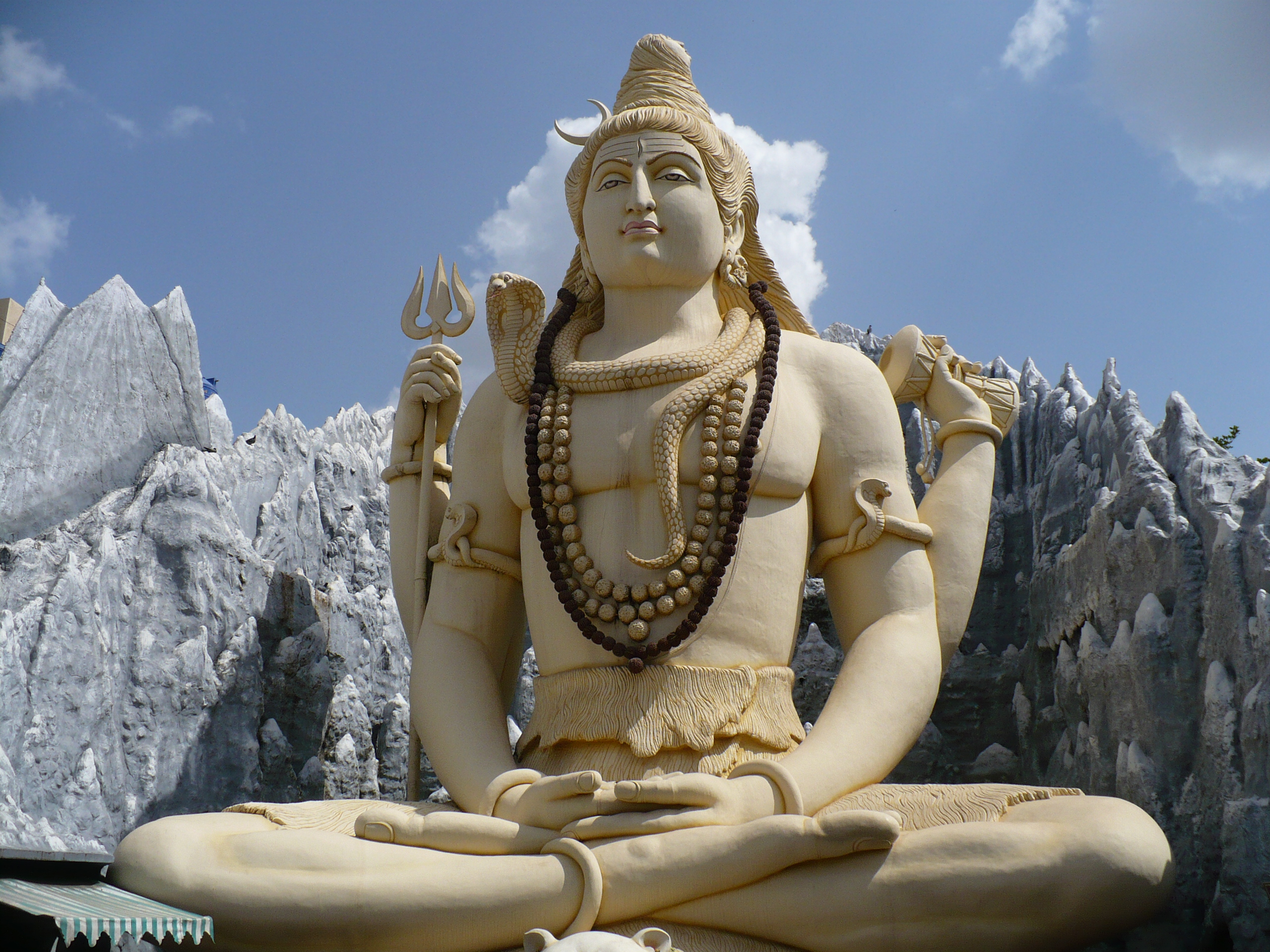
Shiva may be capable of destruction but he also wants to give offerings, to save lives. Shiva is almost always depicted with blue skin from the myth in which he saves humanity by holding in his throat poison that was churned in waters and threatened womankind and mankind. Shiva is painted carrying a trident, the three tips representing creation, protection, and destruction of the universe. Shiva is seen as a source of both evil and good, of destruction and rebirth. In his embodiment, he shows us the light and dark contained in this world and within each of us. He shows us the capacity to hold it all.


Shiva statue in Bangalore, Karnataka, India

Shiva statue in Bangalore, Karnataka, India


I have a Rumi of the Day book that I read from each morning before I sit in meditation. And each year on my birthday, I am struck by the poem for July 5. However, the time and distance of a year gives me time to forget and then to appreciate it anew. In “The Tree of Awe,” Rumi acknowledges the inherent contradiction of life’s joy and suffering and the necessity of both light and darkness. He writes, “No matter how fast you run, your shadow more than keeps up. Sometimes it’s in front. Only full, overhead sun diminishes your shadow. But that shadow has been serving you. What hurts you blesses you.” And “Darkness is your candle. Your boundaries are your quest.” And “You must have shadow and light source both.”


We may think we want only full brightness, but I can tell you from recent experience of 109 degree heat and high humidity in Tucson, that sometimes shade is most welcome. Sometimes we need the shadow to appreciate the beauty and warmth of the light.


When I dance now, I do so because the dance is in me and wants out. Instead of self-consciousness, I come to dance with a deep appreciation for those around me and for this life and for this body that carries me through it. Some days I dance to burn off old stories and some days I dance in appreciation and honor of the beauty in my life.


I am grateful to Shiva for appearing on my birthday to remind me of the power of destroying and razing and of renewing and recreating. These are the makings of a life, and I am grateful to experience both the light and dark offered in mine.


11 Comments

Filed under other words

inv.

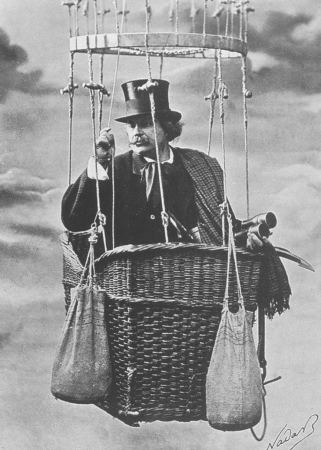
Gasper Felix Tournachon Nadar, who took aerial photos via hot air balloon.

Gasper Felix Tournachon Nadar, who took aerial photos via hot air balloon.


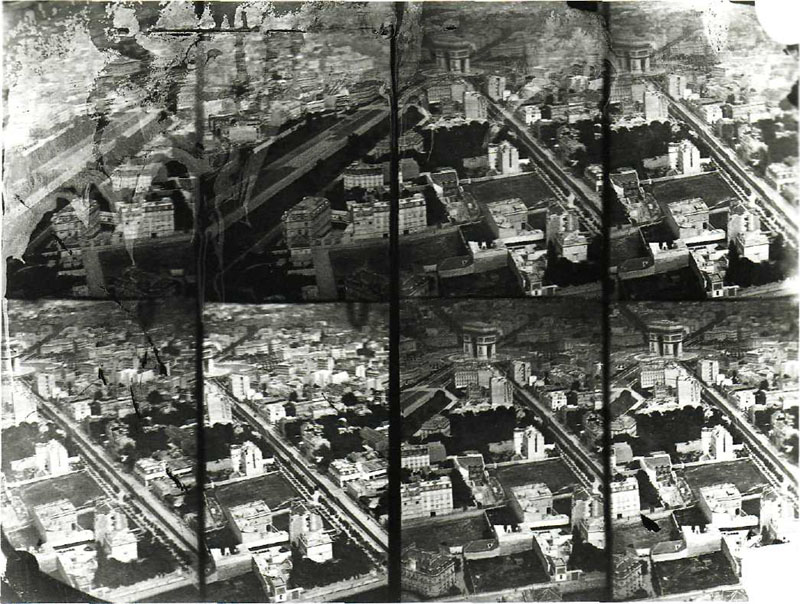
Felix Nadar Aerial Photograph

Felix Nadar Aerial Photograph


Julius Neubronner, who invented a camera to take aerial photographs using pigeons (he was an apothecary and also used pigeons to deliver medicine). All Neubronner photos courtesy of retronaut.com

Julius Neubronner, who invented a camera to take aerial photographs using pigeons (he was an apothecary and also used pigeons to deliver medicine). All Neubronner photos courtesy of retronaut.com


Camera-ed pigeons: In 1903 Dr. Julius Neubronner patented a miniature pigeon camera activated by a timing mechanism. The invention brought him international notability after he presented it at international expositions in Dresden, Frankfurt and Paris in 1909–1911. Spectators in Dresden could watch the arrival of the camera-equipped carrier pigeons, and the photos were immediately developed and turned into postcards which could be purchased.” - Public Domain Review

Camera-ed pigeons: In 1903 Dr. Julius Neubronner patented a miniature pigeon camera activated by a timing mechanism. The invention brought him international notability after he presented it at international expositions in Dresden, Frankfurt and Paris in 1909–1911. Spectators in Dresden could watch the arrival of the camera-equipped carrier pigeons, and the photos were immediately developed and turned into postcards which could be purchased.”
– Public Domain Review

Photos from Dr. Julius Neubronner's pigeon cameras.

Photos from Dr. Julius Neubronner’s pigeon cameras.


inv.,  1.  invenit,  [L.], he (or she) designed it.  2.  invented.  3.  inventor  4.  invoice


The other day on All Things Considered, a reporter was talking to the man who “invented” the 401K. I don’t remember what he did before that, but he wasn’t in finance. He said he thought if an employer matched an employee’s retirement fund there might provide more of an incentive for the employee to participate. The inventor didn’t intend for this to replace the pension, although it essentially has, but rather he liked the idea of providing a way to supplement someone’s retirement.

What the discussion brought to mind for me was the idea of invention and creation. And ownership. This man was given credit for establishing the 401 K plan, but surely, he wasn’t the first one to think of it or to maybe to even try it out. We often act as if inventing happens in a vacuum and inventors are some sort of isolated geniuses instead of a product of the thinking and ideas of an entire culture.

We human beings are part of a collective, whether we choose to recognize it or not. Why else would similar deities and mythologies and folk tales and rituals and systems have arisen on separate continents even at times where there was little or no contact between these peoples?

In the United States, one of our most valued ideologies is that of independence. We can make it as individuals, on our own. What arises with this value is the encouragement of and the desire for perpetual uniqueness. We must be different to be special. While this ideology may drive ambition and creative work in ways, it can also lead to suffering. These ideas take away from the very reality of interdependence. We suffer if we feel like we are not different enough to distinguish ourselves from the crowd. And we suffer if our desire to be unique leads us to isolate from others rather than draw our inspiration and support from community. In other places, where people strongly identify with their clan or community, I imagine there is less selfishness and less worry about own’s place and that this frees up space to just be.

In Reality Hunger, David Shields culls together his book entirely from quotes y taken from other people’s writings in order to make a statement about reality and about the idea that it is impossible for to claim anything as one’s own because of the ever-present influence of others.

The “Reader’s Guide” to the book reads, “‘Who owns the words?’ asks a disembodied but very persistent voice throughout much of William Burroughs’s work. Who does own them now?  Who owns the music and the rest of our culture? We do. All of us. Though not all of us know it, yet. Reality cannot be copyrighted.”

Our obsession with copyright in this country feels less about the intellectual property rights of inventors than it does about ownership and profit. I just heard on the news last Wednesday that the Supreme Court voted that companies could not patent human genes. Well, thank God. That’s insane. But the fact that this is even a question, that a case involving this issue is coming before our highest court shows how askew we currently are in our ownership and entitlement culture.

Copyright can be a useful way to protect the ideas and livelihood of inventors and creators. As a writer, I get that. But this becomes a problem when the letter of the law ends up being more dominant than the spirit of the law. The laws that are in place to protect the little guy end up benefiting the larger organizations who have money for lawyers and lawsuits. Look at Monsanto, who sues small farmers when they “steal their property” when seeds fly off their loosely-tarped trucks and are mixed in with the small farmers’ crops. Many of these farmers have lost their farms and others have committed suicide when faced by financial ruin from these lawsuits, lawsuits that are meant to protect the “rights” of billion dollar corporations (see the illuminating documentary The Future of Food for more on this).

In the end, the questions I have lead to more questions:

Where is the line between invention and that which was always going to emerge? Did someone “invent” singing—or even a particular style of singing—when it is an act our bodies were made to do? How do we trace every influence of a particular style of dance that came out of a given country? How does it shift when it is brought to another group of dancers? Can we still call this dance by the same name?

What is the connection between independence and invention? We don’t talk about one individual inventing a language, do we? We recognize ways of communicating as emerging from a community. But when we shape those words together in certain ways, is that when invention comes in? Or just because someone got something right and their invention works, does that mean that all the work of those who weren’t able to get it right before her/him doesn’t count? That their process of trial and error isn’t worth anything in the end?

A decade ago, I wrote an essay on Rosa Parks on the anniversary of the day she sat down in the white section of a segregated bus, the event that began the Montgomery Bus Boycott. I lauded her role but, as many others have also pointed out, dismissed the idea that she was a solitary hero. Parks had studied at the Highlander School in social justice leadership and had served as the secretary of the Montgomery Chapter of the NAACP. She was chosen by her community of activists to be the next person to take this action because of a potential to establish credibility because of who she was: “a married woman with a stable job… everyone’s next-door neighbor, their best friend, their aunt, their fellow parishioner at church.”

There is a temptation, even with something as ephemeral as community movements, to locate the person or persons responsible (just as, on the flip side, when something horrible occurs, the first response of media and officials is to try to find someone to blame, instead of looking at all the complexities at play, including the culture’s role). Some may argue this is to give credit where credit is due or to praise those involved. But there is something dangerous that can underlie this action. If we praise inventors, of products or of social movements, as remarkable individual human beings, this can have one of two effects.  We can become inspired to be remarkable (but maybe in a way more encouraged by ego and need for attention than altruism). Or we can become disempowered as we fear we are not “remarkable” enough to accomlish what these inventors have achieved. A healthier medium is to realize that each of us has an important contribution to make and in making this contribution, we can help fill in the missing links in a chain of which we are all a part. We don’t have decide between one or the other. We can choose to collaborate. We can invent together.

1 Comment

Filed under weekly words

the dictionary project author interview: brent hendricks

Photo by Kate Bernheimer

Photo by Kate Bernheimer


I read Brent Hendricks memoir A Long Day At the End of the World on an airplane ride, flying from the desert where I live to the swamp where I was born. And this liminal space was a fitting and somewhat eery space for musings on death and life; on the disintegration of expectations, relationships, bodies; on the apocalypse. My friend and writer Frankie Rollins once talked about how driven we are as humans to stories and to story our existence. “Look at all the post-apocalyptic novels and films,” she said. “We can’t even imagine the ending without more story.” And when we are through with these stories, we return to ones of creation. The big questions like that of our own mortality, as individuals and as a collective, jar us into story-making. I think what I appreciate most about Brent’s book is its meditative quality, returning and returning to unanswerable questions and events to try to make sense of them, to hold them to the light in an attempt at understanding. Please enjoy his interview below.


1. Please share a memory/story/thought in relation to a dictionary/dictionaries:


At some point in college, I think after reading Walker Percy’s The Moviegoier, I decided I’d look up every word I came across that I didn’t know. This meant lugging around a dictionary in my book bag or paging through one of those giant dictionaries propped up at the library in the old days. After a while, because it took some commitment, there was a degree of ritual to the gesture and the dictionary became a kind of sacred text for me. A monkish act, in the only way I knew how.


2. What is your current favorite word?

Dark, because it feels so ancient and old-school Anglo-Saxon. You know there’s that Auden poem, “The Wanderer,” where he explicitly employs pre-Norman invasion words to create that weird (as in “fated”) Dark Age effect: “Doom is dark and deeper than any sea-dingle.” Doom’s a pretty good one, too, come to think of it.


3. What is the most obnoxious/insidious/annoying word?


Dingle, of course, because if not connected to “sea-dingle” I automatically think of dingleberry. I doubt I’m alone in this irritation. The compound word is an Americanism that, in single conflation, reveals the essential difference between the two cultures.


4. What word has been your (recent or past) muse?


Well, “berry” was one of then. Remember that terrific Robert Hass poem, “Meditation at Lagunitas,” ending with “blackberry, blackberry, blackberry”? “Berry” is also of Old English derivation and, at the risk of revealing too much, I’d have to say I used to love eating blueberries and blackberries. However, those innocent days are all but past due to the above corruption.


5. I have been reading your new book A Long Day at the End of the World: A Story of Desecration and Revelation in the Deep South. I remember talking to you about this book at a party at the side of a pool a few years ago when it was still in draft form and many of questions and ideas you expressed then reverberate through the book now: particularly the “whys” of death and life and our attempts as humans to reconcile our own deaths and the life and death of our world. I think we all have stories from our lives we need to write our way into and out of. What was at the root of your need to write this particular story?


Money, first, which I wanted more of. And second, fame, which I also callously desired. I’m really much more famous than I used to be. Third, though obviously an ancillary cause, I truly felt the gothic nature of the Tri-State Crematory Incident — the largest mass desecration in modern American history — deserved some storyline expansion, particularly as my father’s body was one of those left abandoned at the crematory site for five long years. There were bodies piled up in pits, bodies stuffed into metal vaults, bodies scattered through thick brush of a North Georgia crematory — blackly fantastic, all of it. And fourth, less overtly significant than the first three, I was demonically captured by Giorgio Agamben’s take on Walter Benjamin’s take on Saint Paul’s take on messianic time, or “now-time,” or “the time of the now.” My thralldom, if that’s what you call it, led me to believe I could project, contemporaneously, many different histories unto the present. That I could bring past events forward onto the page.  It’s a method really, a dark one, forcing me to cast onto my otherwise expiatory road trip (a terrific and rarely used narrative device) such unrelated and “shoehorned” events as the conquistador Hernando de Soto’s rampage through the South, the civil war and civil rights, environmental degradation and its consequences, the Book of Revelation, and some other botanical stuff about flowers. The causes, then, are many, involving most of the deadly sins and my own demonic possession.  It’s really quite disturbing.


6. Could you define “desecration” and “revelation”?


In ancient Greek, the original language of the New Testament, “apocalypse” means “revelation.” In this context, for me at least, a revelation reaches far beyond the realm of personal insight so as to suffuse a moment of “now time” with the fullest of  possibility, while intimating, in relation to the horizon of that moment, some inevitable end-point. Usually happens if I have a second cup of coffee.


Desecration is just everything else — all the non-illuminating instances that exist outside the glow of that second cup of coffee.


7. Please respond to the following words* and definitions, picked exclusively at random for you:


hole  (hōl),  n.  [ME.; AS. hol.  orig. neut. Of holh, adj. hollow; hence akin to G. hohl, hollow; IE. base *qaul-, *qul-, hollow, hollowed thing, as also in L. caulis, stalk, cabbage (cf. COLE, CAULIFLOWER],  1.  a hollow or hollowed-out place; cavity; specifically a) an excavation; pit: as, he dug a hole in the ground.  b)  a small bay or inlet; cove: often in place names. c) a poor or deep, relatively wide place in a stream: as, a swimming hole. d) an animal’s burrow or lair; den; hence  2.  a small dingy, squalid place; any dirty, badly lighted room, house, etc.  3.  a prison cell. 4. a) an opening in or through anything; break; gap; as, a hole in the wall.  b)  a tear or rent, as in a garment.  5.  a flaw; fault; blemish; defect: as, we found holes in his argument.  6.  [Colloq.], an embarrassing situation or position; predicament.  7.  in golf, a) a small, round hollow palce into which the ball is to be hit.  b) the tee, fairway, greens, etc. leading ot this: as, 18 holes of golf.  v.t.  [HOLED (  ), HOLING],  1.  to make a hole or holes in.  2.  to put, hit, or drive into a hole.  3. to create by making a hole: as, they holed a tunnel through the mountain.


Following the medieval practice of sortes biblicae — in which a person with a question randomly opens the Bible to seek God’s answer — I’ll do my best to seek guidance in these similarly plucked words. I’ll therefore use these offerings to assist with my primary existential question: Should I actually dig a hole in the backyard and climb in it? I wonder about this a lot. I am not kidding.


ha·bit  (ˈhabit),  n.  [ME.; OFr.; L. habitus, condition, appearance, dress; pp. of habere, to have, hold], 1.  costume; dress.  2.  a particular costume showing rank, status, etc.; specifically, a)  a distinctive religious costume; as, a monk’s habit.  b)  a costume worn for certain occasions: as, a woman’s riding habit.  3.  habitual or characteristic condition of mind or body; disposition; as, a man of healthy habit.  4.  a thing done often and hence, usually, done easily; practice, custom, act that is acquired and has become automatic; hence, 5. a tendency to perform a certain action or behave in a certain way; usual way of doing: as, he does it out of habit.  6.  an addiction: as, the alcohol habit.  7.  in biology, the tendency of a plant or animal to grow in a certain way; characteristic growth; as, a twining habit.  v.t.  1. to put a habit on; dress; clothe.  2.  [Archaic], to inhabit.


Okay, so I will dig a hole in my backyard and climb in it — because, over time and with practice, the act might be “done easily” and even lead to a certain “tendency” in the ground, “as, a twining habit.” This “twining” sounds like something pretty revelatory, too, as long at can still happen to an animate object.


ten·der·foot (ˈtendərˌfo͝ot),  n.  1.  a person who tends, or has charge of, something.  2.  a small ship for supplying a large one.  3.  a boat for carrying passengers, etc. to or from a large ship close to shore.  4.  a railroad car carrying coal and water for a steam locomotive, to the rear of which it is attached.


Okay, now I’m totally confused as to the dictionary god’s will, because I thought a tenderfoot was a “novice” or “greenhorn.” Is God (or the dictionary god) telling me that I’m a greenhorn at interpreting signs and divine wishes. Are the heavens mad at me? I guess I’ll just stand out in the backyard for a while, shovel in hand, and try to think it all through.


Jute  (jo͞ot), n.  [AS, Iote, Yte: L. Iuta], a member of any of several Germanic tribes that lived long ago in Jutland: Jutes invading southeastern England in the 5th century A.D. spearheaded the Anglo-Saxon conquest.


Okay, back on track, right? Angles, Saxons, and Jutes — in naming the third Germanic peoples who originally invaded England and so helped to create all those Old English words in the first place, I think we have a winner. I should definitely dig that hole and lie in it. That’s exactly what a Jute would do.


Philemon  (fəˈlēmən), [L.; Gr. Philemon, lit., affectionate], a masculine name.  n.  1.  the Epistle to Philemon, a book in the New Testament which was a message from the Apostle Paul to his convert Philemon: abbreviated Phil.  2.  in Greek mythology, an old man who, with his wife, Baucis, shared what little he had with the disguised Zeus and Hermes.


Wait a second. What is Saint Paul (by way of the dictionary god) trying to tell me here … that I should free the slaves within me? Maybe he’s saying it doesn’t matter what I do. Dig or not dig. Lie or not lie. According to Paul — am I being directed to this? — the messianic vocation is to seek the revocation of every vocation (1 Cor 7:29-32) (Agamben, The Time That Remains), with my vocation being to wonder continually about my particular existential question. Forget about it, Paul seems to be saying. Remember there’s not much time left, which may or may not be self-evident, and which may or may not necessitate climbing in a hole. After all, and like always, there’s only the time that remains. 


Brent Hendricks is the author of A Long Day at the End of the World (Farrar, Straus and Giroux 2013).


*Definitions taken from Webster’s New World Dictionary of the American Language: College Edition, copyright 1955


Leave a comment

Filed under author interviews

the dictionary project author interview: tc tolbert

Today, I’m delighted to share an author interview with tc tolbert. TC is a brilliant poet and essayist whose work asks important questions about space, about the body, about how we interact with one another in regard to space and the body and about how we might do that better, about both the tenacious and the tender aspects of the human heart. In addition to his own writing, he is committed to seeking out, sharing, and providing spaces for the work of others. He has two chapbooks, spirare and territories of folding, and his first book Gephyromania comes out in 2014.  Troubling the Line: Trans and Genderqueer Poetry and Poetics, an anthology he co-edited, just came out in March of this year. He also co-curates Trickhouse Live, a reading series affiliated with the online journal Trickhouse, which features artists working in different media sharing their work. Please enjoy his words below!


Photo by Sam Ace

Photo by Sam Ace


1. Please share a memory/story/thought in relation to a dictionary/dictionaries:


I found the title of my first book, Gephyromania, in this thing called an “Illustrated Reverse Dictionary.” I bought it at a garage sale, strictly for the title. I don’t totally understand it but it’s got lots of random lists – kinds of boats, -ologies and –ographies, types of garden predators, etc – and from those lists you can either find the word you were looking for or find the word you didn’t know you were looking for but the word you clearly need. That’s what happened to me. I was just picking through it and I came across the list of phobias and manias and there was “gephyromania” – “an addiction to, or an obsession with, bridges.” And I had been working in a notebook I titled “bridge” – both for the idea that it was to carry me over some daunting (emotional) terrain and as a nod to the musical bridge that signals a contrast or a tangent. I desperately needed both and thus, the writing, the poems.

Also, I’m truly obsessed with what it takes, how it happens that two bodies (of any kind) come to connect. And what, then, is passed or carried over, along, or between them.


2. What is your current favorite word?


My favorite words have always been swear words. I grew up Pentecostal in Tennessee and there was a very real belief that how one used language could determine not just one’s experience of the current moment but all of eternity. Of course that’s dramatic but look at it this way. All you had to do was say, “I accept Jesus as my Lord and Savior” and boom, you were golden. My Papaw had cancer in his lymph nodes and people in the church laid hands on him and said, “you are healed” and, yep, he was. It was the words that made identity and body real. The flip side of that sort of literal relationship to language was with swear words – where certain words were off-limits and could cause eternal damnation (as opposed to salvation). So, “taking the Lord’s name in vain” was imbued with such a level of sacrilege and terror that I genuinely believed if I ever uttered the word “goddamn” I would be sealing my fate right then and there.

But I’ve never been one for just following the rule without testing it. So, as a kid I would wander into the woods near my house and sit in a little ditch and practice smoking cigarettes and saying “fuck” with different inflections. I tried to imagine every context possible in which I could toss around the f-bomb with clarity and grace. Then I would do the same with “goddamn.” Each day I was a little bit surprised and emboldened to find that I could swear and not be killed on the spot. But then again, I spent thousands of hours with major stomach aches and the shits thinking god was getting me back for all of the swearing (and masturbating) I’d done. As it turns out, I just have a gluten sensitivity and I ate too many Little Debbies. The god of my upbringing was not only severe but fantastically so.


3. What is the most obnoxious/insidious/annoying word?


Judge. I don’t like it b/c I think it’s too often wielded as an attempt to shame folks for being discerning or having boundaries. I don’t like the way judgment has taken on a sort of blanket negative connotation. To say, “I like that” or to have a clear sense that “I don’t want that in my life” or “I do want this in my life” that seems like a good and healthy way to move through the world. We make positive judgments all the time. That’s how we determine everything from what to wear in the morning to life partner to favorite ice cream!

When I worked at the queer youth center and I worked closely with the anti-violence project, I saw too many instances of people being abused and trying to get out of it but experiencing a kind of public shaming for “judging” the abuser and for “not being compassionate enough.” The words judgment and compassion became these linguistic vortexes to keep people in very damaging situations so I’m wary anytime I hear someone speak or act as if judgment is a universally negative thing.

That said, I also understand that judgment can easily turn into a sort of rigidity that is then used as a measuring stick for what others should like or believe and that is obviously counterproductive.

I’d like to see the word judge used in a less “judgy” way, I suppose. I mean, it’s a complex word and idea and I think that’s what people are pointing at when they use the word judge in a negative way (do we ever complain when someone judges us positively? I don’t think I do) – that lack of context and complexity.


4. What word has been your recent or past muse?


Troubled and troubling. I like these words especially for the bl sounds – how silly they make our mouths – how you can’t actually be that serious when you say trouble – it’s so buoyant and playful. I like the contrast between their vocalization and meaning. I also think it’s hilarious – this idea of “being in trouble.” I mean, it’s something I worry about so much (see above – Pentecostal) and yet I recognize the absurdity. It’s an adolescent kind of word, I think, with grown-up aspirations.

Also, both words reference Judith Butler and the Bible, simultaneously. I love how they conflate danger/threat and healing/freedom. These themes and references all went into the title Troubling the Line: Trans and Genderqueer Poetry and Poetics, a book I just co-edited with Tim Trace Peterson. (link to purchase book: http://www.upne.com/1937658106.html) I think trans and genderqueer poets and poetries are dangerous/threatening to our gendered cultural confines and we (trans and genderqueer poets and poetries) offer multiple avenues of freedom and healing from those confines.

Also, fricative. I love that word. How it makes your mouth do what it means. I want all of my poems to be that embodied.


6. I bibliomanced a word from the anthology and that word was “splendor.” What would be your personal definition of “splendor”?


I think of splendor as an undetermined space – the space of the question – Rilke imploring that we “love the questions themselves.” I’m picturing the component parts of a computer caught on film in midair – are they falling or flying? I have no idea.

The space of unknowing. Pause. A kind of holy attention.

That moment in Virginia Woolf’s To the Lighthouse, this:

“What is the meaning of life? That was all—a simple question; one that tended to close in on one with years. The great revelation had never come. The great revelation perhaps never did come. Instead there were little daily miracles, illuminations, matches struck unexpectedly in the dark; here was one. This, that, and the other; herself and Charles Tansley and the breaking wave; Mrs. Ramsay bringing them together; Mrs. Ramsay saying “Life stand still here”; Mrs. Ramsay making of the moment something permanent (as in another sphere Lily herself tried to make of the moment something permanent)–this was of the nature of a revelation. In the midst of chaos there was shape; this eternal passing and flowing (she looked at the clouds going and the leaves shaking) was struck into stability. Life stand still here, Mrs Ramsay said.”

I feel myself moving into that space of splendor right now, actually. As Troubling Tucson: Trans and Genderqueer Poetry Symposium is only 2 days away and my life has been so completely consumed with logistics for the symposium and yet here I am – on the cusp of seeing it realized – in that liminal space right where the thing moves from an idea into a being. It’s thrilling, a little bit terrifying, and a way of focusing my attention so clearly on exactly where I am. There is a beautiful and open calm right now – it feels like a gift to me.


7. Where do words reside in the body?


Well, my words reside in my right trapezoid. I know that because for quite some time now I’ve had an overuse injury there and I literally feel the words start there when I write.


8. Please respond to the following words* and definitions, picked exclusively at random for you:


ca·ba·na  (kəˈbanə; Sp. kəˈbanyə),  n.  [Sp. cabaña; LL. capanna, hut], 1.  a cabin, cottage, or hut.  2.  a small shelter used as a bathhouse. Also cabaña


“Oh, Mandy. You came and you gave without taking. And I need you today, oh, Mandy. When you kissed me, you stopped me from shaking. And I need. You.”

 The next person to sing this to me (which would also be the first person to sing this to me) will have my ever-lasting devotion. I’m just saying. I fucking love Barry Manilow. Now you know the way to my heart.


dis·place·ment  (disˈplāsmənt),  n.  1. a displacing or being displaced.  2.  the weight or volume of air, water, or other fluid displaced by a floating object, as a balloon or a ship.  3.  the difference between a later position of a thing and its original position; hence, 4. in geology, a fault.  5.  in psychiatry, the transference of an emotion to a logically inappropriate object.


I used to hate my body. I thought it betrayed me. Then John Cage said, it’s lighter than you think.


di·e·sis  (ˈdī-ə-səs),  n. [pl. DIESES (-sez’], [L.;Gr. diesis  <  diienai, to send through  <  dia-, through + hienai, to send], a reference mark ( ‡ ) used in printing: also called double dagger.


The first woman I fell in love with was the 3rd base woman on my softball team. We were in 6th or 7th grade. I suppose you could say we were girls.


keep  (kēp),  v.t.  [KEPT (kept), KEEPING], [ME. kepen; AS. cepan, to behold, watch out for, lay hold of; ? akin, via *kopjan, to ON. kopa, to stiffen, gape, MLG. Kapen, to gape, stare at, AS. capian up, to look up at; ? IE. base *gab-, to look at or for],  1.  to observe or pay regard to; specifically, a) to observe with due or prescribed acts, ceremonies, etc.; celebrate or solemnize; as, they kept the Sabbath. b) to fulfill (a promise, etc.). c) [Archaic], to show observance by regularly attending (church, etc.).  2.  to take care of, or have and take care of; specifically, a) to protect; guard; defend. b) to look after; watch over; tend. c) to raise (livestock). d) to maintain in good order or condition; preserve. e) to supply with food or lodging for pay: as, she keeps boarders. g) to have or maintain in one’s service or for one’s use: as, they keep servants. h) to set down regularly in writing; maintain (a continuous written report or record): as, he keeps an account of sales in the store. i)  to make regular entries in; maintain a continuous record of transactions, accounts, or happenings in: as, businessmen keep books, she keeps a diary. j) to carry on; conduct; manage.  3.  to maintain, or cause to stay or continue, in a specified condition, position, etc.: as, keep your engine running. 4.  to have or hold for future use or for a long time. b) to have usually in stock for sale.  5.  to have or hold and not let go; specifically a) to hold in custody; prevent from escaping. b) to prevent from leaving; detain. c) to hold back; restrain: as, the rain kept us from going out. d) to withhold. e) to conceal; not tell (a secret, etc.)  f) to continue to have or hold; not lose or give up. G) to stay in or at; not leave (a path, coruse, or place).


Three women were found alive in a Cleveland home last night. One of them has a 6-year-old daughter. All of them have been missing for over 10 years.


medium bomber  (B-25 Mitchell, 1940 from image: Types of Airplane)


It’s in me. That’s the thing. It arrived in me, too.


TC Tolbert is a genderqueer, feminist poet and teacher. Assistant Director of Casa Libre en la Solana, instructor at University of Arizona and Pima Community College, and wilderness instructor at Outward Bound, s/he is the author of Gephyromania (forthcoming, Ahsahta Press, 2014) and chapbooks spirare (Belladonna*, 2012), and territories of folding (Kore Press, 2011). TC is co-editor, along with Tim Trace Peterson, of Troubling the Line: Trans and Genderqueer Poetry and Poetics (Nightboat Books, 2013). TC writes monthly lyric essays on the trans body, intimacy, architecture, and public space for The Feminist Wire and s/he recently curated a trans and queer issue of Evening Will Come for the Volta. TC is a regular curator for Trickhouse, an online cross-genre arts journal and s/he is the creator of Made for Flight, a youth empowerment project that utilizes creative writing and kite building to commemorate murdered transgender people and to dismantle homophobia and transphobia. Thanks to Movement Salon and the Architects, TC keeps showing up and paying attention. John Cage said, it’s lighter than you think.


*Definitions taken from Webster’s New World Dictionary of the American Language: College Edition, copyright 1955

Leave a comment

Filed under author interviews

sur·ren·der

Photo by Francesca Woodman

Photo by Francesca Woodman


Well, here we are at the conclusion of a wonderful na·po·mo at the dictionary project! I’m grateful that poetry gets its own month and also grateful that we can continue to read and support poets, to write and share our own poetry all year. I want to thank all of our wonderful poets for the work they have written and shared with us and special thanks goes to our last poet, Danielle Vogel. 

And in the first time in the history of this literary community, a word was bibliomanced for the second time. I guess this is appropriate because it is a word we probably all need to be reminded of from time to time. The word is surrender. Those of you who have been regular followers of the dictionary project will remember that I first wrote about surrender in the fall in relationship to an Amy Goodman reading I attended. I am delighted to share with you Danielle’s gorgeous and evocative take on the word. Thanks go to Danielle for providing the image as well.

And thanks to you, today and always, for reading and being part of this process.


sur·ren·der (səˈrendər)v.t. [OFr. surrendre: sur-, upon, up + rendre, to render], 1.  to give up possession of or power over; yild to another on demand or compulsion.  2.  to give up claim to; give over or yield, especially voluntarily, as in favor of another.  3.  to give up or abandon; as, we surrendered all hope.  4.  to yield or resign (oneself) to an emotion, influence, etc.  5.  [Obs.], to give back or in return.  v.i.  to give oneself up to yield.  n.  [Anglo-Fr.  < OFr.  surrendre (see the v.); inf. used as n.],  1.  the act of surrendering, yielding, or giving up.  2.  in insurance, the voluntary abandonment of a policty by an insured person in return for a cash payment (surrender value), thus freeing the company of liability.
SYN.–surrender commonly implies the giving up of something completely after striving to keep it (to surrender a fort, one’s freedom, etc.); relinquish is the general word implying an abandoning, giving up, or letting go of something held (to relinquish one’s grasp, a claim, etc.); to yield is to concede or give way under pressure (to yield one’s consent); to submit is to give in to authority or superior force (to submit to a conqueror); resign implies a voluntary, formal relinquishment and, used reflexively, connotes submission or passive acceptance (to resign an office, to resign oneself to failure).


dv1 dv2 dv2again dv4


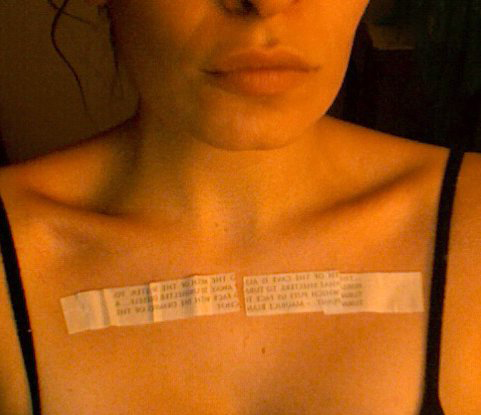
Vogel, Dictionary Project author photoDanielle Vogel’s textile scroll-works and ceramic book artifacts, which explore the ceremonial gestation of a manuscript as it is written, have been exhibited in galleries across the country. Her most recent collection, Narrative & Nest, is a cross-disciplinary study relating the construction of nests to the writing of books — both as complex sites of composition, habitation, instinct, and narrative. She is the author of Narrative & Nest (Abecedarian Gallery, 2012) and lit (Dancing Girl Press, 2008). She received her MFA in Writing & Poetics from Naropa University, and is currently a PhD candidate at the University of Denver. She lives in Providence, Rhode Island, where she is writing toward the completion of her book Clasp, excerpted here. Her author photo was bibliomanced by Maurice Blanchot’s The Writing of the Disaster and reads: “a turning point which puts us face to face with the demand of the turning point.” Danielle wrote, ‘I often carry books alongside the books I am writing. I dip into them for messages the way one might visit the Tarot. One such book is Maurice Blanchot’s The Writing of the Disaster. While writing the middle section of Clasp, I asked Blanchot’s book to interrupt my writing practice with a message and this is what I received.”


Leave a comment

Filed under napomo

sur·veil·lance

"What Are You Looking At?", Banksy

“What Are You Looking At?”, Banksy


Today is the last day of April and the last day of na·po·mo 2013. We have a double-decker day with one poem now and one poem later in the day. Our first poem today is by Logan Dirtyverbs. Enjoy!


sur·veil·lance,  n.  [Fr.  <  surveiller, to watch over; sur- ( < L. super), over + veiller  < L. vigilare, to watch],  1.  watch or observation kept over a person, especially one under suspicion or a prisoner.  2. supervision or inspection.


TO NEITHER CONFIRM NOR DENY
 

a legible surveillance disclaimer
TO OBSERVE WITH INTENT
a distinct whine in blue sky
TO NOTICE AGGRESSIVELY
where drones roam freely
TO ACTIVELY TAKE NOTE
soon drones will keep quiet
TO KEEP CLOSE WATCH
a more convenient freedom
TO INTERCEPT PREEMPTIVELY
the windchime sounds unstable
TO ASCERTAIN CULPABILITY
the bee conducts search flower-by-flower
TO AGGREGATE EFFICIENTLY
a swarm of self-directing drones
TO SECURE THE HOMELAND
an obtuse infestation of bugs
TO PHOTOGRAPH PUBLIC SPACES
a budding nest of security cameras
TO TRANSMIT ELECTRONICALLY
the trains of thought in choreography
TO IRREVOCABLY CONNECT DOTS
a gold rush of data mining geology
TO PRACTICE NONADMISSION
a twenty twenty all aerial eyesight
TO UNMAN AERIAL SYSTEMS
an officious and casual voyeurism
TO SPEAK FREELY IN PUBLIC
a vain culture easiest to surveil
TO SEARCH FOR IDENTITY
a watched society most secure
TO ASSOCIATE WITH OTHERS
social media a great diy fbi fyi
TO KNOW THE LATEST
a clear evolutionary craving
TO SEE AND BE UNSEEN
knowing what others are doing
TO RECOGNIZE THE FACES
security for whom & by whom
TO AUTOMATE REDACTION
certain cannot be used
TO SPEAK SUSPICIOUSLY
prison regulates unemployment
TO WAGE WAR ON FEAR
war a fantastic job creator
TO TRIGGER WORDS
self-surveillance smaller govt
TO POLICE STATE SECRET
the alibi sousveillance hobby
TO THREATEN PRIVACY
policing the self in private
TO USE DANGEROUS SPEECH
a homegrown wet orwellian orgasm
TO STATE & PLAUSIBLY DENY
or what do you have to hide anyway
TO JUST ASK A FEW QUESTIONS
you don’t know what you have to hide
TO AGREE TO TERMS & CONDITIONS
until it has been finally found
TO PLEASE SIGN HERE
x___________________________


Photo by Trish Santangelo

Photo by Trish Santangelo

 
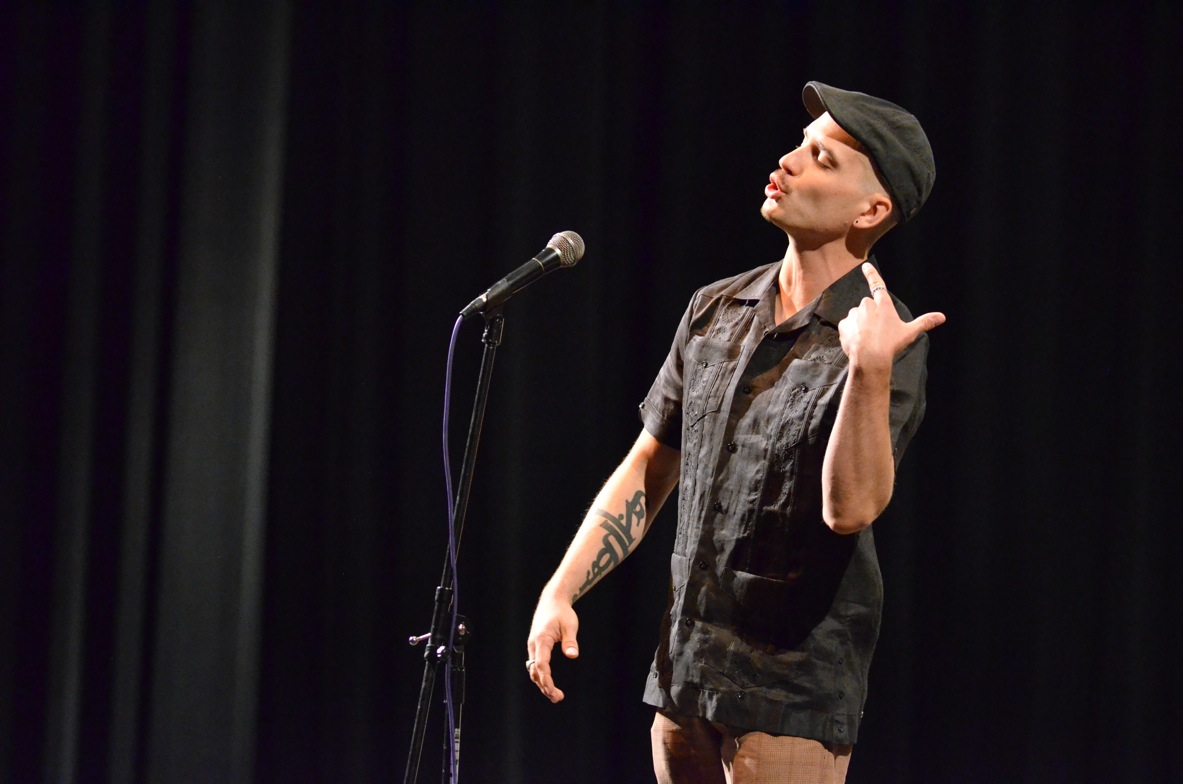
logan dirtyverbs is a bilingual poet, performer and dj based in tucson, az. to see more of his work, check out: dirtyverbs.com and @dirtyverbs on twitter.

Leave a comment

Filed under napomo

yore

photo courtesy of retronaut.com


photo courtesy of retronaut.com


photo courtesy of retronaut.com

all photos in this post courtesy of retronaut.com


We have two days left of April and three poets’ work still to share with you for na•po•mo 2013.

Enjoy Shelly Taylor’s take on yore.


yore  (yôr),  n.  [ME., fr. yore, adv., long ago, fr. OE, gedra, fr. gear year]: time long past < in days of ~  


Na•Po•Mo The Dictionary Project:  Yore

Shelly Taylor / Apr 25, 2013


Stop the death music:  city a body

leashed a fastened quagmire:  city sky lean

back:  a wreck eschewed our righteous

inhabitants, one carousel livened your last

disposal:  wait—women weaving raffia

—their city hands tied furiously an earthen tree.

Go around the brawling in the street:

our fortunes buried post-Sherman

set the South aflame—his gods reflecting

opaque the horizon:  general gaze of

yore, its forgotten fauna:  glint in the light of fog:

never manage it:  your restless eye:  what happened then?

Shoulders back to please the ladies:  break the same

as rise:  our rooster forgetting its agrarian foothold

fenceline morning:  brown from your mama—

this black horse you will her forget about. 

Scales & carapaces:  each city

namesake, go one & believe me:  or: 

fight man’s possession:  antennae of light

—they who were happiest at one time: 

make them endure it.     


shellypicfornapomoBorn in rural southern Georgia, Shelly Taylor resides in Tucson. She is the author of Black-Eyed Heifer (Tarpaulin Sky Press: 2010) & four chapbooks: Peaches the yes-girl (Portable Press at Yo-Yo Labs: 2008), Land Wide to Get a Hold Lost In (Dancing Girl Press: 2009), Dirt City Lions (Horse Less Press: 2012), & the forthcoming, The Doldrums (Goodmorning Menagerie: 2013).


Leave a comment

Filed under napomo