Category Archives: weekly words

car·a·van (a new string of wagons)


Caravan 3 by Noah Saterstrom, with words by Julia Gordon


car·a·van (ˈkarəˌvan), n. [Fr. caravone; OFr. karouan; Per. karwan, caravan],  1.  a company of travelers, especially of merchants or pilgrims traveling together for safety, as through a desert  2. a number of vehicles traveling together.  3. a large covered vehicle for passengers, circus animals, gypsies, etc.; van.  (see previous post)
 

Caravan 1 by Noah Saterstrom, with words by Amanda Sapir


Sometimes I get lost

and then I am grateful

for noises in the dark

 —Kristen Nelson


Caravan 2 by Noah Saterstrom, with words by Frankie Rollins


Leave a comment

Filed under weekly words

car·a·van

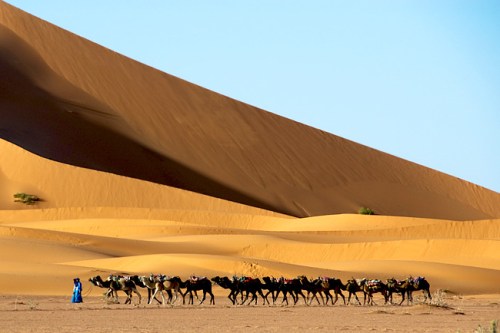
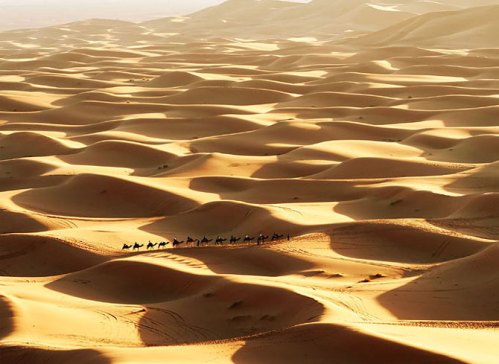
Sahara Desert Caravan


car·a·van (ˈkarəˌvan), n. [Fr. caravone; OFr. karouan; Per. karwan, caravan],  1.  a company of travelers, especially of merchants or pilgrims traveling together for safety, as through a desert  2. a number of vehicles traveling together.  3. a large covered vehicle for passengers, circus animals, gypsies, etc.; van.


My Desert Caravan:

In Tucson, I have been completely and utterly blessed to have a company of travelers in the desert. These artists, writers, thinkers are not only companions for the journey but muses for my creative endeavors. They are my large-covered vehicle, my circus animals, my gypsies. They are truthtellers. They are truthseekers. They are oracles. They speak in poetry and image and they ask me the hard questions that my soul needs to be asked but dares not ask itself. I asked some of these members of my caravan to offer their own interpretation of caravan.

And in the spirit of a caravan, these posts, which begin now, will be continuing to move, expand, and add new members throughout the week. Join us.

Join us for the journey.
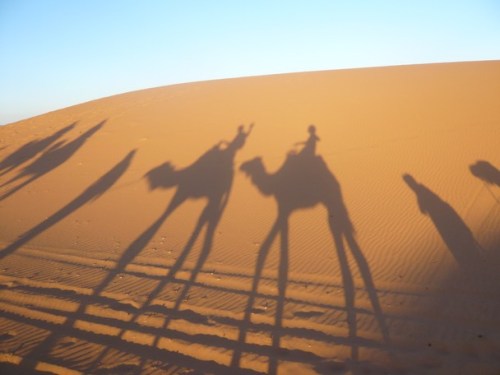
 

"traveling through the Sahara desert in Morocco," by Izabela Szatylowicz


(((the first string of camels))))


We enter into this line of hearts, strung across the horizon of desert like sanctuaries, each with a bright, open, door. We hitch. In here: plates of tortillas and beans are passed.  Someone plays guitar. Out there: the sun spreads muscular, casually pounding all things white. We move through daily desires, drink good, strong coffee.  Drink good, strong whiskey.  Drink good, clear water.  Some sleep, pulling dusty blankets to the ears.  Some scratch marks onto paper tablets.  Some murmur.  Rustle in crates.  Finally, humming blue dusk dips wild wings into the cooling night, flings it across. We stir. We stumble out through the doors into the milky rising tongue-spill of stars.  We bring out cloths, chairs, set the fire burning.  We pass thoughts back and forth, tender and delicate as onion skins, and begin sewing the day’s most important meal.

—Frankie Rollins


~            ~            ~~~                         ~~                        ~~~~~            ~            ~~~~~~


through city lights of the soul as companions

at the helm together, one atop a camel throne

a sound around our imagination belly


to press on,  landscapes intersexual and always dramatic

to press on,  mountains plunge peaks  into ecstatic promenade

to press on, moonlight soft /sharp spreading

to press on, as viscera animal


a feast  in the bosom of the cornucopia

a perpendicular and parallel circus

our roads are story

+++


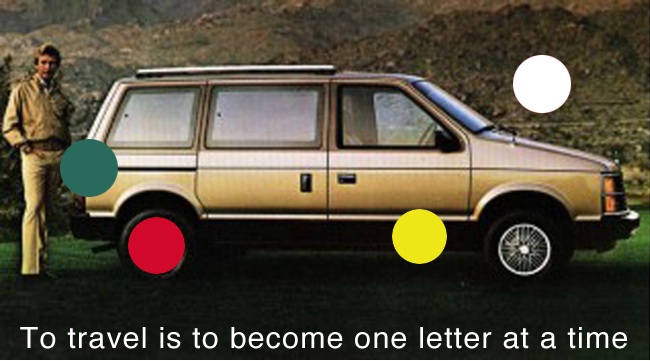
to travel is to become one letter at a time

to be together is to form a word

landscape is our molding

—Amanda Elizabeth Sapir


^^^^^^^^^^^^^^^^^^^^^^^^^^^^^^^^^^^^^^^^^^^^^^^^^^^^^^^^^^^^^^^^^^^^^^^^^^^^^^^^^^^^


Cara. Van. Cara. Van. Cara. Care. Can you car-re? How much is enough to strap on our backs? How much is too much to car-ry?  How do we know? They care, the carried, the carrying. The care itself a bundle. Within that checkered napkin, pieces of desires, imaginings, uncertainties. A spoon for serving them up, a knife for cutting through.

This care, could you hold it? Could you place it somewhere for safekeeping? In your pocket perhaps. Tucked away in the corner of the carriage, nestled with the glass bottles, as they softly rattle. This place so full of nothing that the everything rushes into it, spills over sometimes. But the everything is welcome in a place that often feels scarce. It’s scarce or it’s overflowing; there is no in between.

A place of lushness can be scarce too, it’s fullness means you sometimes forget to trim back, forget to breathe. But in this place, the dearth is more obvious. There is openness across the horizon, all the space to dream and to despair. A wide-angle shot filled with brown earth. And the sky when it breaks apart in color—purples, reds, siennas raging strong across the firmament.


— &


This caravan a blessing. This caravan a hearse. And too, a bridal train. A band with trumpets and tubas and trombones. Those, and large thrumming drums. We are cloaked in feathers. This enveloping a sort of being reborn, a tentative step forward. We throw up our open hands and scatter colored glitter in the air. Particles cascade down unto our faces and our garments. And though this path is arduous, we do not tire. We tend each other’s shoulders and feet. We whisper soft words. And when we need to, we wail. Our cries echo into the blanket of deep blue. Our laughter is our becoming.

—Lisa O’Neill


((((((((((((((((((                 ))))))))))))))))))))             (((((((((                        ))))))))))))


He comes from down there, by the river.  She comes from up there, by the sea. That one comes from everywhere, up and down, left, right, and center, a big “x” already traced across the land before she arrives.  He comes from another, still the same yet different, and makes it anyway.    She came by covered wagon and made a diagonal from corner to corner like it says in the story books. He came with a dog. She put her dog down and came without him. He came across the sea. She came flying out of the sky with no parachute but five diamond rings. She comes from somewhere in the vast grey middle, and has forgotten how she got here in the first place. We all come from the vast grey middle, and have forgotten how we got here in the first place.   We all forget how we got here in the first place.  We have all forgotten how we got here in the first place. We all stay. As we stay we forget less. As we stay we remember more. And then: he leaves across the sea.  She takes off into the sky with a rocket pack filled with mountain fuel.  She re-traces her x and decides to stop where the axes meet. He turns into a lizard and has another incarnation. Her dog comes back to life in the form of a parrot. He goes back, to the river.   She goes back, to the sea. The river is a different river. The sea is a different sea. The wagon-canvas is a cape with wings. We forget why we came.  We forget why we left.  We remember, we remember, we remember.

—Julia Gordon


— &more&more&more.to.come

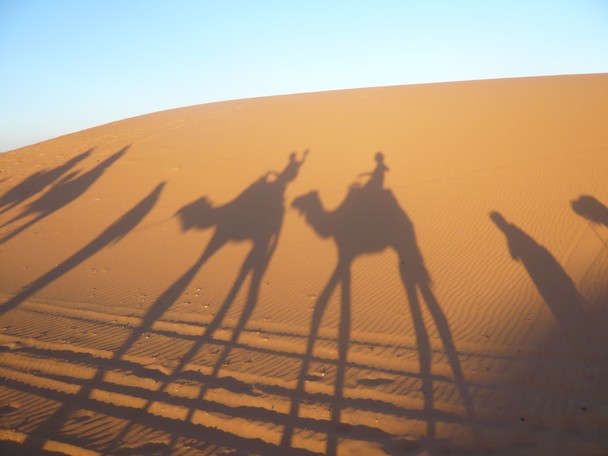
Desert Caravan by Jure Oblak


1 Comment

Filed under weekly words

flo·rid·i·ty

Opulence


flo·rid·i·ty (ˈflȯr-əd-ə-tē)  n. the state or quality of being florid

flo·rid (ˈflȯr-əd) adj. [L. floridus, flowery < flos, floris, a flower],  1. Rosy; ruddy; highly colored; said of the complexion.  2.  Highly decorated; gaudy; showy; ornate; as, a florid passage in music, etc.  3.  [Rare], decorated with flowers; flowery. –SYN. See rosy.


Peacock


Where is the line between gorgeous and gaudy? Between taste and ostentation?

When I think of floridity, these questions come to mind and also: the irresponsible use of color; writers who aren’t afraid to use flourishes; embroidery on bodices and pillows and handkerchiefs; flowery accents in music, the lilt of a trumpet carried over the beat of a handdrum; dark ink curling around elbows and forearms, beneath clavicles; cheeks flushed from flirting; brocaded curtains; balconies, ornate with iron plumage.


New Orleans Balcony, by David Paul Ohmer


When I was seventeen, I visited Versailles for the first time and witnessed it in all its floridity—everything lacquered with gold, everything in undulating waves and crevasses, cherubs everywhere, gilted glory. In my body, I experienced the feeling of it being too much and then the quiet relief of the garden—which, even if precisely manicured, provided, in its lush greenness, a respite. Somewhere to stand that felt closer to where my body comes from, my mother’s body, and where it will end up, underneath the earth.


Hall of Mirrors, Versailles by Stephane Feugere


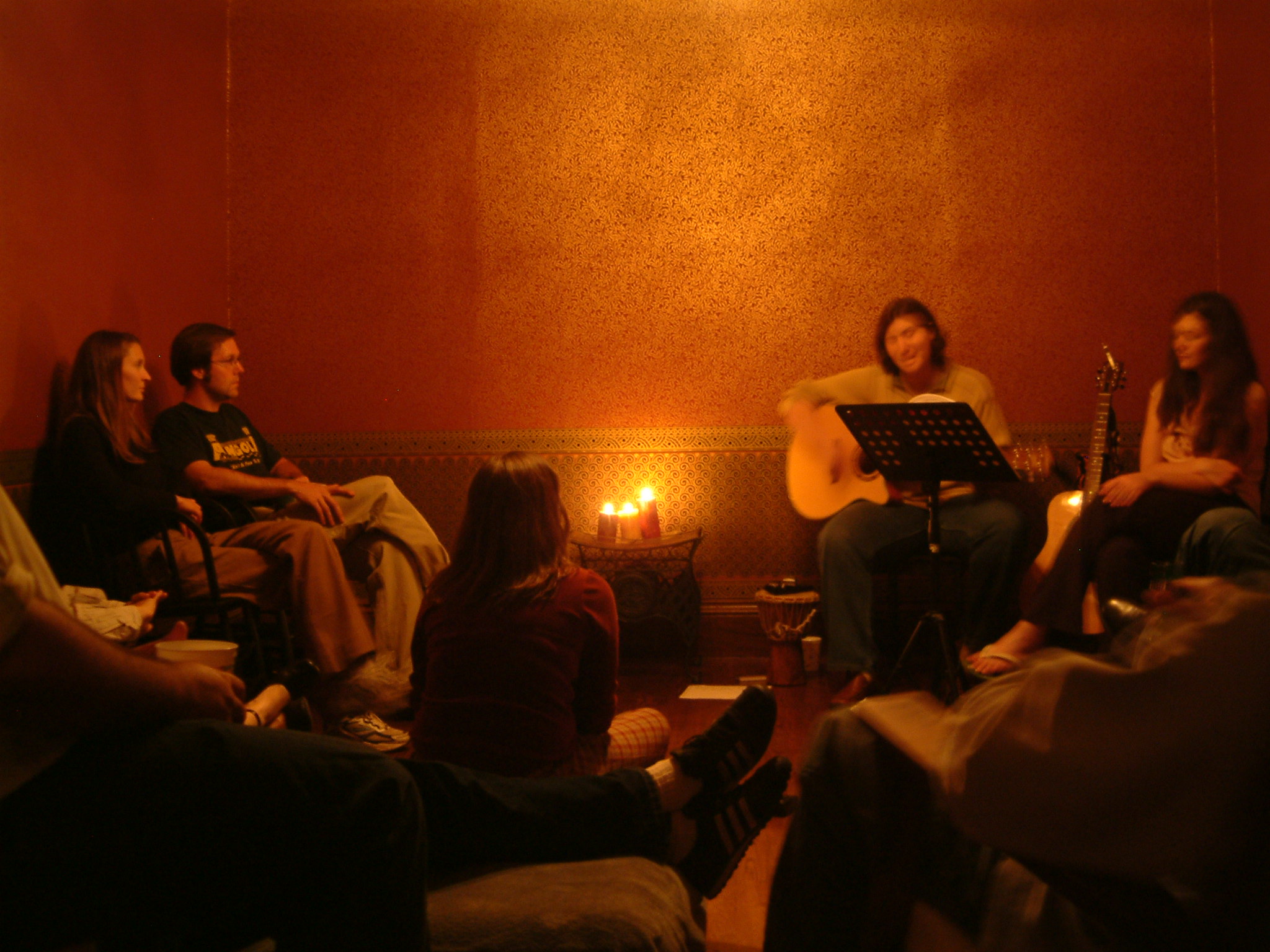
When I first moved to San Francisco, I stayed in the apartment of a friend. The walls of the living room and one of the bedrooms were covered in ornate wallpaper, dark maroon and dark green etched over with a pattern of intertwined gold leaves and vines. At night, when the fire was lit, small strokes of light illuminated the golden pattern before it was reclaimed by shadow. The paper contained both darkness and light. And yet, when I had the opportunity to move into one of the rooms with that paper, I could not do it. To be there part of the time was acceptable but to sleep with this richness, that was too much. When a room with plain green walls opened up, I moved in.


McAllister, San Francisco, CA 2005


Florid sounds like floral—floral was big in the early nineties when I was in junior high. Babydoll dresses, rufflely shirts, ultra-feminine pinks and corals. Lipstick that looked like the little Avon samples my grandma kept in her drawer—tubes the perfect size for my fingers. As a child, I felt so grown-up, with the addition of this color.


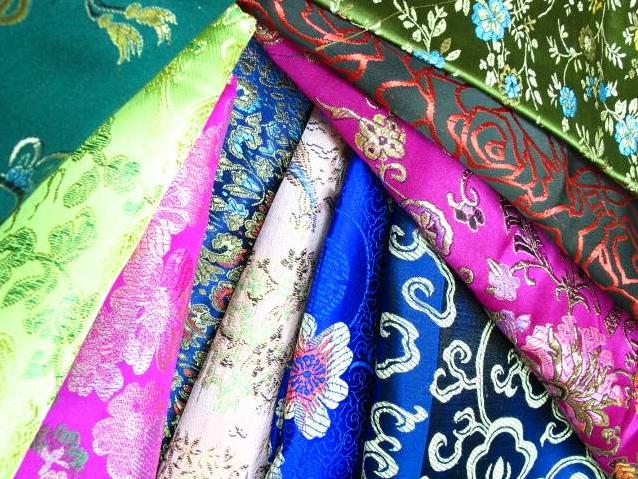
Brocade


Floridity: a matter of personal taste and aesthetics. But also a communal decision because at different eras in different locales, different levels of floridity were prized. The Puritans weren’t so much into the gaud, but the Baroqueans were. It seems some floridity comes from the desire to decorate, to make things beyond beautiful. And other aspects of floridity seem to stem from not being satisfied with life as it is, with things as they are. As if the addition of a bustle or a bow could help in any more than a superficial way. But it can, on some level, can’t it?


Gilded


I love adornment. I am a fan of earrings and scarves and brooches. I like stripes and polka dots and dark colors etched over in silver and gold leaf. Really our world is our canvas, parts of it have already been colored in and on and other parts are ready for our own definitions and markings. We are both the made and the makers. The adorned and those who adorn. We fasten, we draw, we gather, all in the hopes that we can make something that will somehow mean something to us and to those around us.

In her essay “Beauty Laid Bare: Aesthetics in the Ordinary,” bell hooks writes: “…among the traditional Southern black folks I grew up around there was a shared belief in the idea that beautiful things, objects that could be considered luxurious, that were expensive and difficult to own, were necessary for the spirit. The more downtrodden and unfortunate the circumstance, the more ‘beauty’ was needed to uplift, to offer a vision of hope, to transform.”

We all need beautiful things. What things we consider beautiful will be different for each of us. For me, I have begun to appreciate beauty in the small things I used to consider ordinary: the shape of my spoon, the way light shines through the colored glass of a candle holder, the new turquoise curtains that cover my windows. And also the floridity that can happen in just one person’s visage and how many looks—the tip of a laugh, the bathed eyes and soft brow of someone moved, the focus held in the corners of a mouth—can be contained in just one face.


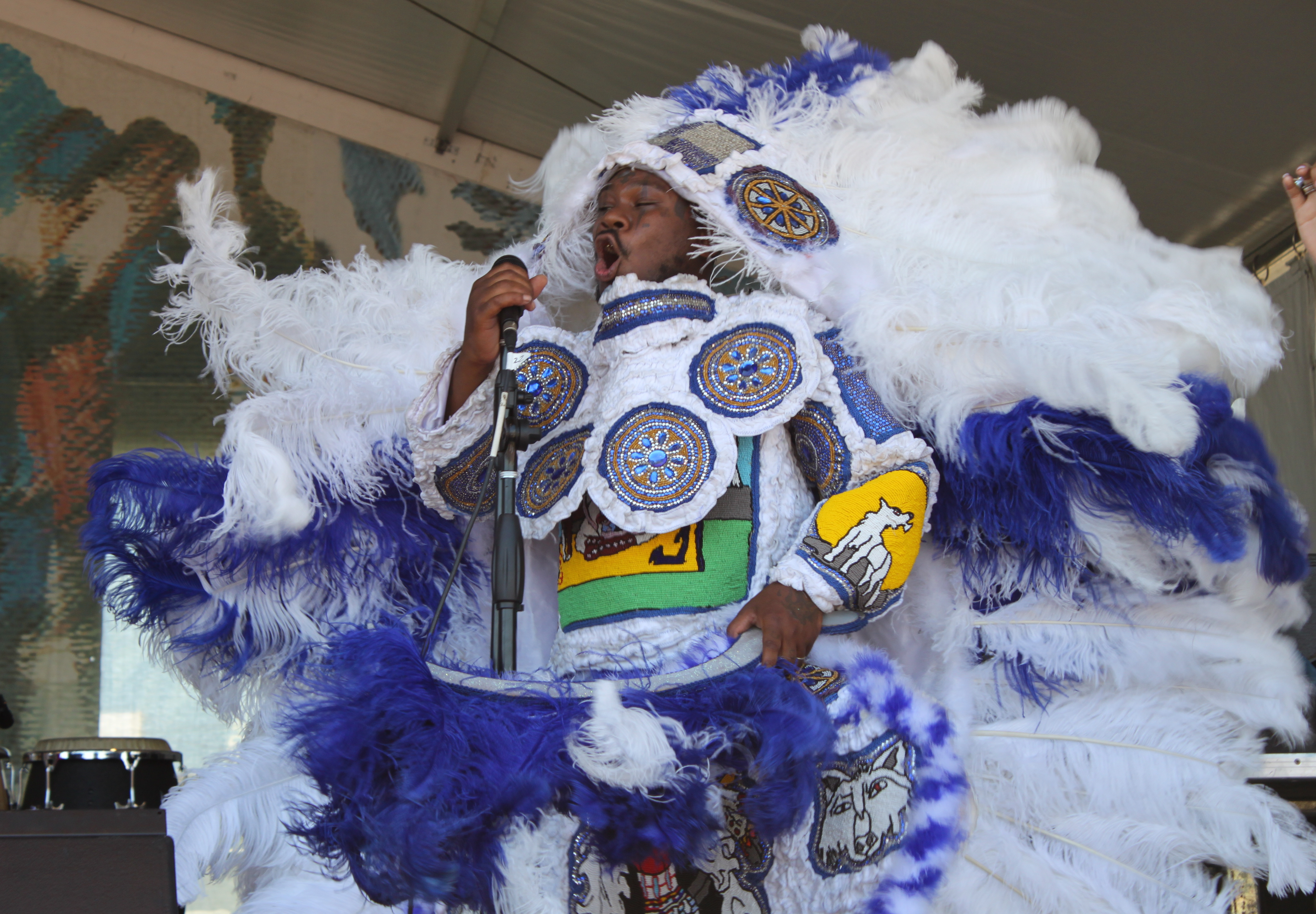
Mardi Gras Indian, New Orleans, 2011 by Lisa O'Neill

Leave a comment

Filed under weekly words

gen·er·al·i·ty


gen·er·al·i·ty (jenəˈralitē), n. [pl. GENERALITIES (-tiz)], [Fr. généralités; LL. generalitas < L. generalis], 1.  the condition or quality of being general, or applicable to all  2.  a general, or nonspecific statement, expression, idea, principle, etc.: as, he spoke in generalities 3.  The bulk; main body; majority; mass.


I cannot tell you how appropriate this word is for me at this moment, as I read my freshmen students’ first composition essays of their college careers. In class, I told them that one thing they should not do is begin their essay with any of the following statements or anything resembling these: “Since the beginning of time, man has known…”, “Everyone in the world knows that…”, “All human beings have the same quality that allows them to…”, “Webster’s defines language as….” For many of them, their knee-jerk reaction is to write with this broad scope. They have been taught to begin with the general and move towards the specific so often, they write these sort of statements that are non-statements, words that don’t express anything because of their lack of specificity.

I don’t say these things to give them a hard time. I’m quite sure that I began papers like this way back when. Part of it has to do with the way we Americans are often taught to write and think in high school, where learning is a process of memorization and receiving information rather than a process of inquiry and engagement, and part of it has to do with not trusting the specificity of our own voices and our own experiences. Writing about others is way less vulnerable than writing about ourselves. What could we possibly have to say about ourselves that someone else would care about? Maybe I’ll just quote Mark Twain instead.

When we speak in generalities, we have the cushion of a group to protect us. “We human beings are flawed” is much easier than saying “I am flawed.” “Growing up can be scary” is easier to say than “I am scared.” There is something comforting in “since the beginning of time”, even if it is inaccurate, because we can rest in the assurance that others before us had similar struggles; it makes us feel as if we are not alone. The problem here is that generalities allow us to forget that these groups, these communities were and are all made up of many individual specific people with their own specific stories. The Civil Rights Movement was a movement made up of individual people, each with their own relationship to disobedience, to putting themselves in harm’s way, to wanting to look out for the rights but also the wellbeing of their families. Hurricane Katrina didn’t just happen to “the city of New Orleans.” It happened to the Greater New Orleans area, a community made up of two million individual people, each with their own unique story to tell, with their own sorrows and yearnings and struggles.

As someone who writes nonfiction, I am often engaged in the debate about memoir. Some argue that only people with lives deserving should write memoirs. My questions to them is:  Who then is to decide whose life is worthy and whose isn’t? I certainly couldn’t make that decision. I have been just as amazed and moved by stories by “ordinary” people than famous or celebrated ones. There have been times when I’ve found myself completely unengaged by a celebrated author’s work and in contrast completely riveted by the thoughtfulness and words of an undergraduate’s essay. For me, it is all about the resonance and skill of the storytelling, not about the outlandishness of the life lived.

Furthermore, that question itself comes out of an ideology that rings false for me. Because I believe all of our lives are worthy of examination and discovery. We each have unique stories to offer, unique things to say, and I think of how lacking our collective story would be if any of the authors whose work I have read had thought that their voice wasn’t deserving of an audience. That would be a devastating loss. What if James Baldwin decided there had been enough writing done about race and racism, about complicated relationships with father figures? What if Charlotte Perkins Gilman listened to her husband and doctors who told her that her writings was unnatural and problematic, that she needed to stop, instead of continue, for her own health and wellbeing?

We are not selfish in our desire to tell our own stories. We are generous. This desire to tell stories is a sign that we are attempting to engage with each other. We are trying to understand ourselves. We are trying to relate. And you may say, well, that’s a generality; people write for many different reasons. And you would be correct. But I also believe there is something innate in us. We make sense of our lives through story.

While there are things we all share, the “applicable to all” statement is really very limiting and, I think, untrue, especially since we are only able to speak in generalities because of the thinking, researching, recording and writing of individual people who decided to ask questions about why we human beings, specifically and as a group, are the way we are.

And it is only in the effort and process of understanding ourselves, our own desires and motivations, that we have any hope of understanding others. Why do we think the way we think? What makes us lash out in anger or be moved to tears? Why is one conversation like sinking into a soft easychair while another leaves us with itchy skin? I may not know exactly who you are, but the more I read individual stories, the more capacity I have to listen and to really hear you. And only when I am honest with myself and only when I do the work of parsing through my own story do I start to have the ability to understand yours.

3 Comments

Filed under weekly words

Kurd·ish

Kurd·ish (ˈkərdiSH) adj. of the Kurds, their language, culture, etc.  n. the Iranian language of the Kurds

I’ve been sitting on this word a long time. I’ve  googled and read and searched databases and read, and I just couldn’t seem to figure out an angle, to get a grasp. But today is the tenth anniversary of 9/11 and although the Kurds are just one group, just part of the picture, it felt apropos to do a little connecting and reflecting. Here are some words I have culled.


A day that delineates borders and boundaries—
between countries, between ideologies, between histories,
between the time before this was so and the time after this was

In the United States, the television glows with stories of widows and widowers, children who have grown inches and ten years in age without their mother or father. The skyscrapers are shown and the planes hitting and the fire and the smoke. Over the radio, voices saying life was never the same again and I miss her and We will never forget. This never forgetting part of our collective chorus. But what are we not forgetting? What are we choosing to remember and what are we choosing to forget?

Mahmoud Othman, a Kurdish member of the Iraqi parliament says, “September 11 was a terrible crime that killed 3,000 innocent people. But the number of people killed in Iraq since September 11 is much, much bigger than the number of Americans who died.  And no one in the world seems to know or care.”

To remember means to bring to mind, to have a recollection of, to keep in mind to attend to or consider.

Ahmad Abdulhussein, the cultural editor of Al-Sabaah, a large government-owned newspaper,  was in Toronto on September 11 and remembers the panic on the faces of Americans he saw there. He also remembers seeing an American man shove a young Muslim woman in a burqa away from a city bus. Today, he says “America had one attack. We have attacks every day, and we as journalists focus on the daily attacks which take place here.”

To forget means to fail to remember, to treat with inattention or disregard, to leave behind unintentionally, to fail to mention, to fail to become mindful at the proper time.

Mohammed Ayoub, an employee of the Population Ministry, said Iraq, under Hussein, never experienced the type of unrelenting carnage which has been a hallmark of the post-war period here. “How could any Iraqi forget Sept. 11?” Ayoub said, lighting a cigarette. “It’s the day our world changed too.”


Quotations and material from paragraphs 3,5, & 7 taken from an article in the National Journal. Please follow the link to read the whole, compelling article: http://www.nationaljournal.com/in-iraq-remembering-a-day-that-changed-two-countries-forever-20110911

Leave a comment

Filed under weekly words

New York·er

“Above Fifth Avenue, Looking North,” a 1905 print by Underwood & Underwood


New York·er  (yôrkər), a native or inhabitant of New York (State or, especially City)

This week, we are lucky to have a guest post contributed by writer Julia Gordon. Enjoy!


When Lisa asked me to be a guest blogger (thanks Lisa!) on The Dictionary Project and told me that the word she’d chosen was “New Yorker,” I immediately started to think about what it means to be a New Yorker, and the different connotations that appellation carries within different spheres: upstate, downstate, Manhattan, boroughs, suburbs. I thought about all of these things and I thought that I would try to touch upon all of them, in some sort of expansive way…and then I realized that all I could possibly talk about as a New Yorker was my own experience of the city, the people, of my life before I got there, of my life while I was there, and of my life before I left. This is nothing less and nothing more than my New York, my version of its reality, my corner of its soul.


This slideshow requires JavaScript.


//     New York, 1978-1996/1999-2009     \\


Knee-high landscapes. Stiletto heels. Subway suits. Blue-suited coffee cups. New gum under new soles. Trains jerk to a stop. Bodies pressed together. Shoulders: intimate friends. Tunnels to nowhere. Tunnels that are homes. Tunnels with rats. Tunnels with mice. Tunnels with spiders. Tunnels in walls. Tunnels underfoot. Tunnels under water. Tunnels through bedrock. Rainboots are in style. Snow is never white. More cars yellow than not. Steaming asphalt. Smell of rain on tar. Rockefeller Center. Times Square smells of guilt. You can only buy chestnuts in winter. The steps to the Met are bigger each time you see them. The Temple of Dendur is magic. You fit your head into a library lion’s mouth. Central Park. Shakespeare outdoors. Class trips to see the dinosaurs. The planetarium was better before. Class trips to see the monkey house. Class trips to the old Westchester manors. Class trips to the Tenement Museum. Guss’ Pickles. Ten feet of buried cobbles. Ten streets of hidden Jews. Class trips to South Street Seaport. Dates who take you to South Street Seaport. The Avenue of the Americas has many fountains. Running through fountains will get you wet. Metro North trains. The subway is a train. Getting on a train going the wrong way. Getting on a train going the right way. Getting on the wrong train. Realizing trains are not right or wrong except for the one that goes to Roosevelt Island. Trying to take a ferry to Roosevelt Island. Finally taking the tram. Perfect makeup. No makeup. Umbrellas open under scaffolding. Getting mad that umbrellas are open under scaffolding. Scaffolding. Ice falling off midtown roofs. Soho costs too much. Smell of parties on tar roofs. Climbing up fire escapes. Climbing down fire escapes. Barred windows. Sixth floor walk-ups with no elevators. Crumbling marble staircases. Intercoms that don’t work. Lowering keys tied to twine on fishing reels. Bodegas on every corner. Ailanthus cracking concrete. Blue trains, green trains, yellow trains, red trains, three brown trains, then two. Living in Brooklyn. Living in Manhattan. Living in Queens for two minutes. Living in Brooklyn. Living in Brooklyn. Living in Brooklyn.

It is Tuesday and we are very busy. It is Election Day and we are even busier than usual. There are planes and they crash. Planes have crashed before; we are still very busy. The governor has yet to speak. People are calling their wives. People are calling their children. People are flying to the ground. Ash is falling from the sky. The governor has yet to speak. We are still very busy. Upper left-hand corners of envelopes with return addresses of One and Two are falling from the sky. The governor speaks. It was Tuesday and we had a plan and now there is not one. We go to the roof. We are on the roof and the big cloud gets bigger and bigger and biggest and there is one shadow less in the world. We climb down off the roof. We get high. We get higher. We get highest. She kept her bunny ears and so we go there. There is snow everywhere: broadcast snow, ash snow, concrete snow, bone snow. Snow is never white. We get more high. We sleep in a tangle. My arms are his and his legs are mine as I always wished they would be, and I am glad and I am guilty that I am glad and it is morning. There is a train that will run. It is yellow. It goes above ground. It crosses the bridge. In unison, we stand. We go to the western windows. They are dirty but we do not care. We press our palms to them, our foreheads, or mouths, our cheeks, we cannot get close enough to the western windows or what lies beyond. What lies beyond is burning. It is people burning. There are Jews on the train and they do not like that there are people burning. There are gentiles on the train and they do not like that there are people burning. There are no Muslims on the train. There are no Muslims on the street. Then there are Muslims on the street with American flags. It will not stop the Sikhs from getting knifed. We go to St. Vincent’s. There is nobody to help. There is nobody there. Everybody is already buried. Everyone is already dead. We vomit tears on Seventh Avenue.

We hear helicopters and we cower. We hear firecrackers and know they are guns. The lights go out and we cry. The lights stay on and we cry. We are very friendly unless you look Muslim. Which means we are very friendly unless you are a certain kind of brown. Or we are overly friendly if you are a certain kind of brown. We watch the news. We can’t watch the news. We wear flag pins. We tie yellow ribbons. We pray. We refuse to pray. We blame prayer. We blame God. We are dogs. We travel in packs. We lie awake at night. We sleep all day long. We drink too much. We smoke even more. It looks like 1986 in that bathroom, there’s so much cocaine. The green trains run. The blue trains run. The red trains run except for the stop that doesn’t exist anymore. There are smoking holes in the ground. It smells like rotting flesh. We drink and smoke and do lines on rooftops against the backdrop of jet fuel flames. We forget. We remember. We forget.

We love each other on the subway. We love each other on the crosstown bus. We smile at each other like it’s Christmas. We talk a lot about just how much we love each other. We wait patiently at stop signs. We stop at red lights. We wave pedestrians past.  We hold the door open. We offer coffee. We put change in tin cups. We buy beers. We go to soup kitchens. We donate coats to the homeless.  We gather our canned goods. It gets colder. We smile a little bit less. We try to get warm. We make love in Prospect Park. We make love in Fort Greene Park. We make love in Green-Wood cemetery. We make love in Brooklyn Bridge Park. We make love under the war memorial at Grand Army Plaza. We make love at Manhattan Beach Park. We make love at Coney Island Park. We try to make love in Central Park but it hurts too much. In Washington Square Park we fare better but stop halfway through to buy pot. We are remembering again but we are trying to forget. This will go on for years.

It has been years. We are better. Firecrackers are firecrackers. Guns are guns. The lights go off and we laugh. The lights stay on and we laugh. Helicopters are helicopters. Thunder is thunder. Rain is rain. We frown again on the train. We lean on our horns. We block the box. We do not like our mayor. We do not like each other. We do not make love. We do not go to holes. We do not look out western windows. We do not wear flag pins. There are no lights in the sky. There are no cranes in the holes. We do not talk about it. We talk about it too much. We lie awake at night. It has been years.

Movies in Bryant Park. Concerts in Prospect Park. Shakespeare in The Park. The monkey house is gone. We are too big to ride the giraffes.  Holiday parties at the MOMA. Coworker trips to the Guggenheim.  Rockefeller Center. Times Square smells like the color pink. The steps at the Met are smaller than they used to be.  The library lions roar. You can’t buy chestnuts at all anymore. There is a right train and a wrong train. There is your train. There is your corner. There is your store. There is your door. Tar roof smells are memories. The planetarium isn’t that bad.  The Temple of Dendur is still magic.  Running through fountains will get you arrested. The cobblestones were always Belgian blocks. You told me it was time to go. We drive across the Brooklyn Bridge. We drive up the West Side Highway. We drive up the Saw Mill Parkway. We drive west on the Cross County Parkway. We drive west. We drive west. We drive west. Ailanthus trees push through the concrete, rock bricks loose from mortar, twist around fire escapes. We always take the stairs.


\\     July 2011     //


Julia R. Gordon is a writer with over ten years of experience in the non-profit sector as well as a background in government and political media, fundraising, and message development. Since 1998 she has worked as a writing consultant, providing one-on-one tutoring in writing skills, public speaking, and resume development as well as editing services for academic papers, research projects, and creative writing endeavors. She currently works at the University of Arizona and Raise the Bar LLC, and serves on the Board of Directors for Casa Libre en la Solana, a Tucson, AZ-based literary arts organization. She also writes for The Skein (www.theskeinblog.com), an online blog she created to explore politics, government, society, and interpersonal relationships through language and the written word. Julia was born and raised in downstate New York, and made her home in Brooklyn for a decade, prior to relocating to Tucson in 2009. During her time in New York she worked for such organizations as The Center for Literacy Enrichment at Pace University, Cornell University Medical College, the New York City District Council of Carpenters, Alliance for Quality Education and East River Media. During her career she has also held positions with several city- and statewide political and issue-based campaigns throughout the country. Julia is a graduate of Cornell University.


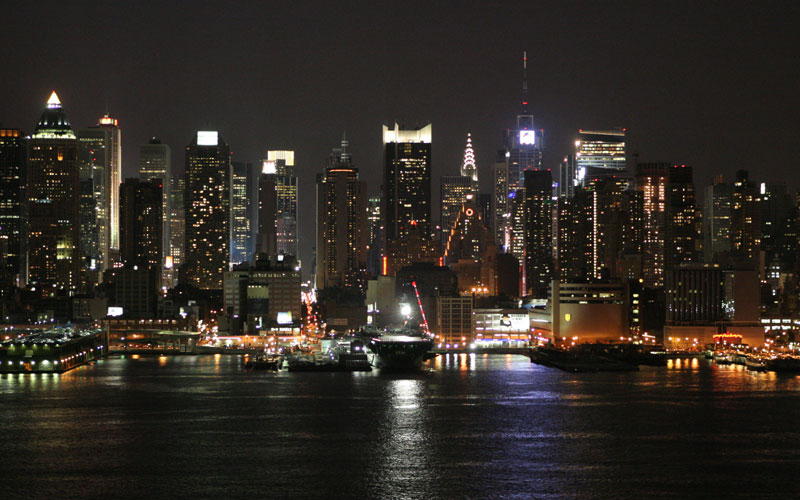
Modern NYC Skyline


Ryan Adams’ album Gold, on which the song “New York, New York” appears, was released September 25 , 2001. The video for the song (below) was shot in the streets of New York four days before September 11, 2001.


Leave a comment

Filed under weekly words

peal

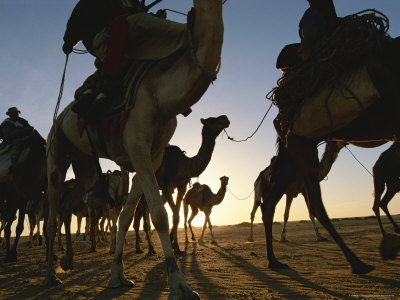
camel bells on the front porch, june 2011

1peal \pēl\  n.  1:  the loud ringing of bells 2: a set of tuned bells 3: a loud sound or succession of sounds.

2peal v. :  to give out peals: RESOUND

She thought of the word peel, how it meant an unfolding, a stripping away, of layers of paint, of onions, of clothes. And then she thought of the word peal, the eruption of sound, suddenly and forcefully, cascading across the air. Peel, she thought, separation. Peal, she thought, an evermore echo. The force of the “p,” the screech of the “ee” sound, the lullaby provided by the “l.” The words sounded like what they described, both of them.

Why she thought of this now was a mystery. She didn’t remember how the word had been summoned up but here it was, wanting to be considered, asking her to make connections and to consider sound. She had a memory of when she was young, nine maybe, and she had participated in a bell choir. She had wanted to play the littlest tinkliest bells, but those were taken so she was sent to the other end, to the large bronze bells, the ones that sounded like gongs, like a heart throbbing. It took all of her energy to shake them back and forth and all her control to do so without smacking herself in the face. It was then that bells shifted in her mind from a light and airy sound to something heavy, something substantial, an honor, perhaps, or a burden.

That was a long time and a world away from this small room, where she sat in bed alone, waiting for no one. Soundless, she went through her days, so she played with memory, remembering the way words resonated, like the symphony of “Carol of the Bells,” the strong line of the cello’s bow in Pachelbel’s Canon. She was memories without associations. She held them with nothing to tie them with: balloons without ribbons, kites without strings, a lion cub untethered.

So the unfolding was a sort of bliss, each new memory a new world, forgotten and now remembered. But so too was it agony, when she could not place it, when she didn’t understand why she was remembering or who she really was.

Appeal, appealing, repeal, pealing, peeling, peal, peel—like clothes, like onions—peeling, pealing, repeal, appeal—things like strawberries, like the nape of a neck, the crease of a hipbone—appellant, appellate, appease—to please, to make oneself invisible—appear—a vision, a sight for sore eyes—appearance, appearing, appetite—to hunger, hungering, for something, a hunger unfounded, insatiable, unmet.

She looked down the bed at her toes and saw a twitching.


p.s. Yesterday, at a local bookstore, Antigone’s, I purchased a string of bells to hang outside my house. Upon inspection of the tag when I went to hang them at home, I saw these were “camel bells” from India. In India, bells are not a frivolity, a surplus, an addition of pleasant sound. They are a necessity. They order life and signal warning, in many different facets. These strings of bells, like the ones I have, are attached to camels, the ships of the desert, to encourage them to move forward in their arduous treks through the hot desert. I trust they will serve as a good reminder, especially on laborious days, to keep rhythm and pace and, perhaps, to lighten up a bit.

2 Comments

Filed under weekly words

i·so·chor

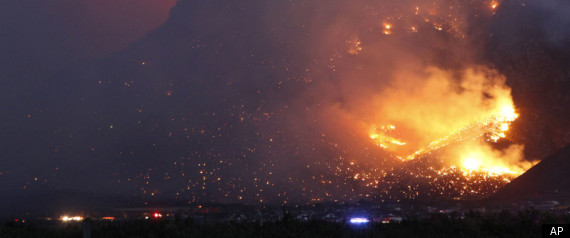
Monument Wildfire, Sierra Vista, Arizona; AP Photo


i·so·chor, i·so·choresō kôr′, -sə-)  n. [<iso-; + Gr. Chora, a place], in thermodynamics, a line on a graph representing the parallel changes in pressure and temperature of something whose volume remains constant.

*(163)


I.


Isochor, isochore, isochoric: these are all about the process of transformation and sameness. When undergoing an isochoric process, the volume of a given material remains the same even as it undergoes changes in temperature, in pressure. The isochor line reveals the jagged ups and downs of these changes while the material’s volume is constant. How much does this resemble the process of our bodies and our lives? The content, the core of who we are remains constant in many ways, and yet as we endure stresses, fracture, swelling joy, calming neutrality, we are also transformed. Over the course of even one day, our skin flakes off, our hair is falling out and emerging new from follicles, water evaporates from our bodies until we drink to hydrate again, our cells change and adapt and yet our body still maintains a sense of solidity and of consistency so that we can feel our skin, look in a mirror and say, “yes, this is still me.”


II.


Summer Solstice is tomorrow, and so we enter the season of fire. The earth is warmer, our bodies are warmer. Heat is not something to contemplate but a reality. Something that requires us to pay attention to our bodies in a way we might not always pay attention. Last Saturday, I attended a three-hour yoga class to celebrate the solstice. Our teacher asked us: What patterns no longer serve you? What insecurities in your life do you want to burn off? And what, in your life, do you want to set ablaze? As we moved through deep yin yoga poses, strenuous vinyasa, 108 push-ups to serve as prostrations, I could definitely feel the shifts of energy in my body and in my heart and mind, a consistent burning and also a flickering of change. I thought of the constant and yet frenetic nature of a flame, of something on fire. The fire continual, the flame existing as both the same and changing.


III.


For weeks, fires have burned across southern Arizona. The landscape set ablaze, flames consuming all they meet. In the desert, we always pray for rain, but prayers have become more insistent. One place affected is Sierra Vista, a town where I teach. I have been praying for the safety and wellbeing of former students, hoping their homes remain untouched by the fire. Over coffee with a friend, we mentioned our mutual sadness about the fires. She had read the definition of crown fire, the way in which flames leap across the air from crown to crown, treetop to treetop, using gases for fuel until they reach the next branch. The fire is doing exactly what it’s meant to do, she said. Burn. The trouble is when fire burning directly clashes with our health and that of our loved ones, with the place we have chosen to make our home. When fire burning transforms matter in ways that destroy what we have painstakingly built.


IV.


Sol + stice derives from Latin words meaning “sun” and “to stand still.” Summer solstice celebrates the longest day and shortest night of the year. When days grow longer, the sun rises higher in the sky until it has the appearance of staticity, of standing still. My yoga teachers say there is no such thing as “balance,” that stillness is an illusion. When we do tree or dancer pose, we are “balancing.” Even as we hold a pose, blood pumps through our vessels, energy courses up and down our bodies, toes clench and release, hips tilt. Druids’ celebrated  solstice as the wedding of Heaven and Earth. Ancient Germanic, Slav and Celtic tribes started bonfires, jumping through luck-giving flames. The Tohono O’odham mark solstice as the beginning of the new year, harvesting saguaro fruit into wine named nawait that they drink at vi:gida to bring annual rains. We are moving and motionless. We hold heat and coolness as our earth holds fire and water.


* (words in each section)

Leave a comment

Filed under weekly words

rhyth·mist


rhyth·mist  (ˈrith-mist)  n. A master of rhythmical composition; also, one versed in rhythmics.

(from Webster Comprehensive Dictionary: International Edition, Lobate through Z)

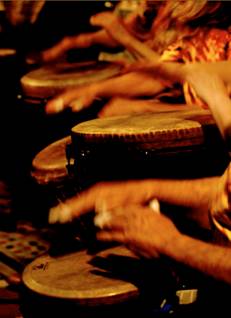
“Get rhythm when you get the blues/ Get rhythm when you get the blues/ Yes a jumpy rhythm makes you feel so fine/It’ll shake all the trouble from your mind/Get rhythm when you get the blues.” –Johnny Cash


Lately, I’ve had a case of the doldrums. This usually happens to me in summer. I think that we make summer the time of happiness. Get a tan. Go on vacation. Read mindless books. Enjoy yourself. So if you aren’t feeling happy all the time, there is something wrong with you because, come on, it’s summer.

Especially in the past four years while I have been studying and working on the academic calendar, summer is a sort of pause in the rhythm of my life. It is a time for reflection and detoxification and detoxifying requires bringing all the toxins to the surface, where they are visible. This can be a difficult process.

I’ve been thinking lately about what I am in this life and what I am meant to be. I know, easy questions. And I’ve also been thinking about Lucinda Williams’ song “Born to be loved.” In it, she cites all the things you are not born to be: “to be abused,” “to lose,” “to be abandoned,” “to be forsaken,” “to be mistreated,” “to be misguided.” What you are born to be at the end of each refrain is loved. You were born to be loved.

Lately, in my mindfulness meditation, I’ve been practicing metta, or loving-kindness, for myself and one of the things I’ve been saying to myself is “May I be love. May I be loved.” Isn’t it amazing that only one letter is different in these two intentions? When I say them aloud, if I do so quickly, you may not even hear the difference. Perhaps it is because they are so closely intertwined, the ability to love others and one’s receptivity to love. Recently, Stephen Elliot in his daily email piece for The Rumpus quoted someone’s interpretation of the human question as being not: “Am I loveable?” but “Am I capable of love?” For it is in our capacity to offer love, which we are all born with even if we have to work at it in our lives, that we are able to be loved. My mindfulness teacher has me offering metta to myself because he knows that only in offering acceptance and love to myself am I really able to offer these to others.

So, a few pulses I have been considering, a few rhythms repeating in my mind these days. Hope yours are steady and continuous and raw and new.

Leave a comment

Filed under weekly words

poly·sty·rene

poly·sty·rene /ˌpäliˈstīrēn/ n: a rigid transparent nonconducting thermoplastic used esp. in molded products and foam.

Yesterday, a status update went viral on facebook. People began posting and reposting the quote that was attributed in its entirety to Martin Luther King.

This quote was:

“I mourn the loss of thousands of precious lives, but I will not rejoice in the death of one, not even an enemy. Returning hate for hate multiplies hate, adding deeper darkness to a night already devoid of stars. Darkness cannot drive out darkness: only light can do that. Hate cannot drive out hate: only love can do that.” Martin Luther King, Jr.

The message was posted in response to the United State’s killing of Osama Bin Laden on Sunday and was posted by numerous facebook users, of which I was one. By yesterday evening, articles began springing up pointing out the inaccuracy of the quote. The Atlantic had an article entitled “Out of Osama’s Death, a Fake Quotation is Born.”This headline is inaccurate. The quote wasn’t a fake, a fraud, made up. A part of it, less than a third, was misattributed.

The first sentence of this quote was not written or said by Martin Luther King, Jr., but the rest of it was. Okay, I thought, we all have a little egg on our face. We should make sure we have researched the quote before posting, but it is the solidarity of that message, the need to speak to that sentiment of love and of nonviolence after this violent act that counts, right? Apparently, wrong.

More articles emerged talking about the “fake quotation” and how immediately it went viral without people checking their facts. (I won’t even go into the fact that this is a facebook status message, not an investigative report.)

This kind of focusing on the minor detail in lieu of the whole, the attempt to find the piece that invalidates the whole message is what I detest most about news networks like Fox News, who spread information completely skewed and out of context to masses who are genuinely and earnestly seeking information. It reeks of that “Gotcha” mentality. Look what we found, look at this detail and how silly, how stupid, how wrong this sentiment, this speech, this movement, this entire group of people is. Taking this first sentence that was misattributed and blowing it out of proportion makes us lose sight of what was really happening here. Individual people were taking action, were responding in a way that was in opposition to the jubilant celebration of Osama Bin Laden’s death.

Here is what I take from the status updates of yesterday. People who posted were trying to call on a bit of solemnity in relationship to the killing of a man by our country. People who posted felt conflicted about the act of violence that occurred when the U.S. took the life of Osama Bin Laden. Even if he was a person who was responsible for the needless death of thousands of innocents, he was also a human being. Our act of murdering him was returning hate with hate, violence with violence. People who posted felt conflicted about and embarrassed by the drunken St. Patrick’s Day style celebrating and jubilation that they witnessed after seeing images of our fellow Americans thumping their chests and screaming “USA,” holding American flags and hanging out of trees. Maybe they, like me, had a hard time reconciling that sort of response to a man’s death, even if it was the death of a man who had caused such tragedy and suffering to our community. In status updates that their friends posted, these facebook status posters found a sense of solidarity, of community and of compassion in the midst of a situation they were wrestling to understand and make sense of a personal level. They were looking to the words of one of our greatest leaders of nonviolent social change. They were seeking to model him. They were trying to think about what creative problem solving we might employ to be a country that engages in peaceful diplomacy, that attempts to find ways to better understand others in the world so that this kind of violence is not necessary.

By posting the words of MLK and by what I write here, I am not saying I don’t understand the ways in which this feels like necessary closure to those Americans who lost family and friends in the attacks and even to those who didn’t. We, as a country, were all affected in a major way by 9/11. I grieve with my fellow Americans for the losses we suffered, and I understand how this event can feel like a satisfying resolution. What I am saying is that our response involved more violence, involved stoking the fire of hatred, and I am not at ease with that. (Furthermore, I don’t believe that this act will resolve our problems with al Qaeda nor cause them to disengage and desist. I think it might exacerbate it all. But this is not my focus here. My focus is this one status update, this one response.)

I think its important to recognize that what a large group of people felt called to do yesterday, in the wake of the death of Bin Laden, was to think of major leaders of the nonviolent movement, like Martin Luther King, Jr., like Gandhi, like Dorothy Day. People that said: No. No matter what the violence. No matter what the mistreatment. We will, in fact, conquer, but we will work as a peaceful people.

For me what makes the United States great is not the times we use force but the times we use creative thinking and diplomacy to relate to other people and to get the outcomes we need.

And I don’t want to sit by while the fine line is scrutinized, while these statuses are viewed as unfortunate and inaccurate. The sentiment embedded in the quote was there. These facebook users wanted to suggest and seek out the ways in which we can add lightness to the dark, the ways in which we can drive out hatred with the power of our love. And that is what is important in this: the amount of people that message resonated with. Not that the first sentence of it didn’t come out of the mouth of Martin Luther King, Jr.

7 Comments

Filed under weekly words