Monthly Archives: May 2012

live from the dictionary project presents! part two!

solar eclipse at Gate’s Pass, Tucson, Lisa O’Neill


Today, we have more readers from the dictionary project presents! event at Casa Libre on April 28, 2012.

Annie Guthrie and Samuel Ace read poems they composed for National Poetry Month (napomo) at The Dictionary Project. Elizabeth Frankie Rollins and Rebecca Iosca read flash fiction pieces composed for flash fiction february.  I read on “conduct.” Julia Gordon reads on “New Yorker” and it is a complete and utter tragedy that the video cut out two minutes before she finished because she brought. the. house. down.

Enjoy!


Samuel Ace on “drowsily”:


Elizabeth Frankie Rollins on “schizophrenia”:


Rebecca Iosca on on “schizophrenia”:


Annie Guthrie on “penology”


Lisa O’Neill on “conduct”:


Julia Gordon on “New Yorker”:

Leave a comment

Filed under the dictionary project presents

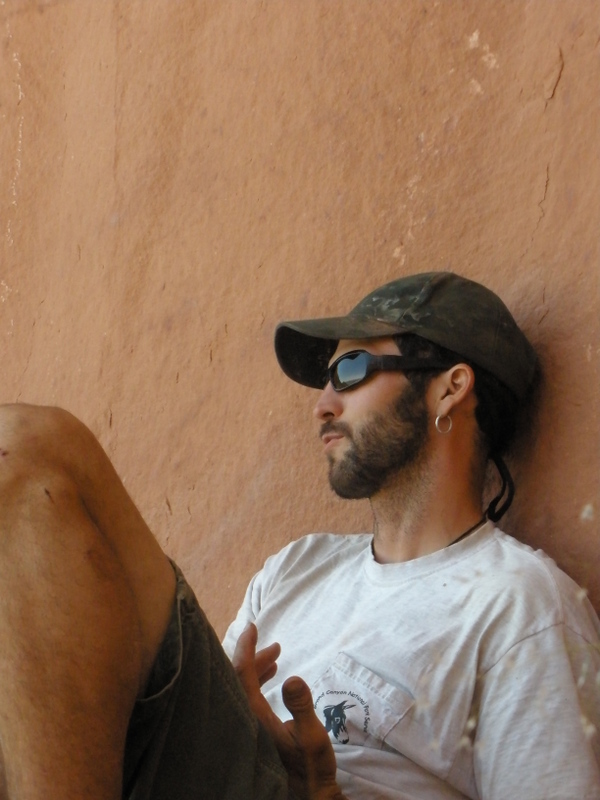
the dictionary project author interview: nathaniel brodie


At the dictionary project, we have non-traditional author interviews on the second and fourth Wednesdays of the month. In our author interviews, instead of responding to direct questions about their life or work, guest authors discuss their relationship to words and provide answers to dictionary project words bibliomanced specifically for them.

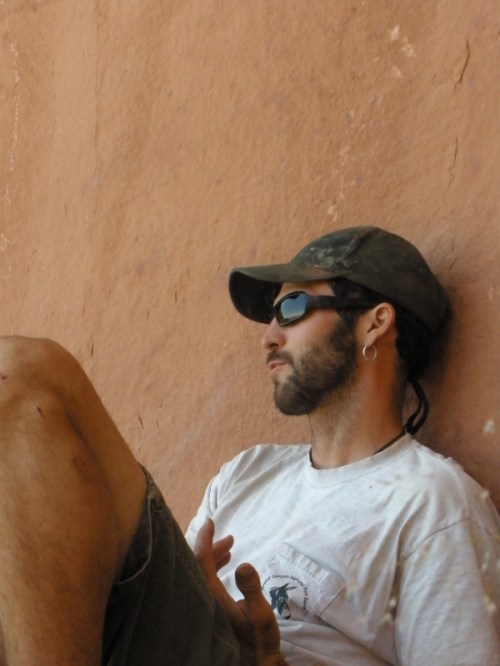
This Wednesday, we feature the words of writer, outdoor enthusiast, soon to be dad, and one-time builder of Grand Canyon trails Nathaniel Brodie. Enjoy!


1.   Please share a memory/story/thought in relation to a dictionary/dictionaries:

The first that springs to mind has to do with a lack of a dictionary: when my wife and I were in the Peace Corps in a small shack in rural Paraguay we whittled away the hours playing Scrabble. But we lacked an English dictionary, so I had no way of calling out my wife on all the words I suspected her of inventing. There’s no way I’d have let her get away with something like “zwyk,” of course, but mostly they resembled actual words (like “sleck” or something), in which case, depending on an complex personal algorithm of belly-satiation, alcohol consumption, and game-board analysis, I’d let her get away with it, but not before adding it to a List of Words To Check Next Time We Get A Dictionary. I can’t remember if I ever got around to truthing that list; I like to think that by then I may have learned enough about life and marriage to know that whatever satisfaction I may have thought I’d have derived from exposing her lexiconic creations would in fact be a tired and petty victory.


2.   What is your current favorite word?

Sylvan. Isn’t that nice?


3.   What, in your opinion, is the most obnoxious/insidious/annoying word?

The one I’ve found particularly irksome recently is “epic.” This has less to do with the word itself—which is a fine word, really—but the way it’s being faddishly and improperly used and abused. Maybe it’s the subculture I find myself in: climbers and kayakers and surfers and the like, but people are constantly describing things as “epic”—things that may have been especially harrowing, or exciting, or in some manner intense, but which to my admittedly curmudgeonly mind do not exactly resemble Gilgameshian acts of heroic valor. Really, though: the existence of two feet of fresh powder does not automatically entail an “epic” day of skiing, especially if the narrative of that day will later be delivered using slang in which the phrase “shredding the gnar-gnar” or “pow-pow” could possibly be employed and understood.


4.   Please respond to the following words and definitions, picked exclusively and randomly for you:


most  (mōst),  adj.  [compar. MORE (môr, mōr)],  [ME. < AS. Mast, maest, used as superl. of micel, big (cf. MUCH); akin to Goth. Maists; for base see MORE],  1.  greatest in amount, quantity, or degree: used as the superlative of much.  2.  greatest in number: used as the superlative of many.  3.  in the greatest number of instances: as, most flame is fleeting.  n.  1.  the greatest amount, quantity, or degree: as, he took most of the credit.  2.  [construed as pl.] a)  the greatest number (of persons or things): as, most of us are going.  b)  the greatest number of persons.  adv.  1.  [compar. MORE], in or to the greatest degree or extent: used with many adjectives and adverbs (regularly with those of three or more syllables) to form the superlative degree: as, most horrible, most quickly.  2.  very (often preceded by a): as, a most beautiful morning.  3.  [for almost], [Colloq.], almost; nearly. 


An ugly word, reeking of selfishness and possessiveness, gluttony and greed. But all is context, I suppose; it depends on the adverb: could be “the most beautiful ____,” which is a bit exclusive, but not all bad. Regardless, I generally regard superlatives as either lazy or simply dull tools of the trade. Yes, we need to be able to say “Kareem Abdul-Jabbar scored the most points in the history of the NBA” (and believe me, I find myself saying that a lot), but there’s not much zest to these type of lines. Same goes for its colloquial use (“Most of the time…”)—just kind of a boring word.  But that’s okay—oftentimes boring is far preferable to flashy. Whatever. Moving on…


 eye·wink·er (ˈī-ˌwiŋkər) n.    1.  an eyelash.  2.  any foreign particle in the eye that causes blinking.


I hate that. Hate the contortions of trying to flush my eye out under the faucet; hate the way the eye becomes bloodshot and bleary; hate the irritating and painful hours of blinking and stifled rubbing. And yet every once in a while it’s good to be reminded of how blessed I am to be of good health; the occasional tweaked back or broken wrist or, yes, “foreign particle” in the eye reminds me of how different and difficult the world could be (and, for billions of people, is). On a sidenote, an “eyewinker” person (n. 3. one who habitually winks, in a conspiratorial manner) can be either creepy or kind. Somewhat to my dismay, I can’t wink.


push  (poosh),  v.t.  [ME. posshen; Early Fr. pousser; OFr. poulser; L. pulsare, to beat, freq. < pellere, pulsum, to beat, drive; cf. PULSE],  1.  to thrust or press against (a thing) so as to move it away.  2.  to move by exerting force in this way.  3.  to thrust, shove, or drive up, down, in, out, forward, etc.  4.  to urge forward or on; impel; press.  5.  to follow up vigorously, as a campaign, claim. etc.  6.  to extend; expand: as, the Genoese pushed their trade to the Far East.  7.  to press hard upon:as, he was pushed for time.  8.  to urge or promote the use, sale, success, etc. of.   v.i.  1.  to press against a thing so as to move it.  2.  to press or thrust forward vigorously.  3.  to put forth great effort.  4.  to advance against opposition.  n.  1.  a pushing; shove, thrust, etc.  2.  a thing to be pushed in order to work a mechanism.  3.  a vigorous effort.  4.  an advance against opposition.  5.  pressure of affairs or of circumstances.  6.  an emergency.  7.  [Colloq.], aggressiveness; enterprise; drive; force.  8.  [Slang], a crowd or clique.
push off, [Colloq.], to set out; depart
push on, to proceed.
SYN.—push implies the exertion of force or pressure by a person or thing in contact with the object to be moved ahead, aside, etc. (to push a baby carriage); shove implies a pushing of something so as to force it to slide along a surface, or it suggests roughness in pushing (shove the box in a corner); to thrust is to push with sudden, often violent force, sometimes so as to penetrate something (he thrust the knife into his victim’s back); propel implies a driving forward by a force that imparts motion (the wind propelled the sailboat).—ANT. Pull, draw.


The ancient Greeks had a lot of things going for them, but I’m particularly thankful for all the time they put into coming up with stories of ingenious punishments for sinners in the land of Hades:  Tantalus and the Danaides and ol’ Sisyphus, who had to push a boulder up a steep hill until, almost at the peak, it rolled over him and down to the bottom, whereupon he had to start over, with the same results, for all of eternity. Man, that’s a good one.


ax·is  (ˈaksis),  n.  [pl. AXES (-sez)], [L., axle, axis]  1.  an imaginary or real straight line on which an object supposedly or actually rotates: as, the axis of a planet.  2.  A straight line around which the parts of a thing, system, etc. are regularly arranged: as, the axis of a picture.  3.  A main line of motion, development, etc.  4.  an alignment between countries, groups, etc. for promoting their purposes: now usually a derogatory term.  5.  in aeronautics, any of three straight lines, the first running through the center of the fuselage length-wise, the second at right angles to this and parallel to the horizontal airfoils, and the third perpendicular to the first two at their point of intersection. 6.  in anatomy, a) the second cervical vertebra.  b) any of several axial parts, especially the spinal column.  7.  in botany, a) the main stem of a plant.  b) the central system of a cluster.  8.  in geometry, a) a straight line through the center of a plane figure or solid, especially one around which the parts are symmetrically arranged. b) a straight line for measurement or reference, as in a graph: see also abscissa, ordinate.  9.  in optics, a) the straight line through the centers of both surfaces of a lens (optic axis).  b)  a straight line from the object of vision to the fovea of the eye (visual axis). Abbreviated ax.


I like the idea of an axis, and for a long time I believed fervently in all the corresponding (and comforting) notions of balance and symmetry, of yin and yang, good and evil, life and death, heaven and hell, synchronicity and rhythm. But not so much anymore—the thorough debunking of the notion of a mechanistic universe has really resonated with me, as have, for reasons I can’t yet put into words but have something to do with mystery and complexity and The Ineffable, theories of chaos and endemic disturbance and unending, dynamic change. Who wants to live in a fixed, clockwork universe? Not me.


mi·ni·um  (ˈminēəm),  n.  [L.; of Iberian origin; cf. Basque arminea],  1.  vermillion (the color)  2.  red oxide of lead, Pb3O4: also called red lead.


Nice: the Vermillion Cliffs in Northern Arizona is one of my favorite landscapes in the world and I had no idea there was such a word to describe the rusty slopes, so thanks, Lisa. (Of course, this also brings me to a familiar writer’s quandary: should I use a word that the vast majority of the population would need a dictionary to understand and which thus puts me at risk of being labeled pretentious? My usual guide is that it depends on the word: in this case “minium” is good, but not that good.) Also: let’s take a moment to admire the “-ium” and lament the American “aluminum,” as opposed to British “aluminium,” this latter case allowing us to etymologically link it to other metallic minerals. But I also like “grey” as opposed to “gray,” and admire the Old-English instances of ending-with-an-e (“centre” instead of “center”), so I’m not exactly a reliable judge.


Nathaniel Brodie lives in Corvallis, Oregon. He writes, and gardens, and posts an occasional blog post about his imminent fatherhood at A Pregnant Husband.
Leave a comment

Filed under Uncategorized

stri·gose


This slideshow requires JavaScript.


stri·gose  (ˈstrīˌgōs),  adj.  [Mod. L. strigosus  <  L.  striga,  a furrow],  1.  in botany, having stiff hairs or bristles, as some leaves.  2.  in zoology, having fine, close-set grooves or streaks. 3. finely grooved or furrowed.


This woman makes nests.
She said: Imagine an impossible book and body as they realize themselves.
She said: my mouth: a living altar space, a living nest.
This woman makes nests out of earth and fills them with words.
She said: I am interested in the muscle memory of the book, the logic stored beneath the sentence.
This woman makes nests that are no longer a part of the book but inseparable from the book.
She said: vessels, chambers, a gathering of something.
She said: Please climb with me into under the sentence.


This woman weaves threads.
She said: I’m working with time, with the moment, with breath, with song, with the thread.
This woman weaves threads through people.
She said: There were no people—everyone was inside. So I was weaving saguaros and lizards.
This woman weaves threads through people and earth and the spaces she moves within.
She said: What is aggressive about a thread lying on the floor?
This woman weaves threads of storysong, songstory into now.
She said: A song a woman sings from hurt is called a pulling…How can I respond except crying in a tone no one cares for?


This woman arranged a courtship.
She said: P and S are pushing at the edge of their relationship.
This woman arranged a courtship, one between the page and the screen.
She said: They share text’s fleshy network.
This woman arranged a courtship, affirming each party in what they had to offer.
She said: Pale, pole, pawl have the same root as page.
This woman arranged a courtship: one of the pair she held up to be seen, the other she sent spinning in motion.


This woman layered a landscape.
She said: So we are all caught hanging: the rope inside us, the tree inside us.
This woman layered a landscape of word and image.
She said: The hearts of my brothers are broken.
This woman layered a landscape in black and white and then blue and green and red.
She said: And you are not the guy but you fit the description. And there is only one guy who is always the guy fitting the description.
This woman layered a landscape, opaque and reflecting.
She said: It was a place to begin to look at what is seen and at perception. It’s deeper than the image and yet it is the image.


These women ask the body.
She said: If a woman in a forest recalls a woman in bed.
These women ask the body to remember, to recall, to reiterate.
She said: If a woman in bed recalls a woman driving.
These women ask the body and the body answers in a curved spine, in sitting upright, in staring out, in.
Shes said:
Are you cooking?
Are you driving?
Are you in the car?
Are you on the phone?
On where writing begins, she said: The jaw. There’s a kind of will in the jaw: it has to do with desire, maybe it has to do with speech and a desire to say something.
She said: It begins in the space in the spine, reflexive knowledge.


Author Note: I wrote this reflection over the course of attending the Poetry Off The Page Symposium at the University of Arizona Poetry Center. The women, in order of appearance, are: Danielle Vogel, Cecilia Vicuña, Amaranth Borsuk, Claudia Rankine, Julie Carr & K.J. Holmes.


1 Comment

Filed under weekly words

live from the dictionary project presents

This slideshow requires JavaScript.


As some of you may know, the dictionary project hosted it’s first live event: the dictionary project presents! at Casa Libre on April 28, 2012.

This week, we’ll be sharing readings from the event. It’s almost like you were there! Or if you were there with us, relive it with us.

(Thanks very much to Casa Libre’s Assistant Director Tc Tolbert for providing the video!)

The first videos are the introduction to the evening as well as the readings that were produced using the word bibliomanced for the event: guava!


gua·va  (ˈgwävə),  n.  [Sp. guayaba  <  native (prob. Arawakan) name in Brazil],  1.  a tropical American tree or shrub bearing a yellowish, pear-shaped, edible fruit.  2.  the fruit, used for jelly, preserves, etc.


Leave a comment

Filed under Uncategorized

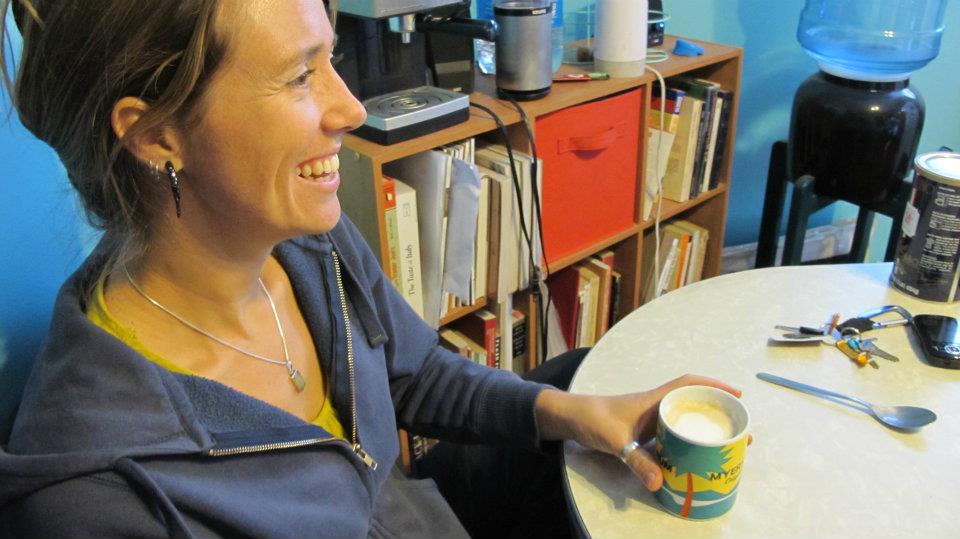
the dictionary project author interview: Arianne Zwartjes


It’s the second Wednesday of the month at the dictionary project, and we have our second non-traditional author interview featuring writer Arianne Zwartjes!

In our author interviews, instead of responding to direct questions about their life or work, guest authors discuss their relationship to words and provide answers to dictionary project words bibliomanced specifically for them.


1. Please share a memory/story/thought in relation to a dictionary/dictionaries:


My grandparents gave me my first dictionary, a brown leatherbound edition which I still have, packed as it is in boxes at the moment. My grandmother’s spidery handwriting stretches across the inside of the cover, for Arianne, so much love, etc etc. I was eight, I think, or nine. I still think of them every time I open it, which I do with fair regularity.


2. What is your current favorite word?

Currently my favorite word is eyesoar, a gross misspelling from a recent work email which, it occurs to me, creates gorgeous new meaning and is actually a way better word than the original they were trying to approximate.


3. What, in your opinion, is the most obnoxious/insidious/annoying word?

Like. Anyone who teaches must feel this way, I imagine.


4. Please respond to the following words and definitions, picked exclusively and randomly for you:


os·ten·ta·tion  \ˌäs-tən-ˈtā-shən\  pretentious or excessive display — ostentatious \shəs\ adj  — ostentatiously  adv


ver·so  \ˈvər-sō\  n, pl   versos :  a left-hand page


draughts  \ˈdräf(t)s\  n, Brit  :  CHECKERS


Far East  the countries of  E Asia & the Malay Archipelago — usually thought to consist of the Asian countries bordering on the Pacific but sometimes including also India, Sri Lanka, Bangledesh, Tibet, & Myanmar — Far Eastern adj


film·o·gra·phy  \filˈmägrəfē\  n,  pl  phies  a list of motion pictures featuring the work of a film figure or a particular topic


leavings: a filmography


aisha is the one who should create any list of films. i am the verso, she the main page. this is an ostentation, a play for words, a desperate bid. tom waits agrees; he says i am striving. to lose at draughts, to misplay, to lose the lines on the road. this is the kind of move i have made recently.  when i traveled in the far east which is only far and only east to us, rooted as we are here in our stretching continent of asphalt and wheat and mountains, i learned the past moves in both directions, forward as well as behind us. when words try to pin that down they fail.


*


the idea of home is suspect. in spike jonze’ film the fall, a horse is winched from the river below a high bridge; it hangs dripping from the sling in a limp arc. a train is frozen on the trestle, a small black and white terrier barks furiously. (home can be person, place, or thing. nouns define us.) this intro is, in my opinion, the best part of the film.


*


i have been to two films recently which stopped midway through, the screen blurring or blacking out, the sound jelling to a halt. J tells me once when that happened to him, his friend seamlessly began verbalizing the soundtrack as he imagined it, and the whole theatre clapped when the scene was done. films that include separations, departures, homes found or homes lost: a river runs through it. lonesome dove. lawn dogs. once upon a time in anatolia. a la mar.


*


Arianne Zwartjes is addicted to the NPR show On Being. She is currently living out of a moving van traveling between Arizona and New Mexico. She will soon be living out of a backpack in the Gila wilderness. Lately she has fallen in love with The Brothers K by Robert James Duncan and with everything and anything by Fanny Howe.

1 Comment

Filed under author interviews

write this word contest


Introducing the dictionary project’s first “write this word” contest!


Writers have from May 1 to June 15, 2012 to write and submit an essay, poem, or fiction piece inspired by the selected dictionary project word.


rules:

Entries must be inspired by the write this word contest word. Judges will look for influence of the word as well as for creativity and innovation. The actual word need not be included in the piece.

Entries should be titled.

Entries must be no more than 1,000 words in length.

Only one entry per person.

Writers previously published on the dictionary project may not submit.

Please include in your email a brief author bio and a sentence telling us how you found out about the dictionary project.

Entries must be submitted in the body of an email to thedictionaryproject@gmail.com by 11:59 p.m. on June 15, 2012.


prizes:


1st Prize:  The write this word contest winner will be awarded $50 and will have hir/his/her piece published on the dictionary project website.


2nd Prize:  The write this word runner-up will be awarded $30 and a pocket dictionary.


3rd Prize:  The write this word third-prize winner will be awarded a year’s subscription to Poets & Writers magazine.


AND THE WORD IS   :


. . . . . . . . . . . . . . . . . . . . .


. . . . . . . . . . . . . . . . . . . . .


. . . . . . . . . . . . . . . . . . . . .


. . . . . . . . . . . . . . . . . . . . .


. . . . . . . . . . . . . . . . . . . . .


. . . . . . . . . . . . . . . . . . . . .


. . . . . . . . . . . . . . . . . . . . .


. . . . . . . . . . . . . . . . . . . . .


. . . . . . . . . . . . . . . . . . . . .


. . . . . . . . . . . . . . . . . . . . .


. . . . . . . . . . . . . . . . . . . . .


. . . . . . . . . . . . . . . . . . . . .


. . . . . . . . . . . . . . . . . . . . .


. . . . . . . . . . . . . . . . . . . . .


. . . . . . . . . . . . . . . . . . . . .


. . . . . . . . . . . . . . . . . . . . .


rip·ple  (ˈripəl),  v.t.  [RIPPLED  (-id), RIPPLING], [Early Mod. Eng.; orig. of stormy, dangerous water; hence prob.  <  rip, v.  -le,  freq. suffix],  1.  to form of have little waves or undulating movements on the surface, as water or grass stirred by a breeze.  2.  to flow with such waves or movements on the surface.  3.  a)  to make a sound like that of rippling water.  b)  to proceed with an effect like that of rippling water: said of sound.  v.t.  1.  to cause to ripple.  2.  to give a wavy or undulating form or appearance to. n.  1.  a small wave or undulation, as on the surface of water.  2.  a movement, appearance, or formation resembling or suggesting this. 3.  a sound like that of rippling water.  4.  a small rapid.  SYN. see wave.


I’ll look forward to seeing how you will write this word!

3 Comments

Filed under contests