Monthly Archives: January 2012

Ni·cae·a

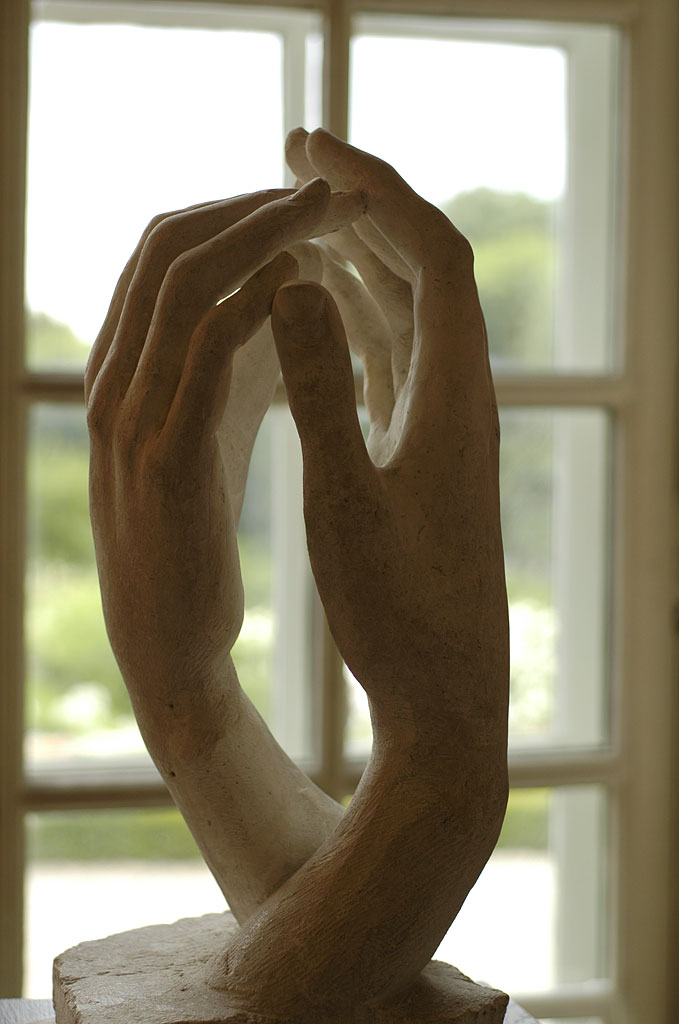
Rodin's "Cathedral" (David Udvardy)


Ni·cae·a (nīˈsēə)  n.  1.  an ancient city in Bithynia, near the Sea of Marmara: at an important church council held here in 325 AD, the Nicene Creed was formulated: English Name, Nice  2.  Nice (city in France): the ancient name.


Some thoughts on Nicaea:


1. I stopped going to mass for good when I could no longer say the words of “The Nicene Creed” without feeling anger and revulsion rise up in my body. While other Catholic prayers ceded my sacredness, this one felt the most visceral: one God, the Father, the almighty; one Lord, Jesus Christ, the only Son of God; the Holy Spirit, the Lord, the giver of life, who proceeds from the Father and the Son. With the Father and the Son, he is worshiped and glorified. Even the holy spirit, the most ethereal of the trinity, was male. Where was I to find myself in this paradigm? God made me in “his image”? I cannot name the number of times I recited the creed over the years (hundreds? thousands?); having gone to Catholic school kindergarten through college, mass was not only a part of my family life but my school life and my education. I was only three years old, at the ordination of a friend of my parents when I saw the line of men in cassocks drifting up the aisle and asked my father where the women were (His answer: I don’t know, Lisa). But it was in high school that I began to clearly see my absence from the representation of the sacred in Catholic prayers. And I felt the reasoning given for this as what they were: excuses. If the prayers were written a long time ago and by men and that’s why the patriarchal language existed, then we needed to rewrite the prayers, to change the language to make it real for our culture and all the people in our church. If it was that way because that’s the way it had always been, then it was time for change.

The First Council of Nicea, where The Nicene Creed was written and adopted, was the first ecumenical council of the Catholic Church. The conference was called to reach consensus on questions of the church’s body, to work towards unification. Agenda items: 1. Clarification of the relationship between God the Father and Jesus: are the Father and Son one in divine purpose or also in being? (i.e. the beginnings of the Trinity; Jesus is “begotten, not made”) 2. Deciding the date to celebrate Easter 3. Discussion of the Meletian schism (an early breakaway sect) 4. The validity of baptism by heretics (Paulian heretics denied that Christ was divine and thus not part of the holy trinity; baptisms conducted by subscribers to Paulianism were deemed invalid) 5. The status of the lapsed in persecution under Licinius (the persecution of Christians had just ended with the February 313 Edict of Milan by Emperors Constantine and Licinius)

Primarily, the council was gathered to discuss and reach agreement on the deity or non-deity of Jesus. It is interesting to note that among early Christians, there was division about whether he was God or was sent by God; was he a prophet or divine himself?

All of these specific questions bore me now. Jesus was an amazing teacher (whose most central teachings on love and peace are now largely ignored or passed over by those who claim to know him), as was the Buddha and Mohammed. All the terminology and details of the Catholic Church that I once desired to know or felt privileged when I knew and “understood” feel unimportant to me now. It seems to me that so much of Christianity and Catholicism and many world religions come from a defensive platform. Our way! our God! is right, is the best, and here are all the reasons why. Laws and rules and prayers that are based on this defensive and reactive standpoint are a waste of time to me. The Dalai Lama says: My religion is kindness. I can get behind that: a religion where compassion and love towards another is the rule, where we can meet each other with genuine attempts at understanding, where it is in the way we live—not what temple we visit—that we show our faith. And where the divine resides within each one of us.


2. The first time I played the “Ha Ha” Game was on a beach in Nice, France. This was not the sort of beach I was used to: beige, covered in tiny grains. There were black and gray rocks, big ones that covered the earth near the water. Stones and gravel. I was there on spring break, from Rome where I was studying. My friends and I, close although we’d not known each other long, laid on the rocks, one head on another’s belly, and when the inevitable first laugh came, the movement and sound cascaded down the row. The inevitability caused by others’ laughter, the luxury of silliness when one is supposed to be, finally and always, an adult. Other moments I remember from that trip: Nice just a few weeks before Carnival, the busyness of preparations but no clear signs; buckets of irises, of carnations—red, purple, pink, white—cascading out of buckets at the flower market; a hostel painted all in white; my all purpose wool green sweater with flecks of white; the French version of American diner breakfast; a bus ride to see Rodin’s This Kiss, something that was maybe the most tender and erotic art I had ever seen, and large hands rising up to form a sort of temple: Cathedral.



Leave a Comment

Filed under weekly words

plot


1plot \`plat\ n.  1 :  a small area of ground  2 :  a ground plan (as of an area)  3 :  the main story (as of a book or movie)  4 :  a secret scheme : INTRIGUE


I have been going by the house for years now, every time I am home for a visit. It was just a shell of where we lived but I felt compelled to visit every time I was back in New Orleans in the years following Katrina. A few months ago, my mom sent me an email to tell me that the house had been razed. It’s just river sand now, she wrote. She said she picked up three pieces of brick (one for her, one for my dad, one for me), a small piece of wood, a small piece of latticework—the traces that were left behind. She said she wanted to lie in the sand and make a sand angel, to place her body on the earth itself, but a truck drove up so she just pretended.

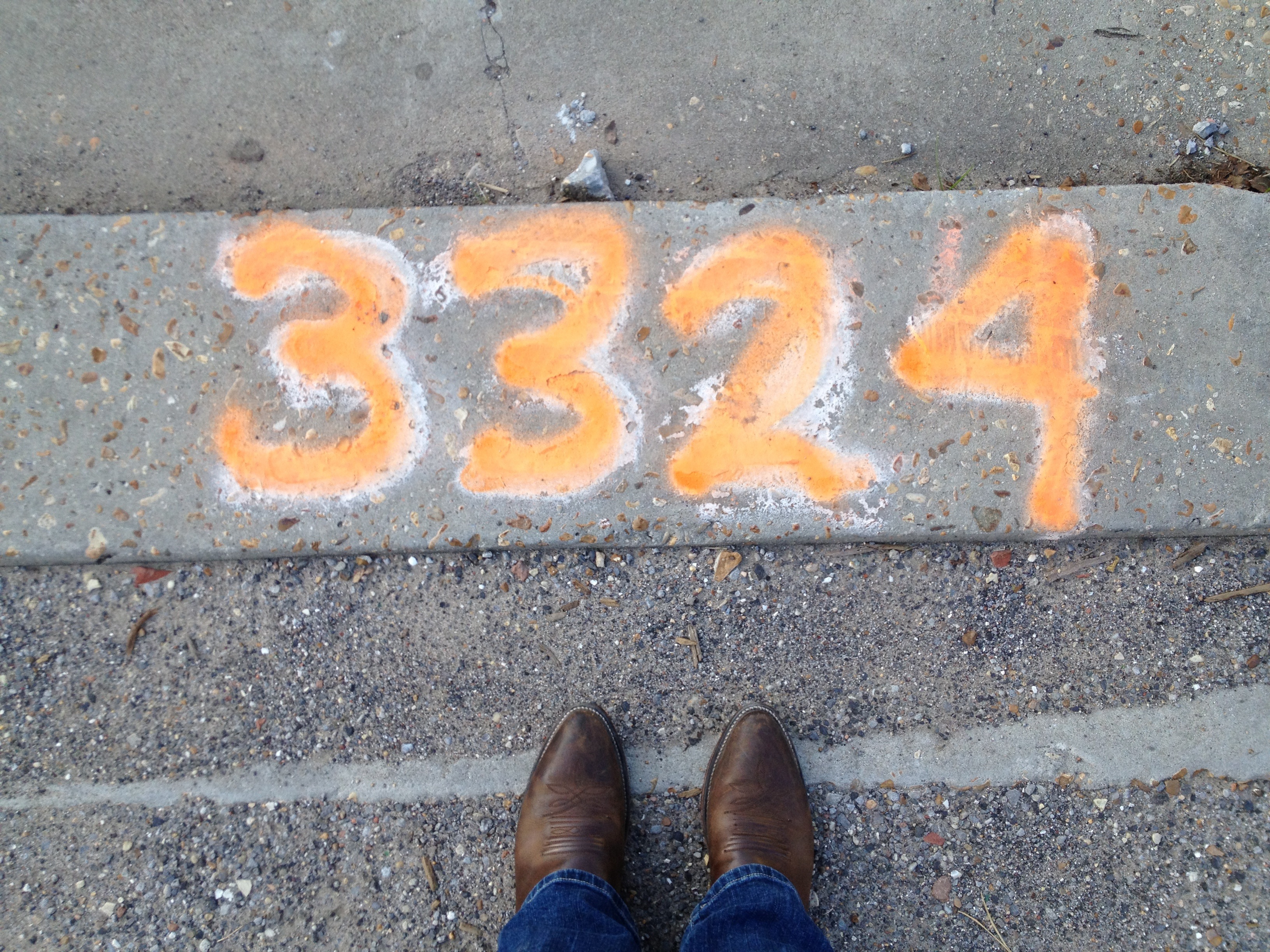
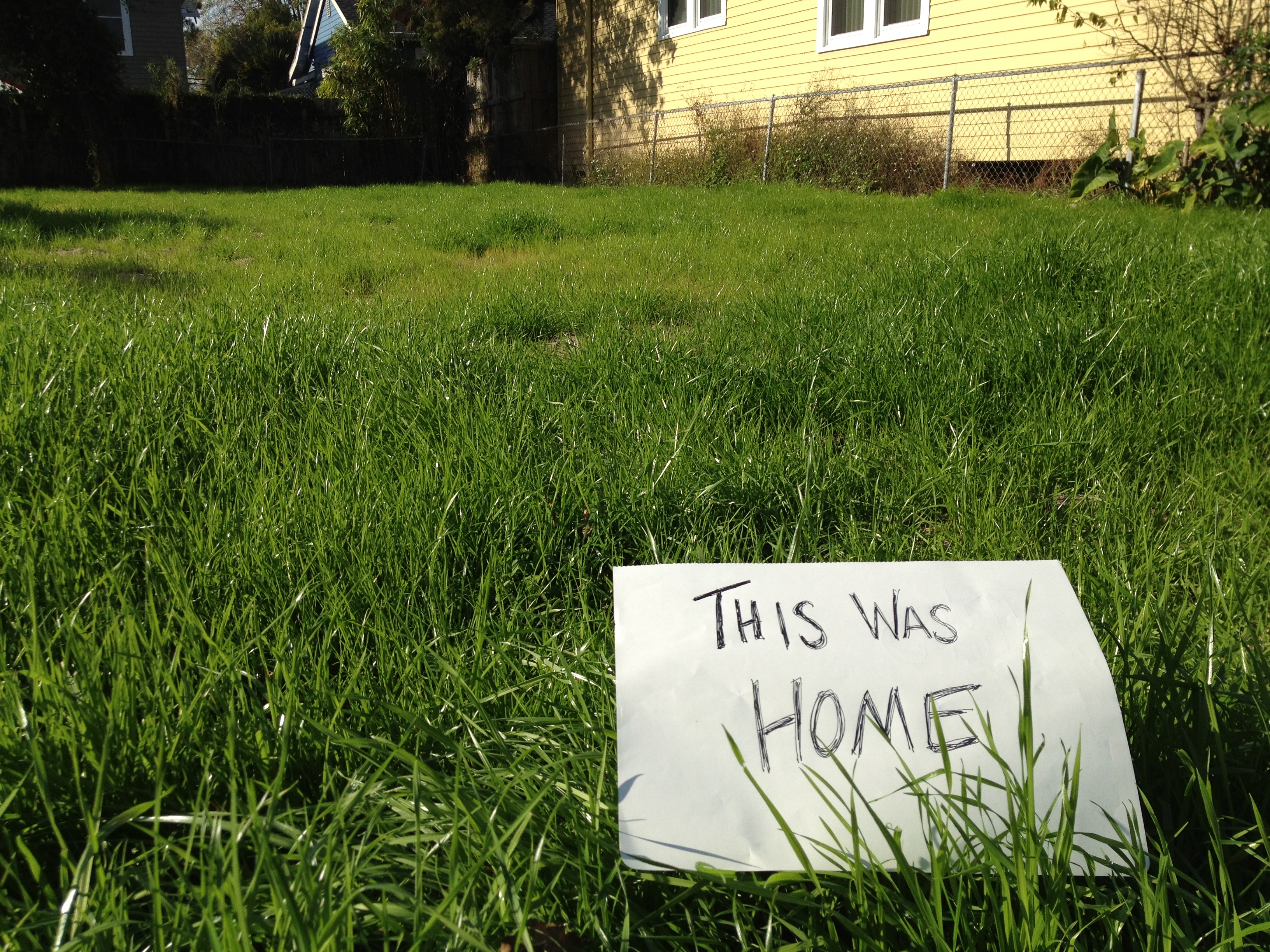
I knew, then, what to expect when I went by 3324 Vincennes Place, and yet, I was surprised all the same. I was taken aback by the shock of green grass usurping the plot. I had expected river sand, but since my mom visited, there had been time for old seeds to sprout up. To fill this hole, this gap, this absent space.

I thought: how odd to witness so clearly an absent place that is so full, this place that occupies so much space in my in my memory. The lot looks enormous without our house on it (hadn’t my mom mentioned that in her email as well?). Just one small block of green. It was hard to imagine all those rooms, all that our house contained.

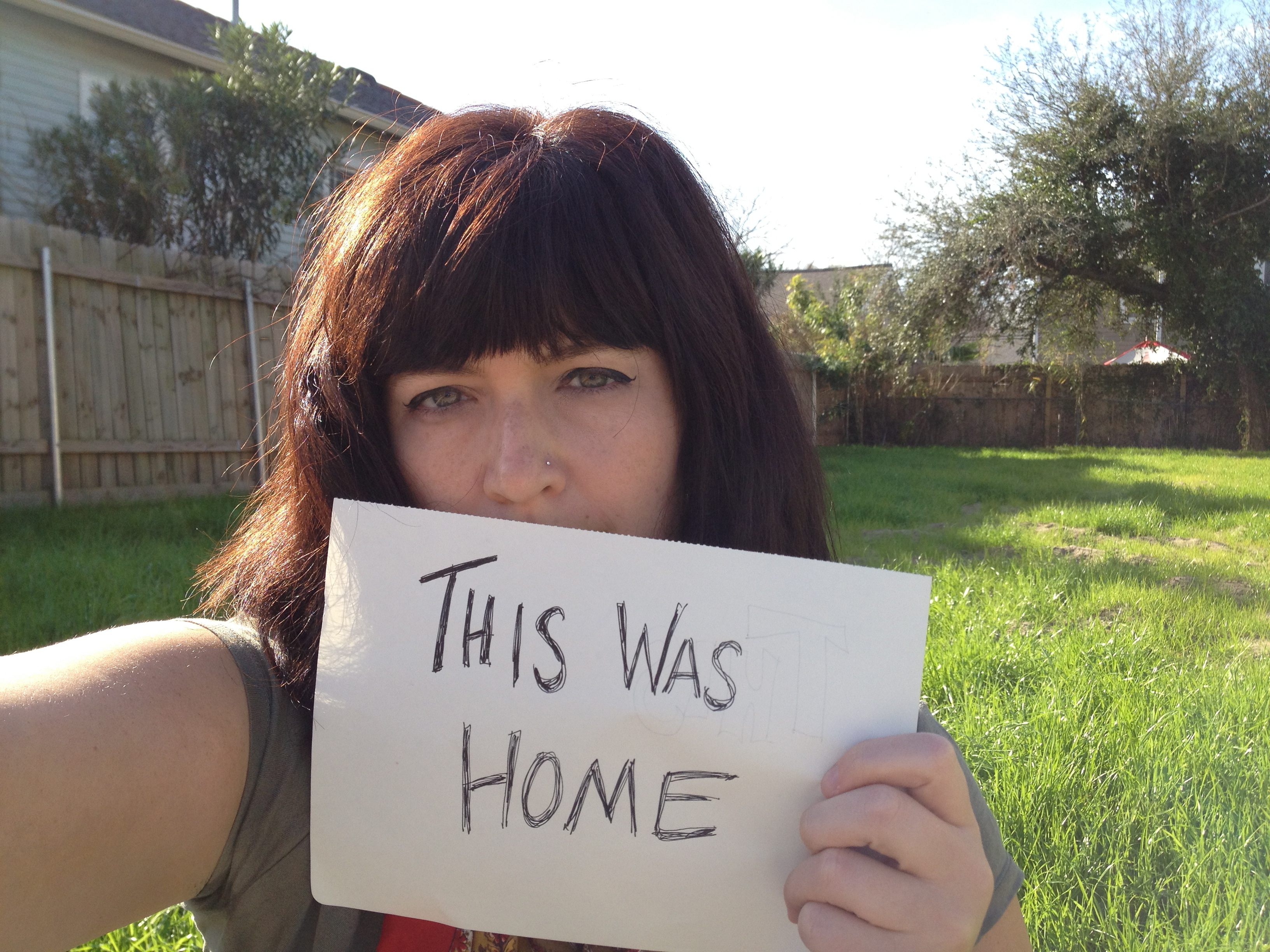
I pulled out my journal and tore out a perforated page. On it I wrote: THIS WAS HOME. This (space). Was (past tense of “to be,” as in is no longer). Home (a place where families are born, where dreams are dreamed, where mornings break and evenings are put to bed). I took pictures of the sign resting in the grass in front of the plot. I took portraits of myself with my arm extended, holding the sign. I walked around the perimeter and traced the word HOME with my finger in the river sand. Then I took a stray stick and signed my name in the corner of the plot before tucking the stick in the back pocket of my jeans. Three trees stood as sentries at the back of the land and then there was just the span of grass and sand and the neighboring fences on either side.


The sidewalk had 3324 spray-painted in orange, over a version painted in white. This now marks the address since there is no longer a house to mark the space. Addresses are random numbers and letters we assign to places to make them ours, to make them home, to tell people where to find us. While I was sitting in the car across from the plot where our house was, a mail carrier, mail in one hand and a bag crossing her body, walked by the empty lot on her route.

I scanned my body. I felt tears behind the lids of my eyes—held, not held back. There was a sort of soft gnawing in my belly. I didn’t feel sad really but rather vaguely numbed out.

This was a place I had been saying goodbye to for years. A place I came to visit as one does a deceased family member in a cemetery, over and over again. Our home died to us and now the traces of it, save a long thin piece of wood with blue paint that I found and took, are gone as well.

And although this moment felt like it should be the natural point of closure, the final goodbye, I couldn’t imagine stopping my visits: even if there was a new house there, even if there was a new family in it. In the movie version of my life, we might end here as the protagonist bids farewell to her childhood memories and her childhood home and steps off into her very bright future. Maybe there would even be a flash-forward to her home-to-be, complete with husband in the doorframe and children eating breakfast at the kitchen table. So why do I feel its not over for me and this land?

It’s not a compulsion, this desire to visit. It’s more like coming to sit in silence with an old friend. There’s a kind of peace that comes from being there—from remembering what was and seeing what is real now. I can sit with all the fond memories and the painful loss of this place. It feels real. It feels authentic—this mix of beauty and joy with grief and sorrow. This house taught me how to live life and bear it all: how to grow, how to be nurtured and to nurture, how to love and also how to unexpectedly and without warning, let it all go. To say goodbye. To unhand expectations of what the space you rest your life in looks like.


I feel I owe this land so much—the place I was born into, where I took my first steps and read and wrote my first words, where I learned how to embrace and be enclosed in the arms of somebody who loved me. I learned to cry, to mourn and to go on, still and always, with the movement of life. I learned about the richness that lies in details—in the shape of a sill, in nicks, slants, the flaws we perceive as such or the ones we find charming. I learned how to observe and how to write those observations down.

It occurred to me as I sat across the street from my childhood home that while I thought I had been coming back to grieve and let go, I was also coming back to honor and pay tribute to the home that held the space for me to become who I am, to the sacred spot where my mom, dad and I became a family. I realized I have continued to come back, all these months, all these years later, because I am so deeply grateful.


2 Comments

Filed under other words