Monthly Archives: January 2011

ef·fec·tive


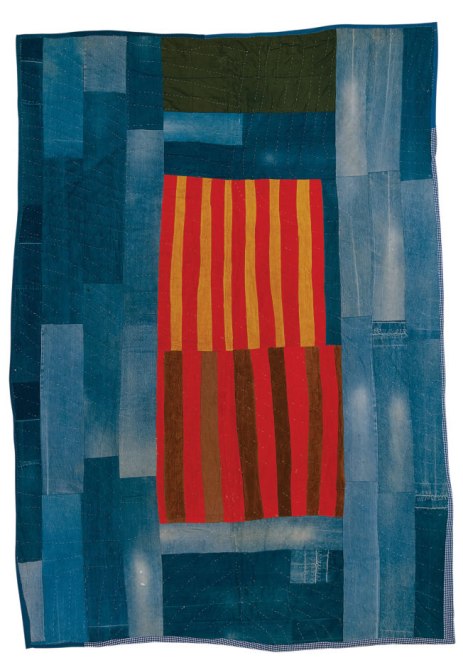
Annie Mae Young (born 1928) Work-clothes quilt with center medallion of strips. 1976. Denim, corduroy, synthetic blend (britches legs with pockets). 108x77 inches.


1ef·fec·tive adj \i-ˈfek-tiv, e-, ē-, ə-\  1  a : producing a decided, decisive, or desired effect <an effective policy> b : impressive, striking <a gold lamé fabric studded with effective…precious stones — Stanley Marcus>   2  : ready for service or action <effective manpower> 3  : actual <the need to increase effective demand for goods> 4  : being in effect : operative <the tax becomes effective next year> 5  of a rate of interest : equal to the rate of simple interest that yields the same amount when the interest is paid once at the end of the interest period as a quoted rate of interest does when calculated at compound interest over the same period — compare nominal 4

ef·fec·tive·ness noun

ef·fec·tiv·i·ty \ˌe-ˌfek-ˈti-və-tē, i-, ē-, ə-\ noun

2ef·fec·tive noun \i-ˈfek-tiv, e-, ē-, ə-\  : one that is effective (see 1effective); especially : a soldier equipped for duty

Origin of EFFECTIVE (see 1effect)  First Known Use: 1722


Lately, when I’ve considered the word effective, I have thought of the idea of being of use. Alice Water’s short story “Everyday Use,” considers both the dynamics of a family and the way in which we use things, which ones are meant to be preserved and which are best suited for everyday use. In the story, one character criticizes another who she considers foolish. “Maggie can’t appreciate these quilts!” Dee said. “She’d probably be backward enough to put them to everyday use.”

Years ago, in San Francisco, I saw an exhibit featuring the famous Gee’s Bend Quilts. These quilts, now honored and esteemed in the art world and hung on pristine white walls, were made out of scraps of clothing—jeans with knees worn out, workshirts that were torn by work in the fields. They were made to be beautiful but their primary purpose was to be effective in keeping out the cold. The items we employ every day are not effective to us if they don’t work in the way we need them to. All inventions come out of a need, however great or small. We constantly think of ways to complete the tasks we do in our day-to-day lives in a more effective way.

In this way, effectiveness is not so much about the magnitude of the task to be completed, but how that process is maneuvered through for an ideal end result.

Jessie T. Pettway (born 1929). Bars and string-pieced columns. 1950's. Cotton. 95x76 inches.

I’ve been thinking about this in relation to myself lately. Because out of all of the things I desire for myself and my life, at the top of the list is to be of use. What individual gifts or ideas or qualities do I possess and how can I be most useful to the world around me in employing them? I am of the opinion that each of us are put on this planet to fill very individual and important roles, and I think most of our soul searching, wondering and questioning, and confusion and chaos is derived from our attempts to either figure out what these roles are or, once we do, to resist them.

It can be overwhelming to consider what we want to do with our lives and how we can be most effective as a friend, partner, parent, daughter or son, member of our community. And yet somehow, I also believe that the way we listen, respond and initiate small actions in our day-to-day life gives us insight into what we are meant to do in the bigger scheme of things. We learn in these smaller moments what we can do easily. We also learn where we have resistance and we learn to differentiate where the resistance lies: do we resist because what we set out to do is something we genuinely do not want to do or do we resist because we are afraid that we cannot do it (or, sometimes even more threatening, that we can)?

In Naomi Shihab Nye’s lovely poem, “Famous,” she says: “I want to be famous to shuffling men/ who smile while crossing streets/ sticky children in grocery lines/ famous as the one who smiled back. //I want to be famous in the way a pulley is famous/ or a buttonhole, not because it did anything spectacular/ but because it never forgot what it could do.”

Gee's Bend Quilters sing at the de Young in San Francisco, September 2006. Credit: Lisa O'Neill

Lately, I have been reminded that this is what I most deeply long for: to never forget what I can do. And it is what I most long for for others. Because in the face of tragedy and suffering and despair, it is important to realize that our individual decisions and actions and creations, the small pieces we each contribute, add up. There is power in recognizing how effectively these pieces combine to a beautiful whole, not something that is manufactured in one seamless movement by one person. But, rather, a whole made of pieces, like a quilt, that when sewn together winds up being not only useful but striking in beauty—a testament to time and patience, hard work and vision, faith and action.

Leave a Comment

Filed under Uncategorized

thrive

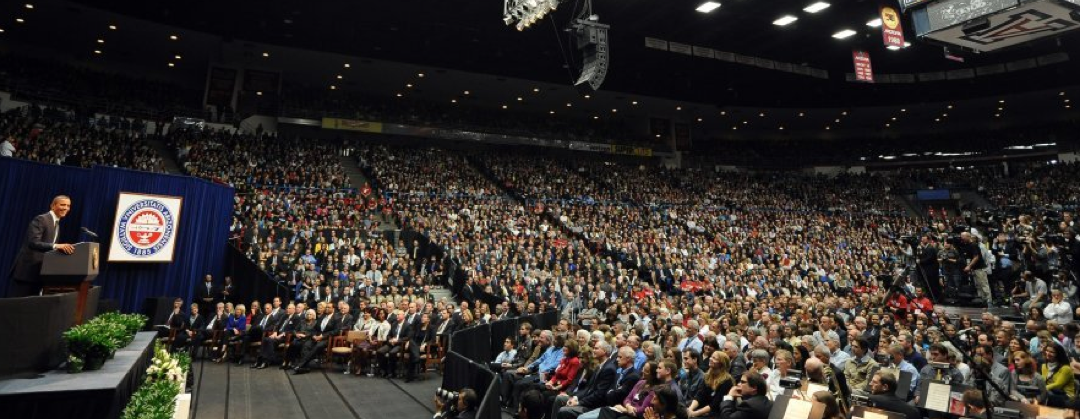
Obama Speaks At Memorial for Victims of Shooting, http://www.huffingtonpost.com

thrive* \ˈthrīv\ verb

1. To make steady progress; prosper.

2. To grow vigorously; flourish

*The title of tonight’s memorial was “Together We Thrive: Tucson & America”

I was there tonight in Tucson. I stood in line with the thousands to be able to participate in the memorial for the victims of Saturday’s tragic shooting, to be able to pray for healing of those who are still in the hospital and for all those impacted by this tragedy.

I went because I wanted to stand up with my community and remember those we have lost. I went because I wanted to pray for the healing of those who suffer. I went because I wanted to hear what our leaders had to say.

As a college instructor, I have decided to spend some of my rhetoric class time examining and discussing texts about the shooting. It not only feels relevant to talk about words and their meaning at times like this, it feels necessary to give students a space in which they can wrestle with their feelings about an act of violence taking place in their adopted town, at a grocery store that could be their grocery store.

As we discuss in class, the words we say and the way that we say them matters. We each need to take responsibility for our own words and we need to call those we listen to, particularly our media and our political leaders, to be responsible for theirs and to speak in a way that invites rather than discourages open and thoughtful conversation. Obama said it the best last night when he said: “It’s important for us to pause for a moment and make sure that we’re talking with each other in a way that heals, not in a way that wounds.”

One of the moments I valued most about tonight was when President Obama spoke about the importance of not making this an opportunity to hate one another. He said: “But what we cannot do is use this tragedy as one more occasion to turn on each other. That we cannot do. That we cannot do.”

I myself am guilty of this. When 19 people, including a congresswoman I deeply respect, were shot on Saturday, I immediately thought of the rhetoric surrounding her reelection campaign. I thought of Jesse Kelly and his screaming campaign strategies. I thought of the tea party and how often their language includes words that insinuate violence, and how whether these words are figurative or literal is often hard to tell. And on top of the enormous sadness I felt, I became really angry.

We need to listen critically to all points of view we are exposed to. But being angry and blaming those who invoke this kind of language is not ultimately the solution. The solution is not to return anger with anger, hate with hate. It seems to me that the only real solution is to move towards a society in which kindness, respect and empathy are woven into the fabric of our institutions, our neighborhoods, our daily lives. And while I do think it is important to hold our leaders and media personalities accountable for their language and encourage speech that is inclusive to understand different points of view (as Obama talked about when he emphasized the need for civil discourse), it seems to me that the most important step that each of us can take individually is to model in our day to day lives what we want our world to look like.

Meaning: we choose to be kind, to be empathetic, to be respectful, to be generous. We weigh carefully the words we use when we speak to one another. This sounds simple, but I believe it is one of most difficult things we can commit ourselves to doing. I think of how many times per day I allow myself to become annoyed with other people: because they are not moving quick enough, because they should have used their blinker, because they are being too loud. Sometimes I merely note this to myself, but sometimes this annoyance comes out in my speech or my body language, to my perceived offenders or to other people.

One of the things I have heard multiple people say about Gabby is that she is someone who genuinely loves people, someone who tries to find the good in each person she meets.

Our responsibility is not only to be kind to the people we know and love (and let’s be honest, we aren’t always even able to muster that), our responsibility is to be kind and loving to people we don’t know and yes, to people that to us, for whatever reason, feel the hardest to love.

Underneath vitriolic political rhetoric, underneath cuts to mental healthcare, underneath lax gun control laws—all of which are valid and important things to discuss and sort through together—is a society has become sick from a severe lack of connection. We don’t realize how much we need each other or how our choices and interactions impact each other. We don’t try to understand each other. We don’t love each other in the way that we need to love and be loved. This denial of our interconnectedness is a wound we all carry and it is something that we can begin to change with every interaction we have.

Tonight, as President Obama shared stories about each of the victims, we laughed and smiled and cried as we, as a community, celebrated their lives and, in turn, grieved for their loss. When the President told us that Gabby Giffords had opened her eyes for the first time, the stadium erupted in joy, people jumping out of their seats, tears streaming down cheeks.

I think of a young man I saw at the University Medical Center on Sunday night who had a piece of fabric safety pinned to the back of his hoodie with these words: Love is stronger.

Love is stronger.

The actions we take tomorrow, next month, next year will not undo the tragedy that has been inflicted on these individual souls, on their families, on our community and our nation. There will be many more tears. There will be years of recovery and struggle. There will be much sorrow and much need. And, by saying what I say here, I in no way mean to minimize the gravity and sadness that permeates all of this.

But, it seems to me that loving each other better, caring about each other more is the only answer. This will come out not only in our daily interactions but in the decisions we make collectively as a community and as a nation. I believe this kind of love is possible. I believe in its possibility because I have known too many stories, seen too many miracles, known too many people who demonstrate in their own way the decency and compassion and beauty and endurance of the human spirit.

For now, we can pray for the strength to love each other and that the ways we can do so will be shown to us all.

Sunday 1.9.11 at UMC, Tucson

4 Comments

Filed under other words

peace

peace noun \ˈpēs\  1 : a state of tranquillity or quiet: as a : freedom from civil disturbance b : a state of security or order within a community provided for by law or custom <a breach of the peace> 2 : freedom from disquieting or oppressive thoughts or emotions 3: harmony in personal relations 4 a : a state or period of mutual concord between governments b : a pact or agreement to end hostilities between those who have been at war or in a state of enmity 5 —used interjectionally to ask for silence or calm or as a greeting or farewell — at peace : in a state of concord or tranquillity


what we need now

in our hearts

in our communities

in our words and actions towards one another

in our world

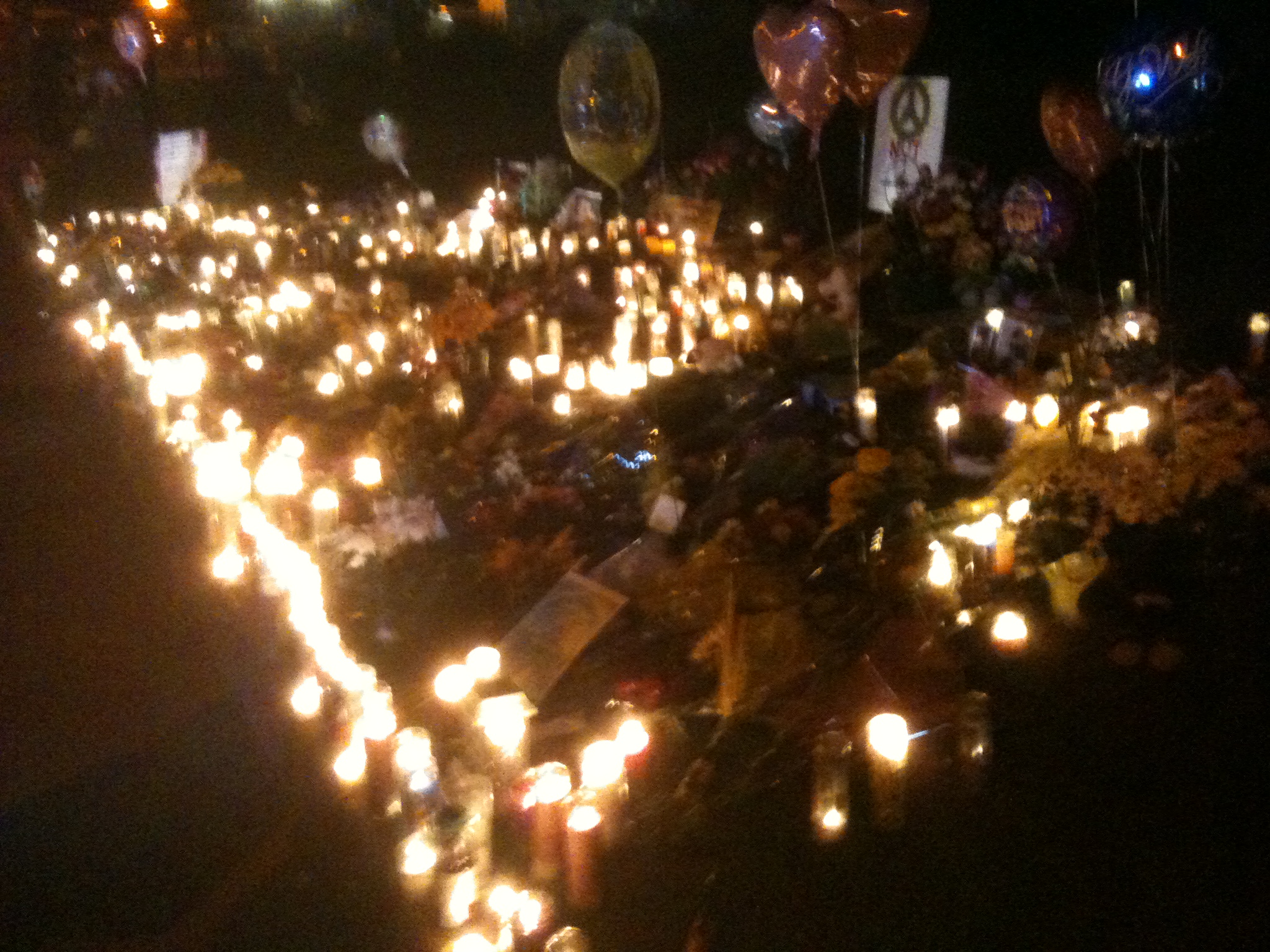
I took this outside UMC in Tucson this evening, 1/9/11

2 Comments

Filed under other words