Monthly Archives: July 2010

de·form

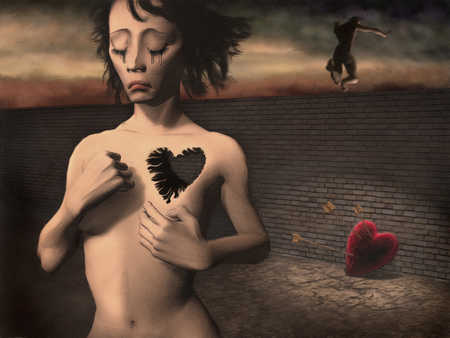
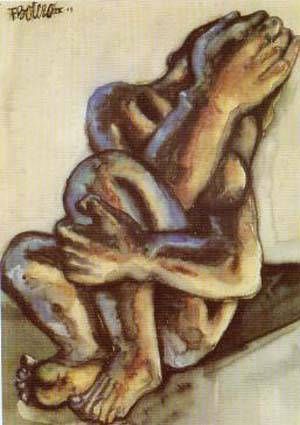
Painting by Jay Koelzer

de·form \di-´form\ vb. 1. DISFIGURE, DE-FACE 2. To make or become misshapen or changed in shape.

*Today, we have a guest post by writer and friend to The Dictionary Project, Jenna Orzel.

When Lisa asked me to be a guest writer on this wonderful blog, I was honored and excited. When she told me the word she had chosen at random for me, I felt a little overwrought. Just the word deform makes me a little uncomfortable. I immediately think of two movies: Mask and The Elephant Man, two 1980-something films based on true stories. Both tell the story of the fear we as people have on appearances and how despite a deformity, both characters turn out to be articulate, kind and intelligent men. The men portrayed in each film are set in very different times and settings, but the meaning at the end is basically the same.

Cacophobia is the fear of ugliness. There are many reasons why people are impacted by this phobia but the biggest reason that stands out to me is: perhaps individuals simply watched the reactions of others and began to imitate their negative and fearful response. I think all of us to some degree fear something unseemly. We make fun of and assume that if it doesn’t look pretty then there is obviously something wrong with either a person or a situation. Our mothers or guardians or teachers have taught us all to not judge a book by its cover. Yet, I think it’s difficult to not be somewhat afraid, at least at first, when faced with someone or something that doesn’t appear to what we as a society view as normal.

I got a text message a few months ago from a friend of mine that said, “OMG, I just saw that guy with no face again!” I don’t think my friend suffers from the fear of ugliness, but it is shocking when you encounter a deformity. I have definitely been overcome by seeing some sort of disfigurement.

One particular story that I have was during my senior year of high school when I needed two electives to graduate. It was an easy year school-wise. In addition to senior English, I took jewelry making for the third year in a row and an aerobics class for a physical education credit. In the locker room we had to undress and change into a P.E. uniform. Most of the girls in that class were younger than me and I didn’t know anyone in it. I went to a very large high school where the majority of the student body and staff were Mormon. Me not being raised Mormon, I was already kind of an outcast and had few friends.
On the first day of this aerobics class, I had gotten to the locker room early and was relieved to find no one was there yet. I quickly undressed and changed into my uniform and read my book to pass the time until the class started. Soon chatty girls started to flood the locker room to get changed. From another row, I heard a couple of girls squeal and yell, “Go find another locker, freak!” A girl clearly fighting tears back rounded the corner to come into my row. She walked up to me and asked if the locker next to mine was taken.

“Nope, it’s all yours,” I replied.

She opened the locker and very sheepishly started to take her shirt off. I averted my eyes but could see something in my peripheral vision, something odd. I looked up at her for a glance and saw that she had a third breast growing full and plump out of her side, under her armpit. The nipple was erect and I could tell was slightly larger than her other two naturally-placed breasts. I quickly looked away, not knowing if what I just saw was real. Before I could even process the thought of, was that a boob?, other girls in the row of lockers were pointing, whispering and laughing. I looked up at her and she was facing her locker with her head down, now tying the waist strings on her shorts and she had a few tears streaming down her face. I stood up and told the girls laughing to shut the fuck up. Swearing at this school was a big no no. Mormon teenage ears hearing the word fuck was like a gunshot of silence. I loved this power. They all looked at me as the blasphemous young girl I was and trailed off into the gym. I waited, retrieved some Kleenex I had in my backpack and asked this girl what her name was.

“Carrie” she said, taking a tissue. “Carrie with an ie not a y. Thank you by the way, but you shouldn’t say the f word.”

Over the semester, I befriended Carrie. I spoke with the gym teacher about speaking with Carrie’s teachers to let her out five minutes early to be able to come to the locker room to change for class while it was empty. She was always waiting for me by my locker and we always stood together in class and walked in and out of the gym together. I learned that Carrie was also Mormon and her family, being so religious, believed that God made her this way and refused corrective surgery. She being so young also believed this notion. She was not a pretty girl whatsoever. Her hair was stringy and always looked dirty. She had bad acne, smelled of mothballs and her teeth were jagged and yellow. When she was younger, she was hit by a car and the injuries to her legs made her ankles look almost bell-bottom-like and she had large flat feet. She walked with a limp and, to top it all off, she had a fucking third boob.

I learned that she was gifted and could literally be a human calculator. She was a sophomore and surpassed my level of intelligence by far. Yet, the girls were vultures, tearing her apart at every chance they got. It was awful. I used the words “fuck off” and “fuck you” and “stop being so fucking cruel” a lot during the last semester of high school. On the last day of class, she walked me to my car. She told me she would come to graduation and clap for me when she heard my name. I thanked her and she hugged me hard. I immediately burst into tears. I was surprised that this was my reaction to saying goodbye and I felt embarrassed by it. I felt afraid and sad that she had to come to this depraved place for another two years and I told her that. She told me that nobody liked me either and I got through it and that she would be fine. “Plus,” she added, “I’m a lot smarter than…(with a pause and a low whisper), all those stupid fucks.”

I can only imagine what she has been through with her deformity over the years. I need to try to remember that when I’m having a bad hair day or when I don’t like the way my ass looks in a pair of jeans. Finding beauty in someone should be a lot easier than it is. Carrie taught me that and I won’t ever forget her. I hope she is kicking ass and taking names.

Be kind to one another, even when it’s eerie and intimidating. The beauty you find may surprise you.

————————

Jenna Orzel resides in Tucson, Arizona with her partner, Amber. After living in the Pacific Northwest for over ten years, she found herself back in the desert to be close to her family. She provides chefs with often unusual ingredients to sustain Tucson’s pallet for her day job. Jenna has a passion for good food, her family, her close friends, and finding humor in the odd experiences she often encounters. She writes about these experiences and has a collection of true short stories from her life titled, In Case of Emergency.

Leave a Comment

Filed under weekly words

clench

clench (klench), v.t. [ME. Clenchen; AS. –clencan (in beclencan), lit., to make cling, caus. Of AS, clingan (cf. CLING); akin to OHG, klenken, to bie, bind & G. klinke, door latch; IE. Base *gleng(h) <  *gel- ; see CLIMB-]  1. to clinch, as a nail.  2. to bring together tightly; close firmly, as the teeth or fist.  3. to grip tightly   n. 1. a firm grip.  2. a device that clenches.

I tend to hold on tight. Whether that be to people, to possessions, to places that are important to me. I sometimes misinterpret this closeness, this tightness, for connectivity. If I can only hold on tight enough to these things or people, I won’t lose them. If I grasp hard enough, what I have created around me will remain stable and secure. And it is in this holding, this clenching, that I am most prone to lose the things and people that are important to me.

The same thing that happens in my mind and heart sometimes is also reflected in my body. I carry around knots and tension in my shoulders that I seldom release. When I am doing healthy things for my body, like going to yoga, the tension dissipates and my body feels more at peace. I feel healthier and more in touch with my own feelings about what is happening around me. But with this kind of fluidity comes openness and vulnerability.

Clenching is often used in reference to anger: clenching teeth, clenching hands. When I think of the word clench, I get images of fists with knuckles turning white or teeth held tight in a grimace. But I think the act of clenching is less about anger than it is about fear. When we are in situations where we feel unprotected, where we feel the potential—real or imagined—to be harmed, we clench. We try to bring ourselves in as tightly as possible to arm ourselves from what we fear.

As much as I think that we need to protect ourselves, I wonder how much clenching we do that is completely unnecessary and that actually dramatically limits our experience. If we are always closed off, our hands balled up, we have no way to receive the good things that are presented to us. Then, we have a choice. We can unclench in that moment and trust or we can stay clenched. We can let go and present ourselves unarmed, or we can remain armed and stuck exactly where we are.

Within the past week, two of my friends gave birth. One of my closest friends gave birth to her first child in a pool of water, surrounded by those assisting her and her husband. Within the next few days, a dear friend’s dog will give birth to puppies. I have found myself thinking about the process of labor, the process of birth. In order to give life to something else, there is first a time of preparation. Then, there is contracting. But ultimately, this giving birth is an act of letting go. The baby is released and begins to participate in the world as a creature all its own. The baby, of course, needs the nourishment of its parents and the community around them. But as I understand it, the act of being a mother really means one act of letting go after another.

Some of these acts are little, like letting your child choose his own clothing. Others are big, like letting them leave the house alone or watching them move far away from you. By bringing another being into the world, you are also accepting the responsibility that this being will grow up, will have its own aspirations and dreams and will go off to pursue them.

And just as it is with people, this letting go is something we must do over and over again in our lives. When we have produced art or writing or music, there is a time for letting it out of our hands and into the world. When we move from jobs or homes or cities and towns, we let go of the identity we had there, of the people who we spent so much time with, of the places that have become familiar and comfortable to us.

Letting go, even when it is what we want or what we need, is never easy. There is something in us that wanted us to hold on, and when we let go, we feel the thing slip through our fingers. We feel the absence in our palm. There is nothingness for awhile before something else comes to fill that space. And sometimes nothing comes to fill it.

Although it is often used in a negative context, I don’t interpret clench in a negative way.  To hold closely, to grasp tightly to things or people is not always a bad thing. I think of holding onto family heirlooms or cultural traditions. I think of couples who have experienced breaches of trust who choose to repair and hold onto their relationship because they want to be with each other, because they love each other too much to let go of what they have together.

For myself, it’s a matter of awareness of how and why I hold onto things. Only when I’m conscious of these reasons can I determine when it is time to hold on and when I need to open up and just let go.

2 Comments

Filed under weekly words

po·tiche & hurl·ing

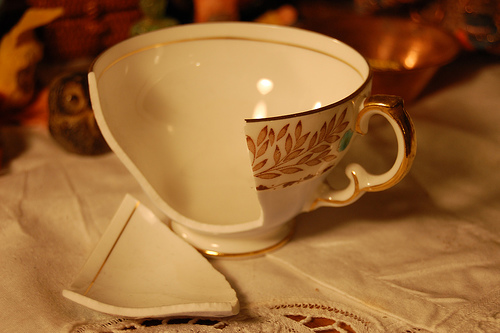
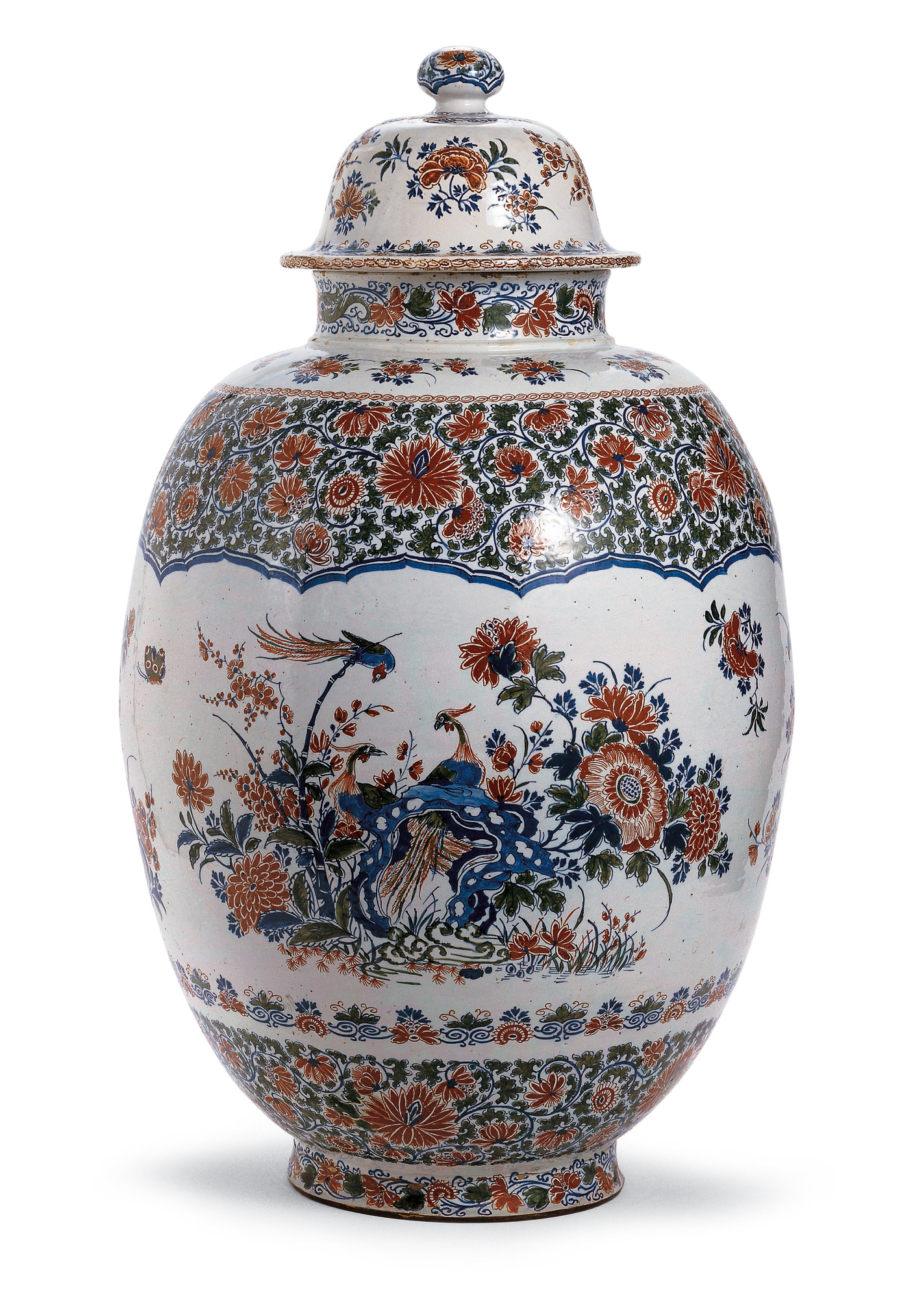
A potiche. Isn't it lovely? I want it!

po·tiche n. Pl. pronounced same. L19 [Fr.] A large (esp. Chinese) porcelain jar or vase with a rounded bulging shape and a wide mouth, freq. having a lid.

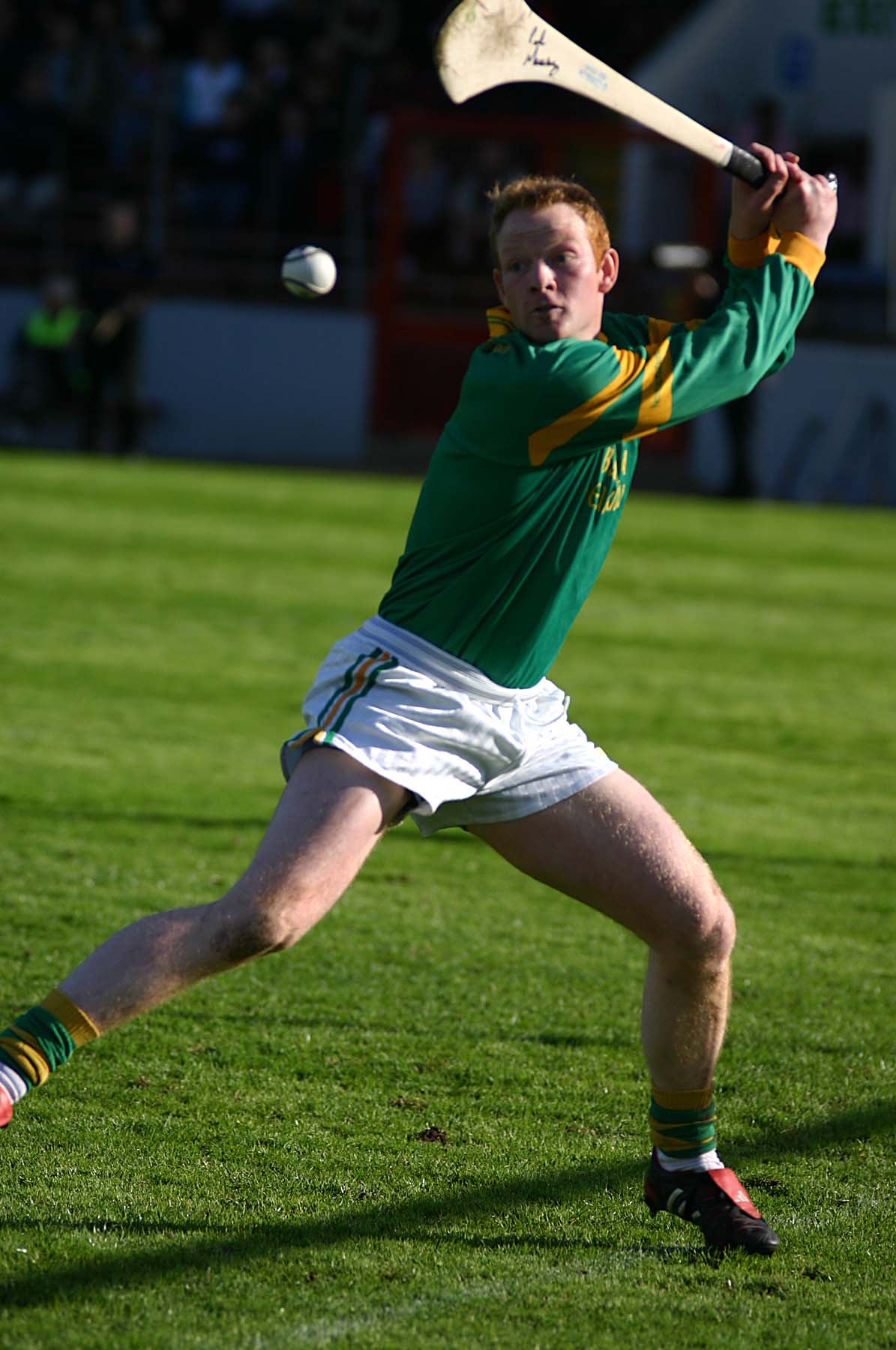
hurl·ing  n. LME. [f. HURL v. + -ING.] 1. The action of HURL v.; throwing, casting, esp. with violence.  LME. 2a. The game of hurley, in which two parties attempt to hurl or carry a ball to a distant goal.  E17. 3. Strife; commotion. LME-M17.  4. (The sound of) the violent rushing of wind.  LME-M17.

On my birthday two weeks ago, I decided to use the two volume Oxford Dictionary at the house where I was staying to pick two words for myself, for that day, maybe even the year. I closed my eyes, flipped the pages, picked a page and, eyes still closed, ran my index finger across the page. These were the two I came up with. And I think there is something beautiful in their pairing. There is beauty and fragility. And there is roughness, throwing, casting out with violence. There is softness and force. And isn’t this really every day in this world of ours?

The beauty of a child’s laughter. The violence of war, broadcast over the radio or television waves. The softness of a hug from a dear friend. The force of a backhanded comment, a gossipy word said behind your back. The fragility of a flower impossibly growing up out of the asphalt. And the strife of a field burnt from harsh sun and lack of water. The rough elegance of a beaded necklace. And the elegant roughness of the calloused hands that beaded it.

Sometimes we value the tender over the forceful. And sometimes we value force over tenderness. The qualities themselves exist without good or evil. It is the way in which we employ these qualities that give them meaning. And the truth is that we need a balance. I think of how, as a young woman, I had the realization that I needed to be more assertive. At first this seemed contradictory. I felt in conflict with myself. I worried about having to be someone other than who I was. But then I realized that asserting my voice and making myself heard wasn’t about denying my feminine qualities. It was about honoring all of me, all I had to offer: the tender, the grace, and the violent rushing of wind.

A "hurler"

and for fun!

1 Comment

Filed under other words

vis·i·to·r·i·al

vis·i·to·r·i·al  /viz′i tôr′ē əl/  a. [f. prec. or VISIT v.: see –IAL.] = VISITATORIAL I.

vis·i·ta·to·ri·al  /viz′i tə tôr′ē əl/ a. [f. prec.  +  -IAL, or f. med. L visitatorisu visitatory + -AL.] 1. Of, pertaining to, or connected with, an official visitor or visitation  2. Having the power of official visitation; exercising authority of this kind.

vis·i·ta·tion /vi-zə-ˈtā-shən/ n. 1. The act or an instance of visiting or an instance of being visited: rules governing visitation at a prison.  2. An official visit for the purpose of inspection or examination, as of a bishop to a diocese.  3. The right of a parent to visit a child as specified in a divorce or separation order.  4. a. A visit of punishment or affliction or of comfort and blessing regarded as being ordained by God.  b. A calamitous event or experience; a grave misfortune.  5. The appearance or arrival of a supernatural being.  6. Visitation Roman Catholic Church a. The visit of the Virgin Mary to her cousin Elizabeth.  b. May 31, observed in commemoration of this event.

I have being thinking of what it means to visit a lot lately. Every week, I visit three detention centers to facilitate creative writing classes. I watch as family members and friends check in to visit their loved ones through the impersonality of computer screens at jail. I check in at the “professional visitation” desk. I get my badge. I walk through a metal detector and a security checkpoint. I press a button to unlatch the massive metal door. I hear the ka-chunk of the door slamming behind me. And am I there.

But I am clearly a visitor in this space. I wear no uniform and walky-talky. I’m not in orange. I am not behind bars.

In juvenile detention, I go through a similar procedure. Lately, I am not allowed to bring in a bag so I carry my books and papers and supplies in with me in my arms. As with a visit to a friends, I bring some food to share, chocolate chip cookies and hot Cheetos. The girls were disappointed last week when I didn’t bring snacks so I certainly wasn’t going to come empty handed this week.

When I arrive in the pod, they see me with a Safeway bag.

“You brought snacks?”

“I did.” And I smile.

“Hot Cheetos?”

“Yes.”

“And cookies.”

“Yes, those too.”

For the day, I have planned to talk about music, art, writing and ask the girls what impact these things have on them. Do these artistic outlets have the capacity to heal our community? Ourselves?

I have them look at black and white images and write about them. Then we read poetry from other classes. When we write again, I ask them to either consider the question about art, music and writing or this one:

How do you find positivity in your life when there seems to be only negative around you?

Walking around, I stop to check in with one of the girls, who wrote a poem last week about traditions in her Native American culture. She is writing about positive and negative.

“Want to read what I have so far?” she asks.

She is talking about how when she is in a negative space, she gets mad at people for no reason. Sometimes, she says, she feels as if she doesn’t deserve a better life.

The paragraph about finding the positive is just two sentences so far.

“What do you mean by this?” I ask, “that you don’t deserve a better life.”

She tells me that sometimes she is overwhelmed by her mistakes and doesn’t think she deserves something better. We talk about how all of us have unique things to offer and I ask her about what she grounds herself in, what is one of the gifts she has.

“My culture,” she tells me. “I come from strong cultural traditions being Native. And the spirituality and traditions are really important to me.”

“Great,” I tell her. “That’s so great. Try writing about that.”

Later, although she is soft-spoken, she is eager to share her writing with the group. But when she begins to read the positive part, about the importance of her culture, she begins to cry. The girls in the circle all send her compassionate looks. Keep going, they say.

She finishes and says that it is so hard. That a lot of cultures have their language but her community doesn’t speak it anymore. There is so much alcoholism and in adults and so much early death among the children.

“It is so painful,” she says.

Later the same day, I go to an event sponsored by Coalición de Derechos Humanos, where artists, poets and musicians are sharing their responses to the SB 1070 bill. The final group to perform is a group of Native American dancers. The adults wear feather headdresses and large anklets made of shells around their ankles. The children wear white shirts and shorts and red bands around their heads. A drummer, a man with long braids, provides the rhythm for their dancing, which was beautiful.

I stand close to the drum and I can feel the beat within my body. In a break between dances, the lead dancer stops to talk about their presence there.

“We, like many indigenous peoples, do not have a word for owning the earth or property because we do not believe Mother Earth is something that can be owned. So we do not believe in people being stopped from going where they want to go, living where they want to live.”

I think about her words. Much of the talk surrounding the bill, even amongst those who oppose it, surrounds immigration reform: reforming the way we allow immigrants into our country. But what this woman is suggesting is that immigrants to this country do not need our invitation to be here. They, she says, have every bit as much right to be here as we do.

I wonder too how hard it must be for Native peoples to constantly find the larger culture in which they live in so in conflict with the believes at the core of their community. They find themselves having to buy homes or cars, to sign documents of ownership. They live oftentimes on reservations, the specific (often non ideal) land that the government has told them they own. This land, but not the rest. It must be hard to live divided.

I think then about the girl in detention and the struggles of her community. I think of her immense pride in her community and the way she was so sensitive to the suffering of people in her culture and to the potential loss of their way of life. The fact that it is so important to her and that she believes so strongly in its value is so key, and I told her so. But that fact does not do away with the pain and suffering, with grieving a tragic loss.

No matter how hard we try to convince ourselves otherwise, we are all visitors to the very ground we stand on. It doesn’t matter how much we try to make ourselves and our lives permanent—through deeds to houses, through buying furniture, through having babies, through building massive, strong buildings, through making art. The truth is that our lives have an expiration date. We are visitors to this earth.

And as visitors we have a responsibility to not act like the houseguests from hell, like we are sometimes prone to do. We need to bring our gifts to the table. We need to be polite and generous to our host. We need to leave the home not having left a negative mark on it, but instead, having made it better or more alive with our presence.

Standing just next to one of the dancers was a boy, who was maybe three or four. He wore a Spiderman t-shirt and shorts and he was moving, trying to follow the dancers best he could. I saw the round shape of his eyes that indicated that most likely this boy has Down-Syndrome. I wondered if the dancer he was next to, a beautiful woman with a brown-feathered headdress, was his mother. He was dancing, off rhythm sometimes and often almost running into the woman next to him or the other dancers. But he wasn’t shooed away. The attitude of the dancers was one of total acceptance and love. He belonged there, I thought. And the dancers were allowing him to be where he belonged.

*I have decided to begin attaching relevant links to the dictionary word of the week when appropriate. Related to “visitorial”: Read Suzanne Rivecca’s short story “look ma, i’m breathing” from death is not an option

Leave a Comment

Filed under weekly words

in·gra·ti·a·tor·y

in·gra·ti·a·tor·y* /in-ˈgrā-sh(ē-)ə-ˌtȯr-ē/ a. tending to ingratiate, ingratiating

in·gra·ti·ate /in-ˈgrā-shē-ˌāt/ v. [f. L in gratiam into favour + -ATE, after It. Ingratiare, ingraziare.}  1. v. refl. Get oneself into favour; gain grace or favour (with); make oneself agreeable to). 2. v.t. Bring (a person or thing) into favour (with someone); make (a person or thing) agreeable (to).  3. v.i. Gain grace or favour (with)

When I was twenty-three and living back home in New Orleans, I began working for a community center that offered a coffeehouse with pastries and coffee a couple of times a week for homeless men. This was the first time I had real conversations with people who were living without a home, instead of encounters in passing on the street. Through them and through Unity for the Homeless, I learned more about what they were facing, where they came from, why it was near impossible for many of them to hold down a steady job and residence.

I also learned about the different places around town that provided services for homeless men and women, and I learned the different expectations that came with those places. At more than one place, the men and women who sought shelter and food were given it only after they attended a spiritual service, for whatever denomination was there. They were emphatically told they were sinners and to repent. And it was only after sitting through this condemnation. “Sermon for your sandwich,” the guys told me. Many would rather go hungry than go there.

In my experience, people who are homeless, who are addicted, who have committed crimes, who have estranged themselves from their families—hell, people, like me, who have messed up in anyway, have the knowledge that they have messed up. They don’t need a reminder of the ways in which they are flawed or the damage they have done. Most often, they need the hope that healing is possible. If all you have known is brokenness in your life, how are you to even begin to believe that wholeness is something that can be achieved? No wonder your behavior is to continue to break, to break with, to behave in ways that shatter your self or connection to other people.

And to begin to heal oneself, one’s primary concern cannot be the needs or desires of others.

This is not only because one needs to take care of oneself, but because one needs to be real about who one is while making oneself whole. People need to know that they, as they are, are worthy of rich, fulfilled lives, and they don’t have to act a way they are not, believe something they do not believe, or ingratiate themselves to others to do so.

When I was in my mid-twenties, I continued working with homeless and low income people in San Francisco, for St. Anthony Foundation, a Franciscan based organization in San Francisco’s Tenderloin neighborhood. The reason I was attracted to the organization was largely due to its mission statement. Part of this statement was that every human being is worthy of dignity and respect just by being.

I don’t mean, by this post, to undermine the reality that people make awful mistakes and cause wounds that are sometimes so difficult to heal. But I do think it is important for us to remember that all of us have the capacity to make mistakes, to fuck up in ways we would never think possible. And because we all have that capacity within us, we also have the responsibility to offer grace to those are hurting whenever we can, not because they can do something for us but because they need it and we are in the position to give that grace.

*I am house-sitting right now so this word was not selected from one of my home dictionaries but from this one:

The Newer Shorter Oxford English Dictionary (Thumb Index Edition), Volume A-M 1993

1 Comment

Filed under weekly words